Escape Ladders
Escape Ladder Weight Limits Explained
Every ladder in this category claims a capacity. Almost none of them explain what the number means, and two brands publish two different ones.
By Ryder M.Last reviewed
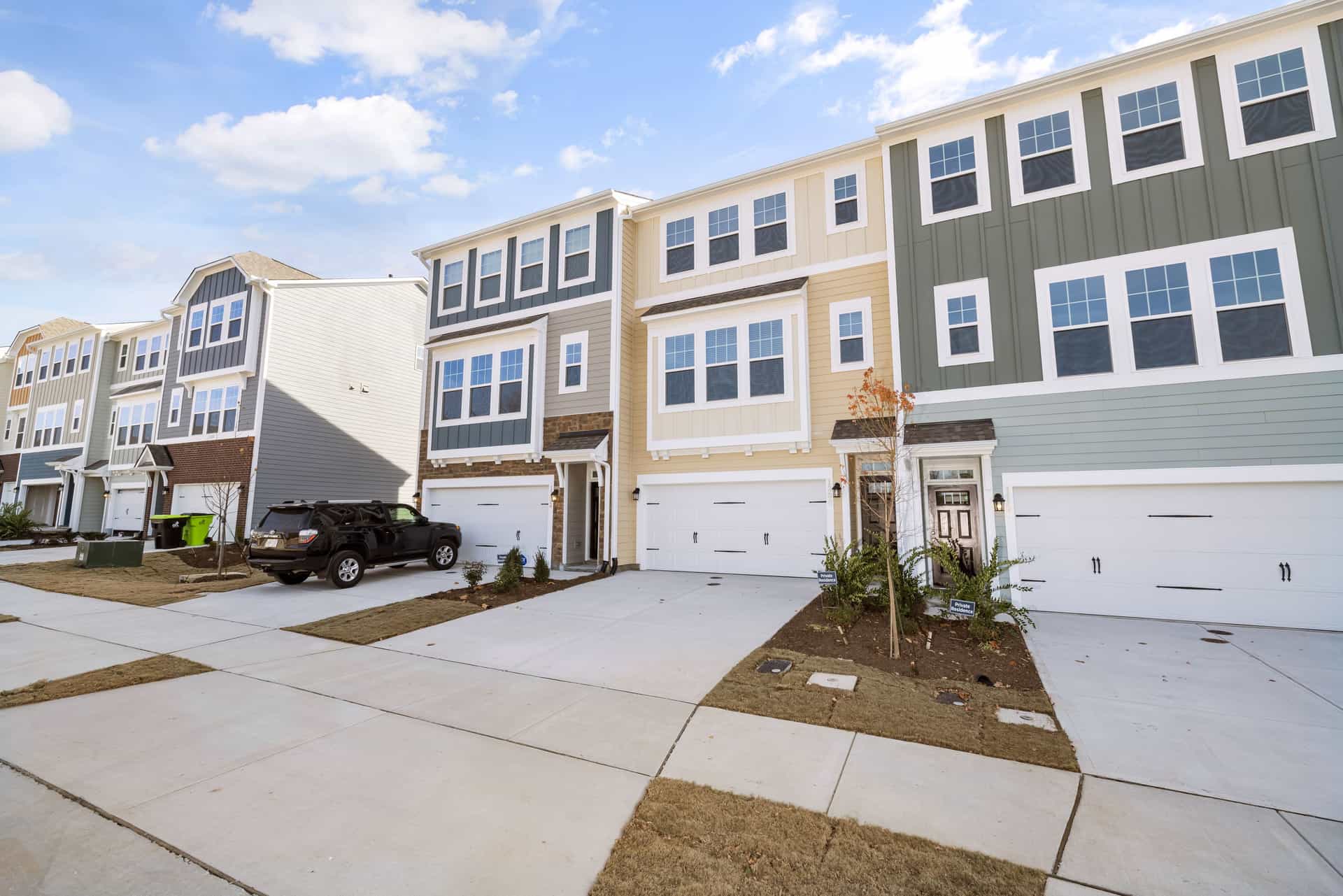
Plan around the lowest and most specific figure a manufacturer publishes, not the biggest one. The useful number is the single-rung or per-section load, because a descent puts one person's weight on one rung at a time: Kidde publishes 750 lb on a single rung within a 1,000 lb tested total, and VEVOR publishes 330 lb per section within a 1,000 lb maximum. Treat a bare "1,000 lb" with no breakdown as a spread-load marketing figure. And know the context: portable escape ladders sold to US consumers have no certification standard at all, so every figure on every listing is a manufacturer or seller claim rather than a tested rating.
Siren & Safe is reader-funded. We earn a commission on some links on this page, at no cost to you. It does not change what we recommend or the order we rank it in. Full disclosure.
Why the numbers are a mess
The root cause is simple and worth stating before any of the figures: there is no US consumer standard for a portable escape ladder. A smoke alarm is listed to UL 217 and an extinguisher is rated under UL 711 — tested by an independent laboratory against a published protocol, with a mark on the product that means something specific. An escape ladder has none of that. No listing, no rating, no mandated test, no common definition of what "capacity" even measures.
So each brand invents its own disclosure. Kidde splits spread load from single-rung load. VEVOR splits total from per-section. Hausse gives one round number. First Alert gives two numbers that do not agree. ISOP gives none. All five are legal, and none of them is comparable with the others.
What the numbers could plausibly mean is at least knowable. A spread load is weight distributed across several rungs or the whole ladder — the easiest test to pass and the least representative of use. A single-rung load is one rung taking the lot, which is close to what a descent actually does. A per-section load on a multi-section ladder is the limit for the part of the ladder somebody is standing on. And a dynamic load — the shock of a step, which is meaningfully higher than a standing weight — is something no brand in this category publishes at all.
Hence the rule at the top of this page. Lowest, most specific figure. Always.
Every capacity claim on this site, as published
Quoted exactly as each brand or seller words it. The last column is what we would actually plan around.
| Ladder | Published claim | Type of figure | Test house named? | Plan around |
|---|---|---|---|---|
| Kidde 2-story (13 ft) | Tested to 1,000 lb; 750 lb on a single rung, 1,000 lb spread | Spread and single-rung, both given | No | 750 lb single rung — generous |
| First Alert EL52-2 (14 ft) | 375 lb tested per First Alert; 1,125 lb in the listing title | Contradictory | ASTM named, no specific standard | 375 lb |
| Hausse 3-story (25 ft) | Tested for up to 1,000 lbs | Unspecified, probably spread | No | One person at a time; treat as unverified |
| VEVOR 3-story (25 ft) | 1,000 lb maximum; 330 lb per section | Total and per-section | No | 330 lb per section |
| BANGBANGJI 4-story (32.8 ft) | Seller-stated 1,000 lb; up to three people descending at once | Spread, with a usage claim | No | One person at a time regardless |
| ISOP 32 ft with anchors | None published | — | No | One person at a time; judge on hardware |
No row in this table is a certification. Every figure is a manufacturer or seller claim, which is a property of the category rather than of any one brand.
Quick picks
Scored against claim specificity, claim consistency, per-rung margin and rehearsal cost. Tap a row for the full write-up. The price in each buy button is the live Amazon price at the last check, stamped with the date it was taken.
| # | Product | Best for | Score | Price |
|---|---|---|---|---|
| 1 | 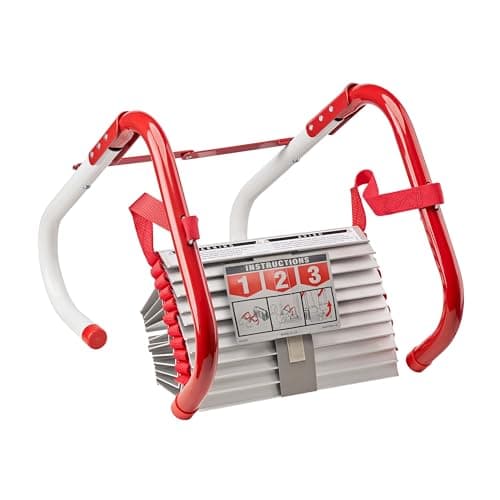 Kidde 2-Story Fire Escape Ladder (13 ft) 1,000 lb tested, 750 lb on a single rung. A brand that splits the figure has thought about how the ladder is loaded. | The clearest published figure in the category | 7.6/ 10 | $53.99 · View on Amazon #ad how we are funded · price as of October 19, 2026 |
| 2 | 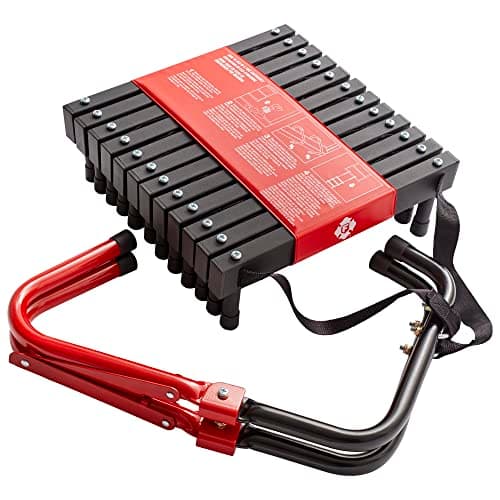 First Alert EL52-2 2-Story Fire Escape Ladder (14 ft) 375 lb tested per First Alert; 1,125 lb in the listing title. Plan around 375, and note that the ladder itself is excellent. | The clearest example of why you read the specification | 7.0/ 10 | $56.99 · View on Amazon #ad how we are funded · price as of October 19, 2026 |
| 3 | 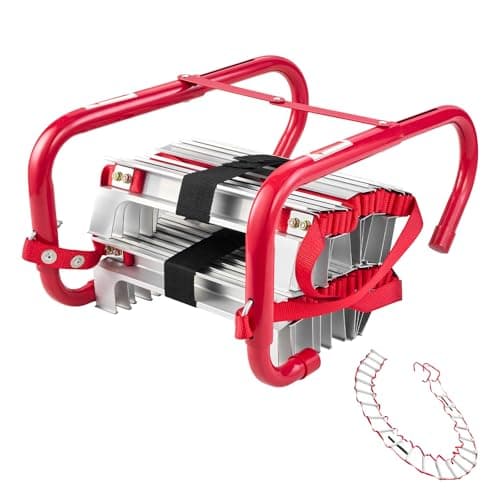 VEVOR 3-Story Retractable Fire Escape Ladder (25 ft) 1,000 lb overall, 330 lb per section. The per-section figure is the honest one and the one to plan around. | The most useful way a generic brand states capacity | 7.3/ 10 | $82.99 · View on Amazon #ad how we are funded · price as of October 19, 2026 |
The three ladders whose numbers tell you something
1. The clearest published figure in the category
Kidde 2-Story Fire Escape Ladder (13 ft)
1,000 lb tested, 750 lb on a single rung. A brand that splits the figure has thought about how the ladder is loaded.
- Listed to
- Kidde states the ladder is tested to 1,000 pounds, published as 750 lb on a single rung and 1,000 lb spread over more than one
- Sensing / agent
- Zinc-plated 1 ft wide anti-slip metal rungs on red nylon strap rails, window hooks
- Power / service life
- Single use — Kidde says discard when unfolded or used. 5-year limited warranty; inspect annually
This is the figure to use as your mental benchmark when reading anybody else's claim. Note what Kidde does: it tells you the total and the single-rung figure, which means somebody tested both loading cases and thought the distinction mattered.
It does matter. Walk down a ladder and your full weight transfers to one rung at a time, with a dynamic component as you step. A spread-load figure measured across several rungs does not describe that, which is why a bare 1,000 lb with no breakdown tells you less than a 330 lb per-section figure does.
What it does well
- **Kidde states the ladder is tested to 1,000 pounds, published as 750 lb on a single rung and 1,000 lb spread over more than one** — the only brand here that separates the two
- 750 lb on one rung is a genuinely large margin over one adult plus whatever they are carrying
- Tangle-free design, 13 ft, and no assembly or tools
- Zinc-plated 1 ft wide anti-slip metal rungs on nylon strap rails
The downside
- **Single use — Kidde says discard when unfolded or used**, so you cannot test the claim without consuming the ladder
- No independent test house is named, even though the figures are specific
- 5-year limited warranty with an annual inspection expectation
- Strap rails twist against the wall; no stabilizers
Do not buy this if: a household that wants to rehearse a full descent. A single-use ladder makes practice expensive, and practice is the thing that actually determines whether a ladder works.
- 13 ft, which is the length that reaches ground from a standard second-floor window
- Fits most common windows up to 11 in deep and 16 in wide, casement windows included — measure before you order
- No assembly and no tools: hook it over the sill and release the rungs
- Tangle-free design, which is the specification that matters when you deploy it once, in the dark, for real
- Strap rails twist against the wall, which is the part that frightens people mid-climb
#ad how we are funded · price as of October 19, 2026
2. The clearest example of why you read the specification
First Alert EL52-2 2-Story Fire Escape Ladder (14 ft)
375 lb tested per First Alert; 1,125 lb in the listing title. Plan around 375, and note that the ladder itself is excellent.
- Listed to
- Tested to ASTM standards. First Alert states the ladder is tested to 375 pounds, and quotes 1,125 lb on the listing title
- Sensing / agent
- Steel anti-slip rungs on nylon strapping, with steel stabilizers and window-sill hooks
- Power / service life
- Single-use emergency ladder; inspect annually
The 375 versus 1,125 problem. Three hundred and seventy-five pounds is a credible tested figure for one adult plus a large margin. One thousand one hundred and twenty-five pounds is exactly three times that, which strongly suggests it is a spread or multi-point figure being used as a headline number. We cannot tell you which test produced which figure, because First Alert does not publish the detail — and that is the point of this page.
What to do with a contradiction. Always take the lower number. The cost of being conservative is that you send people down one at a time, which you should be doing anyway. The cost of being optimistic is a strap-rail failure at height.
And do not let the numbers put you off the ladder. The stabilizers are the best feature in the mainstream market and they matter more to a successful descent than any load figure. Kidde vs First Alert escape ladders is the head-to-head, and escape ladder brands compared ranks all six brands on disclosure.
What it does well
- Tested to ASTM standards per First Alert, which is more than any generic brand claims
- **Steel stabilizers hold the ladder away from the wall** — the feature that most affects a real descent
- 14 ft, steel anti-slip rungs on nylon strapping, arrives fully assembled
- First Alert publishes the sill width range it fits: 6 to 10 in
The downside
- **Two contradictory figures: 375 pounds tested per First Alert, 1,125 lb on the listing title.** Three times apart
- A buyer reading only the title would assume three people could descend together, which 375 lb does not support
- Single-use emergency ladder, so the claim cannot be tested without consuming it
- ASTM is named but no specific standard number or test house is published
Do not buy this if: anybody taking a listing title at face value. Use 375 lb as the working figure — one person at a time, with margin.
- 14 ft, a foot longer than the common 13 ft unit
- Designed for window sills between 6 and 10 in wide — measure yours before ordering
- **Steel stabilizers hold the ladder away from the wall**, which is the single biggest difference between a ladder you can climb and one that pins your toes
- Tested to 375 lb at a time, which is the figure to plan around rather than the 1,125 lb in the title
- Arrives fully assembled and folds flat for storage
#ad how we are funded · price as of October 19, 2026
3. The most useful way a generic brand states capacity
VEVOR 3-Story Retractable Fire Escape Ladder (25 ft)
1,000 lb overall, 330 lb per section. The per-section figure is the honest one and the one to plan around.
- Listed to
- VEVOR states a 1,000 lb maximum load, with each ladder section supporting up to 330 lb
- Sensing / agent
- Aluminum alloy rungs on polyester strapping, with high-strength fastening screws and window hooks
- Power / service life
- Reusable per VEVOR; inspect annually and after any deployment
This is the clearest illustration of why the breakdown matters. Read only "1,000 lb" and you might reasonably conclude that three adults could use the ladder at once — the BANGBANGJI listing in this category says exactly that about three people. Read the per-section figure and the picture changes: 330 lb is one adult with a modest margin.
Both numbers are presumably true of different tests. Only one of them describes what happens when somebody climbs out of a window.
Our standing rule for every ladder on this site: one person on the ladder at a time, regardless of what the total claim says. It is also better practice for other reasons — a second person on a swinging strap-rail ladder makes the first person's descent worse.
What it does well
- **VEVOR states a 1,000 lb maximum load with each ladder section supporting up to 330 lb** — a breakdown, which most generic brands do not give
- 11.8 in wide steps, the widest tread on this site
- 25 ft (7.5 m) for a third-floor window
- Aluminum alloy rather than steel: lighter to lift to the sill, and it folds flat
- Reusable per VEVOR, so rehearsal does not consume the ladder
The downside
- **330 lb per section is the real constraint**, and it is not a large margin above one adult plus clothing and shoes
- No test house named — both figures are seller claims
- Extendable hooks must be fully extended before use
- 25 ft is an intimidating climb, and many people cannot make it
Do not buy this if: two people descending together. A 330 lb per-section figure means one person at a time, and anybody near that figure should think hard about the margin.
- 25 ft (7.5 m) for third-floor windows
- 11.8 in wide steps rather than bare rungs — the widest tread of any ladder on this page
- 1,000 lb overall, 330 lb per section — the per-section figure is the one to plan around
- Aluminum alloy rather than steel: lighter to lift to the sill, and it folds flat for storage
- Practice the hooking motion; the length makes it awkward at a narrow window
#ad how we are funded · price as of October 19, 2026
How to use a capacity figure properly
Five rules. None of them require trusting a number you cannot verify.
- One person on the ladder at a time, whatever the total claim says. A second climber makes a swinging strap-rail ladder worse for the first, and the per-rung loading is what governs.
- Take the lowest published figure as your working limit. If a brand gives 1,000 lb and 330 lb per section, your limit is 330 lb. If it gives 375 lb and 1,125 lb, your limit is 375 lb.
- Add what the person is carrying. Shoes, a coat, a child, a pet carrier, a phone. A 200 lb adult carrying a 40 lb child is a 240 lb load with a dynamic component on top.
- Inspect the webbing and the hooks before and after any use. The rails are the failure point, not the rungs. Look for abrasion where the rails pass over the sill, UV damage if it has been stored anywhere light, and any distortion in the hooks.
- Replace on the manufacturer's schedule, not on how it looks. Kidde says discard once unfolded. Hausse recommends replacement every three years. VEVOR and ISOP say reusable with inspection. Those are very different ownership commitments and all of them are part of the product.
The limit that is not about weight
Here is the thing the capacity debate distracts from. The common failure of an escape ladder is not the ladder breaking. It is somebody not being able to use it: a 25 ft climb on strap rails that twist against the wall, in the dark, barefoot, frightened, possibly with a child. Load figures are the least of it.
Which is why we rate stabilizers, tread width and tangle-free deployment above any published number, and why the honest question is not "how much will it hold" but "can the people in this house get down it". For a child, an older adult or anybody with limited grip or mobility, the answer is often no at 25 ft — and that is a planning fact, not a product fault. Escape ladders for kids and older adults deals with it directly.
Then practice the parts you safely can. Find the ladder in the dark. Open the window. Extend and seat the hooks. Look at how the rails lie. Do not rehearse a full descent from height — the rehearsal is more dangerous than the fire is likely to be — but do everything short of that, twice a year, alongside the rest of the plan in fire escape plan.
Questions people actually ask
What is the weight limit on a fire escape ladder?
Can two people use an escape ladder at once?
Are escape ladder weight ratings tested?
Why do escape ladders list two different weight limits?
What actually fails on an escape ladder?
How these picks were chosen. On published specifications, safety listings and manufacturer documentation — plus the findings of organizations that do run tests. We have no laboratory and we do not burn anything. Read the full methodology.
Sources
- NFPA — Making and practicing a home fire escape plan
- US Fire Administration — Home fire escape planning
- US Fire Administration — Home fire prevention
- International Code Council — IRC Chapter 3 — building planning (R310, R314, R315)
Read next
Escape Ladders
Kidde, First Alert, Jomy, Hausse, VEVOR and ISOP ranked on what each publishes about testing — because no US consumer standard exists to rank them on.
Escape Ladders
Kidde vs First Alert Escape Ladders
Light and fast to deploy versus rigid and easy to climb — who each one suits.
Escape Ladders
What Size Fire Escape Ladder Do I Need?
Measure sill to ground, check the sill width, and read the right capacity number.
Escape Ladders
Escape Ladders for Kids and Older Adults
Why the ladder often is not the answer for children or older adults, and what is.
Escape Ladders
How to Use a Fire Escape Ladder
The deployment sequence, the three mistakes at the sill, and how to practice safely.