Fire Extinguishers
Where to Mount a Fire Extinguisher
The position decides whether you ever get to use it. Almost every domestic mistake is the same one: mounting the extinguisher next to the thing most likely to catch fire.
By Ryder M.Last reviewed
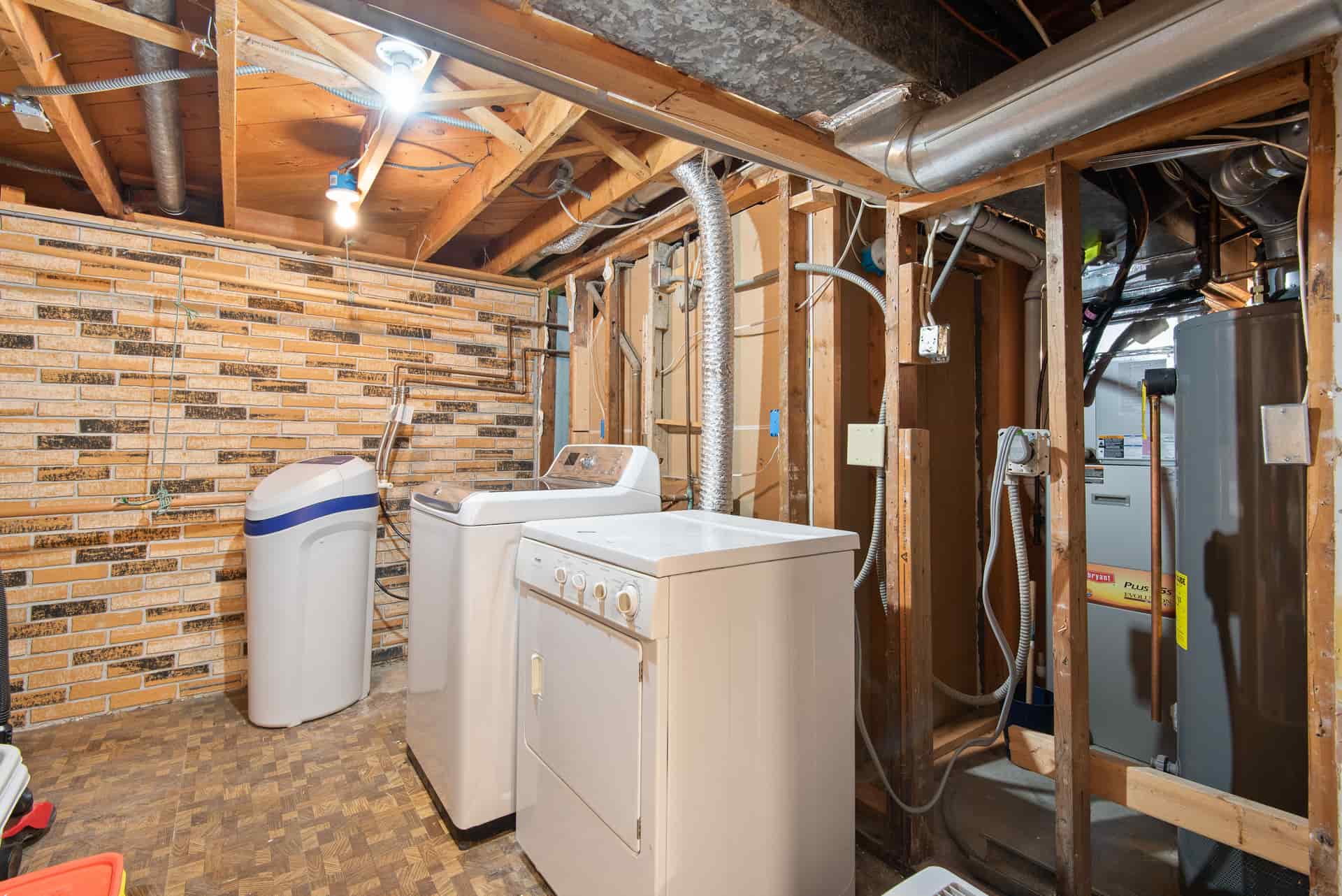
Mount a household fire extinguisher **on the wall beside the room's exit, not beside the hazard**, with the carrying handle no more than 5 ft from the floor for units up to 40 lb, at least 4 in clear of the floor, and visible from the middle of the room. That is the shape of the NFPA 10 guidance for portable extinguishers and it is the rule that matters, because an extinguisher you have to walk past the fire to reach is an extinguisher you will not use.
Siren & Safe is reader-funded. We earn a commission on some links on this page, at no cost to you. It does not change what we recommend or the order we rank it in. Full disclosure.
The one rule that decides every position
You approach a fire from the exit and you retreat the way you came. Everything about extinguisher placement follows from that single sentence.
It means the extinguisher belongs between the hazard and the door — on the exit side of the room, so that collecting it does not require walking toward the fire, and using it leaves the way out behind your back.
It also means the obvious-looking position is usually wrong. An extinguisher mounted above the cooker, beside the grinder, next to the furnace or inside the cupboard that holds the paint tins is an extinguisher inside the fire. By the time you need it, you cannot reach it.
The test is simple and worth doing out loud: stand in the doorway, imagine the hazard alight, and ask whether you could collect the extinguisher without stepping toward the flame. If the answer is no, the bracket is in the wrong place.
Mounting dimensions
These are the figures NFPA 10 sets for portable extinguisher installation. Confirm the edition your local authority has adopted before relying on them for an inspection.
| Dimension | Requirement | Why |
|---|---|---|
| Maximum height, units up to 40 lb | Carrying handle no more than 5 ft above the floor | Above that, the lift down becomes the thing that drops the unit |
| Maximum height, units over 40 lb | Carrying handle no more than 3.5 ft above the floor | Not a residential concern — these are wheeled and commercial units |
| Minimum clearance to the floor | At least 4 in | Keeps the base out of standing water and off the floor where it is kicked and swept around |
| Visibility | Visible and unobstructed, with signage where it is not obvious | An extinguisher behind a door or inside a cupboard does not get found under stress |
| Fixing | The manufacturer's bracket, into a stud or a load-rated fixing | A bracket pulling out of plasterboard puts the unit on the floor at the worst moment |
| Travel distance, Class A hazards | Commonly 75 ft maximum in the standard | In a house this translates to one unit per floor, not one per building |
NFPA 10 governs selection, installation, inspection and maintenance of portable extinguishers. A single-family home is rarely inspected against it; a rental, a multi-family building or a short-let frequently is.
Quick picks
Scored against bracket included, fits a narrow wall, weight at height, rating and serviceability. Tap a row for the full write-up. The price in each buy button is the live Amazon price at the last check, stamped with the date it was taken.
| # | Product | Best for | Score | Price |
|---|---|---|---|---|
| 1 | 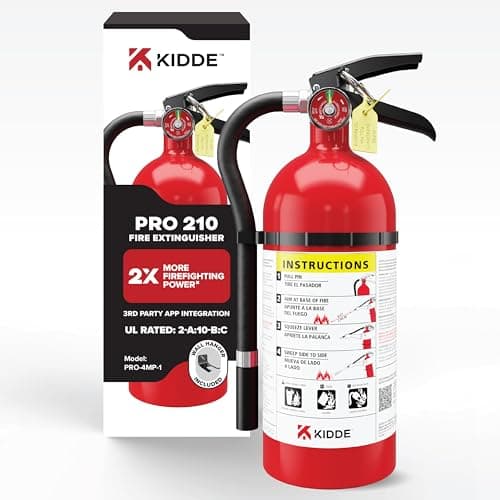 Kidde Pro 210 4 lb Multi-Purpose Extinguisher 4 lb at 2-A:10-B:C with the bracket in the box. | The unit that comes with its fixing | 8.1/ 10 | $54.97 · View on Amazon #ad how we are funded · price as of October 19, 2026 |
| 2 | 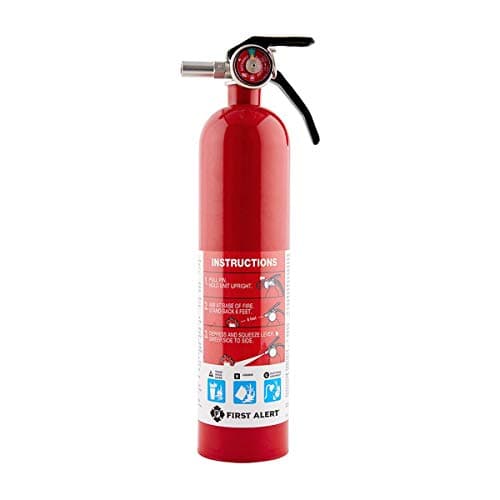 First Alert HOME1 Rechargeable Home Extinguisher (2.5 lb) 2.5 lb, 1-A:10-B:C, bracket in the box. The one anybody can lift down. | A hallway or a landing where weight is the constraint | 8.4/ 10 | $19.98 · View on Amazon #ad how we are funded · price as of October 19, 2026 |
| 3 | 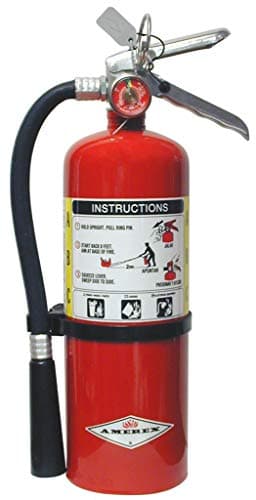 Amerex B500 5 lb ABC Dry Chemical Extinguisher 2-A:10-B:C, 5 lb, all-metal. Mount it on a stud, not an anchor. | The main-level position, if the wall can take it | 7.6/ 10 | $75.01 · View on Amazon #ad how we are funded · price as of October 19, 2026 |
Units that mount well
1. The unit that comes with its fixing
Kidde Pro 210 4 lb Multi-Purpose Extinguisher
4 lb at 2-A:10-B:C with the bracket in the box.
- Listed to
- UL rated 2-A:10-B:C
- Sensing / agent
- Monoammonium phosphate dry chemical
- Power / service life
- Rechargeable; mounting bracket included
Bracket availability sounds like a detail and is the single biggest predictor of whether a household extinguisher is actually on a wall a year later. A unit without a fixing ends up on a shelf, then on the floor, then behind something.
The weight matters at height too. Lifting 4 lb off a bracket at chest height is a different action to unhooking a heavier unit, and the NFPA height limits exist precisely because the lift is where people drop things.
Fit it beside the door, not above a worktop, and make sure the bracket is into a stud or a proper fixing rather than a plasterboard anchor carrying a swinging load.
What it does well
- Mounting bracket supplied, which is the difference between mounted and leaning in a corner
- 4 lb is light enough to lift off a bracket at shoulder height without a stumble
- Reaches 2-A:10-B:C, the rating threshold most requirements specify
- Narrow enough to fit the strip of wall beside a door frame
The downside
- Least agent of the rated units on this site, so less margin for a missed first attempt
- 10-B is undersized for a garage that stores fuel
- Dry chemical, with the residue that implies
Do not buy this if: the room is a workshop with flammable liquids. Mount a higher-B unit there and keep this one for the house.
- 4 lb — the lightest unit that still reaches a 2-A rating, which matters for one-handed use
- Rechargeable, with the bracket in the box
- Same 2-A:10-B:C class coverage as heavier units, with less run time
- Less agent means less margin for error if the first attempt misses
#ad how we are funded · price as of October 19, 2026
2. A hallway or a landing where weight is the constraint
First Alert HOME1 Rechargeable Home Extinguisher (2.5 lb)
2.5 lb, 1-A:10-B:C, bracket in the box. The one anybody can lift down.
- Listed to
- UL rated 1-A:10-B:C
- Sensing / agent
- Monoammonium phosphate dry chemical
- Power / service life
- Rechargeable by a certified professional; metal head and pull pin
A landing, an upstairs hallway, a boat or a caravan is a position problem rather than a rating problem. The right extinguisher for a tight wall at the top of a staircase is the one somebody can unhook without losing their footing.
Visibility is the other reason this unit mounts well. A gauge you can read from the other end of a hallway means the monthly glance actually happens, and a monthly glance is the entire domestic maintenance regime for a stored-pressure extinguisher.
Pair it with a larger unit downstairs rather than treating it as the house's extinguisher — the home roundup sets out that arrangement.
What it does well
- 2.5 lb — the lightest rated unit most people can lift down and aim with one hand
- Color-coded corrosion-resistant gauge that can be read from across a hallway
- Mounting bracket in the box
- Metal head and metal pull pin with a safety seal rather than a plastic-valve disposable
The downside
- 1-A is half the ordinary-combustible rating of a 2-A unit
- Short run time — one attempt, with little margin
- Will not satisfy a requirement that specifies a 2-A minimum
Do not buy this if: it is the only extinguisher in a house with a garage, or you are buying to satisfy a minimum-rating requirement. It is an excellent second position and a marginal primary one.
- 2.5 lb — the lightest unit most people can aim accurately with one hand
- Metal head and a metal pull pin with a safety seal, not the plastic valve of the disposable tier
- Color-coded corrosion-resistant gauge and a mounting bracket in the box
- 1-A is half the ordinary-combustible rating of a 2-A unit, which is the trade for the size
First Alert product documentation
#ad how we are funded · price as of October 19, 2026
3. The main-level position, if the wall can take it
Amerex B500 5 lb ABC Dry Chemical Extinguisher
2-A:10-B:C, 5 lb, all-metal. Mount it on a stud, not an anchor.
- Listed to
- UL rated 2-A:10-B:C
- Sensing / agent
- Monoammonium phosphate dry chemical
- Power / service life
- Rechargeable; all-metal valve and body
This is the unit the main-level position wants, and the mounting is the part people under-think. A 5 lb extinguisher on a bracket is a static load that becomes a dynamic one every time somebody knocks it — into a stud, or into a cavity fixing rated for the weight, never a push-in plug.
Height is the other consideration. NFPA 10 caps the carrying handle at 5 ft from the floor for units in this weight class, and the practical version of that rule is: high enough that it is not a trip hazard, low enough that a shorter adult can lift it down without reaching over their head.
The right room is the one between the kitchen and the way out. Why that is is the argument the home roundup makes at length.
What it does well
- 2-A:10-B:C and 5 lb of agent — the capability a main-level position should carry
- All-metal valve and body, serviceable and rechargeable for decades
- Heavy enough to justify a proper fixing, which also means it stays where you put it
- The unit professional suppliers stock, so a recharge is a phone call
The downside
- Check whether a bracket is included on the listing you are buying — it is not always
- 5 lb needs a stud fixing rather than a plasterboard anchor
- Larger body, so the strip of wall beside a door frame may not take it
Do not buy this if: the only available wall is hollow plasterboard with no stud behind it and you are not willing to use a proper cavity fixing rated for the load.
- All-metal valve rather than plastic, which is the difference between a serviceable unit and a disposable one
- Rechargeable, so a partial discharge during a small fire does not write off the extinguisher
- 2-A:10-B:C covers ordinary combustibles, flammable liquids and energized electrical equipment
- 5 lb is heavier than the supermarket unit and needs a proper bracket
#ad how we are funded · price as of October 19, 2026
Room by room
One extinguisher per floor is the floor, not the ceiling. These are the positions worth having in a typical house.
Kitchen
- Mounted beside the door out of the kitchen, at handle height — never above the hob or on the cupboard next to it
- A fire blanket within one step of the cooker, which is the kitchen's actual first tool for a pan of oil
- An aerosol spray in a drawer for the small contained fire, if you want one
- Nothing mounted where reaching it means passing between the cooker and the worktop
Main level and hallway
- A 2-A:10-B:C unit on the route to the front or back door, visible from the living space
- At the bottom of the staircase rather than the top, because the staircase is the escape route
- Clear of coat hooks, prams, shoe racks and anything else that accumulates in a hallway
Garage, workshop and utility
- Beside the door into the house or the door to the driveway, never over the workbench
- A higher B rating than the house unit, because this is where the flammable liquids are
- Off the floor and out of the zone a vehicle bumper sweeps
- Away from the furnace or water heater rather than above it
Upstairs and bedrooms
- A lighter unit on the landing, where anyone can lift it down one-handed
- Not inside a bedroom cupboard — nobody searches a wardrobe during a fire
- Remember the hierarchy: upstairs, the escape route matters more than the extinguisher
Vehicles and outbuildings
- In a car, a bracketed unit in the trunk or footwell, never loose on a seat where it becomes a projectile
- In a shed or outbuilding, remember that water and foam units freeze and dry chemical does not
- Mounted, in every case — a loose extinguisher is a rolling object
The five positions that make an extinguisher useless
Each of these is common, and each one defeats the purchase entirely.
- Above the cooker. The single most common domestic error. Reaching over a pan fire to unhook an extinguisher puts your forearm in the flame front, and the heat plume will have made the handle too hot to hold.
- Beside the hazard. Next to the furnace, the grinder, the charging bench, the fuse box. The fire and the equipment occupy the same square foot, so you lose the equipment with the fire.
- Inside a closed cupboard. Nobody opens doors looking for equipment under stress, and an extinguisher out of sight is never checked.
- Standing on the floor. It gets moved to sweep, knocked by a bumper, buried behind a bag, and it ends up somewhere nobody remembers.
- Behind the door it swings against. Push the door open in a hurry and the extinguisher is now hidden behind it, in the one position in the room you cannot see from the doorway.
The monthly glance, and the annual one
A stored-pressure extinguisher has a domestic maintenance regime that takes about four seconds: look at the gauge. If the needle is in the green, the unit is pressurized. If it has drifted into either red zone, it needs service or replacement.
Mount it where that glance happens without effort, because a unit you have to find is a unit nobody checks. A gauge visible from the hallway gets looked at; a gauge in a cupboard does not.
Once a year, do three more things: lift it to confirm it feels full, check the pin and seal are intact, and check the body for dents, rust or a corroded base. Expiration and service sets out what is serviceable and what is not.
Put that annual check on the same day as the smoke alarm checks. One date, one walk around the house, and the home safety checklist has the full list.
Tell people where it is
An extinguisher nobody knows about is decoration. This is not a placement rule but it is the highest-value free action on this page.
Say it out loud to every adult and teenager in the house: where each unit is, what it is for, and the two rules that matter — aim at the base, not the flames, and if it is bigger than a pan, leave.
Do the same for the fire blanket and the escape plan. A household that has had that two-minute conversation gets more out of the equipment it already owns than one that upgrades the rating, and the escape plan page is where the rest of that conversation belongs.
And if the house has lodgers, a rental agreement or a short-let listing, the positions are no longer only a safety matter. Rental and landlord requirements covers what tends to get inspected.
Questions people actually ask
How high should a fire extinguisher be mounted?
Where should a fire extinguisher be placed in a kitchen?
Should a fire extinguisher be mounted or can it stand on the floor?
How many fire extinguishers does a house need?
Can I mount a fire extinguisher in a cupboard?
Where should a fire extinguisher go in a garage?
How these picks were chosen. On published specifications, safety listings and manufacturer documentation — plus the findings of organizations that do run tests. We have no laboratory and we do not burn anything. Read the full methodology.
Sources
- NFPA — NFPA 10, Standard for Portable Fire Extinguishers
- UL Solutions — Fire extinguisher testing and certification (UL 711)
- US Fire Administration — Home fire prevention
- NFPA — Cooking equipment fires in US homes
Read next
Fire Extinguishers
The Best Fire Extinguishers for a Home
Four rated units, what the numbers mean, and why the valve material matters.
Fire Extinguishers
How to Use a Fire Extinguisher
PASS, the two decisions that come first, and why aiming at the flames wastes the charge.
Fire Extinguishers
Fire Extinguisher Expiration and Service
Where the date is, what the gauge means, and the service intervals that apply.
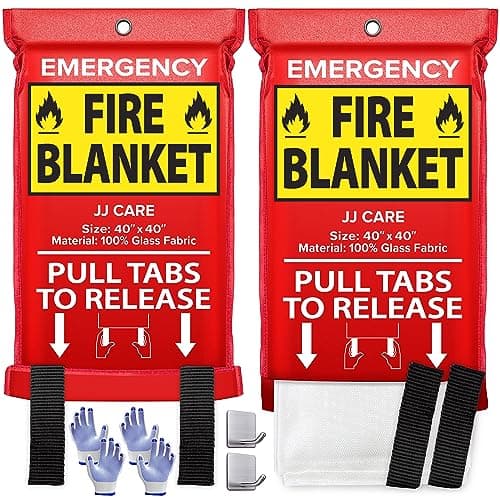
Fire Blankets
Height, distance and fixing — plus the one position that makes a blanket useless.
Placement & Code
A printable room-by-room audit of alarms, CO detection, exits and suppression.