Carbon Monoxide Detectors
Best CO Detectors for Apartments
An apartment has a problem a house does not: the source may be two floors down, behind a wall you have no access to, in a unit you have never been inside.
By Ryder M.Last reviewed

The First Alert CO710 is the right alarm for most apartments — a sealed ten-year battery with a digital display, which means no outlet to find, no drilling, nothing to rewire, and a reading you can show a landlord. Add a Kidde Nighthawk KN-COPP-3 in a hallway outlet if you want peak-level memory, because its record of concentrations as low as 11 ppm is the single most useful piece of evidence in a dispute with a building manager. In a rental the alarm is not only a warning device, it is your documentation.
Siren & Safe is reader-funded. We earn a commission on some links on this page, at no cost to you. It does not change what we recommend or the order we rank it in. Full disclosure.
Why an apartment is a different problem
In a house, carbon monoxide comes from something you own: a furnace, a water heater, a gas range, a fireplace, a car in an attached garage, or a generator somebody put too close to a window. You can service it, replace it or stop using it.
In an apartment, the source may not be yours and may not be reachable. Shared flues, common chimney stacks, a neighbor's unserviced water heater, a blocked vent in a utility riser, an underground parking garage below the lowest floor, a boiler room on the other side of a wall. You cannot inspect any of it and you cannot fix any of it.
That changes what the alarm is for. In a house an alarm is a warning. In a rental it is also evidence — the thing that turns a tenant's complaint into a landlord's obligation. Which is why a readout and, better, a peak-level memory are worth more here than anywhere else.
It also changes the installation constraints. No drilling, no rewiring, nothing that needs a deposit deduction, and a device that can leave with you. Every alarm on this page meets that test.
The four alarms against rental constraints
Specifications are the manufacturers' own. The last two columns are what actually decides this in a rental.
| Power | Display | Peak memory | Needs an outlet | |
|---|---|---|---|---|
| First Alert CO710 | Sealed 10-year battery | Yes | No | No |
| Kidde KN-COPP-3 | Plug-in with 9V backup | Yes, 30-999 ppm, 15-second refresh | Yes, from 11 ppm | Yes, or use the 6 ft cord |
| Kidde KN-COPP-B-LPM | Replaceable batteries | Yes | Yes | No |
| First Alert CO615 | Plug-in with battery backup | Yes | No | Yes |
All four are listed to UL 2034, which is the residential CO alarm standard. None of them is a low-level monitor — those are a separate class of instrument and they do not replace a listed alarm.
Quick picks
Scored against no-install friendly, evidence you can show, survives a power cut, placement freedom and ten-year certainty. Tap a row for the full write-up. The price in each buy button is the live Amazon price at the last check, stamped with the date it was taken.
| # | Product | Best for | Score | Price |
|---|---|---|---|---|
| 1 | 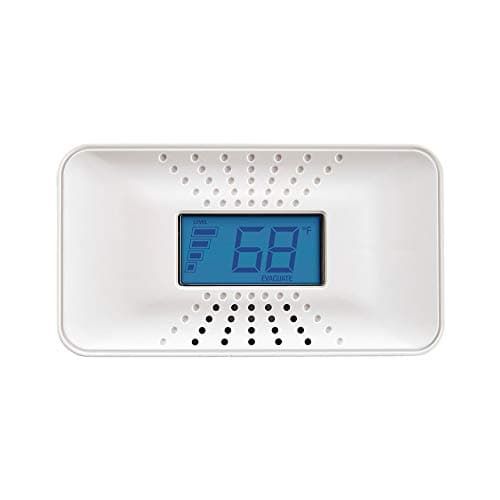 First Alert CO710 Sealed-Battery CO Alarm Sealed ten-year battery, digital display, and complete freedom over where it goes. No outlet and no drilling needed. | The apartment default | 9.4/ 10 | $44.00 · View on Amazon #ad how we are funded · price as of October 19, 2026 |
| 2 | 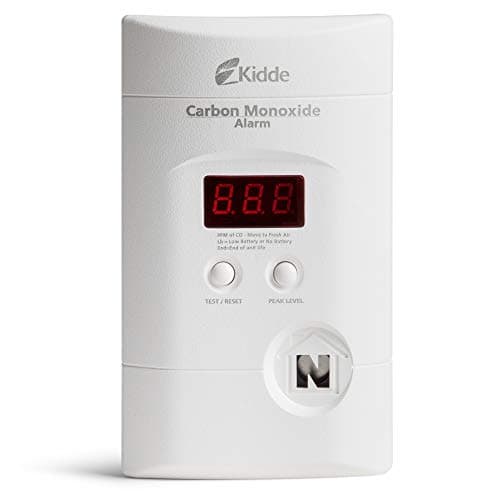 Kidde Nighthawk KN-COPP-3 Plug-In CO Alarm Peak-level memory down to 11 ppm. The alarm that records what happened while you were asleep. | Documenting a chronic low-level leak | 8.6/ 10 | $44.50 · View on Amazon #ad how we are funded · price as of October 19, 2026 |
| 3 | 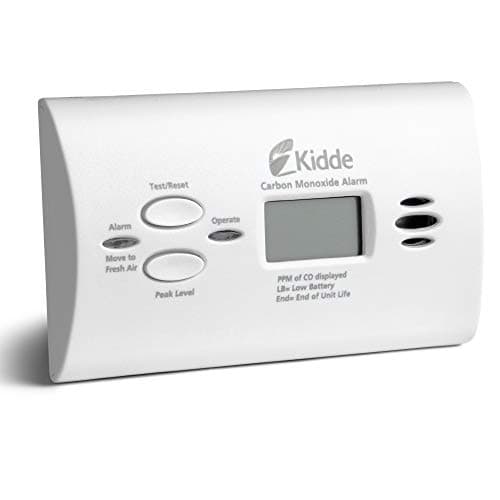 Kidde KN-COPP-B-LPM Battery CO Alarm with Digital Display Battery only, with a display and peak memory. Both features, no outlet, and it travels. | A bedroom wall with no outlet, or a move every year | 8.8/ 10 | $27.97 · View on Amazon #ad how we are funded · price as of October 19, 2026 |
| 4 | 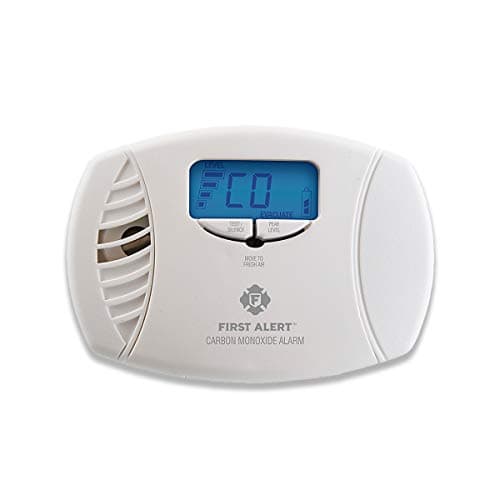 First Alert CO615 Plug-In CO Alarm with Battery Backup Plugs in at outlet height with a battery backup and a live reading. The simplest thing to add to a shared hallway. | A hallway outlet you can actually reach | 7.6/ 10 | $44.95 · View on Amazon #ad how we are funded · price as of October 19, 2026 |
The four alarms
1. The apartment default
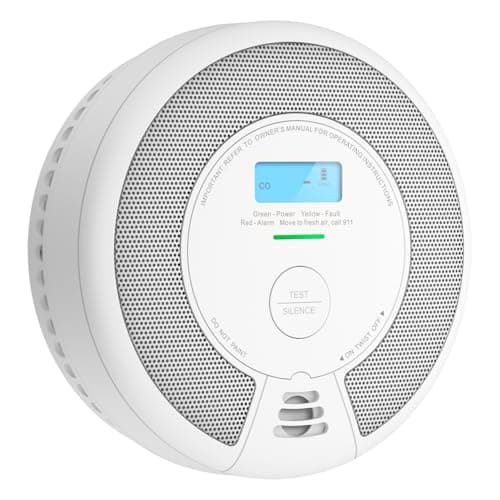
First Alert CO710 Sealed-Battery CO Alarm
Sealed ten-year battery, digital display, and complete freedom over where it goes. No outlet and no drilling needed.
- Listed to
- UL 2034
- Sensing / agent
- Electrochemical CO sensor
- Power / service life
- 10-year sealed battery
The reason this wins a rental is everything it does not need. No outlet, no screw, no circuit, no landlord permission. A sealed-battery alarm can sit on a bookshelf, a wardrobe top or a bedside table at the height CO actually needs, and it can move with you when the lease ends.
Placement freedom matters more in an apartment than in a house. Apartment layouts are constrained: the one outlet in the hallway is behind the shoe rack, the bedroom has two outlets and both are behind furniture, and you cannot add one. An alarm that does not care about outlets is an alarm that can go where the guidance says rather than where the wiring allows. Where to install CO detectors covers the heights, and the answer is less about height than people expect.
The display is the second reason, and it is specific to renting. "My alarm went off" is a conversation. "My alarm is reading 48 ppm right now and here is a photograph with a timestamp" is a work order. Best CO detectors with digital display goes further into which readouts are worth having.
Ten years sealed also removes the one maintenance task a tenant reliably forgets, and the one a landlord will blame you for. Nothing to change means nothing to fail to change.
What it does well
- Sealed ten-year battery — nothing to change, and no low-battery chirp until it is genuinely done
- Placement is completely free: no outlet required, so it goes at the height the room actually needs
- Digital display showing the measured concentration, which is what makes a complaint credible
- Listed to UL 2034, the residential CO alarm standard
The downside
- End of life means replacing the whole unit, by design
- No peak-level memory, so an overnight excursion you slept through leaves no record
- Sits on a shelf or needs a fixing — and in a rental, a shelf is usually the answer
Do not buy this if: you are trying to document a suspected chronic low-level leak. For that the peak-memory Kidde below is the better instrument, and it is worth having both.
- Sealed 10-year battery — nothing to change, and no low-battery chirp until it is genuinely done
- Digital display showing the measured concentration
- Placement is free: no outlet required, so it can sit at the height the room actually needs
- End of life means replacing the whole unit, by design
#ad how we are funded · price as of October 19, 2026
2. Documenting a chronic low-level leak
Kidde Nighthawk KN-COPP-3 Plug-In CO Alarm
Peak-level memory down to 11 ppm. The alarm that records what happened while you were asleep.
- Listed to
- UL 2034
- Sensing / agent
- Electrochemical CO sensor
- Power / service life
- 10-year unit life; 9V battery backup
Peak-level memory is the reason to own this one, and in an apartment it is close to essential.
A UL 2034 alarm is not required to sound until roughly 70 ppm has been present for an hour, by design — the thresholds exist to avoid constant alarming at levels that are not immediately dangerous. The consequence is that a persistent 25 or 35 ppm, which is enough to produce headaches, nausea and exhaustion over weeks, can be present continuously without any alarm sounding.
That is the classic apartment pattern: a shared flue, a neighbor's unserviced water heater, a blocked vent in a utility riser. Nobody is poisoned in an hour; everybody in the stack feels unwell for a month. The peak-memory function means you can press a button and show a number instead of describing a feeling. Best low-level CO monitors covers the instruments that go further still.
Use the 6 ft cord if the only outlet is in a bad place. A plug-in alarm does not have to be at outlet height, and an apartment hallway rarely offers a choice.
What it does well
- Peak-level memory records concentrations as low as 11 ppm — the feature that catches a chronic leak
- Digital display reads 30 to 999 ppm and refreshes every 15 seconds
- Direct-plug, 6 ft cord or tabletop mounting, so it adapts to an awkward rental layout
- Battery backup keeps it monitoring through a power cut, which is exactly when generators come out
The downside
- Tied to an outlet position unless you use the cord or stand it on something
- 9V battery backup rather than a sealed cell, so the annual check is real
- Plug-in height is rarely the height you would choose on the merits
Do not buy this if: this is your only alarm and your outlets are all behind furniture. A plug-in alarm wedged behind a sofa is a muffled alarm.
- Digital display reads 30 to 999 ppm and refreshes every 15 seconds
- Peak-level memory records concentrations as low as 11 ppm — the feature that catches a chronic leak
- Direct-plug, 6 ft cord or tabletop mounting
- Battery backup keeps it monitoring through a power cut, which is exactly when generators come out
#ad how we are funded · price as of October 19, 2026
3. A bedroom wall with no outlet, or a move every year
Kidde KN-COPP-B-LPM Battery CO Alarm with Digital Display
Battery only, with a display and peak memory. Both features, no outlet, and it travels.
- Listed to
- UL 2034
- Sensing / agent
- Electrochemical CO sensor
- Power / service life
- Battery powered; 10-year unit life
This is the alarm for the sleeping room in a rental, which is the position that matters most and the position with the fewest outlets.
CO poisoning kills people in their sleep because the early symptoms are indistinguishable from tiredness and because sleeping people do not notice headaches. An alarm within earshot of a bed is the one that does the work, and in an apartment bedroom there is often simply nowhere to plug anything in.
Having both the display and the peak memory in a battery unit is unusual and genuinely useful. It also travels — which, for anyone moving annually, means one alarm rather than a new one each lease. Hotel rooms, holiday lets and borrowed rooms are all places where nobody can tell you when the flue was last swept. Best CO detectors for RV and travel is the page for that use.
The honest caveat is the replaceable battery. If you are the sort of household that lets a chirp run for a fortnight, buy the sealed unit instead.
What it does well
- Battery only, so it goes where there is no outlet — a bedroom wall, a cabin, a rental
- Digital display plus peak-level memory, which is the combination that documents a problem
- Portable enough to travel with, which matters more than most buying guides admit
- Listed to UL 2034 and unaffected by a power cut
The downside
- Replaceable batteries mean an annual check is genuinely required, and tenants move house more often than they change batteries
- No mains power at all, so a flat battery is a dead alarm
- Ten-year unit life still applies — the batteries are not the whole story
Do not buy this if: you will not remember to check a battery. A sealed ten-year unit removes that failure mode entirely and that is worth more than the peak memory to most people.
- Battery only, so it goes where there is no outlet — a bedroom wall, a cabin, a rental
- Digital display plus peak-level memory
- Portable enough to travel with, which matters more than most buying guides admit
- Replaceable batteries mean an annual check is genuinely required
#ad how we are funded · price as of October 19, 2026
4. A hallway outlet you can actually reach
First Alert CO615 Plug-In CO Alarm with Battery Backup
Plugs in at outlet height with a battery backup and a live reading. The simplest thing to add to a shared hallway.
- Listed to
- UL 2034
- Sensing / agent
- Electrochemical CO sensor
- Power / service life
- AC powered with battery backup
The case for a plug-in unit in an apartment is realism. If the alarm has to be checked, tested and eventually replaced by somebody who is busy, outlet height beats ceiling height every time — you can see the display walking past, and you can press the test button without a chair.
It is the easiest alarm to add to a hallway between a kitchen and a bedroom, which in a one or two-bedroom apartment is very often the single best position in the whole home.
The limitation is the outlet itself. If the only hallway socket is behind a cabinet, the alarm is muffled and unreadable, and one of the battery units above is the better answer. Plug-in vs battery CO detectors works through that trade properly.
What it does well
- Plugs in at outlet height, which is where a hallway alarm is easiest to read and test
- Battery backup keeps it alive through an outage
- Digital display of the current reading
- Nothing to install, nothing to drill, nothing to explain at the end of a tenancy
The downside
- Tied to an outlet position, so it cannot go wherever you like
- No peak-level memory, so it reports now rather than overnight
- Occupies an outlet, which in an older apartment may be the only one in the hall
Do not buy this if: you are trying to prove a historic exposure. Without peak memory it only tells you about the moment you are looking at it.
- Plugs in at outlet height, which is where a hallway alarm is easiest to read and test
- Battery backup keeps it alive through an outage
- Digital display of the current reading
- Tied to an outlet position, so it cannot go wherever you like
#ad how we are funded · price as of October 19, 2026
Where to put them in an apartment
Three positions cover almost every apartment layout. Start with the first and add the others if you can.
- Outside the sleeping area, within earshot of every bedroom door. This is the position that saves lives, because CO kills sleeping people. In a one-bedroom apartment it is usually the short hallway between the bedroom and the living space.
- Inside the bedroom, if anyone sleeps with the door closed. A closed door is a meaningful barrier to an alarm sounding ten feet away. This is the position the battery units above exist for.
- On the same level as any fuel-burning appliance, a few feet away rather than beside it. A gas range, a water heater in a closet, a wall furnace. Too close and normal start-up produces nuisance alarms; too far and it is monitoring the wrong air.
- Not in the kitchen directly above the range, not in a bathroom, and not inside a closet with the water heater. Steam, cooking by-products and enclosed appliance spaces all produce false readings or no readings.
- Not blocked by furniture, curtains or a shoe rack. Obvious, and the single most common real-world failure in a small apartment where every wall has something against it.
- One per floor in a maisonette or a two-level unit. Air does not move between floors reliably, and a basement-level alarm is not protecting an upstairs bedroom.
What your landlord is responsible for
Most US states now require carbon monoxide alarms in rental dwellings with fuel-burning appliances or attached garages, and the residential code has required CO alarms in new and substantially altered dwellings for years. The specifics — which units, how many, who installs, who tests, who replaces — vary by state and by municipality, and sometimes by the age of the building.
What that means practically: your landlord almost certainly has an obligation, and the alarm you buy yourself does not discharge it. Buying your own alarm is a sensible immediate step, not a reason to stop asking.
If an alarm sounds or a display shows a reading, the order is: get everyone into fresh air, call 911 from outside, then notify the building manager in writing with the time, the reading and the photograph. Written notice with a number attached is what produces an inspection.
Rental and landlord requirements covers the smoke and CO rules together, and do I need a CO detector answers the version of this question for people who are not sure their home has a source at all. In an apartment, the honest answer is that you often cannot know — which is the argument for the alarm.
Questions people actually ask
What is the best carbon monoxide detector for an apartment?
Can I install a CO detector in a rental without drilling?
Can carbon monoxide come from a neighbor's apartment?
Is my landlord required to provide a CO alarm?
How these picks were chosen. On published specifications, safety listings and manufacturer documentation — plus the findings of organizations that do run tests. We have no laboratory and we do not burn anything. Read the full methodology.
Sources
- CPSC — Carbon Monoxide Fact Sheet
- UL Solutions — UL 2034 — single and multiple station carbon monoxide alarms
- NFPA — NFPA 72, National Fire Alarm and Signaling Code (2025 edition)
- International Code Council — IRC Chapter 3 — building planning (R310, R314, R315)
- CDC / NIOSH — Occupational exposure guidance and chemical databases
- US Fire Administration — Home fire prevention
Read next
Carbon Monoxide Detectors
Room by room, and a straight answer to the high-or-low question.
Carbon Monoxide Detectors
Plug-In vs Battery CO Detectors
Outlet resilience against placement freedom. And why mains-only is the wrong buy either way.
Carbon Monoxide Detectors
The Best CO Detectors With a Digital Display
A readout plus peak memory tells you what happened while you were out. What UL 2034 hides.
Carbon Monoxide Detectors
How Many Carbon Monoxide Detectors Do I Need?
Two rules decide the count: separate sleeping areas, and levels. Worked through by house size.
Placement & Code
Rental and Landlord Requirements
Where rental alarm duties actually come from, and what tenants and landlords should check.