Escape Ladders
Best Escape Ladders for Balconies
The hooks on a standard escape ladder are shaped for a window frame. A balcony needs either a railing the hooks genuinely fit or a permanent anchor in the structure.
By Ryder M.Last reviewed
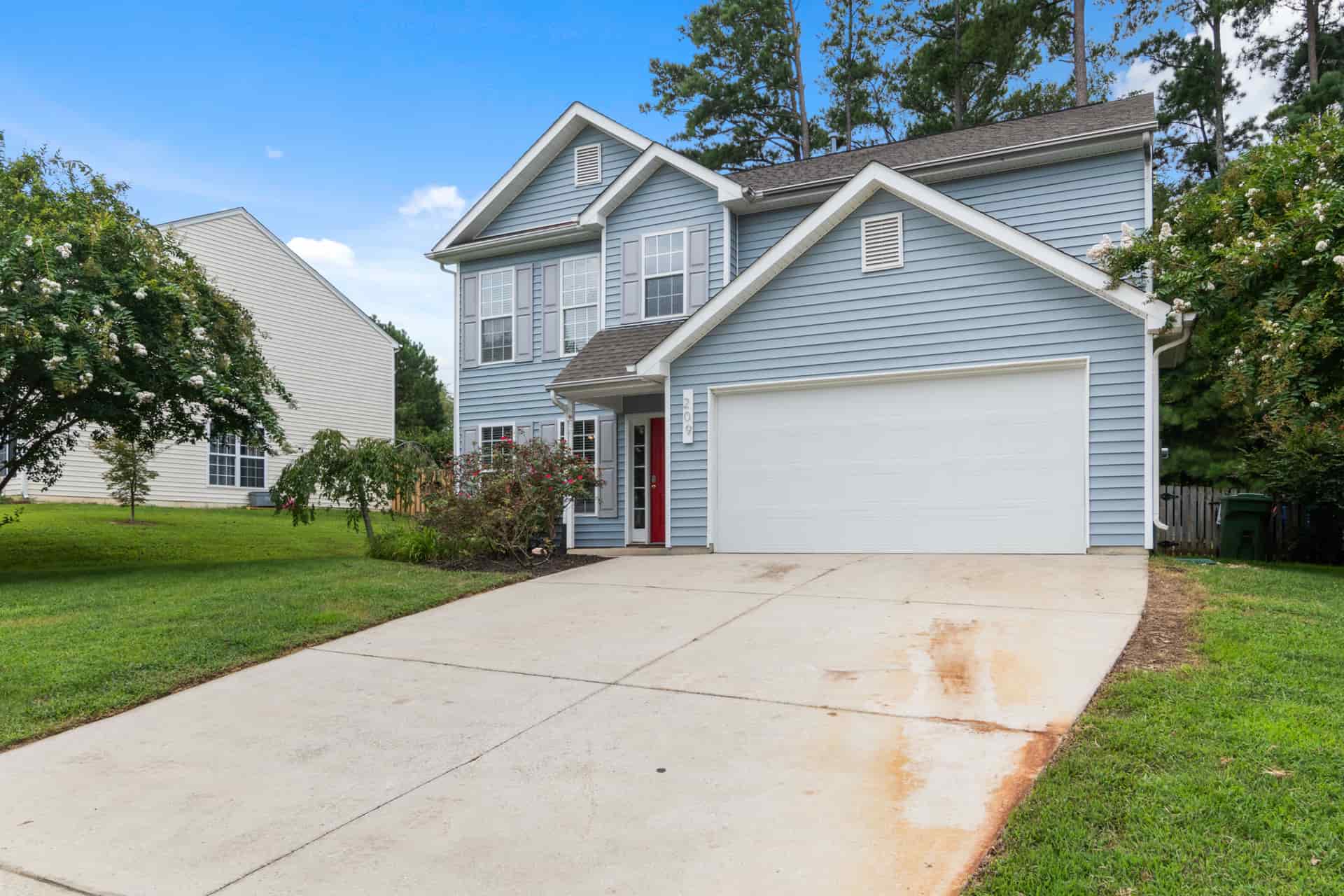
For a balcony, buy the ISOP 32 ft ladder with mounting anchors: it is the one unit here designed around a permanent wall fixing rather than a window-sill hook, which is what a balcony actually offers. If the balcony has a solid railing or a parapet the hooks can span, the VEVOR 25 ft retractable is the better climb because its 11.8 in steps are the widest tread on this site. The thing to understand before buying anything is that escape-ladder hooks are specified for window sills — the Kidde unit fits sills up to 11 in deep and 16 in wide, the First Alert EL52-2 for sills 6 to 10 in wide — and a balcony railing is a different shape entirely. Measure yours before you order.
Siren & Safe is reader-funded. We earn a commission on some links on this page, at no cost to you. It does not change what we recommend or the order we rank it in. Full disclosure.
Why a balcony is a different problem
Every mainstream escape ladder is a window product. The hook geometry, the published fit dimensions and the way the rails bear against the wall are all designed around a sill with a wall below it. Manufacturers say so in their own specifications: Kidde quotes windows up to 11 in deep and 16 in wide, and First Alert specifies the EL52-2 for sills between 6 and 10 in wide. Those are sill numbers.
A balcony offers three attachment options instead, and you need to work out which one you actually have. A railing the hooks can span — a solid top rail of the right cross-section, ideally with the ladder bearing on the outside face. A parapet or a solid balustrade wall, which behaves most like a sill and is the best case. Or a structural element you can anchor into permanently, which is the one option a window rarely gives you and the reason the anchored ladder leads this page.
What a balcony usually does not have is a clean sill. Glass balustrades, cable rail, wide-capped timber and ornamental metal all defeat a hook designed for a window frame. And it has one hazard a window does not: the floor of the balcony itself may have a gap at the edge, a drainage channel or a projecting lip, all of which change where the rails bear and what they bear against.
Measure before you buy. The top rail's width and depth, the clear floor space to deploy in, the height from balcony floor to ground, and what the structure under your intended anchor point is actually made of. Four measurements, ten minutes, and they decide which of the four ladders above is right.
The four ladders, by what a balcony needs
Load figures are exactly as the manufacturer or seller publishes them. Where no test house is named, this table says so.
| Ladder | Length | Attachment | Published load claim | Tread |
|---|---|---|---|---|
| ISOP 32 ft with anchors | 32 ft (10 m) | Permanent mounting anchors | No standard and no test house named | Aluminum rungs with rung stabilizers |
| VEVOR 3-story retractable | 25 ft (7.5 m) | Extendable hooks over a frame | 1,000 lb total; 330 lb per section (seller-stated) | 11.8 in wide steps |
| Hausse 3-story retractable | 25 ft | Retractable hooks over frame or sill | Tested for up to 1,000 lbs (manufacturer-stated) | Slip-resistant rungs |
| Kidde 2-story | 13 ft | Window hooks — sills to 11 in deep, 16 in wide | 1,000 lb spread; 750 lb on a single rung | 1 ft wide anti-slip metal rungs |
The Kidde unit is the best documented and the worst fit for a balcony. Both facts belong in the same table.
Quick picks
Scored against fits a balcony, climbability, length reach, published evidence and storage. Tap a row for the full write-up. The price in each buy button is the live Amazon price at the last check, stamped with the date it was taken.
| # | Product | Best for | Score | Price |
|---|---|---|---|---|
| 1 | 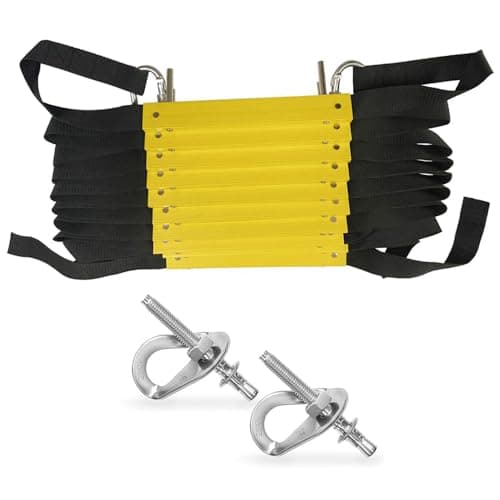 ISOP 32 ft Rope Fire Escape Ladder with Mounting Anchors The only unit here built around a structural fixing rather than a sill hook. That is exactly what a balcony gives you. | A balcony where you can fit a permanent anchor | 7.8/ 10 | $159.88 · View on Amazon #ad how we are funded · price as of October 19, 2026 |
| 2 | 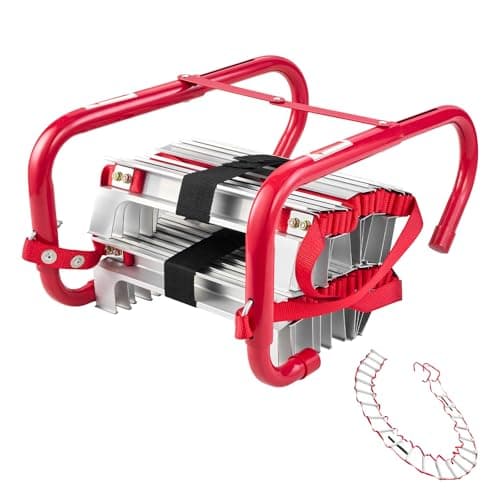 VEVOR 3-Story Retractable Fire Escape Ladder (25 ft) The widest tread on this site and extendable hooks. If your railing suits it, this is the one you can actually climb. | A balcony with a railing or parapet the hooks can span | 7.9/ 10 | $82.99 · View on Amazon #ad how we are funded · price as of October 19, 2026 |
| 3 | 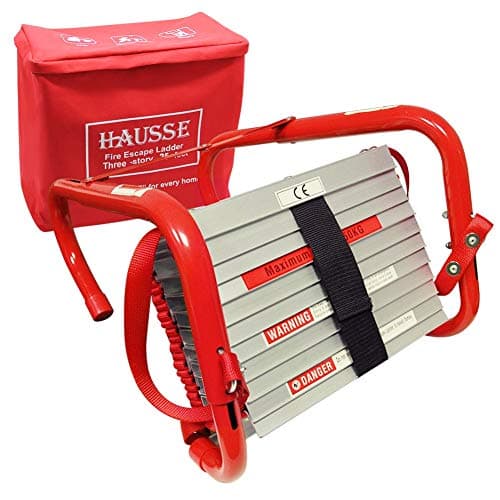 Hausse Retractable 3-Story Fire Escape Ladder (25 ft) 25 ft, tangle-free, tested to 1,000 lb per the manufacturer. The cheaper retractable, with a three-year replacement note. | A third-floor balcony on a budget | 7.2/ 10 | $89.99 · View on Amazon #ad how we are funded · price as of October 19, 2026 |
| 4 | 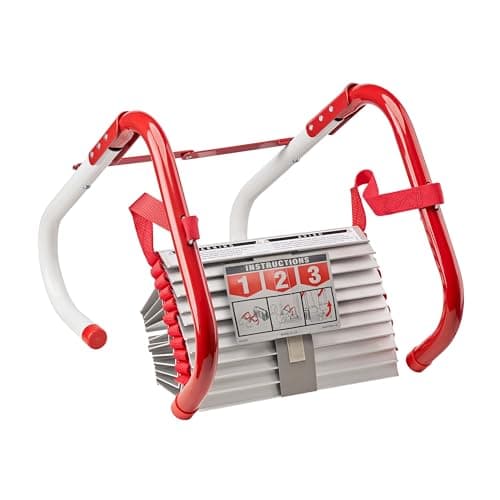 Kidde 2-Story Fire Escape Ladder (13 ft) An excellent 13 ft window ladder with hooks specified for window sills. Included here because it is the unit people wrongly buy for a balcony. | A first-floor balcony or a low terrace — and a warning | 6.4/ 10 | $53.99 · View on Amazon #ad how we are funded · price as of October 19, 2026 |
The picks
1. A balcony where you can fit a permanent anchor
ISOP 32 ft Rope Fire Escape Ladder with Mounting Anchors
The only unit here built around a structural fixing rather than a sill hook. That is exactly what a balcony gives you.
- Listed to
- ISOP names no standard and no test house for this ladder; everything below is a seller claim
- Sensing / agent
- Continuous webbing strap rails with aluminum rungs, anchored to a permanent wall fixing
- Power / service life
- Reusable per the seller; inspect before and after any use
Why the anchor is the point. A window escape ladder hangs from a hook shaped to sit over a sill: the geometry of the hook, the depth of the sill and the thickness of the wall are all part of the design. A balcony has no sill. What it has is a railing of unpredictable shape and a structural wall or floor edge you can fix to. A ladder designed for a permanent anchor matches the second of those, which is why it leads this page.
Fit it where the structure is. An anchor is only as good as what it is screwed into. Concrete, solid masonry or a structural steel balustrade post are fine; render over insulation, timber cladding, a composite decking board and anything bolted to a planter are not. If you are not confident which you have, this is a job worth paying somebody for once.
And be honest about the paperwork. There is no US consumer standard for an escape ladder, so no ladder on this page carries a certification in the sense a smoke alarm does. ISOP does not name a test house. That is a reason to be conservative about load and to practice the deployment, not a reason to buy nothing — a ladder you have rehearsed with beats a certification you do not have. Escape ladder weight limits explained sets out which brands publish what.
What it does well
- **Ships with heavy-duty mounting anchors for a permanent fixing** rather than relying on a sill hook — the right attachment method for a balcony
- 32 ft (10 m), marketed for a 3- to 4-story building, so it covers the heights balconies usually sit at
- **Rung stabilizers hold the ladder off the wall**, so there is somewhere to put your toes — the single biggest difference between a ladder you can climb and one that pins your feet
- Continuous webbing running top to bottom rather than separate rope sections
- Smooth-finished aluminum rungs with an anti-slip pattern and no sharp edges on the hands
The downside
- **ISOP names no standard and no test house for this ladder** — everything in the listing is a seller claim
- A permanent anchor means drilling into the structure, which a renter cannot do and a condo board may prohibit
- The anchor has to go into something structural, not into render, cladding or a planter box
- 32 ft of ladder is a lot to store on a balcony, and it must not live outside in the weather
Do not buy this if: a rented apartment where you cannot drill. Use a retractable hook unit over a railing you have measured, or raise the question with the building manager — many will fit an anchor on request.
- 32 ft (10 m), marketed for a 3- to 4-story house
- Ships with heavy-duty mounting anchors for a permanent fixing rather than a sill hook
- **Rung stabilizers** hold the ladder off the wall, so there is somewhere to put your toes
- Continuous webbing running top to bottom rather than separate rope sections
- Smooth-finished aluminum rungs with a textured anti-slip pattern, and no sharp edges on the hands
#ad how we are funded · price as of October 19, 2026
2. A balcony with a railing or parapet the hooks can span
VEVOR 3-Story Retractable Fire Escape Ladder (25 ft)
The widest tread on this site and extendable hooks. If your railing suits it, this is the one you can actually climb.
- Listed to
- VEVOR states a 1,000 lb maximum load, with each ladder section supporting up to 330 lb
- Sensing / agent
- Aluminum alloy rungs on polyester strapping, with high-strength fastening screws and window hooks
- Power / service life
- Reusable per VEVOR; inspect annually and after any deployment
If the hooks fit your railing, this is the better ladder to be on. Rung width is the specification that separates a ladder people can descend from a ladder people freeze on: a flat 11.8 in step takes a whole foot, where a bare round rung takes the ball of one.
Test fit it in daylight, with the hooks fully extended, and leave it hooked for a minute while you look at how the rails sit against the balcony edge. If the rails run over a sharp edge, pad it — the webbing is the part that fails, and a concrete corner under load is the thing that cuts it.
Permanent vs portable escape ladders is the wider decision this sits inside.
What it does well
- **11.8 in wide steps rather than bare rungs** — the widest tread of any ladder on this site, and the thing that makes a long descent survivable
- 25 ft (7.5 m), the right length for a third-floor balcony
- Aluminum alloy rather than steel: lighter to lift over a railing, and it folds flat for storage
- VEVOR states a 1,000 lb maximum load with each section supporting up to 330 lb
- Retractable hooks with high-strength fastening screws
The downside
- **The hooks must be fully extended before use**, which is one more thing to get right in the dark
- Hook geometry is designed for window frames; a round or wide-top railing may not seat it properly
- **1,000 lb overall, 330 lb per section — the per-section figure is the one to plan around**
- Seller-stated figures with no named test house
- 25 ft is an intimidating climb, and many people genuinely cannot do it
Do not buy this if: a glass or cable balustrade, or a railing whose top rail is wider than the hook opening. Measure the top rail in both directions before you order, and if it will not seat, go with an anchored unit.
- 25 ft (7.5 m) for third-floor windows
- 11.8 in wide steps rather than bare rungs — the widest tread of any ladder on this page
- 1,000 lb overall, 330 lb per section — the per-section figure is the one to plan around
- Aluminum alloy rather than steel: lighter to lift to the sill, and it folds flat for storage
- Practice the hooking motion; the length makes it awkward at a narrow window
#ad how we are funded · price as of October 19, 2026
3. A third-floor balcony on a budget
Hausse Retractable 3-Story Fire Escape Ladder (25 ft)
25 ft, tangle-free, tested to 1,000 lb per the manufacturer. The cheaper retractable, with a three-year replacement note.
- Listed to
- Hausse states the ladder is tested for up to 1,000 lbs
- Sensing / agent
- Slip-resistant rungs on strap rails, with retractable hooks that secure over the window frame or sill
- Power / service life
- Hausse recommends replacing it every three years to ensure usability; inspect annually
This is the budget option at third-floor height, and the three-year replacement recommendation is the thing to weigh. Over a decade that is three ladders, which closes much of the price gap with the units above.
Whichever you buy, the deployment is the part to rehearse. Lift, extend the hooks, seat them over the railing or frame, check the rails are not running over anything sharp, and only then commit weight. How to use a fire escape ladder walks through it properly.
What it does well
- 25 ft for a genuine third-floor height
- Hausse states the ladder is tested for up to 1,000 lbs
- No assembly and no tools, with a red canvas storage bag in the box so it can live by the balcony door
- Slip-resistant rungs on strap rails with retractable hooks that secure over a frame or sill
The downside
- **Hausse recommends replacing it every three years** to ensure usability, which is a real running cost most buyers do not notice
- Retractable hooks must be fully extended before use
- Heavier and bulkier than a 13 ft unit — deploying it takes both hands and real space, which a small balcony may not have
- Strap rails twist against the wall, which is the part that frightens people mid-climb
- A 25 ft climb is beyond what many people can physically do
Do not buy this if: a narrow balcony with no clear floor space. You need room to lift, swing and hook a 25 ft ladder, and a balcony crowded with furniture does not have it.
- 25 ft for a genuine third-floor window
- Retractable hooks — they must be fully extended before use, which is one more thing to get right in the dark
- No assembly or tools; a red canvas storage bag is in the box so it lives under a bed or by the window
- Heavier and bulkier than the 13 ft — deploying it takes both hands and real space
- A 25 ft climb is beyond what many people can physically do; plan accordingly
#ad how we are funded · price as of October 19, 2026
4. A first-floor balcony or a low terrace — and a warning
Kidde 2-Story Fire Escape Ladder (13 ft)
An excellent 13 ft window ladder with hooks specified for window sills. Included here because it is the unit people wrongly buy for a balcony.
- Listed to
- Kidde states the ladder is tested to 1,000 pounds, published as 750 lb on a single rung and 1,000 lb spread over more than one
- Sensing / agent
- Zinc-plated 1 ft wide anti-slip metal rungs on red nylon strap rails, window hooks
- Power / service life
- Single use — Kidde says discard when unfolded or used. 5-year limited warranty; inspect annually
This is the best-documented portable escape ladder we have found, and it is the wrong tool for most balconies. Both things are true, and saying so is more useful than leaving it off the page.
The reason it is wrong is the hook. Kidde specifies a window up to 11 in deep and 16 in wide, including casement windows — a dimensional fit for a sill and a wall. A balcony railing has a different cross-section, often a round or box top rail, sometimes glass, sometimes cable. If the hooks do not positively seat, the ladder can shift under load, and that is the one failure nobody survives discovering mid-climb.
Where it is right: a ground-floor or low terrace exit, or a bedroom window that opens onto the same floor as the balcony. Best 2-story fire escape ladders is the page for the window case.
What it does well
- **Kidde publishes how it tested: 1,000 lb overall, 750 lb on a single rung** — the clearest load statement of any ladder on this site
- Tangle-free design, which is the specification that matters when you deploy it once, in the dark, for real
- 13 ft reaches the ground from a standard second-floor window
- No assembly and no tools: hook it and release the rungs
- Compact enough to live under a bed
The downside
- **The hooks fit windows up to 11 in deep and 16 in wide** — that is a window-sill specification, not a railing one
- 13 ft is too short for most balconies above the first floor
- Single use — Kidde says discard it once unfolded or used
- Strap rails twist against the wall, with no stabilizers
- 5-year limited warranty, so it is not a buy-and-forget item
Do not buy this if: a balcony above the first floor, and not for any railing the hooks do not positively seat on. We have included it to be explicit: this is the ladder most people buy by mistake for this job.
- 13 ft, which is the length that reaches ground from a standard second-floor window
- Fits most common windows up to 11 in deep and 16 in wide, casement windows included — measure before you order
- No assembly and no tools: hook it over the sill and release the rungs
- Tangle-free design, which is the specification that matters when you deploy it once, in the dark, for real
- Strap rails twist against the wall, which is the part that frightens people mid-climb
#ad how we are funded · price as of October 19, 2026
Before you buy, measure these four things
In this order. Any one of them can rule out a ladder.
- The top rail, in two dimensions. Width across the top and depth front to back. Compare against the hook opening in the product specification, not against a photograph.
- Balcony floor to ground. Not floor-to-floor. A ladder that stops 4 ft short is a ladder you drop off the end of, and 25 ft of ladder on a 15 ft drop is a tangle risk.
- Clear floor space to deploy in. You need room to lift the bundle, extend the hooks and swing it over the edge. A balcony with a table, two chairs and a barbecue on it does not have that room, and clearing it in the dark is not a plan.
- What the anchor would go into. Concrete, solid masonry or structural steel: fine. Render, cladding, composite decking, a planter: not. If you cannot tell, ask somebody who can.
The part the ladder does not solve
A balcony is a place of relative safety, and that is worth more than most people realize. In a multi-story building, going out onto a balcony, closing the door behind you and making yourself visible to the fire service is frequently the correct action — and it is almost always correct above the third floor, where a portable ladder stops being a realistic descent for most people.
So buy the ladder for the height you can actually climb, and plan the balcony as a refuge for the heights you cannot. If you are in a tall building, read your building's own fire strategy: many are designed for occupants to stay in place behind a fire door while the fire service deals with the incident, and leaving a protected flat for a smoke-filled corridor is the worse choice.
Then practice. Not the climb — a rehearsal descent on a 25 ft ladder is itself dangerous — but everything up to it: finding the bundle in the dark, extending the hooks, seating them, and knowing which hand goes where. The US Fire Administration's standing advice on escape planning is to have two ways out of every room and to practice the plan twice a year, and a balcony ladder is only a second way out if somebody in the household has actually handled it. Fire escape plan and escape ladders for kids and older adults are both worth ten minutes.
Questions people actually ask
Can you use a fire escape ladder on a balcony?
What is the best escape ladder for an apartment balcony?
How long should a balcony escape ladder be?
Are balcony escape ladders safe?
Should I use the balcony or the ladder in a fire?
How these picks were chosen. On published specifications, safety listings and manufacturer documentation — plus the findings of organizations that do run tests. We have no laboratory and we do not burn anything. Read the full methodology.
Sources
- NFPA — Making and practicing a home fire escape plan
- US Fire Administration — Home fire escape planning
- US Fire Administration — Home fire prevention
- International Code Council — IRC Chapter 3 — building planning (R310, R314, R315)
Read next
Escape Ladders
The Best Escape Ladders for Apartments and Balconies
No drilling, an uncertain sill and a floor number that may rule a ladder out entirely.
Escape Ladders
The Best 3-Story Fire Escape Ladders
Twenty-five feet, the two options, and who genuinely cannot use one.
Escape Ladders
Permanent vs Portable Escape Ladders
The permanent unit deletes the hardest step. Whether that is worth the cost and the install.
Escape Ladders
Escape Ladder Weight Limits Explained
Five ladders, four different ways of stating capacity, and one brand publishing two contradictory numbers. How to read them.
Escape Ladders
How to Use a Fire Escape Ladder
The deployment sequence, the three mistakes at the sill, and how to practice safely.