Fire Extinguishers
Fire Extinguisher Brands Compared
Brand barely matters on the agent inside. It matters enormously on the valve, the rating offered at each size, and whether anyone will recharge the thing in six years.
By Ryder M.Last reviewed
Amerex is the brand to buy if you want one extinguisher to last: an all-metal valve and body, a 2-A:10-B:C rating at 5 lb, and a unit a service company will actually recharge. First Alert covers the widest range of sizes, from a 2.5 lb galley unit to a 4-A:60-B:C heavy-duty cylinder, which makes it the easiest brand to fit a whole house from. Kidde sits between the two and owns the useful middle — the 4 lb Pro 210 is the lightest unit here that still reaches a 2-A rating. All three fill their cylinders with the same monoammonium phosphate dry chemical.
Siren & Safe is reader-funded. We earn a commission on some links on this page, at no cost to you. It does not change what we recommend or the order we rank it in. Full disclosure.
What is the same across all three
Start with the thing brand comparisons usually bury: the agent is identical. Every household ABC extinguisher from Amerex, First Alert and Kidde is filled with monoammonium phosphate dry chemical. It is the same chemistry, it works the same way, and it leaves the same corrosive residue.
The UL ratings are also the same standard. A 2-A:10-B:C from one brand is tested to the same protocol as a 2-A:10-B:C from another, through UL 711. A rating is a rating; it is not a brand claim and it is the one number on the label that cannot be marketing.
The classes come from NFPA 10: A for ordinary combustibles, B for flammable liquids, C for energized electrical equipment. Fire extinguisher classes sets out all of them, including the K class a home kitchen does not need.
So brand choice is not a choice about whether the extinguisher works. It is a choice about hardware, range and what happens after you pull the pin.
The three brands on what actually differs
Every entry below is from the published specification of the unit named in each column. Ratings are the UL ratings printed on the label.
| Amerex B500 | First Alert PRO10 | Kidde Pro 210 | |
|---|---|---|---|
| Weight of agent | 5 lb | Heavy duty — larger than the household norm | 4 lb |
| UL rating | 2-A:10-B:C | 4-A:60-B:C | 2-A:10-B:C |
| Agent | Monoammonium phosphate | Monoammonium phosphate | Monoammonium phosphate |
| Valve | All-metal valve and body | Metal valve | Metal valve |
| Rechargeable | Yes, and genuinely serviced | Yes | Yes |
| Bracket included | Needs a proper bracket | Floor or bracket mount | Yes, in the box |
| Best room | Hallway, utility, long-term primary | Garage, workshop, home office | Hallway, landing, general household |
The valve row is the one that decides what the unit is worth in ten years. The rating row is the one that decides what it can do today.
Quick picks
Scored against valve and build, rating per pound, recharge path, range of sizes and ease of handling. Tap a row for the full write-up. The price in each buy button is the live Amazon price at the last check, stamped with the date it was taken.
| # | Product | Best for | Score | Price |
|---|---|---|---|---|
| 1 | 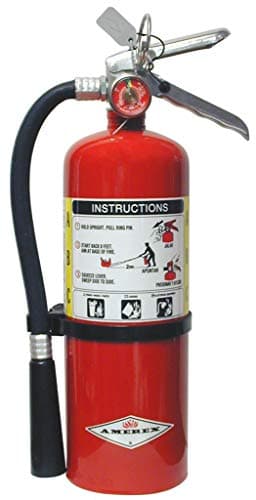 Amerex B500 5 lb ABC Dry Chemical Extinguisher All-metal valve and body, UL rated 2-A:10-B:C at 5 lb, and genuinely serviceable rather than nominally rechargeable. | Amerex — the one to buy if it has to last | 8.9/ 10 | $75.01 · View on Amazon #ad how we are funded · price as of October 20, 2026 |
| 2 | 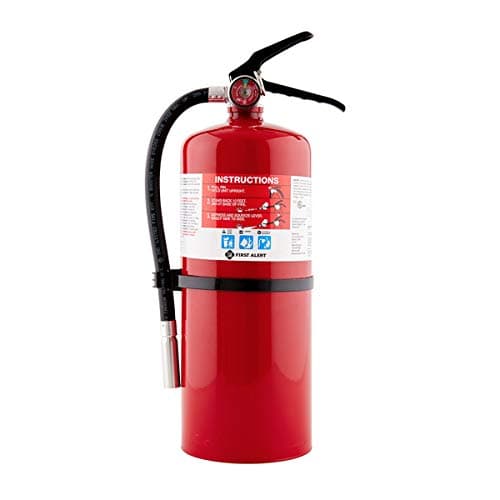 First Alert PRO10 Rechargeable Heavy Duty Extinguisher UL rated 4-A:60-B:C, which is a larger rating than any other household unit in this registry. | First Alert — the widest range, and the biggest rating here | 8.4/ 10 | $72.98 · View on Amazon #ad how we are funded · price as of October 20, 2026 |
| 3 | 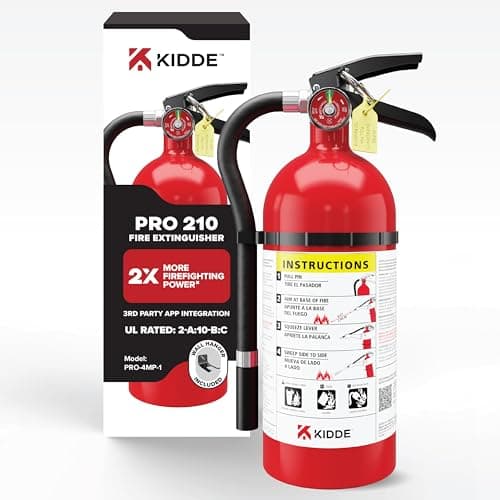 Kidde Pro 210 4 lb Multi-Purpose Extinguisher 4 lb at 2-A:10-B:C with the bracket in the box. The lightest unit here that still reaches a 2-A rating. | Kidde — the useful middle | 8.6/ 10 | $54.97 · View on Amazon #ad how we are funded · price as of October 20, 2026 |
One unit per brand, and what it says about the brand
1. Amerex — the one to buy if it has to last
Amerex B500 5 lb ABC Dry Chemical Extinguisher
All-metal valve and body, UL rated 2-A:10-B:C at 5 lb, and genuinely serviceable rather than nominally rechargeable.
- Listed to
- UL rated 2-A:10-B:C
- Sensing / agent
- Monoammonium phosphate dry chemical
- Power / service life
- Rechargeable; all-metal valve and body
The valve is the whole argument, and it is worth being precise about why. A plastic-valve extinguisher is sold as rechargeable and is, technically. In practice service companies will not warrant a plastic valve after a discharge, so the unit is replaced instead — which means the rechargeable claim was a label rather than a plan.
An all-metal valve is a unit that gets refilled, re-tested and re-tagged for a fraction of the replacement cost, repeatedly, across decades. If you keep an extinguisher for twenty years, that is the cheaper purchase by a wide margin as well as the better one.
The 5 lb size is the second reason this is a serious household unit rather than a token one. What size fire extinguisher do I need works through the arithmetic, but the short version is that discharge time on a 2.5 lb canister is measured in seconds and most people's first attempt misses.
Weight is the honest downside. If you cannot lift and aim 5 lb one-handed from a standing start, this is the wrong unit however good the valve is — and Amerex B500 vs First Alert HOME1 is the head-to-head on exactly that trade.
What it does well
- All-metal valve rather than plastic, which is the difference between a serviceable unit and a disposable one
- Rechargeable in the real sense — a service company will take it, and it is worth the fee
- 2-A:10-B:C covers ordinary combustibles, flammable liquids and energized electrical equipment
- The brand most often found in commercial and institutional buildings, which is a usable signal about build
The downside
- 5 lb is heavier than a supermarket unit and needs a proper bracket into structure
- Narrower household range than First Alert — fewer small sizes
- Costs more up front than the equivalent-rated disposable
Do not buy this if: you want a light unit for a galley or a small kitchen. Amerex's household offering starts bigger than that, and the small First Alert is the better fit.
- All-metal valve rather than plastic, which is the difference between a serviceable unit and a disposable one
- Rechargeable, so a partial discharge during a small fire does not write off the extinguisher
- 2-A:10-B:C covers ordinary combustibles, flammable liquids and energized electrical equipment
- 5 lb is heavier than the supermarket unit and needs a proper bracket
#ad how we are funded · price as of October 20, 2026
2. First Alert — the widest range, and the biggest rating here
First Alert PRO10 Rechargeable Heavy Duty Extinguisher
UL rated 4-A:60-B:C, which is a larger rating than any other household unit in this registry.
- Listed to
- UL rated 4-A:60-B:C
- Sensing / agent
- Monoammonium phosphate dry chemical
- Power / service life
- Rechargeable by a certified professional; all-metal construction with a commercial-grade metal valve and head; 12-year limited warranty
The range is the real brand argument for First Alert. You can fit a 2.5 lb unit in a galley, a mid-size unit in a hallway and this 4-A:60-B:C cylinder in a garage, all from one manufacturer, all with gauges that read the same way and brackets that work the same way. For a household that is worth something — one set of habits, one check routine.
The 40-B rating is the specific capability worth paying for in one room. B is the flammable-liquid class, and a garage or workshop is where the gasoline, the solvent, the thinner and the spare fuel can live. A 10-B unit on a spreading liquid fire in that room is underpowered.
Where First Alert is weaker than Amerex is the top of the build hierarchy — the valve hardware on the household range is good rather than institutional. For most people that difference never surfaces. For someone who intends to own one extinguisher for twenty-five years, it does.
Best garage fire extinguishers is the room-specific version of this argument, and it lands on a larger unit for exactly the reasons above.
What it does well
- 4-A:60-B:C is a substantially larger rating than the typical home unit — six times the flammable-liquid capability of a 10-B
- Metal valve and rechargeable
- The brand covers the widest range of household sizes, from 2.5 lb up, so one brand can fit a whole house
- Suits a garage, workshop or home office where liquids and equipment are the realistic risk
The downside
- Bigger and heavier, which is a real problem for anyone who cannot handle the weight one-handed
- The large rating is wasted in a kitchen, where reach and speed matter more than capacity
- Range breadth means it is easy to buy the wrong First Alert unit for the room
Do not buy this if: a hallway or a kitchen. This is a garage and workshop extinguisher, and putting it where a 2.5 lb unit belongs makes the house less safe, not more.
- 4-A:60-B:C is a far larger rating than most home units — six times the flammable-liquid rating of the 10-B:C supermarket unit
- Rechargeable rather than disposable, with an all-metal valve and head
- Suits a garage, workshop or home office where liquids and equipment are the realistic risk
- Mounting bracket and a color-coded corrosion-resistant pressure gauge in the box
- Bigger and heavier, which is a real problem for anyone who cannot handle the weight one-handed
#ad how we are funded · price as of October 20, 2026
3. Kidde — the useful middle
Kidde Pro 210 4 lb Multi-Purpose Extinguisher
4 lb at 2-A:10-B:C with the bracket in the box. The lightest unit here that still reaches a 2-A rating.
- Listed to
- UL rated 2-A:10-B:C
- Sensing / agent
- Monoammonium phosphate dry chemical
- Power / service life
- Rechargeable; mounting bracket included
This is the unit that wins most household decisions and almost never wins an argument, because nothing about it is remarkable. That is the point.
2-A is the ordinary-combustibles rating that actually does something to a burning chair or a pile of boxes — 1-A is half of it. Four pounds is a weight most adults can lift, aim and hold steady. The bracket is in the box, which is the single most-skipped component in this entire category.
Where it is beaten is at both ends. In a galley or a small kitchen, 2.5 lb is easier to handle and the difference in rating matters less than the difference in reach. In a garage, 5 lb of agent buys run time this does not have. In every room between those two cases, this is the answer.
Kidde and First Alert both discontinue and rename household models fairly often, which is worth knowing when you come to replace one in eight years. Amerex changes its line least. Fire extinguisher expiration and service covers what to do when the model you own no longer exists.
What it does well
- 4 lb — the lightest unit that still reaches a 2-A rating, which matters for one-handed use
- Rechargeable, with the mounting bracket in the box rather than sold separately
- Same 2-A:10-B:C class coverage as heavier units
- The size most households should actually be buying, and the one most often skipped
The downside
- Less agent than a 5 lb unit, so less margin if the first attempt misses
- Build sits below Amerex's institutional hardware
- Kidde's household range has fewer high-rating options than First Alert's
Do not buy this if: you need maximum capacity in a garage. The rating is the same as a 5 lb unit but the run time is not, and run time is what a liquid fire consumes.
- 4 lb — the lightest unit that still reaches a 2-A rating, which matters for one-handed use
- Rechargeable, with the bracket in the box
- Same 2-A:10-B:C class coverage as heavier units, with less run time
- Less agent means less margin for error if the first attempt misses
#ad how we are funded · price as of October 20, 2026
How to choose between them without overthinking it
Five questions, in order. Most households are finished after the second.
- How heavy a unit can the lightest adult in the house lift and aim one-handed? This outranks every other consideration on this page. An extinguisher nobody can hold steady is a prop.
- Which room is it for? Garage and workshop want the biggest B rating you can handle. Kitchen and galley want reach and speed. Hallways want 2-A and a bracket.
- Do you intend to still own it in fifteen years? If yes, buy the all-metal valve. If you expect to replace it with the next house, the difference will never show up.
- Is there a service company near you who will recharge it? Worth two minutes of searching before you buy, because a rechargeable unit with nowhere to be recharged is a disposable unit at a premium price.
- How many are you buying? One brand across the house means one bracket type, one gauge to read and one check routine. That consistency is worth more than squeezing the last point of rating out of each room.
What brand does not fix
Three failures are brand-independent, and all three are more common than a bad extinguisher.
Mounting. An extinguisher in a cupboard behind the vacuum cleaner is not available. A bracket, at a height anyone can reach, between the likely fire and the exit, is the difference. Where to mount a fire extinguisher is more important than this page.
Size for the person. The commonest real-world failure is an extinguisher too heavy for whoever grabs it. The right unit for a household is the one the smallest adult can actually aim, which is usually smaller than the one that looks reassuring on the shelf.
Never practicing. PASS — pull, aim, squeeze, sweep — takes ten seconds to learn and nobody does it. How to use a fire extinguisher is ten minutes that outperforms any brand upgrade.
And one more: check the gauge. A unit that lost pressure quietly in 2019 reads as a full extinguisher to everyone who walks past it and does nothing at all when the pin comes out.
Questions people actually ask
What is the best fire extinguisher brand for a home?
Does the brand of fire extinguisher matter?
Is an Amerex extinguisher worth the extra money?
Can I mix extinguisher brands in one house?
How these picks were chosen. On published specifications, safety listings and manufacturer documentation — plus the findings of organizations that do run tests. We have no laboratory and we do not burn anything. Read the full methodology.
Sources
- NFPA — NFPA 10, Standard for Portable Fire Extinguishers
- UL Solutions — Fire extinguisher testing and certification (UL 711)
- CPSC — Recalls and product safety news
- US Fire Administration — Home fire prevention
Read next
Fire Extinguishers
The Best Fire Extinguishers for a Home
Four rated units, what the numbers mean, and why the valve material matters.
Fire Extinguishers
Amerex B500 vs First Alert HOME1
Twice the agent and rating, against a unit you can actually control one-handed.
Fire Extinguishers
What Size Fire Extinguisher Do I Need?
Weight against rating and run time, and why the likely operator decides it.
Fire Extinguishers
The full class chart, what the numbers measure, and which agent suits which fire.
Fire Extinguishers
The Best Fire Extinguishers for a Garage
A garage is a B-class room. Buy the flammable-liquid rating, not the home-kitchen unit.