Carbon Monoxide Detectors
The Best Battery Carbon Monoxide Detectors
A plug-in alarm has to live at outlet height. A battery alarm lives wherever the room needs it - which, for carbon monoxide, is most of the reason to buy one.
By Ryder M.Last reviewed
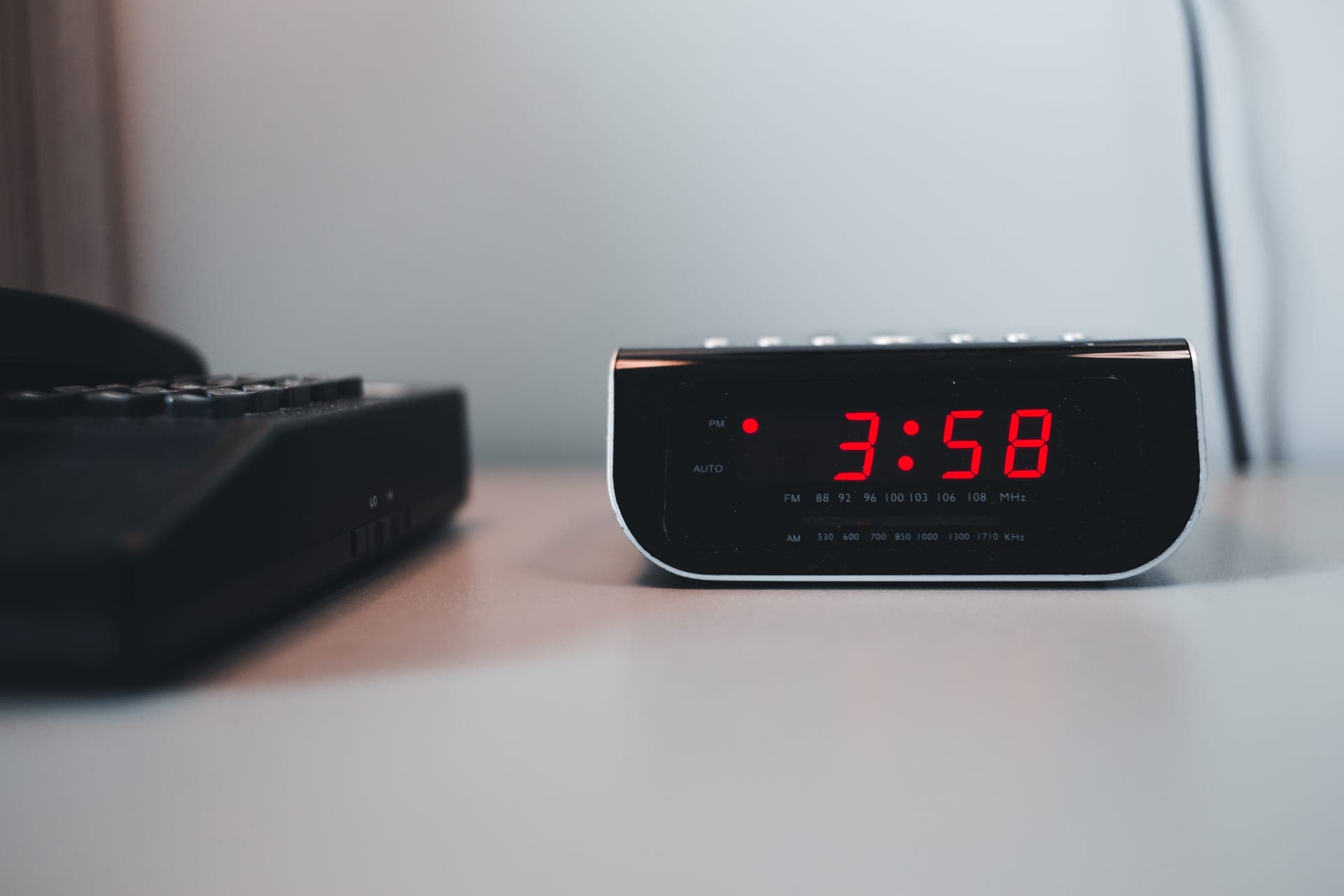
Buy the First Alert CO710 if you want one battery CO alarm and no maintenance: a sealed ten-year cell, a digital concentration display and nothing to open for a decade. The budget pick is the Kidde KN-COPP-B-LPM, the cheapest certified CO alarm in this registry, and the only one here with peak-level memory - the reading that tells a doctor or a gas technician what the house did while you were out. If anyone in the household is a young child, pregnant, elderly or has a heart or lung condition, the Kidde COBDL is the one to spend more on: it alerts from 30 ppm, far below the point at which a standard UL 2034 alarm is permitted to make a sound.
Siren & Safe is reader-funded. We earn a commission on some links on this page, at no cost to you. It does not change what we recommend or the order we rank it in. Full disclosure.
Why battery, and when plug-in is better
The single argument for a battery CO alarm is placement freedom, and it is a strong one. Carbon monoxide disperses through a room with the air rather than pooling at the floor or the ceiling, so the useful position for an alarm is near the people - beside a bed, outside a bedroom door, at the top of a stairwell. A plug-in alarm cannot choose any of those. It goes where the socket is.
The second argument is where there is no socket at all: a cabin, a boat, a camper, an unfinished basement, a bedroom in an older house with one outlet behind a bed. A battery alarm covers all of them, and it travels, which a plug-in does not.
Plug-in alarms win on exactly one thing, and it is worth stating honestly: they never need a battery decision. A plug-in unit with battery backup keeps measuring through a power cut - which is precisely when a generator comes out and the CO risk spikes - and it costs nothing to run for a decade. If the position you need happens to be near an outlet at a readable height, that is the better buy. Plug-in versus battery CO detectors works through the whole decision.
What does not vary is how many you need. The residential code pattern is an alarm outside each separate sleeping area and one on every story of the dwelling, including a basement. How many CO detectors do I need counts it out for a real layout.
How we scored these
Five criteria, chosen for a buyer whose reason for wanting battery power is that the alarm has to go somewhere specific. Detection is not a criterion: all three units are certified to UL 2034 and that settles it.
- Placement freedom. Whether the alarm can go at the height the room needs, and whether it can travel.
- Ten-year upkeep. What the household has to remember. A sealed cell scores highest because the answer is nothing.
- Readability. Whether there is a display, and whether you can read it in a dark hallway at 3 a.m.
- What you learn from it. Current reading only, or a stored peak, or an early-band alert. This is the criterion that separates a compliance purchase from a diagnostic one.
- Install simplicity. Two screws versus anything more. Every unit here scores well; it is a tie-breaker, not a differentiator.
Quick picks
Scored against placement freedom, ten-year upkeep, readability, what you learn from it and install simplicity. Tap a row for the full write-up. The price in each buy button is the live Amazon price at the last check, stamped with the date it was taken.
| # | Product | Best for | Score | Price |
|---|---|---|---|---|
| 1 | 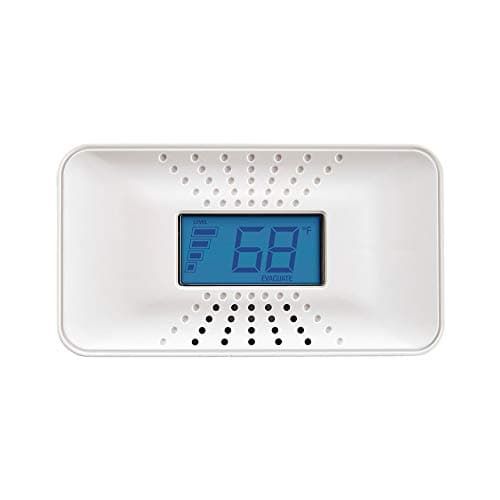 First Alert CO710 Sealed-Battery CO Alarm A sealed ten-year CO alarm with a digital display and no battery door. Buy it, mount it at the height the room needs, and forget it until it tells you to replace it. | Most households - one alarm, one decision, nothing to maintain | 9.0/ 10 | $44.49 · View on Amazon #ad how we are funded · price as of November 11, 2026 |
| 2 | 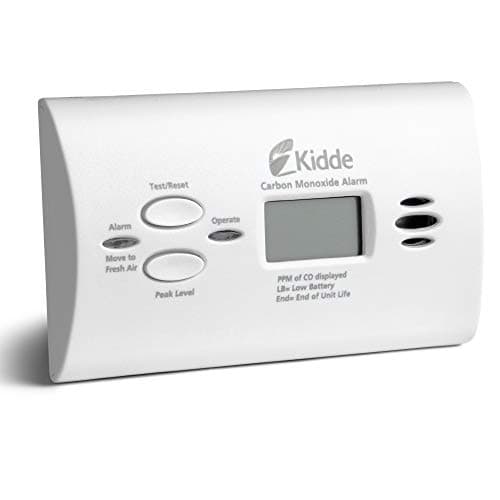 Kidde KN-COPP-B-LPM Battery CO Alarm with Digital Display The cheapest certified CO alarm on this site, with a digital display and peak-level memory. Replaceable cells are the trade, and for a second or third alarm it is the right trade. | The budget pick, and the one to travel with | 8.4/ 10 | $27.97 · View on Amazon #ad how we are funded · price as of November 11, 2026 |
| 3 | 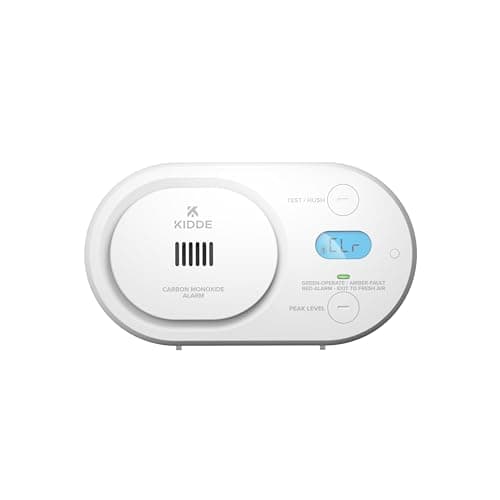 Kidde COBDL Low-Level Carbon Monoxide Alarm A battery low-level alarm that alerts from 30 ppm, below where a standard alarm is allowed to sound. Worth the premium when someone in the house is more exposed than average. | A vulnerable household - the alarm that speaks up below the legal threshold | 8.8/ 10 | $40.47 · View on Amazon #ad how we are funded · price as of November 11, 2026 |
The picks
1. Most households - one alarm, one decision, nothing to maintain
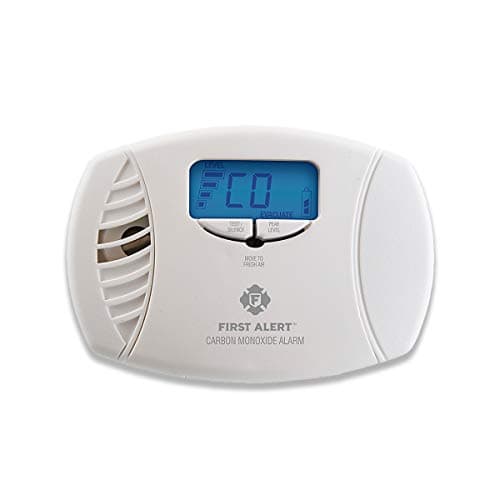
First Alert CO710 Sealed-Battery CO Alarm
A sealed ten-year CO alarm with a digital display and no battery door. Buy it, mount it at the height the room needs, and forget it until it tells you to replace it.
- Listed to
- UL 2034
- Sensing / agent
- Electrochemical CO sensor
- Power / service life
- 10-year sealed battery
Why the sealed cell matters more here than on a smoke alarm. A CO alarm is usually mounted lower than a smoke alarm, which makes it easier to reach - and easier to disable. Replaceable-battery CO alarms are the ones found silent in post-incident investigations, because the chirp is annoying and the hazard is invisible, so the trade feels harmless at the time. A unit with no battery door removes the option entirely.
Where to put it. Carbon monoxide has almost the same density as air and travels with it, so there is no "CO sinks" rule to obey. Put one outside each separate sleeping area and one on every story, which is what the residential code pattern asks for, and then put one inside any bedroom where someone sleeps with the door shut. Where to install CO detectors covers the clearances.
Date it on day one. The stamped date on the back is the manufacture date, not the install date. Write the month you mounted it next to it in permanent marker, because a CO sensor has a service life whether or not it has ever alarmed - CO detector lifespan and replacement is the page for that.
What it does well
- **Sealed 10-year battery.** There is no battery door, which means there is no 3 a.m. chirp that gets silenced by pulling a cell nobody puts back - the single commonest way a CO alarm stops working
- **Certified to UL 2034**, the US residential CO alarm standard, so its alarm thresholds and sounder are the tested ones rather than a marketing claim
- **Digital display of the current concentration**, so a reading of 25 ppm reads as 25 ppm instead of as silence
- **No outlet required**, which is the whole argument for battery: CO mixes through a room, so the alarm can go at breathing height beside a bed rather than wherever the socket happens to be
- **End-of-life signal** when the sensor is spent, rather than quietly degrading into a decoration
- Two screws and an anchor, no electrician, no app, no account
The downside
- **No peak-level memory.** It shows you what the air is doing now, not the 90 ppm spike that happened while the house was empty - and that spike is the diagnostic a technician wants
- **Sealed means disposable.** At ten years the whole unit is scrap, and the lithium cell belongs at a recycling point rather than in a kitchen bin
- **Standard UL 2034 thresholds**, so it stays silent through the low-level exposure band that matters to vulnerable households
- **First Alert's own product page now marks the CO710 as discontinued**, even though the listing still has a buyable offer. Expect it to be replaced by a successor model rather than restocked indefinitely
- The display is unlit, so it is a daytime instrument - you will not read it from a dark bedroom
Do not buy this if: a household with a young child, a pregnant resident, an older adult or anyone with a heart or lung condition, because its alarm thresholds are the standard ones. That is the case for the COBDL below. It is also the wrong choice if you specifically want a peak reading - see [best CO detectors with a digital display](/carbon-monoxide-detectors/best-co-detectors-with-digital-display).
- Sealed 10-year battery — nothing to change, and no low-battery chirp until it is genuinely done
- Digital display showing the measured concentration
- Placement is free: no outlet required, so it can sit at the height the room actually needs
- End of life means replacing the whole unit, by design
#ad how we are funded · price as of November 11, 2026
2. The budget pick, and the one to travel with
Kidde KN-COPP-B-LPM Battery CO Alarm with Digital Display
The cheapest certified CO alarm on this site, with a digital display and peak-level memory. Replaceable cells are the trade, and for a second or third alarm it is the right trade.
- Listed to
- UL 2034
- Sensing / agent
- Electrochemical CO sensor
- Power / service life
- Battery powered; 10-year unit life
Peak memory is the underrated feature in this category. Carbon monoxide incidents are usually intermittent - a blocked flue that spills when the wind is in one direction, a car left running for four minutes in an attached garage. An alarm that only shows the current reading tells you nothing about any of that. An alarm that stored 85 ppm at some point last week hands a technician the fault.
The travel case. Hotel rooms, holiday lets and cabins are where people sleep next to unfamiliar appliances with no idea whether the alarm on the wall works or exists. A battery alarm in the suitcase is the cheapest answer to that, and this is the unit for it. Best CO detectors for RV and travel covers the vehicle version of the same problem.
Buy two, not one. At this price a one-per-floor pattern is affordable, and coverage beats features in this category every time. Put one outside each sleeping area and test both on the same day each month so the habit sticks.
What it does well
- **The lowest price of any certified CO alarm in this registry**, which is what turns "one CO alarm somewhere" into one per floor
- **Peak-level memory.** It stores the highest concentration it has seen, so a reading taken after you get home is evidence rather than a guess - the thing a gas engineer, a landlord or an emergency physician will actually ask for
- **Digital display** of the current level alongside that stored peak
- **Battery only and genuinely portable**, so it goes in a bag for a hotel, a rental cabin or a camper trip, which is where most people's worst CO risk actually is
- **Certified to UL 2034** with a ten-year unit life
- Kidde is a brand a landlord or inspector recognizes without an argument
The downside
- **Replaceable batteries.** That means an annual check you have to remember, and a low-battery chirp that will eventually arrive at an inconvenient hour
- **Standard UL 2034 thresholds**, so like the CO710 it is silent through the low-level band
- **No interconnect and no app.** It sounds in the room it is in, and nowhere else
- **Display is small and unlit**, and the peak reading has to be called up rather than shown continuously
- Ten-year unit life still applies even if the batteries are fresh - the sensor is the part that expires
Do not buy this if: a household that will not reliably change a battery, where the sealed CO710 is the safer unit despite costing more. It is also not an alternative to a low-level monitor for a vulnerable household. If you want one alarm covering both smoke and CO instead, read [combination or separate alarms](/carbon-monoxide-detectors/combo-vs-separate-alarms).
- Battery only, so it goes where there is no outlet — a bedroom wall, a cabin, a rental
- Digital display plus peak-level memory
- Portable enough to travel with, which matters more than most buying guides admit
- Replaceable batteries mean an annual check is genuinely required
#ad how we are funded · price as of November 11, 2026
3. A vulnerable household - the alarm that speaks up below the legal threshold
Kidde COBDL Low-Level Carbon Monoxide Alarm
A battery low-level alarm that alerts from 30 ppm, below where a standard alarm is allowed to sound. Worth the premium when someone in the house is more exposed than average.
- Listed to
- UL 2034, 5th edition; ETL listed
- Sensing / agent
- Electrochemical CO sensor
- Power / service life
- Two AA batteries; 10-year limited warranty on the alarm
What UL 2034 actually permits. The standard is written to avoid nuisance alarms, so a certified residential CO alarm must not sound below 30 ppm for 30 days, and the required alarm points start higher than that. That is a deliberate engineering choice and it is right for most homes. It is also why a perfectly functioning standard alarm can sit silent in a house running at 40 ppm - a level the CDC and CPSC both associate with headaches and nausea over hours.
Who the premium is for. Not everyone. If the household is healthy adults, a standard alarm plus a serviced appliance is a reasonable position. If there is a baby, a pregnancy, an older adult or a cardiac or respiratory condition in the house, the early band stops being academic - and this is the cheapest listed way to get it.
Mount it where the person is. A low-level alarm earns its money beside a cot or a bed, not in a utility room. The point is to catch an exposure the occupant cannot feel, so it goes at the height they breathe at.
What it does well
- **Alerts in the 30 to 70 ppm band** with a distinct light and sound pattern - the range a standard UL 2034 alarm is specifically permitted to ignore
- **Kidde names the people that band is for**: young children, older adults, pregnant women and pets. That is the manufacturer's own framing, not an inference
- **Separate full alarm at 70 ppm**, as the standard requires, so it behaves like a normal alarm as well as an early one
- **Backlit digital display** - the only unit on this page you can read in a dark hallway
- **Listed to UL 2034, 5th edition and ETL listed**, so the early warning is an addition to certification rather than a substitute for it
- **Battery powered**, so it can sit at the height a nursery or a bedroom actually needs
The downside
- **The most expensive alarm on this page**, and the extra money buys a threshold rather than a feature you can see
- **Two AA cells**, so it needs the annual visit a sealed unit does not
- **It is a listed alarm, not a professional instrument.** It does not read single-figure ppm, and anyone wanting that needs a monitoring instrument rather than an alarm
- **A low-threshold alarm will alert on things a standard alarm ignores** - a cold-start car in an attached garage, a fireplace lighting badly - and some households find that unwelcome rather than reassuring
- Kidde lists it as a specialist product, so availability moves around more than the mainstream models
Do not buy this if: a household that wants the cheapest compliant alarm and no extra alerts, where the CO710 is the sensible buy. It is also not a replacement for fixing the source - a low-level alarm that keeps alerting is telling you to get an appliance serviced. [Best low-level CO monitors](/carbon-monoxide-detectors/best-low-level-co-monitors) covers the wider field including true monitoring instruments.
- Alerts earlier, at 30 to 70 ppm, with a distinct light and sound pattern — below the concentration at which a standard UL 2034 alarm is permitted to sound
- Kidde names the people that early band is for: young children, older adults, pregnant women and pets
- Digital backlit display and a test/hush button; no wiring, so it can sit at the height the room needs
- Separate full alarm at 70 ppm, as the standard requires
- It is a listed alarm in its own right, not a professional monitor — it does not read single-figure ppm
#ad how we are funded · price as of November 11, 2026
The three alarms side by side
Specifications as published by the manufacturers, checked on 2026-11-10. No prices appear in this table on purpose - the live price sits in each buy button with the date it was taken.
| Alarm | Power | Display | Peak memory | Alarm threshold | Certification |
|---|---|---|---|---|---|
| First Alert CO710 | Sealed 10-year battery | Digital, unlit | No | Standard UL 2034 | UL 2034 |
| Kidde KN-COPP-B-LPM | Replaceable, 10-year unit life | Digital, unlit | Yes | Standard UL 2034 | UL 2034 |
| Kidde COBDL | Two AA cells | Digital, backlit | No | Early alert from 30 ppm, full alarm at 70 ppm | UL 2034 5th ed., ETL listed |
Peak-level memory has quietly disappeared from most current CO alarms - Kidde does not publish it for its newer models. If the stored reading matters to you, that narrows the field to one unit here.
The battery decision, stated plainly
A sealed ten-year cell is better than a replaceable one for one reason that has nothing to do with electronics: nobody can take it out. The failure sequence in this category is not a sensor going bad. It is a chirp at an awkward hour, a cell removed to stop it, and an alarm that stays dead for years. A sealed unit makes that impossible, and over a decade it costs less than the batteries it replaces.
The counter-argument is real, though: a replaceable-battery alarm is cheap enough to buy three of. Three certified alarms covering three floors beats one sealed alarm covering a hallway, every time. If the budget forces the choice, choose coverage and put a reminder in a calendar.
Whichever way you go, the test button is not optional. Press it monthly on every unit - it checks the horn and the electronics, which is the part that actually fails. It does not test the sensor, and nothing you can do at home does; that is what the service life is for.
Questions people actually ask
What is the best battery carbon monoxide detector?
Are battery CO detectors as good as plug-in ones?
How long does a battery carbon monoxide detector last?
Should a CO alarm go high on the wall or low?
Do I need a CO alarm with a digital display?
How these picks were chosen. On published specifications, safety listings and manufacturer documentation — plus the findings of organizations that do run tests. We have no laboratory and we do not burn anything. Read the full methodology.
Sources
- UL Solutions — UL 2034 — single and multiple station carbon monoxide alarms
- CPSC — Carbon Monoxide Fact Sheet
- NFPA — NFPA 72, National Fire Alarm and Signaling Code (2025 edition)
- International Code Council — IRC Chapter 3 — building planning (R310, R314, R315)
- UpCodes — Specific location requirements for smoke alarms (NFPA 72 §29.11.3.4)
Read next
Carbon Monoxide Detectors
The Best Carbon Monoxide Detectors
Four listed alarms, and why placement and a stored peak beat a fancier display.
Carbon Monoxide Detectors
Plug-In vs Battery CO Detectors
Outlet resilience against placement freedom. And why mains-only is the wrong buy either way.
Carbon Monoxide Detectors
The Best Carbon Monoxide Detectors Under $50
Five certified CO alarms under $50 - including a low-level unit. The one category where the price ceiling costs you almost nothing.
Carbon Monoxide Detectors
The Best Low-Level CO Monitors
Why the 30 ppm floor exists, who it fails, and what a low-level monitor adds.
Carbon Monoxide Detectors
Room by room, and a straight answer to the high-or-low question.
Carbon Monoxide Detectors
How Many Carbon Monoxide Detectors Do I Need?
Two rules decide the count: separate sleeping areas, and levels. Worked through by house size.