Carbon Monoxide Detectors
The Best Carbon Monoxide Detectors Under $50
This is the rare category where the price cap costs you almost nothing. Here is what $50 buys, and the single reason to spend more.
By Ryder M.Last reviewed
Buy the First Alert CO710 if you have one CO alarm to buy under $50: a sealed ten-year battery, a digital display and no maintenance for a decade. The budget pick is the Kidde KN-COPP-B-LPM - the cheapest certified CO alarm in this registry, with a display and a stored peak reading, which makes a one-per-floor pattern genuinely affordable. The surprise is at the top of the band: the Kidde COBDL, a low-level alarm that alerts from 30 ppm, also sits under $50, so a vulnerable household does not have to break the cap to get early warning. Prices are read from the live Amazon listing once a day and stamped with the date they were taken.
Siren & Safe is reader-funded. We earn a commission on some links on this page, at no cost to you. It does not change what we recommend or the order we rank it in. Full disclosure.
What $50 actually buys in a CO alarm
Start with the unusual part: in this category the price ceiling costs you almost nothing. Every alarm here is certified to UL 2034, which means its alarm thresholds, its sounder and its sensor have been tested to the US residential standard. There is no premium tier that detects carbon monoxide better. Above $50 you find smart alarms with phone notifications and combination smoke-and-CO units - convenience and consolidation, not detection.
What under $50 buys comfortably is the specification worth having: a digital concentration display, a sealed ten-year cell if you want one, peak-level memory if you want that instead, battery backup on the plug-in models, and - the genuinely surprising one - a low-level alarm that alerts from 30 ppm. That last feature usually marks the boundary between a consumer alarm and a specialist instrument, and in this registry it sits inside the cap.
What the cap does not buy is a true monitoring instrument: a device reading single-figure ppm with a logged history, which is a different class of product and starts well above this band. If you are chasing a suspected chronic low-level exposure rather than protecting against an acute one, that is the purchase, and no $50 alarm substitutes for it.
The other thing no budget solves is the appliance. An annual service on anything that burns fuel is the control that prevents CO incidents; the alarm is the backstop. Spending $200 on alarms and skipping the boiler service is the wrong way round.
How we scored these
Five criteria for a buyer working to a cap. Detection is not one of them: all five alarms are certified to UL 2034, and that is the detection question settled.
- Cost per covered position. The only budget metric that matters, because the code pattern is one alarm outside each sleeping area plus one per story - so the question is how many positions a given sum covers.
- What you get for the money. Display, stored peak, early alert, backup power - or just a horn.
- Ten-year upkeep. What the household has to remember. Sealed cells score highest because the answer is nothing.
- Readability. Whether there is a display and whether it is lit. A number you cannot read at night is a number you do not have.
- Install simplicity. Two screws, or a plug, or an electrician. Everything here is in the first two groups.
Quick picks
Scored against cost per covered position, what you get for the money, ten-year upkeep, readability and install simplicity. Tap a row for the full write-up. The price in each buy button is the live Amazon price at the last check, stamped with the date it was taken.
| # | Product | Best for | Score | Price |
|---|---|---|---|---|
| 1 | 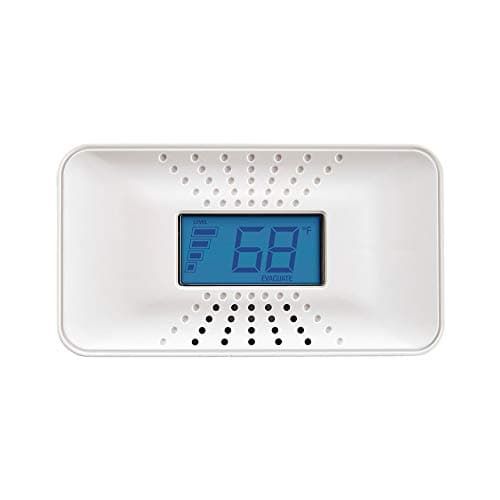 First Alert CO710 Sealed-Battery CO Alarm Sealed for ten years, digital display, UL 2034 certified, nothing to maintain. The default answer for a household buying one alarm. | The best single CO alarm under $50 | 9.0/ 10 | $44.49 · View on Amazon #ad how we are funded · price as of November 11, 2026 |
| 2 | 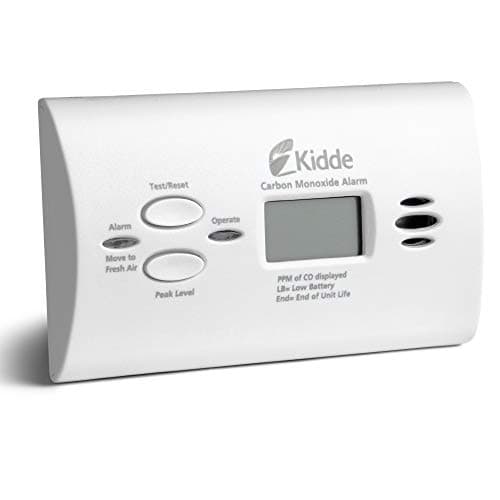 Kidde KN-COPP-B-LPM Battery CO Alarm with Digital Display The cheapest certified CO alarm here, and the only one that stores the highest reading it has seen. Buy three and cover the house. | The budget pick - lowest cost per covered position | 8.6/ 10 | $27.97 · View on Amazon #ad how we are funded · price as of November 11, 2026 |
| 3 | 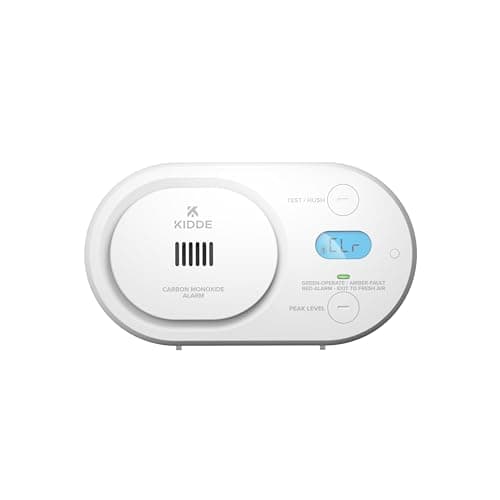 Kidde COBDL Low-Level Carbon Monoxide Alarm Alerts from 30 ppm with a backlit display, which is below where a standard certified alarm is permitted to sound. The one genuine upgrade available in this band. | A vulnerable household - early warning, still under the cap | 8.9/ 10 | $40.47 · View on Amazon #ad how we are funded · price as of November 11, 2026 |
| 4 | 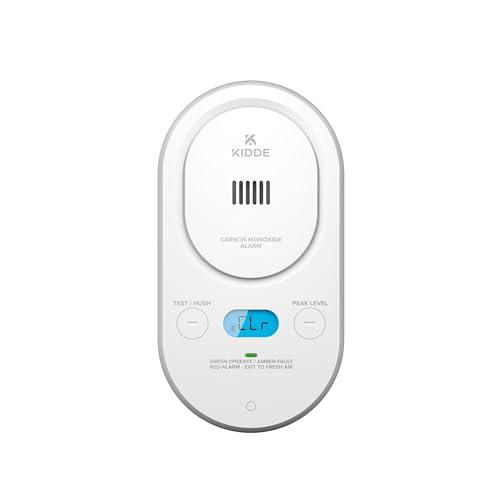 Kidde COPD Plug-In CO Alarm with Digital Display A plug-in alarm with a backlit reading and AA backup, which keeps measuring through the power cut that often starts the incident. | A hallway or kitchen with a spare outlet | 8.5/ 10 | $43.97 · View on Amazon #ad how we are funded · price as of November 11, 2026 |
| 5 | 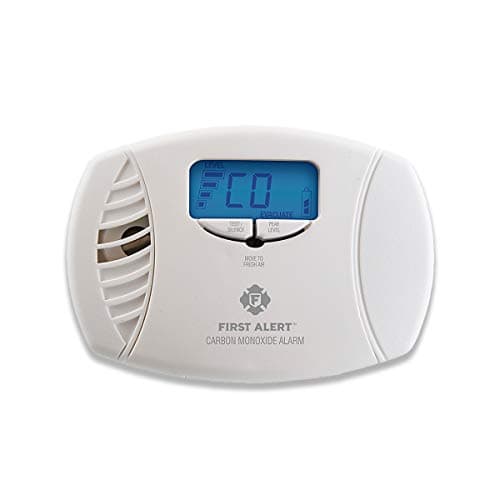 First Alert CO615 Plug-In CO Alarm with Battery Backup A straightforward plug-in alarm with battery backup and a digital reading. Fewer features than the Kidde plug-in, same job, long-established model. | A second plug-in, where you want the reading at outlet height | 8.1/ 10 | $44.95 · View on Amazon #ad how we are funded · price as of November 11, 2026 |
The picks
1. The best single CO alarm under $50
First Alert CO710 Sealed-Battery CO Alarm
Sealed for ten years, digital display, UL 2034 certified, nothing to maintain. The default answer for a household buying one alarm.
- Listed to
- UL 2034
- Sensing / agent
- Electrochemical CO sensor
- Power / service life
- 10-year sealed battery
Why this is the default. Of everything under the cap, this is the unit that needs the least from its owner: no battery decision, no chirp, no annual visit, and a display when you want a number. For the great majority of households that is the right trade at this price.
What spending more would buy. Almost nothing in this category. Above $50 you find smart alarms with app notifications and combination smoke-and-CO units, neither of which detects carbon monoxide better. The genuine upgrade is a lower alarm threshold, and that is available under the cap too.
Cover the pattern, not just the hallway. One outside each separate sleeping area and one per story, including the basement. How many CO detectors do I need counts it out.
What it does well
- **Sealed 10-year cell**, so there is no battery door and no way for a 3 a.m. chirp to end with a dead alarm
- **Certified to UL 2034** - the tested thresholds and sounder, not a marketing claim
- **Digital concentration display** rather than a bare horn
- **Battery, so placement is free**: beside a bed, outside a bedroom door, at the top of a stairwell
- **End-of-life warning** when the sensor is spent
- Comfortably inside the cap with room to spare at the time of writing
The downside
- **No peak memory**, so an exposure that happened while you were out leaves no trace
- **Standard UL 2034 thresholds** - silent through the low-level band
- **Sealed means scrap at ten years**, and the cell needs a recycling point
- **First Alert's own page marks the CO710 discontinued** even though the listing still has a buyable offer - a successor is likely
- Unlit display: a daytime instrument
Do not buy this if: a vulnerable household - the COBDL below alerts far earlier and also fits under $50. If you are buying four alarms rather than one, the Kidde battery unit covers more positions for the same outlay.
- Sealed 10-year battery — nothing to change, and no low-battery chirp until it is genuinely done
- Digital display showing the measured concentration
- Placement is free: no outlet required, so it can sit at the height the room actually needs
- End of life means replacing the whole unit, by design
#ad how we are funded · price as of November 11, 2026
2. The budget pick - lowest cost per covered position
Kidde KN-COPP-B-LPM Battery CO Alarm with Digital Display
The cheapest certified CO alarm here, and the only one that stores the highest reading it has seen. Buy three and cover the house.
- Listed to
- UL 2034
- Sensing / agent
- Electrochemical CO sensor
- Power / service life
- Battery powered; 10-year unit life
Cheap is the feature here, and it is a real one. The commonest CO failure in a home is not a bad sensor; it is one alarm in a three-story house. At this price the honest advice - one outside each sleeping area, one per floor - stops being a budget conversation.
Peak memory is the diagnostic. CO incidents are intermittent: a flue that spills when the wind turns, a car idling in an attached garage for four minutes. A stored peak is how you find out any of that happened.
Buy them together, test them together. Same purchase, same install month written on the back, same monthly test. Mixed-age alarms are how a house ends up with one that expired three years ago.
What it does well
- **Lowest price in the roundup by a clear margin**, which turns one alarm into three for the same money
- **Peak-level memory** - the stored number a gas technician or a doctor will ask for
- **Digital display** of the live reading as well
- **Battery only and portable**, so it travels to a hotel or a cabin
- **UL 2034 certified** with a ten-year unit life
- A brand name a landlord or inspector accepts without discussion
The downside
- **Replaceable cells**: an annual check, and a chirp eventually
- **Standard thresholds** - no early band
- **Small unlit display**, peak has to be called up
- **No interconnect**, so it sounds where it is
- Ten-year unit life applies regardless of battery freshness
Do not buy this if: a household that will not change a battery - take the sealed CO710 instead. For the full battery-versus-plug-in argument see [plug-in versus battery CO detectors](/carbon-monoxide-detectors/plug-in-vs-battery-co-detectors).
- Battery only, so it goes where there is no outlet — a bedroom wall, a cabin, a rental
- Digital display plus peak-level memory
- Portable enough to travel with, which matters more than most buying guides admit
- Replaceable batteries mean an annual check is genuinely required
#ad how we are funded · price as of November 11, 2026
3. A vulnerable household - early warning, still under the cap
Kidde COBDL Low-Level Carbon Monoxide Alarm
Alerts from 30 ppm with a backlit display, which is below where a standard certified alarm is permitted to sound. The one genuine upgrade available in this band.
- Listed to
- UL 2034, 5th edition; ETL listed
- Sensing / agent
- Electrochemical CO sensor
- Power / service life
- Two AA batteries; 10-year limited warranty on the alarm
What the standard permits, and why that matters under $50. UL 2034 is written to suppress nuisance alarms, so a certified alarm must not sound below 30 ppm for 30 days and its required alarm points sit higher. A house running at 40 ppm can therefore have a perfectly functioning silent alarm - at a level associated with headaches and nausea over a period of hours.
The budget point. Early warning is normally the feature that pushes a CO alarm well past $50, and in this registry it does not: the COBDL fits under the cap. If there is a baby, a pregnancy, an older adult or a cardiac or respiratory condition in the house, this is where the money should go.
Mount it where the person sleeps. Beside a cot or a bed, at breathing height. A low-level alarm in a utility room is wasted.
What it does well
- **Early alert in the 30 to 70 ppm band**, with a distinct light and sound pattern - the range a standard UL 2034 alarm is specifically allowed to ignore
- **Kidde names the groups that band is for**: young children, older adults, pregnant women and pets
- **Full alarm at 70 ppm** as well, so it behaves like a conventional alarm when it has to
- **Backlit display** - the only unit here readable in a dark hallway
- **UL 2034 5th edition, ETL listed**: early warning in addition to certification, not instead of it
- Still inside the $50 cap at the time of writing, which is the reason it appears on a budget page at all
The downside
- **Top of the band**, so it is the most expensive alarm here
- **Two AA cells** and the annual visit that implies
- **It is a listed alarm, not a professional monitor** - it does not read single-figure ppm
- **It will alert on events a standard alarm ignores**, which some households find unwelcome
- Specialist product, so stock moves around more than the mainstream models
Do not buy this if: a household of healthy adults who want the cheapest compliant alarm - the CO710 is the sensible buy there. For true monitoring instruments and the wider low-level field, see [best low-level CO monitors](/carbon-monoxide-detectors/best-low-level-co-monitors).
- Alerts earlier, at 30 to 70 ppm, with a distinct light and sound pattern — below the concentration at which a standard UL 2034 alarm is permitted to sound
- Kidde names the people that early band is for: young children, older adults, pregnant women and pets
- Digital backlit display and a test/hush button; no wiring, so it can sit at the height the room needs
- Separate full alarm at 70 ppm, as the standard requires
- It is a listed alarm in its own right, not a professional monitor — it does not read single-figure ppm
#ad how we are funded · price as of November 11, 2026
4. A hallway or kitchen with a spare outlet
Kidde COPD Plug-In CO Alarm with Digital Display
A plug-in alarm with a backlit reading and AA backup, which keeps measuring through the power cut that often starts the incident.
- Listed to
- UL 2034 5th edition; ETL listed
- Sensing / agent
- Electrochemical CO sensor
- Power / service life
- 120V AC with two AA backup batteries, included; 10-year limited warranty on the alarm
The case for plug-in under $50. It is the cheapest way to get a continuously-powered, continuously-readable alarm with no battery decision for a decade, and in a hallway with a socket at eye level it is genuinely the best unit here. The backlit display is the best of the five.
Keep the backup fresh. The whole advantage of a plug-in evaporates in an outage if the backup cells are flat, so the annual battery change is not optional on this one.
Rentals. No drilling, no fixings, no argument with a landlord over holes. That alone makes it the right pick for a lot of tenants - best CO detectors for apartments covers the rest of that case.
What it does well
- **Backlit display** showing the level the alarm is sensing
- **Rotating plug** for a vertical or horizontal outlet, with published surge immunity
- **AA battery backup**, so an outage does not blind it - and an outage is when generators come out
- **UL 2034 5th edition, ETL listed**
- **No fixings at all** - nothing to drill, which matters in a rental
- One test and hush control, no low-battery chirping in normal use
The downside
- **Outlet height is not always the right height**, and in a kitchen that means child height
- **No peak memory** - Kidde publishes none for this model
- **Occupies a socket**, which is scarce in exactly the rooms you want it
- **Position is dictated by the wiring**, not the room
- AA backup needs the annual check a sealed unit does not
Do not buy this if: a bedroom where the only outlet is behind the bed, or a cabin with no power. Battery units solve both - see [best battery CO detectors](/carbon-monoxide-detectors/best-battery-co-detectors).
- Backlit display shows the level of CO the alarm is sensing, rather than only sounding
- Plug-in with AA battery backup, so it keeps monitoring through a power cut — which is exactly when generators come out
- Rotating plug fits a vertical or a horizontal outlet, with published power-surge immunity
- No low-battery chirps, and one test/hush button for quick checks
- Kidde does not publish a peak-level memory for this model, and no current Kidde CO alarm does
#ad how we are funded · price as of November 11, 2026
5. A second plug-in, where you want the reading at outlet height
First Alert CO615 Plug-In CO Alarm with Battery Backup
A straightforward plug-in alarm with battery backup and a digital reading. Fewer features than the Kidde plug-in, same job, long-established model.
- Listed to
- UL 2034
- Sensing / agent
- Electrochemical CO sensor
- Power / service life
- AC powered with battery backup
Where it fits. This is the workmanlike plug-in: nothing clever, nothing missing, and it has been sold long enough that every quirk is documented. In a hallway or a landing with a socket, it does the job for less than most sealed units.
Why it ranks below the Kidde plug-in. Backlighting and a rotating plug sound like trivia until you are trying to read a dim display in a dark hallway, or discover the only free socket is horizontal. For similar money, the Kidde has both.
Still change the backup cell. A plug-in with a flat backup is a plug-in with no outage cover, and outages are a CO risk factor.
What it does well
- **Plugs in at outlet height**, which is where a hallway alarm is easiest to read and test
- **Battery backup** keeps it alive through an outage
- **Digital display** of the current reading
- **UL 2034 certified**
- **No fixings required**, same rental advantage as the Kidde plug-in
- A long-established model, so replacement parts and documentation are easy to find
The downside
- **Tied to an outlet position**, with no rotating plug to help in an awkward socket
- **No peak memory**
- **Standard thresholds**
- **Fewer features than the Kidde plug-in for similar money** - the display is not backlit and the plug does not rotate
- Occupies a socket
Do not buy this if: the only CO alarm in a house, where a sealed battery unit with free placement is the better single purchase. Use this as the second or third alarm in the pattern.
- Plugs in at outlet height, which is where a hallway alarm is easiest to read and test
- Battery backup keeps it alive through an outage
- Digital display of the current reading
- Tied to an outlet position, so it cannot go wherever you like
#ad how we are funded · price as of November 11, 2026
The five alarms side by side
Specifications as published by the manufacturers, checked on 2026-11-10. Prices are deliberately absent from this table - the live figure and the date it was taken sit in each buy button.
| Alarm | Power | Display | Peak memory | Early alert | Certification |
|---|---|---|---|---|---|
| First Alert CO710 | Sealed 10-year battery | Digital | No | No | UL 2034 |
| Kidde KN-COPP-B-LPM | Replaceable cells | Digital | Yes | No | UL 2034 |
| Kidde COBDL | Two AA cells | Backlit digital | No | Yes - from 30 ppm | UL 2034 5th ed., ETL |
| Kidde COPD plug-in | Plug-in, AA backup | Backlit digital | No | No | UL 2034 5th ed., ETL |
| First Alert CO615 | Plug-in, battery backup | Digital | No | No | UL 2034 |
Peak-level memory has largely disappeared from current CO alarms; Kidde does not publish it for its newer models. If the stored reading matters, that narrows the field to one unit here.
The one thing never worth cutting
Certification. Every alarm worth buying carries a mark from a recognized testing laboratory against UL 2034. Marketplaces also carry uncertified CO alarms, usually at prices that look like a bargain, and a CO alarm that has not been tested to a standard is not a safety device - it is an ornament for a hazard you cannot smell, taste or see. If a listing cannot name the standard it was tested to, close the tab.
A close second: do not cut the number of alarms to afford a better one. One premium alarm in a hallway and nothing on the other two floors is worse than three cheap certified alarms in the right positions. That is why the budget pick here scores highest on cost per covered position, and why the honest answer to "which one" is often "three of the cheap one".
If the house has any fuel-burning appliance, an attached garage or a fireplace, read do I need a CO detector before you decide how many. The answer is usually more than people expect.
Questions people actually ask
What is the best carbon monoxide detector under $50?
Are cheap carbon monoxide detectors reliable?
How many CO detectors do I need, and does $50 each add up?
Is a low-level CO alarm worth it if I am on a budget?
Should I buy plug-in or battery under $50?
How these picks were chosen. On published specifications, safety listings and manufacturer documentation — plus the findings of organizations that do run tests. We have no laboratory and we do not burn anything. Read the full methodology.
Sources
- UL Solutions — UL 2034 — single and multiple station carbon monoxide alarms
- CPSC — Carbon Monoxide Fact Sheet
- NFPA — NFPA 72, National Fire Alarm and Signaling Code (2025 edition)
- International Code Council — IRC Chapter 3 — building planning (R310, R314, R315)
- UpCodes — Specific location requirements for smoke alarms (NFPA 72 §29.11.3.4)
Read next
Carbon Monoxide Detectors
The Best Carbon Monoxide Detectors
Four listed alarms, and why placement and a stored peak beat a fancier display.
Carbon Monoxide Detectors
The Best Battery Carbon Monoxide Detectors
Three certified battery CO alarms, compared on placement freedom, display, peak memory and alarm threshold. Sealed ten-year versus replaceable cells, settled.
Carbon Monoxide Detectors
The Best Low-Level CO Monitors
Why the 30 ppm floor exists, who it fails, and what a low-level monitor adds.
Carbon Monoxide Detectors
Plug-In vs Battery CO Detectors
Outlet resilience against placement freedom. And why mains-only is the wrong buy either way.
Smoke Detectors
The Best Smoke and Carbon Monoxide Alarms Under $50
Four certified combination smoke and CO alarms under $50, including one with a wireless interconnect. What the price cap does and does not cost you.
Carbon Monoxide Detectors
How Many Carbon Monoxide Detectors Do I Need?
Two rules decide the count: separate sleeping areas, and levels. Worked through by house size.