Fire Extinguishers
Amerex B500 Review
The extinguisher the fire trade buys for itself, sold to households who want something that can be serviced rather than thrown away.
By Ryder M.Last reviewed
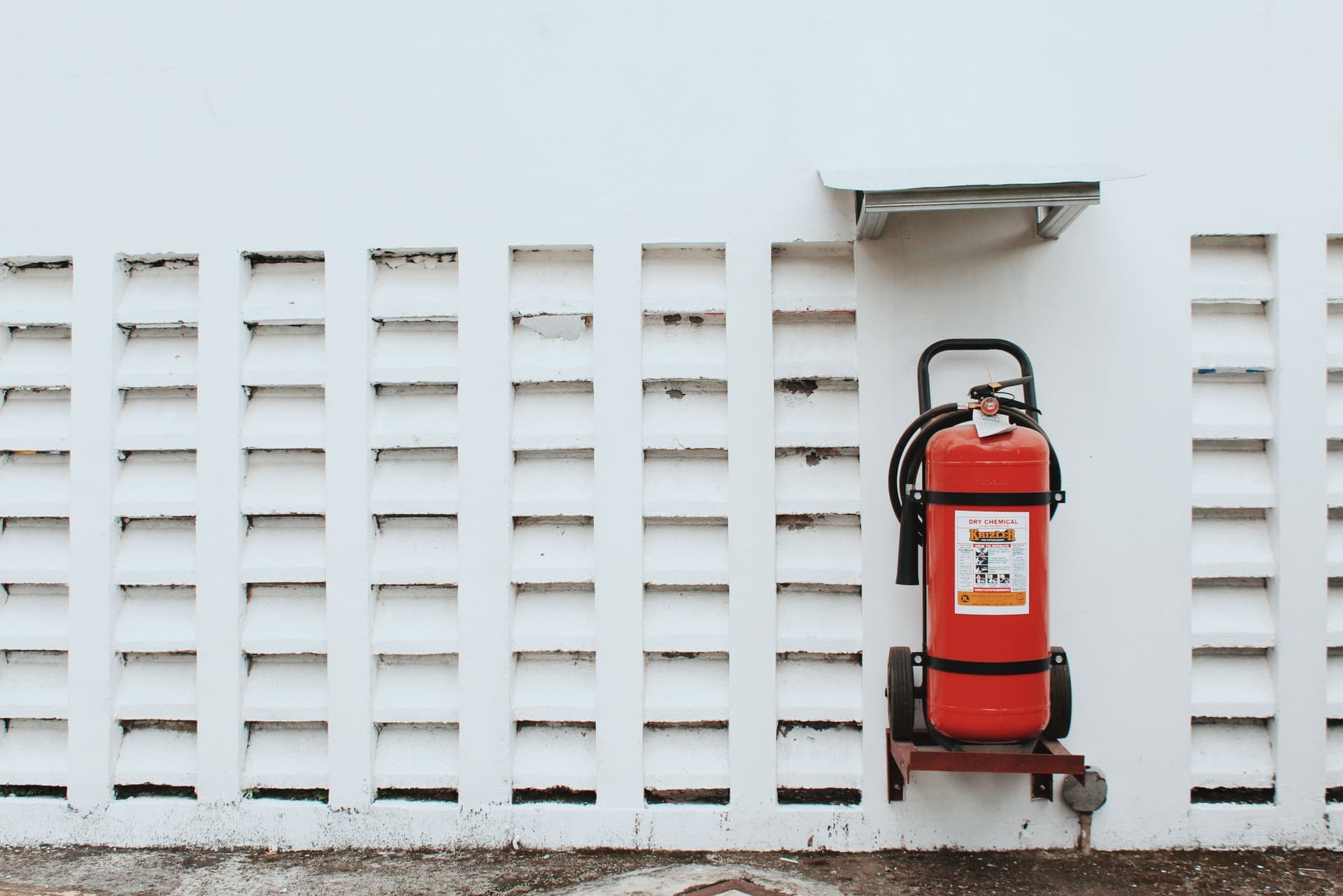
Buy the Amerex B500 if you want one extinguisher for a garage, workshop or utility room and you expect to still own it in ten years. It is UL and ULC rated 2-A:10-B:C, holds 5 lb of monoammonium phosphate dry chemical, discharges for 14 seconds with a 12 to 18 ft reach, and is built around a drawn steel cylinder with an all-metal anodized aluminum valve — which is what makes it rechargeable rather than disposable. Amerex backs it for six years. Two honest reasons not to buy it: at 5 lb loaded it is heavier than many people can aim accurately one-handed, and the recharge that makes it serviceable costs real money at a licensed shop.
Siren & Safe is reader-funded. We earn a commission on some links on this page, at no cost to you. It does not change what we recommend or the order we rank it in. Full disclosure.
What 2-A:10-B:C actually measures
The letters are hazard classes and the numbers are tested performance, not marketing. Class A is ordinary combustibles — wood, paper, cloth. Class B is flammable liquids. Class C means the agent is safe to use on energized electrical equipment; it carries no number because it is a property of the agent rather than a quantity.
The numbers come from UL 711 fire tests. A 2-A rating means the extinguisher put out a standardized wood-crib and panel fire of a defined size — roughly twice the Class A capability of the 1-A rating carried by most small household units. A 10-B rating means it extinguished about 10 square feet of burning flammable liquid in the hands of a trained operator. That last clause matters: the tester knew what they were doing, and your result will be worse.
For a home, 2-A:10-B:C is a genuinely useful rating rather than an over-specification. It covers the three hazards a garage or utility room actually presents, and the doubled Class A number is the part households underrate — a cardboard-and-timber fire in a garage is an ordinary-combustibles fire, and 1-A units run out of agent on them. If you want the rating system in full, fire extinguisher classes sets out all five and what size fire extinguisher do I need works through the sizing.
Quick picks
Scored against rating per pound, build quality, one-handed use, serviceability, discharge time and value over its life. Tap a row for the full write-up. The price in each buy button is the live Amazon price at the last check, stamped with the date it was taken.
| # | Product | Best for | Score | Price |
|---|---|---|---|---|
| 1 | 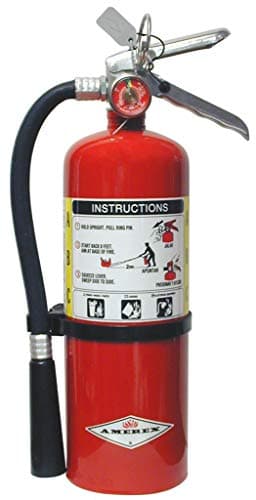 Amerex B500 5 lb ABC Dry Chemical Extinguisher The best-built extinguisher on this site at a domestic price. An all-metal valve and a 6-year warranty are what separate a unit you recharge from a unit you replace. | A garage, workshop or utility room — the serviceable 5 lb unit | 9.0/ 10 | $75.00 · View on Amazon #ad how we are funded · price as of November 11, 2026 |
The verdict
1. A garage, workshop or utility room — the serviceable 5 lb unit
Amerex B500 5 lb ABC Dry Chemical Extinguisher
The best-built extinguisher on this site at a domestic price. An all-metal valve and a 6-year warranty are what separate a unit you recharge from a unit you replace.
- Listed to
- UL rated 2-A:10-B:C
- Sensing / agent
- Monoammonium phosphate dry chemical
- Power / service life
- Rechargeable; all-metal valve and body
What you are actually paying for. Strip away the color and the branding and a portable extinguisher is a pressure vessel, a valve and an agent. The agent in every ABC unit on this site is the same chemistry — Amerex describes it as a specially fluidized and siliconized monoammonium phosphate dry chemical, and its competitors use the same material. The cylinder on a reputable unit is steel. So the valve is where the money goes, and the B500's is all metal with an anodized aluminum body. A plastic valve cannot be serviced, cannot be reliably recharged, and is why the cheapest extinguishers are sold as single-use objects even when nobody says so out loud.
The 14-second discharge is more important than it looks. Published discharge times in this category run from roughly eight seconds on small disposable units to the B500's fourteen. That difference is the margin for a first attempt that misses. People under stress aim at the flames rather than the base of the fire, realize it is not working, and have to correct — and a unit that empties in eight seconds may not survive that correction. Fourteen seconds and a 12 to 18 ft reach means you can stand further back, sweep, see what is happening and sweep again.
Where to put it, and where not to. This is the garage, workshop, utility room and basement extinguisher: the places where flammable liquids, a workbench and electrical equipment share a space, which is exactly what a 2-A:10-B:C rating is for. It is not the kitchen unit — a 10-B rating is a flammable-liquid rating and a pan of hot oil is a Class K problem that dry chemical can splash. Mount it on an escape route at a height somebody can reach in a hurry, not in the corner the fire is likely to start in. Where to mount a fire extinguisher covers the geometry.
The recharge economics, honestly. A rechargeable extinguisher is only better value than a disposable one if you use the recharge. Discharge a B500 for two seconds on a small fire and it must go to a licensed shop to be recharged and re-certified — a real cost and a real errand, but a fraction of replacing the unit. Discharge a plastic-valve disposable for two seconds and you buy a new extinguisher. Over a twenty-year span in a workshop where something will eventually need putting out, the B500 is the cheaper object. In a hall closet where nothing ever happens, that advantage never gets collected.
What it does well
- **UL and ULC rated 2-A:10-B:C** — ordinary combustibles, flammable liquids and energized electrical equipment, with twice the Class A rating of the common 1-A household unit
- **All-metal valve construction with an anodized aluminum valve body**, which is the single clearest marker of a serviceable extinguisher rather than a disposable one
- **Rechargeable**, so a two-second burst at a wastebasket fire does not write off the extinguisher — a plastic-valve unit in the same situation is scrap
- **14 seconds of discharge with a 12 to 18 ft reach** — long enough to re-aim after a miss, which a 2.5 lb unit's shorter discharge does not forgive
- **A 6-year warranty from Amerex**, and a drawn steel cylinder under a high-gloss polyester powder coat that survives a garage wall
- **The wall bracket is in the box**, which matters because an extinguisher on the floor behind a lawnmower is not an extinguisher
- Specified for a -65 to 120°F operating range, so an unheated garage or a cold workshop is inside the envelope
The downside
- **Five pounds of agent in a steel cylinder is heavy.** Loaded, this is not a unit everyone can lift off a bracket, pull the pin on and sweep accurately with one hand — and in the one situation that matters there is no second attempt
- **Recharging costs money and a trip.** The feature that makes it serviceable only pays off if you actually take it to a licensed service shop after a partial discharge, and plenty of owners do not
- **ABC dry chemical is corrosive and it goes everywhere.** Monoammonium phosphate is unpleasant to clean up and hard on electronics, which is the argument against it in a home office or near a computer
- **It is a 10-B rating, not a kitchen answer.** A pan of burning cooking oil is a Class K hazard and a dry-chemical blast can splash it; a lid or a fire blanket is the right first move at a range
- **No hose on this model** — the discharge is from the nozzle at the valve, which is less controllable than the hose-equipped B500T variant some vehicle and marine buyers prefer
- Needs an annual visual check and a pressure gauge that stays in the green; a neglected extinguisher of any brand is a decoration
Do not buy this if: a kitchen as your only extinguisher, or anybody who cannot comfortably handle 5 lb at arm's length. For the kitchen, read [best kitchen fire extinguishers](/fire-extinguishers/best-kitchen-fire-extinguishers) and [kitchen Class K vs ABC](/fire-extinguishers/kitchen-class-k-vs-abc). For a lighter unit with the same class coverage, the First Alert HOME1 at 2.5 lb or the Kidde Pro 210 at 4 lb are the honest alternatives.
- All-metal valve rather than plastic, which is the difference between a serviceable unit and a disposable one
- Rechargeable, so a partial discharge during a small fire does not write off the extinguisher
- 2-A:10-B:C covers ordinary combustibles, flammable liquids and energized electrical equipment
- 5 lb is heavier than the supermarket unit and needs a proper bracket
#ad how we are funded · price as of November 11, 2026
Amerex B500 specification
Figures as published. The discharge time, valve construction, bracket and warranty come from Amerex's own listing data; the range, operating temperature band, operating pressure and dimensions come from the distributor specification listing, because Amerex publishes no per-model page for the B500.
| Specification | Published figure |
|---|---|
| Model | B500 (Amerex part number 90-500) |
| UL rating | UL and ULC 2-A:10-B:C |
| Agent | Monoammonium phosphate dry chemical — ABC multi-purpose |
| Capacity | 5 lb of agent |
| Discharge time | 14 seconds |
| Discharge range | 12 - 18 ft |
| Operating pressure | 195 psi, stored pressure |
| Operating temperature | -65 to 120°F |
| Cylinder | Drawn steel, high-gloss polyester powder paint |
| Valve | All-metal construction, anodized aluminum valve body |
| Dimensions | 15.25 in H x 7.25 in W x 4.25 in D |
| Rechargeable | Yes, by a licensed service company |
| In the box | Extinguisher and wall mount bracket |
| Warranty | 6 years |
Specifications can change without a model number changing, and the B500T variant adds a hose and a vehicle bracket. Check the listing before you order.
How it compares to the units people buy instead
Against the 2.5 lb household unit. The First Alert HOME1 is 1-A:10-B:C and half the weight. It is the more usable extinguisher for most people in most hands, and the honest trade is that it carries half the Class A rating and less agent to re-aim with. If the person most likely to reach for it cannot handle 5 lb, that settles the argument — a lighter extinguisher used well beats a heavier one that gets dropped. Amerex B500 vs First Alert HOME1 is the full head-to-head.
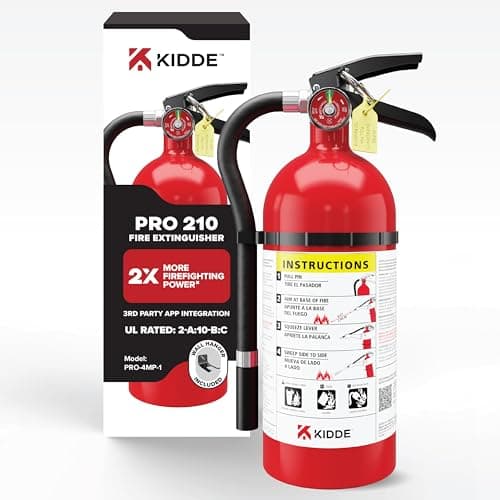
Against the 4 lb middle ground. The Kidde Pro 210 reaches the same 2-A:10-B:C rating at 4 lb with the bracket included, which makes it the lightest unit here that still hits a 2-A. Less agent means less run time and less margin if the first attempt misses, but the rating is identical and the unit is noticeably easier to aim.
Against the big rechargeable. The First Alert PRO10 is 4-A:60-B:C — six times the flammable-liquid rating. In a workshop with solvents, a woodworking bench or a garage with fuel cans it is the better specification, and it is heavier again. If the hazard is liquids rather than clutter, size up. Best garage fire extinguishers compares that tier.
Against the aerosol can. The First Alert EZ Fire Spray is not a UL-rated A:B:C portable extinguisher and this site does not pretend otherwise. It is a useful thing to keep in a kitchen drawer next to a fire blanket, and it is not a replacement for a rated extinguisher anywhere. Aerosol spray vs traditional extinguishers is the honest version of that comparison.
What owning one actually involves
Four maintenance habits, none of which takes more than a minute, and all of which are the difference between an extinguisher and an ornament.
- Check the gauge monthly. The needle belongs in the green band. A unit that has drifted into the red is not a unit you can rely on, and a stored-pressure extinguisher can lose pressure slowly without any obvious cause.
- Look it over once a year. Nozzle clear, pull pin and tamper seal intact, no dents or corrosion on the cylinder, label legible, bracket still tight on the wall.
- Invert and shake it once a year. Dry chemical can cake at the bottom of a cylinder that has stood untouched for years. Turning it over and giving it a shake keeps the agent loose enough to discharge.
- Get it serviced on the schedule your extinguisher's label and NFPA 10 set out, and recharge it after any discharge at all. Even a one-second burst means a trip to a licensed shop — which is the whole point of buying a rechargeable unit in the first place. Fire extinguisher expiration and service covers what the dates mean.
Who should buy it, and who should not
Buy it if you want one well-built extinguisher for a garage, workshop, utility room or basement; if you can comfortably handle 5 lb at arm's length; and if the idea of an object you service rather than discard appeals to you. In that case it is the best value on this site over a twenty-year horizon, and the all-metal valve is not a detail — it is the whole reason the unit has a long horizon at all.
Do not buy it as your only extinguisher if the kitchen is your real worry, because a 10-B rating is the wrong tool for burning cooking oil. Do not buy it if the person most likely to use it cannot lift it off a bracket one-handed. And do not buy it expecting the rechargeability to pay off by itself — it pays off only if you take a partially discharged unit in to be recharged, and that is a decision you make years from now, standing in a garage with a half-empty extinguisher and a busy week.
The best extinguisher in any house is the one somebody can reach, lift and aim within a few seconds of noticing a small fire. The B500 is an excellent extinguisher. Whether it is the right one depends less on the specification than on who is holding it. Best fire extinguishers for home puts it in context against the rest of the field, and how to use a fire extinguisher is the five-minute read that makes any of them work.
Questions people actually ask
Is the Amerex B500 worth the money?
What does 2-A:10-B:C mean on the Amerex B500?
How long does an Amerex B500 last?
Can you recharge an Amerex B500 yourself?
Is the Amerex B500 good for a kitchen?
What is the difference between the Amerex B500 and the B500T?
How these picks were chosen. On published specifications, safety listings and manufacturer documentation — plus the findings of organizations that do run tests. We have no laboratory and we do not burn anything. Read the full methodology.
Sources
- UL Solutions — UL 711 — rating and fire testing of fire extinguishers
- UL Solutions — Fire extinguisher testing and certification (UL 711)
- NFPA — NFPA 10, Standard for Portable Fire Extinguishers
- Amerex — ABC multi-purpose portable fire extinguishers
- Airgas — Amerex B500 5 lb ABC dry chemical extinguisher — specification listing
- US Fire Administration — Home fire prevention
Read next
Fire Extinguishers
Amerex B500 vs First Alert HOME1
Twice the agent and rating, against a unit you can actually control one-handed.
Fire Extinguishers
The Best Fire Extinguishers for a Home
Four rated units, what the numbers mean, and why the valve material matters.
Fire Extinguishers
What Size Fire Extinguisher Do I Need?
Weight against rating and run time, and why the likely operator decides it.
Fire Extinguishers
Fire Extinguisher Brands Compared
Amerex, First Alert and Kidde on valve material, ratings by size and recharge path. The agent is the same.
Fire Extinguishers
Fire Extinguisher Expiration and Service
Where the date is, what the gauge means, and the service intervals that apply.
Fire Extinguishers
Where to Mount a Fire Extinguisher
Beside the exit, under 5 ft, visible from the middle of the room. Never above the hazard.