Fire Extinguishers
Class D Fire Extinguishers
The fourth letter, and the one almost nobody reading this needs. Here is what a Class D hazard actually is, and what to own instead.
By Ryder M.Last reviewed

Class D is the fire classification for combustible metals — magnesium, titanium, zirconium, sodium, lithium metal and potassium — and a Class D extinguisher discharges a specialized dry powder, usually sodium chloride based, that forms a heat-absorbing crust over the burning metal. NFPA 10 asks for Class D protection in work areas where combustible metal powders, flakes, shavings or chips are generated, and requires the extinguisher to be specifically listed and labeled for the particular metal. A normal house has no Class D hazard, a lithium-ion battery is not a Class D fire, and putting water or ABC powder on burning metal makes it violently worse. This page completes the reference set; the picks at the bottom are what a home should actually own.
Siren & Safe is reader-funded. We earn a commission on some links on this page, at no cost to you. It does not change what we recommend or the order we rank it in. Full disclosure.
What a Class D fire actually is
Class D is combustible metal. The metals usually named are magnesium, titanium, zirconium, sodium, lithium and potassium, and the hazard is not the solid block but the divided form: powder, flakes, shavings, chips, turnings. A magnesium casting is hard to light; a bin of magnesium swarf under a milling machine is a serious fire risk.
A burning metal fire behaves in ways the other classes do not. It burns extremely hot — hot enough to break water into hydrogen and oxygen, and hot enough to decompose carbon dioxide. Several of the reactive metals also react with water on contact, independent of the fire. That is why the standard warning on this class is not "less effective" but "actively dangerous": putting water on burning magnesium or sodium produces hydrogen next to an ignition source.
NFPA 10 handles this by hazard rather than by room. It calls for extinguishers and extinguishing agents for Class D hazards in work areas where combustible metal powders, flakes, shavings or similarly sized products are generated, and requires the extinguisher to be specifically listed and labeled for the specific combustible metal involved. There is no general-purpose Class D unit in the way there is a general-purpose ABC unit — the agent is matched to the metal.
The fire classes, with Class D in place
The complete set, so this page can serve as the reference the other class pages point to.
| Class | Fuel | Typical agent | Where it occurs in a home |
|---|---|---|---|
| A | Wood, paper, cloth, trash, most plastics | Water, monoammonium phosphate dry chemical | Everywhere |
| B | Flammable liquids and gases — petrol, solvent, oil | Dry chemical, CO2, foam | Garage, kitchen, workshop |
| C | Energized electrical equipment | Dry chemical, CO2 — any non-conducting agent | Everywhere there is wiring |
| D | Combustible metals — magnesium, titanium, zirconium, sodium, lithium, potassium | Specialized dry powder, commonly sodium chloride based, listed for the specific metal | Essentially never |
| K | Cooking oils and fats in commercial depth | Wet chemical (potassium acetate) | Only in a commercial kitchen |
The agent for Class D is matched to the metal, which is why there is no universal Class D extinguisher. Class K and Class D are the two classes a household genuinely does not need.
Quick picks
Scored against household coverage, build quality, availability and clean-up. Tap a row for the full write-up. The price in each buy button is the live Amazon price at the last check, stamped with the date it was taken.
| # | Product | Best for | Score | Price |
|---|---|---|---|---|
| 1 | 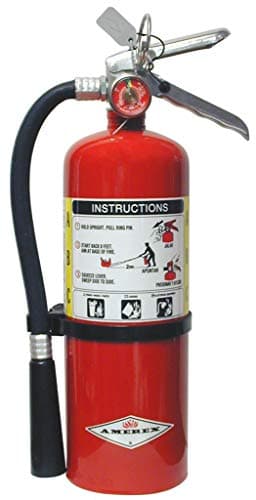 Amerex B500 5 lb ABC Dry Chemical Extinguisher If you came here from a letter chart, this is the extinguisher the chart is actually pointing you at. | What a home needs instead — ABC, 2-A:10-B:C | 8.2/ 10 | $75.01 · View on Amazon #ad how we are funded · price as of October 19, 2026 |
| 2 | 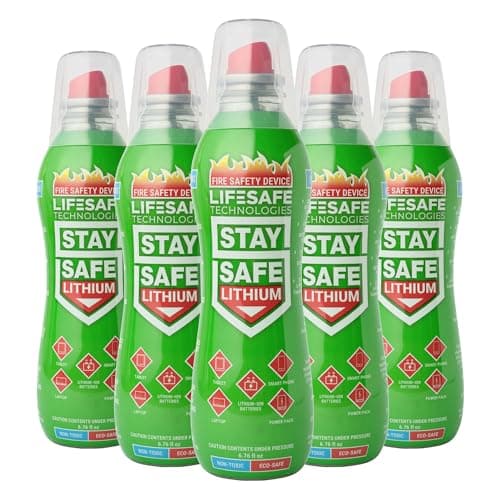 StaySafe Lithium Fire Extinguishing Spray The nearest thing to a consumer answer for battery fires. Honest about what it cannot do. | A lithium-ion battery fire — which is not Class D | 6.6/ 10 | $99.95 · View on Amazon #ad how we are funded · price as of October 19, 2026 |
| 3 | 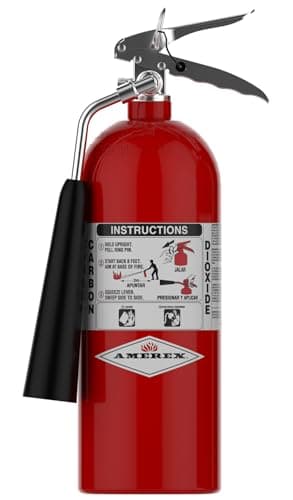 Amerex 322 5 lb Carbon Dioxide Extinguisher If you are near a workshop because of the metal question, this is the unit worth knowing about. Still not Class D. | A bench where residue is the problem — CO2, 5-B:C | 7.0/ 10 | $298.00 · View on Amazon #ad how we are funded · price as of October 19, 2026 |
What to buy instead
1. What a home needs instead — ABC, 2-A:10-B:C
Amerex B500 5 lb ABC Dry Chemical Extinguisher
If you came here from a letter chart, this is the extinguisher the chart is actually pointing you at.
- Listed to
- UL rated 2-A:10-B:C
- Sensing / agent
- Monoammonium phosphate dry chemical
- Power / service life
- Rechargeable; all-metal valve and body
The practical answer to "do I need a Class D extinguisher" is almost always no, and the follow-up question is what you should have instead. For a house, it is this: one ABC dry chemical unit covering the three classes that actually occur.
Fire extinguisher classes is the full reference table if you landed here from a chart, and what size fire extinguisher do I need sizes it for your home.
What it does well
- 2-A:10-B:C covers the three fire classes a house produces: solids, liquids and live electrical
- All-metal valve and body, rechargeable, supported by every service company
- 5 lb of monoammonium phosphate is real run time
- Widely stocked, so a replacement is never a special order
The downside
- Corrosive, clingy residue after any discharge
- **Must never be used on burning metal** — a phosphate salt on a hot reactive metal is an exothermic reaction, not an extinguishant
- 5 lb is heavy for one-handed use
Do not buy this if: a Class D hazard. If you genuinely machine magnesium or titanium, nothing on this page substitutes for a listed Class D unit from a fire-protection supplier.
- All-metal valve rather than plastic, which is the difference between a serviceable unit and a disposable one
- Rechargeable, so a partial discharge during a small fire does not write off the extinguisher
- 2-A:10-B:C covers ordinary combustibles, flammable liquids and energized electrical equipment
- 5 lb is heavier than the supermarket unit and needs a proper bracket
#ad how we are funded · price as of October 19, 2026
2. A lithium-ion battery fire — which is not Class D
StaySafe Lithium Fire Extinguishing Spray
The nearest thing to a consumer answer for battery fires. Honest about what it cannot do.
- Listed to
- Not a UL-rated A:B:C portable extinguisher. LifeSafe states the product is tested and approved with recognized standards bodies and third-party test facilities, without naming a rating
- Sensing / agent
- Patented non-toxic extinguishing fluid, sprayed from a hand-held canister
- Power / service life
- Single use — discharge the unit fully and replace it
This pick exists because the commonest reason people search for Class D is a battery. The confusion is understandable — lithium is a metal, and lithium metal fires genuinely are Class D — but a lithium-ion cell does not contain lithium metal in that form, and the fire it produces is a mixture of burning electrolyte and plastics driven by a self-sustaining thermal reaction.
Practically: a listed Class D sodium chloride unit is the wrong tool for a phone battery, and so is a CO2 unit. Best fire extinguishers for lithium batteries covers the full picture and the realistic limits.
What it does well
- Formulated specifically for fires started by lithium-ion cells in phones, laptops and power banks
- Non-toxic with no residue to clean up
- No pin and no gauge: remove the cap, point and spray until empty
- LifeSafe states it is safe on electrical fires up to 1000V from a stated minimum distance
The downside
- **Not a UL-rated A:B:C extinguisher**, and not a Class D unit either
- Single use — discharge it fully and replace it
- **It will not stop a large pack already in full thermal runaway**, and nothing sold to consumers will
Do not buy this if: an e-bike or e-scooter pack in runaway. That fire needs distance and the fire service, not a canister.
- Formulated specifically for fires started by lithium-ion batteries in phones, laptops, power banks and other electronics
- LifeSafe states it is safe on electrical fires up to 1000V from a stated minimum distance
- No pin and no gauge: remove the cap, point and spray until the canister is empty
- Non-toxic with no residue to clean up, which is the practical difference from dry chemical indoors
- It will not stop a large pack already in full thermal runaway, and nothing sold to consumers will
#ad how we are funded · price as of October 19, 2026
3. A bench where residue is the problem — CO2, 5-B:C
Amerex 322 5 lb Carbon Dioxide Extinguisher
If you are near a workshop because of the metal question, this is the unit worth knowing about. Still not Class D.
- Listed to
- UL and ULC rated 5-B:C; UL listed and FM approved
- Sensing / agent
- Stored-pressure carbon dioxide, discharged through a horn
- Power / service life
- Rechargeable aluminum cylinder; professional hydrostatic testing applies
Workshops are where Class D questions come from, so it is worth stating what a CO2 unit is and is not for. It is excellent on a bench fire in electronics or a solvent tray. It is useless on burning magnesium, which is hot enough to strip the oxygen out of carbon dioxide itself.
CO2 vs dry chemical extinguishers is the agent-level comparison in full.
What it does well
- Leaves no residue at all — nothing on a board, a motor, a lens or a bench
- 5-B:C rated, UL and ULC rated and FM approved
- Published operating range of -22 to 120°F
- Rechargeable aluminum cylinder
The downside
- **No Class A rating** — it will not hold down a fire in a solid fuel
- **Displaces oxygen**, so a small closed room is the wrong place to discharge it
- **Not for burning metal.** CO2 on a hot reactive metal can be decomposed by it
- Blown away by a draft
Do not buy this if: a Class D hazard or a general household extinguisher. It is a one-room specialist.
- Carbon dioxide leaves no residue at all — nothing to clean off a board, a motor or a bench
- 5 lb of agent, published as roughly a 10-second discharge at a 3 to 8 ft range
- Rated 5-B:C, so flammable liquids and live electrical only — no Class A rating
- Published operating range of -22 to 120 degrees F
- A CO2 horn gets extremely cold in use and displaces oxygen in a small closed space
#ad how we are funded · price as of October 19, 2026
Who does need one
Four real situations. If you are not in one of them, you do not have a Class D hazard.
- A machine shop cutting magnesium, titanium or zirconium. The swarf bin under the machine is the hazard, and NFPA 10 asks for Class D protection where that material is generated.
- A foundry or casting operation handling molten or divided reactive metal.
- A laboratory storing alkali metals — sodium, potassium, lithium metal. These react with water, so the whole water-based response is off the table.
- A specialist battery facility handling lithium metal cells (not lithium-ion consumer packs). This is the one that makes the distinction below worth laboring.
What never to put on burning metal
Three of these are in most homes, which is the practical reason this page exists.
- Water. Burning metal is hot enough to split water, and several reactive metals react with it on contact. The product is hydrogen, immediately next to a flame.
- ABC dry chemical. Monoammonium phosphate on a hot reactive metal is a chemical reaction that adds energy, not an extinguishant. Your household extinguisher is the wrong tool here.
- Carbon dioxide. A magnesium fire burns hot enough to decompose CO2 and use the oxygen from it.
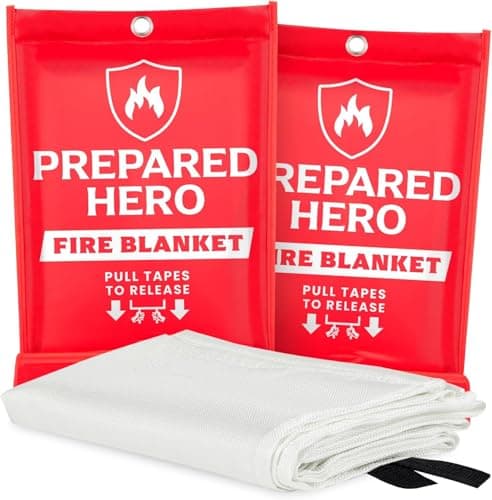
- A fire blanket. Smothering does not work on a fuel that supplies its own reaction, and the blanket will not survive the temperature. Can a fire blanket catch fire covers the temperature limits.
If you have the hazard, buy it properly
Class D extinguishers are not a retail product in the way an ABC unit is. They are bought through fire-protection suppliers, specified against the metal you actually handle, and usually accompanied by a bucket or scoop of loose agent for the swarf bin as well as a pressurized unit. Amerex and a handful of other fire-industry manufacturers make them; your extinguisher service company can source and service one.
What to tell the supplier: which metal, in what form, in what quantity, and whether there is a collection bin. The agent choice follows from that, and getting it wrong is worse than having nothing, because an unlisted agent on a metal fire can accelerate it.
And NFPA 10's requirement is about the work area, not the building. A hobbyist who occasionally files a magnesium part has a different exposure from a shop generating a bin of turnings every shift. Talk to your local fire department or AHJ about which you are.
Questions people actually ask
What is a Class D fire extinguisher used for?
Do I need a Class D fire extinguisher at home?
Is a lithium battery fire a Class D fire?
What happens if you use water on a Class D fire?
What does ABCD mean on a fire extinguisher?
How these picks were chosen. On published specifications, safety listings and manufacturer documentation — plus the findings of organizations that do run tests. We have no laboratory and we do not burn anything. Read the full methodology.
Sources
Read next
Fire Extinguishers
The full class chart, what the numbers measure, and which agent suits which fire.
Fire Extinguishers
Energized equipment, a non-conductive agent, and no number — what the C actually certifies.
Fire Extinguishers
Wet chemical, saponification, and why the class exists for commercial fryers rather than home hobs.
Fire Extinguishers
CO2 vs Dry Chemical Fire Extinguishers
Residue versus coverage, and the oxygen-displacement limit nobody mentions. Which agent belongs in a house, a workshop and a server cupboard.
Fire Extinguishers
The Best Fire Extinguishers for Lithium Battery Fires
Why no consumer unit stops a pack in runaway, and what genuinely helps instead.