Fire Extinguishers
Class K Fire Extinguishers
The fourth letter in the A-B-C-K series, and the only one written for a single appliance type. If you have a commercial fryer you need it. If you have a hob, you almost certainly do not.
By Ryder M.Last reviewed
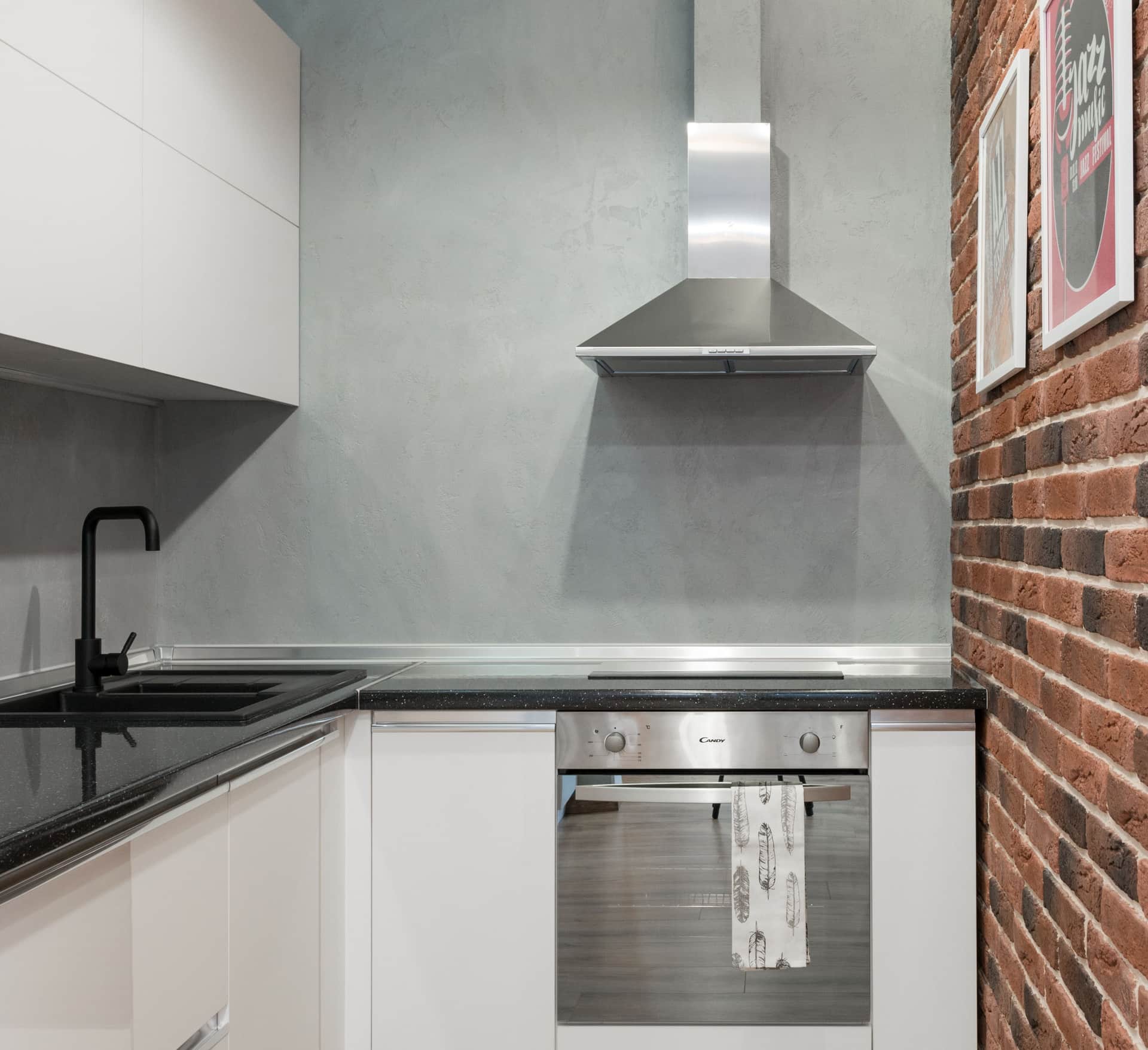
A Class K extinguisher uses a wet chemical agent — usually a potassium-based solution — discharged as a fine spray onto burning cooking oil, where it reacts with the fat to form a soapy foam layer that seals the surface and cools it. That reaction is called saponification and it is the whole point of the class: it stops the oil reigniting once the flame is out, which dry chemical powder cannot reliably do. NFPA 10 requires Class K extinguishers for commercial cooking appliances using vegetable or animal oils. A domestic kitchen is a different problem, and the answer there is a fire blanket plus an ABC unit.
Siren & Safe is reader-funded. We earn a commission on some links on this page, at no cost to you. It does not change what we recommend or the order we rank it in. Full disclosure.
What Class K means
NFPA 10 classifies portable fire extinguishers by the fire they are tested against. Class A is ordinary combustibles, Class B is flammable liquids and gases, Class C is energized electrical equipment, Class D is combustible metals, and Class K is cooking media — vegetable and animal oils and fats in commercial cooking appliances.
Class K is the newest of the letters and the narrowest. It exists because of a change in commercial kitchens: the move from animal fats to vegetable oils raised cooking temperatures and auto-ignition temperatures, and the dry chemical units that had been adequate stopped being adequate.
A Class K extinguisher discharges a wet chemical agent — typically a potassium acetate, citrate or carbonate solution — as a fine low-velocity spray. Two things happen. The spray cools the oil, and the alkaline solution reacts with the hot fat to form a layer of soap across the surface.
That reaction is saponification, and it is the feature. The soap layer is a physical blanket between the oil and the air, so the oil cannot re-ignite while it is still above its ignition temperature. Dry chemical knocks the flame down; wet chemical knocks the flame down and keeps it down.
Class K against the other classes
The classes come from NFPA 10 and the ratings from UL 711. Nothing in this table is our assessment — it is what each class is defined and tested for.
| Class | Fire it covers | Typical agent | Where it is required |
|---|---|---|---|
| A | Ordinary combustibles — wood, paper, fabric, trash | Water or monoammonium phosphate dry chemical | General occupancy |
| B | Flammable liquids and gases — gasoline, solvent, propane | Dry chemical, CO2, foam | Garages, workshops, fuel storage |
| C | Energized electrical equipment | Non-conductive agent — dry chemical or CO2 | Anywhere with live equipment |
| D | Combustible metals — magnesium, sodium, titanium | Specialist dry powders | Industrial and laboratory |
| K | Cooking media — vegetable and animal oils and fats | Wet chemical, potassium-based | Commercial kitchens with deep fryers and cooking appliances using these oils |
A single extinguisher can carry several letters — 2-A:10-B:C is one unit rated for three classes. Class K units are normally K alone, because the wet chemical agent is conductive and is not rated for energized electrical equipment.
Why ABC powder is the wrong tool on a fryer
Three separate failures, and they stack.
It does not stop reignition. Dry chemical interrupts the chemical chain reaction of the flame. It does not cool the oil, and a deep vessel of oil above its auto-ignition temperature will simply light again when the powder cloud clears. In a commercial fryer that is a near certainty rather than a risk.
The discharge velocity splashes. An ABC extinguisher throws agent hard, which is exactly what you want on a burning pile of boxes and exactly what you do not want on a vat of burning oil. Splashed burning oil spreads the fire and burns whoever is holding the extinguisher.
It contaminates the kitchen. Monoammonium phosphate is corrosive and finds every surface, every vent and every open container in the room. A commercial kitchen that has had an ABC unit discharged in it is closed until it has been stripped and cleaned. Fire extinguisher powder cleanup covers what that involves domestically, and it scales badly.
None of this makes ABC a bad extinguisher. It makes it the wrong rating for one specific appliance, which is precisely why a separate class exists.
Quick picks
Scored against stops reignition, speed to deploy, mess afterwards and named standard. Tap a row for the full write-up. The price in each buy button is the live Amazon price at the last check, stamped with the date it was taken.
| # | Product | Best for | Score | Price |
|---|---|---|---|---|
| 1 | 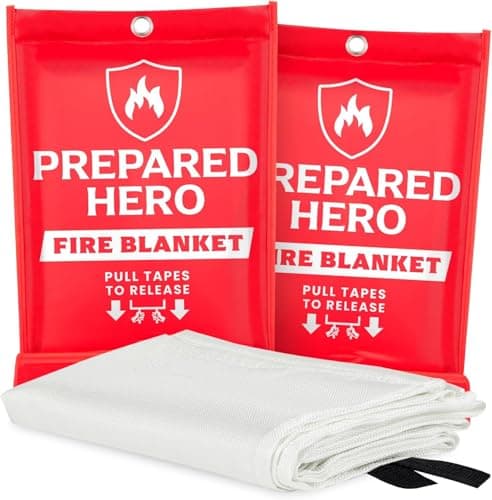 Prepared Hero Emergency Fire Blanket 39 x 39 in with a pull-tab pouch. On a home pan fire it does what a Class K unit does in a restaurant: seals the surface. | The domestic answer to a pan of oil | 7.8/ 10 | $39.98 · View on Amazon #ad how we are funded · price as of October 19, 2026 |
| 2 | 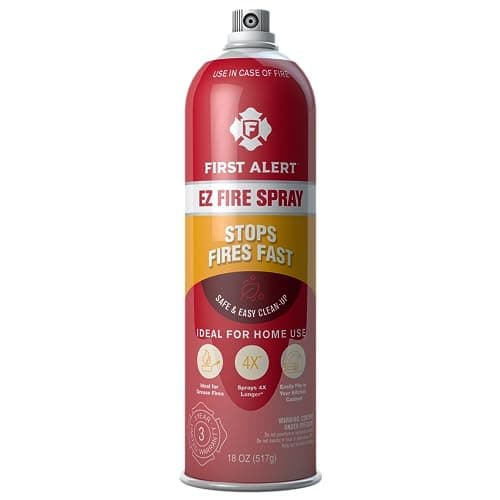 First Alert EZ Fire Spray AF400 Sodium-bicarbonate-based aerosol that wipes up with a cloth. Not a rated extinguisher of any class. | A hob-side can for a small flare-up | 6.0/ 10 | $11.98 · View on Amazon #ad how we are funded · price as of October 19, 2026 |
| 3 | 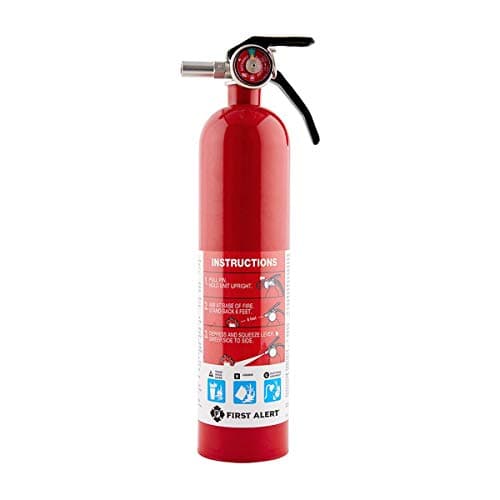 First Alert HOME1 Rechargeable Home Extinguisher (2.5 lb) 2.5 lb, UL rated 1-A:10-B:C. Not for the pan — for everything else a kitchen can set on fire. | The rated unit the kitchen still needs | 6.6/ 10 | $19.98 · View on Amazon #ad how we are funded · price as of October 19, 2026 |
What a home kitchen should keep instead
A domestic hob is not the appliance Class K was written for. These three cover the real domestic kitchen fires, in the order you would reach for them.
1. The domestic answer to a pan of oil
Prepared Hero Emergency Fire Blanket
39 x 39 in with a pull-tab pouch. On a home pan fire it does what a Class K unit does in a restaurant: seals the surface.
- Listed to
- Prepared Hero states conformity to CE safety standards, naming EN 1896:1997
- Sensing / agent
- Two layers of woven fiberglass around an inner fire-retardant layer
- Power / service life
- Single use on a real fire; inspect and replace after any deployment
A home pan fire and a restaurant fryer fire are the same chemistry at very different scale. The restaurant answer is a wet chemical system because there are gallons of oil at temperature in a fixed appliance under a hood. The home answer is a blanket because there is a pan, and the pan can be covered in one movement.
What the blanket achieves is the same objective as saponification, by a different mechanism: it keeps oxygen off the surface while the oil cools. The failure mode is the same too — lift it early and hot oil meets air and reignites, which is why the rule is fifteen minutes minimum with no peeking.
How to use a fire blanket has the procedure, and the two mistakes that turn a contained pan fire into a kitchen fire are both in it.
What it does well
- Smothers a pan by cutting off oxygen, which is the same objective a Class K discharge has
- Pull-tab pouch — the mechanism that matters when you are reaching for it without looking
- No powder, no residue, no corrosive clean-up across the whole kitchen
- 39 x 39 in covers a large pan with margin to press down the sides
The downside
- Manufacturer does not publish an independent listing number for this product
- Woven fiberglass, so the fiber question applies
- Covers what it can cover — a fire that has left the pan is past it
Do not buy this if: the fire has reached a cabinet or an extractor hood. A blanket is a pan tool, and past the pan the answer is leaving.
- 39 x 39 in, sold as a two-pack so a kitchen and a garage can both be covered
- Pull-down tabs deploy it, which is the only mechanism that matters when you are reaching blind
- No powder, no residue, no clean-up beyond throwing the blanket away
- Woven fiberglass construction, so the fiber question below applies to it
- A hanging slot in the sleeve, so it can live on the wall rather than in a drawer
Prepared Hero product documentation
#ad how we are funded · price as of October 19, 2026
2. A hob-side can for a small flare-up
First Alert EZ Fire Spray AF400
Sodium-bicarbonate-based aerosol that wipes up with a cloth. Not a rated extinguisher of any class.
- Listed to
- Aerosol extinguishing spray — not a UL-rated A:B:C portable extinguisher
- Sensing / agent
- Sodium-bicarbonate-based extinguishing aerosol
- Power / service life
- Single use; check the stamped expiry
Included because it is the product people reach for when they search for a kitchen extinguisher, and because the honest assessment is narrow rather than negative.
On a small flare-up — a flaring pan, a scorching tea towel, a bin — an aerosol you can aim without a thought is better than a cylinder you have never practiced with. On a deep pan of oil at temperature it is the wrong tool, because the thing that kills you there is reignition, and nothing in this can forms a sealing layer.
Aerosol spray vs traditional extinguishers is the full comparison, and it does not pretend this product replaces a rated unit.
What it does well
- No pin and no gauge — aim and spray, which suits someone who will never practice with a cylinder
- Sodium bicarbonate chemistry, which is the family commercial Class B:K dry agents came from
- Wipes up with a cloth rather than coating a kitchen in corrosive powder
- Small enough to live beside the hob where a cylinder would not
The downside
- Not a UL-rated A:B:C portable extinguisher and carries no Class K rating
- Single use with a stamped expiry
- Does not saponify, so reignition protection depends on the oil cooling, not on a sealed surface
Do not buy this if: you are looking for the domestic equivalent of a Class K unit. This is a convenience product for a small flare-up, and the blanket is the better first move on oil.
- Aerosol can format — no pin, no pressure gauge, aim and spray
- Wipes up with a cloth instead of the corrosive mess dry chemical leaves
- Genuinely easier for someone who will never practice with a real extinguisher
- It is not a rated extinguisher and does not satisfy a code requirement for one
#ad how we are funded · price as of October 19, 2026
3. The rated unit the kitchen still needs
First Alert HOME1 Rechargeable Home Extinguisher (2.5 lb)
2.5 lb, UL rated 1-A:10-B:C. Not for the pan — for everything else a kitchen can set on fire.
- Listed to
- UL rated 1-A:10-B:C
- Sensing / agent
- Monoammonium phosphate dry chemical
- Power / service life
- Rechargeable by a certified professional; metal head and pull pin
This is on the page to make a specific point: the reason a home kitchen does not need Class K is not that pan fires are harmless. It is that the domestic pan fire has a better answer, and the ABC unit is there for the other kitchen fires.
Kitchens burn in several ways. Cooking oil is the famous one; the others are an overloaded outlet, a failing appliance motor, a cable behind a counter, a bin of packaging. Those are Class A and Class C fires, and a wet chemical Class K unit is not rated for them.
So the domestic kit is a blanket within one step of the hob and an ABC unit by the door — not one device trying to do both. Best kitchen fire extinguishers sets out that pairing, and kitchen Class K vs ABC argues it out in detail.
What it does well
- A real UL rating, 1-A:10-B:C, which an aerosol and a blanket do not have
- Metal head and a metal pull pin with a safety seal
- 2.5 lb — the lightest unit most people can aim accurately with one hand
- Covers the electrical and ordinary-combustible fires a kitchen also produces
The downside
- Dry chemical on a pan of oil risks splashing burning oil and does not prevent reignition
- Monoammonium phosphate residue is corrosive and goes everywhere
- Short discharge time — a missed first attempt is most of the extinguisher
Do not buy this if: the fire is in a pan. Use the blanket. This unit is for the cable, the toaster, the bin and the curtain, and that is a real and separate job.
- 2.5 lb — the lightest unit most people can aim accurately with one hand
- Metal head and a metal pull pin with a safety seal, not the plastic valve of the disposable tier
- Color-coded corrosion-resistant gauge and a mounting bracket in the box
- 1-A is half the ordinary-combustible rating of a 2-A unit, which is the trade for the size
First Alert product documentation
#ad how we are funded · price as of October 19, 2026
Who actually needs a Class K extinguisher
Short list, and the line is about the appliance rather than the building.
- Commercial kitchens with deep fryers or cooking appliances using vegetable or animal oils. This is the case NFPA 10 is written for, and the extinguisher is normally a supplement to a fixed hood suppression system rather than a substitute for it.
- Food trucks and mobile catering. Same appliances, less space, and usually a specific local requirement. Ask your AHJ rather than guessing.
- Shared or institutional kitchens — a church hall, a clubhouse, a staff canteen with a fryer. If there is a fryer and it is not a domestic one, assume Class K is in scope.
- A domestic kitchen with a genuine deep fryer in regular use. Rare, but if you are frying in quarts of oil at temperature on a weekly basis, you are closer to the commercial case than the hob case.
- Not a normal home kitchen. A pan, a hob and a bottle of oil is a blanket problem. Buying a Class K cylinder for it means spending more for a unit rated for fewer of the fires your kitchen will actually have.
Questions people actually ask
What is a Class K fire extinguisher used for?
Do I need a Class K extinguisher at home?
What is saponification in a fire extinguisher?
Can I use an ABC extinguisher on a cooking oil fire?
How these picks were chosen. On published specifications, safety listings and manufacturer documentation — plus the findings of organizations that do run tests. We have no laboratory and we do not burn anything. Read the full methodology.
Sources
- NFPA — NFPA 10, Standard for Portable Fire Extinguishers
- UL Solutions — Fire extinguisher testing and certification (UL 711)
- Amerex — What is a Class K fire?
- NFPA — Cooking equipment fires in US homes
- US Fire Administration — Cooking fire safety
- CDC / NIOSH — Occupational exposure guidance and chemical databases
Read next
Fire Extinguishers
The full class chart, what the numbers measure, and which agent suits which fire.
Fire Extinguishers
Why Class K exists, what saponification does, and what a home kitchen should keep instead.
Fire Extinguishers
The Best Kitchen Fire Extinguishers
Class K versus ABC, and why the blanket is the kitchen's first tool.
Fire Extinguishers
The correct sequence, why water is catastrophic, and when to leave instead.
Fire Blankets
The Best Fire Blanket for a Kitchen
Why a blanket beats an extinguisher at the hob, and what the cooking-fire standard really covers.