Smoke Detectors
First Alert 9120B Alternatives
If a 9120B has reached ten years, you are not shopping for an upgrade - you are shopping for the thing that drops onto the same circuit without losing the interconnect.
By Ryder M.Last reviewed
The closest replacement for a First Alert 9120B is the First Alert SMI105-AC: a hardwired photoelectric smoke alarm that keeps the wired interconnect across the First Alert and BRK family, swaps the annual 9V for a sealed ten-year backup cell, and costs less than any other pick here - which makes it the budget pick as well as the like-for-like one. If you would rather move to Kidde's current hardwired line, the Kidde 20SA10 is listed to UL 217 10th edition with a sealed ten-year backup, and the Kidde 20SAR-VRF adds a wire-free interconnect that reaches rooms your 9120B circuit never did. And if the house burns gas, oil or wood, the honest upgrade is the Kidde 30CUA10-V, which covers carbon monoxide from the same ceiling position. One thing to settle before you order anything: switching manufacturer on a wired loop means replacing the whole loop, because interconnect signaling does not cross families.
Siren & Safe is reader-funded. We earn a commission on some links on this page, at no cost to you. It does not change what we recommend or the order we rank it in. Full disclosure.
Why people search for a 9120B replacement
Almost always because of the date on the back. The 9120B and its siblings were fitted in enormous numbers across US housing, frequently by builders doing a whole development at once, and a smoke alarm has a service life of about ten years from manufacture whether or not it has ever alarmed. So these alarms reach the end of their life in batches, a household discovers it has five expired alarms rather than one, and the search that follows is not "what is the best smoke alarm" - it is "what drops onto this circuit without breaking the interconnect".
The second reason is the annual 9V battery. The 9120B generation takes a replaceable backup cell, and that cell is the origin of most of the chirping in America. A chirp at 3 a.m. gets the battery pulled, and the battery does not always go back. Every alarm on this page except one swaps that for a sealed ten-year backup, which is the single most useful change available in a like-for-like replacement.
The third is coverage: people realize mid-job that the circuit covers the bedroom floor and nothing else, or that the house burns gas and has no carbon monoxide alarm anywhere. Both are fixable in the same afternoon, and two picks here exist for exactly those cases.
What none of this means is that the 9120B was a bad alarm. It is a certified, hardwired, interconnecting alarm with battery backup from one of the two established US manufacturers, it is still sold, and if yours has failed inside its service life then replacing it with the same model is a perfectly good answer. This page is for the other situation - the batch that has aged out, and the decision about what goes up instead.
The two checks to do before you order
Check the family, then count the alarms. Wired interconnect signaling runs over the circuit's third conductor and it is manufacturer-specific, usually series-specific. A First Alert 9120B loop will not sound with a Kidde alarm spliced into it: the Kidde unit detects smoke, sounds alone, and stays quiet when the others go off. That is the failure mode you cannot see from the ground, and it is why switching family is a whole-loop decision. If you want to replace one alarm today and the rest next month, stay in the First Alert and BRK family.
Check the harness plug. Hardwired alarms connect through a keyed plug on a short harness, and the connector is not universal - First Alert itself has used more than one across the years the 9120B was sold. Compare the plug on the old alarm with the one on the new unit before you cut anything. A mismatch is a few dollars for a replacement harness and ten minutes of work; it is never a reason to abandon the circuit and fit battery alarms instead.
While you have the breaker off, it is worth knowing what the local rule is. Many jurisdictions treat removing a hardwired interconnected alarm as a downgrade that is not permitted, and your authority having jurisdiction decides which code edition applies to your house and whether retrofit rules differ from new construction. Rental and landlord requirements covers the tenanted case, where the obligation is usually explicit.
Quick picks
Scored against keeps your interconnect, backup battery, documented specification, install simplicity and value. Tap a row for the full write-up. The price in each buy button is the live Amazon price at the last check, stamped with the date it was taken.
| # | Product | Best for | Score | Price |
|---|---|---|---|---|
| 1 | 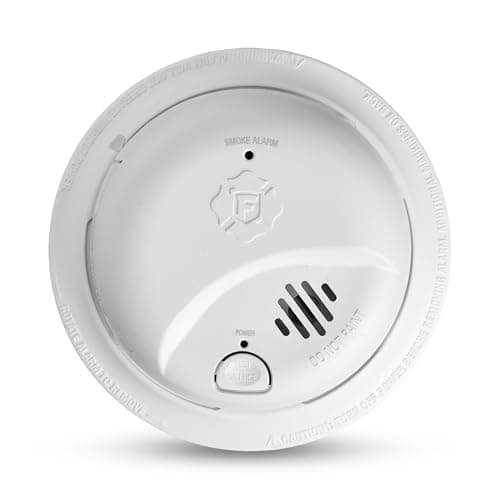 First Alert SMI105-AC Hardwired Smoke Alarm with 10-Year Battery Backup First Alert's current hardwired smoke alarm with a sealed ten-year backup. Same family, same interconnect, no annual 9V, and the cheapest pick here. | The like-for-like swap - and the budget pick | 9.4/ 10 | |
| 2 | 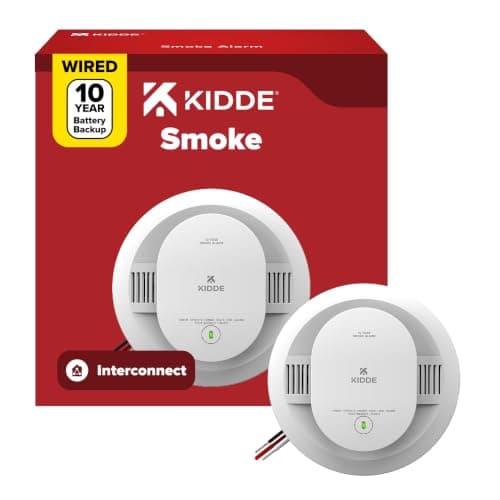 Kidde 20SA10 Hardwired Smoke Alarm with 10-Year Backup Battery A hardwired photoelectric alarm listed to UL 217 10th edition with a sealed ten-year backup, and Kidde's stated successor to its own discontinued hardwired range. | Moving to Kidde's current hardwired line - with the whole loop | 8.5/ 10 | $42.77 · View on Amazon #ad how we are funded · price as of November 22, 2026 |
| 3 | 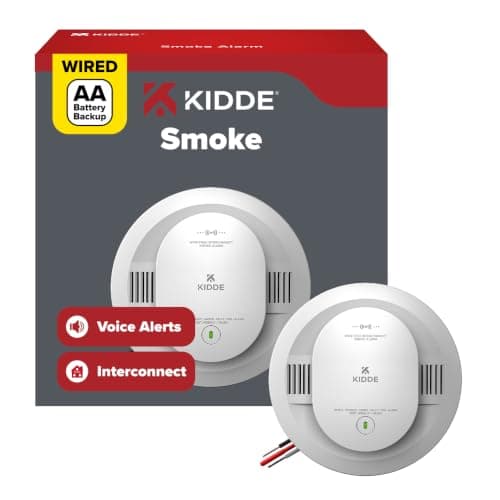 Kidde 20SAR-VRF Hardwired Smoke Alarm with Wire-Free Interconnect A hardwired photoelectric alarm with both wired and wire-free interconnect, plus a spoken "Fire!" instead of an ambiguous horn. | Reaching the rooms your 9120B circuit never did | 8.3/ 10 | $49.97 · View on Amazon #ad how we are funded · price as of November 22, 2026 |
| 4 | 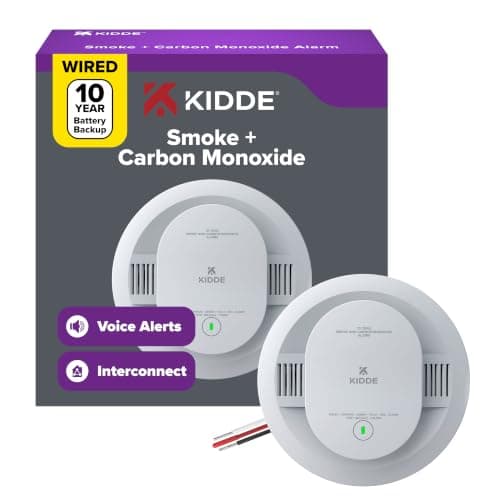 Kidde 30CUA10-V Hardwired Combination Smoke & CO Alarm A hardwired combination alarm that covers carbon monoxide from the same ceiling position, announces which hazard it found, and keeps a sealed ten-year backup. | The honest upgrade if the house burns anything | 8.7/ 10 | $73.99 · View on Amazon #ad how we are funded · price as of November 22, 2026 |
The picks
1. The like-for-like swap - and the budget pick
First Alert SMI105-AC Hardwired Smoke Alarm with 10-Year Battery Backup
First Alert's current hardwired smoke alarm with a sealed ten-year backup. Same family, same interconnect, no annual 9V, and the cheapest pick here.
- Listed to
- UL 217 — First Alert states compliance with the latest edition
- Sensing / agent
- Photoelectric smoke sensing only — no CO cell
- Power / service life
- 120V AC with a sealed 10-year lithium backup battery
What the 9120B is known for, and whether this matches it. The 9120B family earned its place for three reasons: it is hardwired with a 9V battery backup, it interconnects with up to a dozen or more compatible First Alert and BRK alarms, and it has been sold for long enough that builders standardized on it across whole developments. It is a dependable, certified alarm and it is still sold - so if yours is simply faulty rather than expired, replacing it with the same model is a legitimate answer.
What changes if you take this instead. You keep the interconnect and the hardwiring, and you lose the annual battery ritual. You also gain an origin indicator and an end-of-life warning, both of which the older generation lacked. Nothing about the detection changes: both are certified to UL 217 and both have passed the same laboratory fires.
Buy the whole loop. A batch of 9120Bs fitted by a builder reaches ten years within weeks of each other, so one replacement is the first of several. Order them together, fit them on the same afternoon, and write that month on the back of every unit - when to replace smoke detectors explains why the stamped manufacture date is not the date to work from.
What it does well
- **Stays inside the First Alert and BRK interconnect family**, which is the whole point if your other ceilings still hold 9120Bs or their siblings - you can replace the loop in one order and nothing stops talking
- **Sealed ten-year lithium backup battery** instead of the 9120B's annual 9V. That single change removes the chirp that gets alarms disabled, and over a decade it costs less than the batteries it replaces
- **Photoelectric smoke sensing on a hardwired circuit** - the sensor type that responds sooner to smoldering fires, which is the fire that kills people in their sleep
- **Alarm-origin indicator** tells you which unit started it, which the 9120B generation did not do and which ends the hunt around the house
- **Test and silence button that holds the hush for up to eight hours**, plus an end-of-life warning rather than silent expiry
- **Cheapest alarm on this page**, which matters because you are almost certainly buying four to six of them
The downside
- **Smoke only, like the 9120B.** If the house has gas, oil, a fireplace, an attached garage or a generator, this replaces what you had and still leaves carbon monoxide uncovered
- **First Alert does not name the sensor type** on the listing - "Precision Detection" is the published wording, and the photoelectric attribution here is this site's determination from the product family rather than a current manufacturer statement
- **Check the harness plug.** First Alert has used more than one keyed connector across the years the 9120B was sold; a mismatch means a cheap replacement harness, not a different alarm
- **No voice, no display, no strobe** - it is a horn, an LED and an interconnect, which is exactly what a 9120B was
- Needs the 120V circuit live, so this is still a breaker-off job
Do not buy this if: a house with no CO coverage at all, where the combination pick below does both jobs from the same position for roughly twice the money. For the wider hardwired field see [best hardwired smoke detectors](/smoke-detectors/best-hardwired-smoke-detectors).
- Photoelectric sensing on a hardwired circuit, which is the combination most houses should be replacing into
- Precision Detection sensing, which First Alert states meets the new industry standards on cooking nuisance alarms
- Non-replaceable 10-year backup cell rather than an annual 9V change
- Test/silence button that holds the hush for up to eight hours
- Interconnects over the existing alarm circuit with compatible First Alert and BRK units
First Alert product documentation
2. Moving to Kidde's current hardwired line - with the whole loop
Kidde 20SA10 Hardwired Smoke Alarm with 10-Year Backup Battery
A hardwired photoelectric alarm listed to UL 217 10th edition with a sealed ten-year backup, and Kidde's stated successor to its own discontinued hardwired range.
- Listed to
- UL 217, 10th edition (UL 217-2024 Ed.10)
- Sensing / agent
- Photoelectric smoke sensing only — no CO cell
- Power / service life
- 120V AC with a sealed 10-year backup battery; 10-year limited warranty
Why anyone would switch family at all. Two reasons come up repeatedly. The first is certification specificity: Kidde publishes a UL 217 10th edition listing for this series, and a buyer who filters on what a device was tested to can act on that. The second is simple availability - a batch of six alarms in stock today beats a better alarm in three weeks, and in this category the brands trade places on stock constantly.
If you switch, switch everything. Wired interconnect runs over the circuit's third conductor and the signaling is manufacturer-specific. A single Kidde alarm among five First Alerts detects smoke correctly and stays silent when the others sound, which is worse than either a full Kidde loop or a full First Alert one because nobody notices.
Fit the supplied harness. Each manufacturer ships its own keyed connector. Reusing the old First Alert harness on a Kidde alarm is not an option, and the few minutes to wire in the new one is the actual difference between the two options on this page.
What it does well
- **Listed to UL 217 10th edition** per Kidde's certification document - the current edition, which carries the cooking-nuisance test the 8th edition introduced. That is the most specific certification claim available on this page
- **Sealed ten-year backup battery** with no low-battery chirps across the decade
- **Drops onto an existing 120V alarm circuit** and interconnects over the wire with compatible Kidde units - one sounds, they all sound
- **The direct successor to Kidde's discontinued P4010ACS line**, so the documentation and compatibility notes are current rather than archived
- **Same reduced-nuisance sensing** as the battery model in the series, which is the relevant improvement for an alarm near a kitchen
- Roughly the same money as the First Alert option, so the switch is not a price decision
The downside
- **It will not interconnect with your existing 9120Bs.** This is the catch that defines the whole page: moving family means replacing every alarm on the loop, not one
- **Kidde does not name the sensor type** in its published copy - "advanced sensing technology" is the wording
- **Smoke only**, so CO still needs covering separately
- **Harness plug differs from First Alert's**, so expect to fit the supplied Kidde harness to the existing circuit conductors
- No voice, no display, no origin indicator
Do not buy this if: replacing a single alarm on an otherwise-First Alert circuit. In that case buy the First Alert pick above and keep the family intact - [are smoke alarms interchangeable](/smoke-detectors/are-smoke-alarms-interchangeable) explains why.
- Drops onto an existing 120V alarm circuit and interconnects over the wire — one sounds, they all sound
- Sealed 10-year backup battery, so a tripped breaker does not leave the house unprotected
- Same reduced-nuisance sensing as the battery model in this series
- No low-battery chirps across the ten years
- The direct successor to the P4010ACS line, which Kidde has discontinued
#ad how we are funded · price as of November 22, 2026
3. Reaching the rooms your 9120B circuit never did
Kidde 20SAR-VRF Hardwired Smoke Alarm with Wire-Free Interconnect
A hardwired photoelectric alarm with both wired and wire-free interconnect, plus a spoken "Fire!" instead of an ambiguous horn.
- Listed to
- UL 217 10th edition and UL 2034 5th edition; ETL listed
- Sensing / agent
- Photoelectric smoke sensing, with voice annunciation
- Power / service life
- 120V AC with two replaceable AA backup batteries
The upgrade a 9120B replacement can actually justify. A 9120B loop covers the rooms the builder wired, which in a lot of houses means the bedroom floor and nothing else. If your basement, loft conversion or extension has no alarm at all, this unit turns the replacement job into a coverage improvement: the wired alarms stay wired, and the rooms with no cable join the same alert by radio.
Count the AA cells into the decision. This is the only pick on the page that still needs an annual battery visit, and that is a real cost in a six-alarm house. It buys the bridge, so it is worth it where the bridge is needed and not where it is not.
Commission the radio before the final fixing. Pair the whole set, then test from the furthest position with the units propped where they will live. Finding a range problem after the holes are drilled is the one avoidable mistake with wire-free alarms.
What it does well
- **Hardwired and wire-free interconnect in one unit** - it joins the wired alarms on its circuit to up to 12 compatible units in rooms that have no alarm cable at all, which is the commonest gap in a house built to an older code
- **Voice alert announces "Fire!"** rather than sounding a horn, which orients a half-woken person faster than any volume increase can
- **Listed to UL 217 10th edition**, the same current-edition claim as its sibling
- **85 dB with a red LED**, the standard specification done properly
- **Photoelectric sensing with voice annunciation**, both published by Kidde
- Solves the basement, loft-conversion and extension problem without pulling cable through finished ceilings
The downside
- **Two replaceable AA backup batteries rather than a sealed cell** - the one pick here that keeps an annual visit and an eventual chirp
- **Will not interconnect with your existing First Alert alarms**, wired or wireless
- **Radio range is decided by your house**, not the box: masonry, foil-backed insulation and steel cut the link, so pair and test in the real positions before drilling
- **Twelve-unit wire-free limit**, lower than the 24 on Kidde's combination units
- **Smoke only** - no CO cell
Do not buy this if: a fully wired house, where the plain hardwired units above cost less and keep a sealed backup cell. For the wireless-only route in a house with no cable at all, see [interconnected smoke alarms](/smoke-detectors/interconnected-smoke-alarms).
- Hardwired AND wire-free interconnect: it joins the wired alarms on its circuit to alarms in rooms that have no wiring, up to 12 compatible units
- Voice alert announces "Fire!" rather than sounding an ambiguous horn
- 85 dB with a red LED
- Listed to UL 217 10th edition, which carries the cooking-nuisance test the 8th edition introduced
- AA backup batteries rather than a sealed cell — the one part of this alarm that still needs an annual visit
#ad how we are funded · price as of November 22, 2026
4. The honest upgrade if the house burns anything
Kidde 30CUA10-V Hardwired Combination Smoke & CO Alarm
A hardwired combination alarm that covers carbon monoxide from the same ceiling position, announces which hazard it found, and keeps a sealed ten-year backup.
- Listed to
- UL 217 and UL 2034 — Kidde's data sheet states the unit meets UL 217, UL 2034, NFPA 72 and NFPA 101 at the date of manufacture
- Sensing / agent
- Photoelectric smoke sensing plus an electrochemical CO cell, with voice annunciation
- Power / service life
- 120V AC with a sealed 10-year backup battery; 10-year limited warranty and an end-of-life beep at ten years
Why a replacement job is the right moment to add CO. You already have the breaker off, the ladder up and the harness in your hand. Adding carbon monoxide coverage later means doing all of that again, or buying separate CO alarms and managing two replacement schedules. If the house burns any fuel, this is the cheapest hour in which to fix the gap.
Be clear about what it costs. Twice the unit price across six ceilings is a real number, and for an all-electric house with no garage below it buys nothing. The decision is about the building, not the budget: fuel-burning appliance, attached garage, fireplace or generator means yes, and their absence means no.
It is still a whole-loop switch. Like every Kidde unit here, it will not sound with your existing First Alert alarms, so the combination upgrade and the family switch happen together or not at all.
What it does well
- **Covers smoke and carbon monoxide from one position**, which is the gap a 9120B leaves in any house with gas, oil, wood, an attached garage or a generator
- **Announces "Fire!" or "Warning! Carbon Monoxide"** - essential on a combination alarm, because the two hazards require opposite responses and one horn cannot tell them apart
- **Wired interconnect across up to 24 compatible Kidde devices**, more reach than the 9120B generation offered
- **Sealed ten-year backup battery**, so the annual 9V goes away
- **Drops onto the existing 120V circuit** with Kidde's supplied harness
- **85 dB with Kidde's enhanced sensing** for the cooking-nuisance resistance the current standard tests
The downside
- **Roughly twice the price of the smoke-only picks**, multiplied by every position on the loop - that is the real cost of the upgrade
- **Will not interconnect with your existing First Alert alarms**, so this is a whole-loop decision
- **Kidde does not name the sensor type** in its published material for this model
- **No display**, so there is no CO concentration to read - it announces rather than reports
- A CO cell has its own service life, so the combination unit's replacement date governs both functions
Do not buy this if: an all-electric house with no attached garage and no fuel-burning appliance, where a smoke-only replacement is the sensible spend. [Do I need a CO detector](/carbon-monoxide-detectors/do-i-need-a-co-detector) is the five-minute version of that decision, and [best hardwired smoke and carbon monoxide alarms](/smoke-detectors/best-hardwired-smoke-and-co-alarms) compares the full combination field.
- Drops straight onto an existing hardwired circuit and interconnects over the wire, with up to 24 compatible Kidde devices on one set
- Voice alerts announce "Fire!" or "Warning! Carbon Monoxide" rather than sounding an ambiguous horn
- Sealed ten-year backup battery rather than the 2 AA cells its 30CUAR sibling uses — nothing to change for a decade
- 85 dB at 10 ft, with Kidde's enhanced sensing technology for the cooking-nuisance resistance the latest residential standard tests
- Needs an existing 120V alarm circuit — it is not a battery-only retrofit
#ad how we are funded · price as of November 22, 2026
What changes if you switch
The differences that actually matter when a 9120B comes down, as published by the manufacturers and checked on 2026-11-14. The live price and the date it was taken sit in each buy button.
| Replacement | Hazards | Backup power | Interconnect | Joins a 9120B loop? |
|---|---|---|---|---|
| First Alert SMI105-AC | Smoke only | Sealed 10-year cell | Wired, First Alert and BRK family | Yes - same family |
| Kidde 20SA10 | Smoke only | Sealed 10-year cell | Wired, compatible Kidde units | No |
| Kidde 20SAR-VRF | Smoke only | Two AA cells | Wired plus wire-free to 12 units | No |
| Kidde 30CUA10-V | Smoke and CO | Sealed 10-year cell | Wired, up to 24 Kidde units | No |
The last column decides the size of the job. One alarm in the First Alert family is a ten-minute swap; anything in the Kidde column means replacing every alarm on the circuit so that the loop still sounds together.
How we ranked these
Five criteria for somebody replacing an expired hardwired alarm rather than shopping from scratch. Detection is not one of them: every unit here is certified to UL 217, which settles it.
- Keeps your interconnect. Whether the alarm will sound with the 9120Bs still on your circuit. Only one pick scores full marks, and that is the single biggest reason it is first.
- Backup battery. Sealed ten-year cells score highest, because the annual 9V is the problem a 9120B owner is usually trying to leave behind.
- Documented specification. Whether the manufacturer publishes a current UL 217 edition and a sensor type, or describes the sensing in adjectives.
- Install simplicity. Whether the supplied harness matches what is in your ceiling, and whether a radio link needs commissioning as well.
- Value. Unit price multiplied by the number of positions on a real loop - because nobody replacing a 9120B is buying one alarm.
Questions people actually ask
What can I replace a First Alert 9120B with?
Is the First Alert 9120B discontinued?
Can I put a Kidde alarm on a First Alert 9120B circuit?
Do I need the same harness plug to replace a hardwired alarm?
Should I upgrade to a combination smoke and CO alarm while I am up there?
How many alarms should I replace at once?
How these picks were chosen. On published specifications, safety listings and manufacturer documentation — plus the findings of organizations that do run tests. We have no laboratory and we do not burn anything. Read the full methodology.
Sources
- UL Solutions — UL 217 — smoke alarms
- UL Solutions — UL 217, Standard for Smoke Alarms, published with new technical requirements
- UL Solutions — UL 2034 — single and multiple station carbon monoxide alarms
- NFPA — NFPA 72, National Fire Alarm and Signaling Code (2025 edition)
- NFPA — Smoke alarms — installation and placement guidance
- International Code Council — IRC Chapter 3 — building planning (R310, R314, R315)
- UpCodes — Specific location requirements for smoke alarms (NFPA 72 §29.11.3.4)
- US Fire Administration — Home fire prevention
Read next
Smoke Detectors
The Best Hardwired Smoke and Carbon Monoxide Alarms
Four certified hardwired units compared on backup battery, interconnect reach, voice annunciation and accessibility - plus why dropping a wired house to battery alarms is the worst trade in this category.
Smoke Detectors
The Best Hardwired Smoke Detectors
Four current hardwired alarms, the backup-battery decision, and the compatibility rule that breaks interconnects.
Smoke Detectors
First Alert Smoke Detector Alternatives
Three certified alarms to buy instead of a First Alert unit that is out of stock or discontinued - and the interconnect trap to check before you switch brands.
Smoke Detectors
Are Smoke Alarms Interchangeable?
The connector fits across brands; the interconnect signal does not. Why a mixed circuit fails silently.
Smoke Detectors
When to Replace Smoke Detectors
Where the date is, why the test button proves little, and what to replace with.

Smoke Detectors
First Alert vs Kidde Smoke Detectors
Both are listed and both work — the decision is which platform you commit to.