Smoke Detectors
X-Sense Alternatives
The usual reason to move off X-Sense is a certification mark on a form, not a problem with the alarm. Here is what to fit instead.
By Ryder M.Last reviewed
If you need a UL mark rather than an ETL one - because an inspector, insurer or landlord asked for it in those words - buy the Kidde 20SD10: a sealed ten-year battery alarm listed to UL 217 10th edition, at the lowest price in this registry, which also makes it the budget pick. If you want a combination smoke and CO alarm from an established US brand with a spoken hazard announcement, the Kidde 30CUA10-V does that on an existing wired circuit and interconnects with up to 24 compatible units. And if away-from-home notification is what X-Sense's standalone alarms cannot give you, the First Alert SMCO410 is Z-Wave Plus certified and works with a Ring base station. Said plainly: nothing here detects better than the X-Sense alarms do.
Siren & Safe is reader-funded. We earn a commission on some links on this page, at no cost to you. It does not change what we recommend or the order we rank it in. Full disclosure.
ETL, UL, and why this page exists at all
Almost every search for an X-Sense alternative traces back to one thing, and it is not detection. X-Sense alarms are ETL certified to UL 217. ETL is a recognized testing laboratory and UL 217 is the standard; an ETL mark against UL 217 means the alarm was tested to the same requirements as a UL-listed one, by a laboratory with the same recognition. Functionally, it is a real certification and this site recommends X-Sense units as top picks on several pages.
What it is not is the specific word some paperwork asks for. Inspectors, insurers, letting agents and some local requirements are written around "UL listed", and a form does not negotiate. If you have been handed that requirement, the sensible move is to buy a UL-listed alarm rather than to argue - and that is the whole purpose of this page.
The second, much smaller reason is interconnection. Most X-Sense alarms in this registry are standalone: the SC07, SC01 and SC06 do not interconnect at all, and only the SC07-W does. A house with alarm cable already in the ceilings can get a better outcome from a wired family, because every alarm sounding at once is the feature with the strongest evidence behind it.
The third is phone alerts, which the standalone X-Sense range does not offer in any form. That only matters for a property nobody is in - and when it matters, it matters a lot.
What is not a reason to switch is detection performance, price or build. On all three X-Sense competes hard, and on sensor-type disclosure it is currently ahead of both US majors. First Alert versus Kidde versus X-Sense is the three-way comparison if you want the full picture.
Quick picks
Scored against certification mark, price, ten-year upkeep, hazards covered and install simplicity. Tap a row for the full write-up. The price in each buy button is the live Amazon price at the last check, stamped with the date it was taken.
| # | Product | Best for | Score | Price |
|---|---|---|---|---|
| 1 | 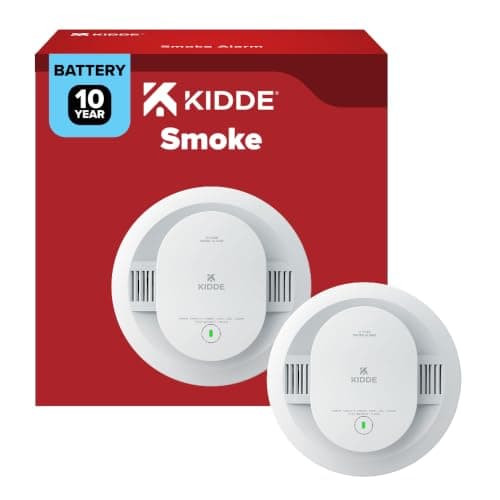 Kidde 20SD10 10-Year Battery Smoke Alarm Listed to UL 217 10th edition, sealed for ten years, and the cheapest alarm this site recommends anywhere. The answer when the paperwork says UL. | The budget pick - a UL 217 listing from an established US brand | 8.8/ 10 | $32.47 · View on Amazon #ad how we are funded · price as of November 11, 2026 |
| 2 | 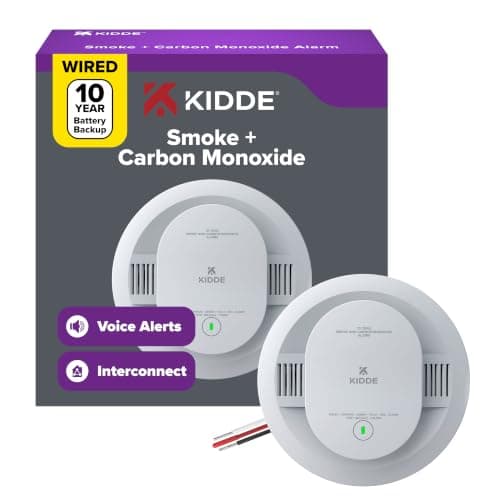 Kidde 30CUA10-V Hardwired Combination Smoke & CO Alarm A hardwired combination smoke and CO alarm that says which hazard it detected and interconnects across up to 24 compatible Kidde units. | A wired house that wants both hazards and a spoken announcement | 8.7/ 10 | $73.99 · View on Amazon #ad how we are funded · price as of November 11, 2026 |
| 3 | 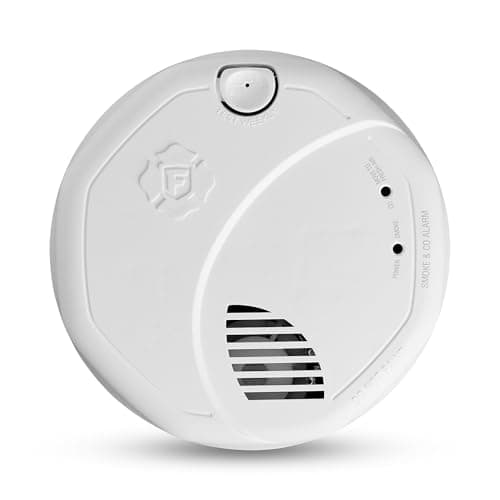 First Alert SMCO410 Z-Wave Plus Smart Smoke & CO Alarm A sealed ten-year combination alarm that a Z-Wave controller or a Ring base station can see, which is the one thing X-Sense's standalone alarms cannot offer. | Anyone who needs the alert on a phone | 8.5/ 10 | $64.98 · View on Amazon #ad how we are funded · price as of November 11, 2026 |
The picks
1. The budget pick - a UL 217 listing from an established US brand
Kidde 20SD10 10-Year Battery Smoke Alarm
Listed to UL 217 10th edition, sealed for ten years, and the cheapest alarm this site recommends anywhere. The answer when the paperwork says UL.
- Listed to
- UL 217, 10th edition (UL 217-2024 Ed.10)
- Sensing / agent
- Photoelectric smoke sensing only — no CO cell
- Power / service life
- Sealed 10-year lithium battery; 10-year limited warranty
What X-Sense is known for, fairly stated. Very low prices for a sealed ten-year combination alarm, LCD CO readings on models far below the price where US brands offer them, a wireless-interconnect option that needs no hub, dust-resistant housings for utility spaces, and - unusually in this category now - the sensor types named on its retail listings. On this site X-Sense units are the top pick on several pages for exactly those reasons.
Where it falls short, and it is narrow. X-Sense alarms are ETL certified to UL 217 rather than UL-listed. That is a mark from a recognized testing laboratory against the same standard, and functionally it is a real certification. It is also not the word some inspectors, insurers and letting agents have written into their requirements, and arguing the point with a form is a losing position.
That is the whole reason this page exists. If your requirement says UL, buy UL. This is the cheapest way to do it.
What it does well
- **Listed to UL 217 10th edition** per Kidde's certification document - the current edition, carrying the cooking-nuisance test
- **Lowest price of any alarm on this site**, so there is no cost penalty for moving to a US brand
- **Sealed 10-year battery** with no low-battery chirps and an end-of-life beep at ten years
- **Three long beeps and a red flash on smoke**, so the pattern identifies the hazard
- **Twist-and-click bracket** and a self-test rather than waiting for the button
- A brand name an inspector, insurer or home buyer recognizes without discussion
The downside
- **Smoke only - no CO cell**, where the X-Sense units you were considering probably covered both hazards
- **No display**, so no CO concentration to read - a direct downgrade from the SC07 or SC01
- **Kidde does not name the sensor type** - "advanced sensing technology" is the published wording, where X-Sense names photoelectric on its listings
- **No interconnect** of any kind
- Sealed, so scrap at ten years
Do not buy this if: a household that wanted one device for both hazards - the combination pick below covers that. If sensor documentation is your filter, moving from X-Sense to Kidde is a step backwards; see [non-toxic smoke detectors](/smoke-detectors/non-toxic-smoke-detectors) for why that matters here.
- Listed to the 10th edition of UL 217, which carries the cooking-nuisance test the 8th edition introduced
- Kidde's own wording: advanced sensing technology helps distinguish real smoke from everyday cooking or steam
- No low-battery chirps for ten years — the first end-of-life beep is the replacement signal
- Three long beeps and a red flash on smoke, so the pattern tells you which hazard it is
- Twist-and-click bracket, and it self-tests rather than waiting for you to press the button
#ad how we are funded · price as of November 11, 2026
2. A wired house that wants both hazards and a spoken announcement
Kidde 30CUA10-V Hardwired Combination Smoke & CO Alarm
A hardwired combination smoke and CO alarm that says which hazard it detected and interconnects across up to 24 compatible Kidde units.
- Listed to
- UL 217 and UL 2034 — Kidde's data sheet states the unit meets UL 217, UL 2034, NFPA 72 and NFPA 101 at the date of manufacture
- Sensing / agent
- Photoelectric smoke sensing plus an electrochemical CO cell, with voice annunciation
- Power / service life
- 120V AC with a sealed 10-year backup battery; 10-year limited warranty and an end-of-life beep at ten years
Interconnect is the real reason to move. X-Sense's cheapest alarms are standalone: the SC07, SC01 and SC06 do not interconnect at all, and only the SC07-W does. If your ceilings already have alarm cable, a wired family gives you alarms that all sound together using wiring you have already paid for, and that is the feature with the strongest safety evidence behind it.
The spoken hazard is a genuine upgrade. Smoke means get out and stay out; carbon monoxide means get into fresh air and call for help. A combination alarm with one horn cannot distinguish them and households guess wrong. This one says which.
Do the whole loop. Alarms on a shared circuit age together, so replacing one is replacing none.
What it does well
- **Announces "Fire!" or "Warning! Carbon Monoxide"**, which is the single most useful thing a combination alarm can do - the two hazards need opposite responses
- **Smoke and CO in one device**, matching what the X-Sense combination alarms cover
- **Wired interconnect for up to 24 compatible Kidde devices**, which X-Sense's standalone models cannot do at all
- **Sealed ten-year backup battery** rather than AA cells - nothing to change for a decade
- **85 dB at 10 ft with Kidde's enhanced sensing** for the cooking-nuisance resistance the current standard tests
- An established US brand on the ceiling, with the recognition that brings at inspection
The downside
- **Needs an existing 120 V alarm circuit** - this is not a battery retrofit, and an unfamiliar junction box means an electrician
- **No display**, so no CO concentration reading: a downgrade from the X-Sense LCD models
- **Kidde does not name the sensor type** in its published copy
- **More expensive than the X-Sense combination alarms**, often by a wide margin
- Interconnect compatibility is per-family, so the whole loop has to be Kidde
Do not buy this if: a rental or any house with no alarm wiring - there the X-Sense SC07-W's hubless wireless interconnect is genuinely hard to beat, and the alternative is the Z-Wave pick below. See [interconnected smoke alarms](/smoke-detectors/interconnected-smoke-alarms).
- Drops straight onto an existing hardwired circuit and interconnects over the wire, with up to 24 compatible Kidde devices on one set
- Voice alerts announce "Fire!" or "Warning! Carbon Monoxide" rather than sounding an ambiguous horn
- Sealed ten-year backup battery rather than the 2 AA cells its 30CUAR sibling uses — nothing to change for a decade
- 85 dB at 10 ft, with Kidde's enhanced sensing technology for the cooking-nuisance resistance the latest residential standard tests
- Needs an existing 120V alarm circuit — it is not a battery-only retrofit
#ad how we are funded · price as of November 11, 2026
3. Anyone who needs the alert on a phone
First Alert SMCO410 Z-Wave Plus Smart Smoke & CO Alarm
A sealed ten-year combination alarm that a Z-Wave controller or a Ring base station can see, which is the one thing X-Sense's standalone alarms cannot offer.
- Listed to
- First Alert states the alarm's Precision Detection sensing complies with the latest industry standards; it does not name a UL edition on the listing
- Sensing / agent
- Photoelectric smoke sensing plus an electrochemical CO cell
- Power / service life
- Sealed 10-year lithium battery
The notification gap. X-Sense's strength is cheap, certified, sealed hardware with no cloud attached, and for most households that is the right trade. It leaves exactly one hole: a house nobody is in. A second home, a let, a long trip - in those cases a horn in an empty building is worth nothing, and a protocol-level smart alarm is the fix.
Protocol beats app, if you have a choice. A Z-Wave alarm is adopted by hardware you own and keeps working whatever a vendor decides about an app in three years. That is the opposite trade from a cloud-first smart alarm, and for a self-hosted setup it is the better one.
It is a certified alarm first. Whatever the hub does, the unit on the ceiling has to detect on its own, and it is built to.
What it does well
- **Z-Wave Plus certified**, so a controller such as Home Assistant's Z-Wave JS can adopt it as a native device - local control, no vendor cloud
- **Works with a Ring Alarm or Ring Alarm Pro base station**; First Alert states the base station plus a Ring Alarm Smoke and CO Listener are needed for away-from-home alerts
- **Smoke and CO in one sealed unit**, with Precision Detection sensing stated to reduce cooking nuisance alarms
- **Sealed 10-year lithium cell** - no battery changes, no low-battery chirps
- **Phone notification is the gap in the X-Sense range**, and this fills it without a subscription being mandatory
- Test and silence button with an end-of-life warning
The downside
- **Needs a controller or Ring base station to be smart**; on its own it is a good combination alarm with no notifications
- **Away-from-home alerts require specific extra Ring hardware** per First Alert's statement - an extra purchase and an extra failure point
- **No display and no voice**
- **First Alert does not name the sensor type** - "Precision Detection" is the published wording
- Several times the price of the X-Sense combination alarms
Do not buy this if: a household with no hub and no plan for one, where the money buys more safety as extra certified alarms. [Best smart smoke detectors](/smoke-detectors/best-smart-smoke-detectors) covers the wider smart field.
- Z-Wave Plus certified, which is what lets a non-Ring controller such as Home Assistant's Z-Wave JS adopt it
- Works with a Ring Alarm or Ring Alarm Pro base station — First Alert states the base station plus a Ring Alarm Smoke and CO Listener are required for away-from-home notifications
- Precision Detection sensing, which First Alert states reduces cooking nuisance alarms
- Test and silence button, plus an end-of-life warning when it is time to replace the unit
- Sealed ten-year cell: no battery changes and no low-battery chirps
First Alert product documentation
#ad how we are funded · price as of November 11, 2026
What changes if you switch
Published specifications only, checked on 2026-11-10. The live price and the date it was taken sit in each buy button.
| Alternative | Certification mark | Hazards | Interconnect | Phone alerts | Sensor named? |
|---|---|---|---|---|---|
| Kidde 20SD10 | UL 217 10th edition | Smoke only | None | No | No |
| Kidde 30CUA10-V | Kidde combination listing | Smoke and CO | Wired, up to 24 units | No | No |
| First Alert SMCO410 | First Alert combination listing | Smoke and CO | Via Z-Wave controller | With Ring hardware | No |
| X-Sense SC07 (the original) | ETL to UL 217 | Smoke and CO | None | No | Yes - photoelectric |
The last row is the product you were looking at. Note the final column: on sensor disclosure the X-Sense alarm is better documented than any alternative here, which is the trade you are making for the certification mark.
Questions people actually ask
What is a good alternative to X-Sense smoke alarms?
Are X-Sense smoke detectors UL listed?
Is X-Sense a good brand?
Can X-Sense alarms interconnect with Kidde or First Alert?
Do X-Sense alarms have phone notifications?
How these picks were chosen. On published specifications, safety listings and manufacturer documentation — plus the findings of organizations that do run tests. We have no laboratory and we do not burn anything. Read the full methodology.
Sources
- UL Solutions — UL 217 — smoke alarms
- UL Solutions — UL 217, Standard for Smoke Alarms, published with new technical requirements
- UL Solutions — UL 2034 — single and multiple station carbon monoxide alarms
- X-Sense — SC07 10-year battery combination smoke and carbon monoxide alarm with LCD
- Kidde — DETECT smoke alarm, 10-year battery powered (20SD10) — product page
- NFPA — NFPA 72, National Fire Alarm and Signaling Code (2025 edition)
Read next
Smoke Detectors
Both listings, a display and a ten-year battery — and no interconnect.
Smoke Detectors
The site's most-recommended alarm reviewed on its own terms: what the wireless interconnect buys, what the radio link costs, and how to commission a set properly.
Smoke Detectors
First Alert vs Kidde vs X-Sense
Sensor coverage, listing clarity and what each brand includes — a three-way with no default winner.
Smoke Detectors
What the standard tests, what the recent editions changed, and how to verify a mark is real.
Smoke Detectors
Kidde Smoke Alarm Alternatives
Three certified alternatives to a Kidde smoke alarm, including the one route that keeps an interconnect - and why a discontinued model number is the usual reason people look.
Smoke Detectors
The Best Combination Smoke and CO Alarms
Two listings, one position — and the one room where separate units win.