Fire Blankets
The Best Fire Blankets for Camping
A blanket is the only fire tool worth its weight in a pack: no pressure gauge, no expiry date, no technique — and it works on a person as well as a pan.
By Ryder M.Last reviewed
Buy the Prepared Hero fire blanket for camping: it is the compact one that comes in a hanging pouch, so it packs small, lives on a tent pole or a camper hook and comes out fast. The budget pick is the JJ CARE blanket, the cheapest in this registry — cheap enough to keep one in the car, one in the camp box and one in the tent, which is the right number. If you want the biggest useful area, the Tonyko is 47.2 x 47.2 in, large enough to wrap around a body as a heat shield rather than only smother a pan, and Tonyko names a specific EN 1869:1997 edition, which is more than most sellers in this category manage. And for a wood stove in a canvas tent or a teardrop, the Waylander carbon felt blanket is rated by its maker to 1800°F and sheds no glass fiber — but read its listing carefully, because it is a welding blanket and is not certified to EN 1869. One thing before you buy: a fire blanket is for a small fire caught early, and nothing here changes the rule that people come out first.
Siren & Safe is reader-funded. We earn a commission on some links on this page, at no cost to you. It does not change what we recommend or the order we rank it in. Full disclosure.
Why a blanket is the right fire tool for a campsite
A campsite has none of the things a house relies on. There is no mains water, usually no extinguisher, no alarm on a ceiling, and the fire service is a long way away over roads it may not know. What there is instead is a gas stove on an uneven table, a fire pit, a lantern, a pile of dry kindling, and several people in synthetic fleece sitting close to all of it.
In that setting a fire blanket does better than anything else you could carry, for four reasons. It has no failure mode you cannot see — no pressure to lose, no gauge to misread, no expiry date, nothing to service, which matters for gear that lives in a hot car boot between trips. It needs no technique: lay it over the fire from the near edge and keep your hands behind it, and that is the whole method. It works on a person, which no extinguisher does — a fiberglass blanket can be wrapped around someone whose clothing has caught, and that single use case justifies carrying one on its own. And it leaves nothing behind, so a camp stove you smother is a camp stove you can still cook on tomorrow, which a dry chemical discharge would not be.
The limit is the same as it is at home, and it is worth stating plainly: a blanket is for a small fire caught early. A tent that is properly alight, a camper fire, a gas cylinder venting flame, or a wildland fire in dry brush are all beyond it. In those cases the right action is to get everybody away from it immediately, move clear of other tents and vehicles, and raise the alarm. No piece of equipment changes that order.
One correction worth making, because it affects what people actually buy: a flame-resistant camping throw is not a fire blanket. Several well-known outdoor brands sell insulated blankets with flame-resistant shells, intended to resist sparks and embers from a campfire without melting. They are good products for sitting by a fire in. They are not certified to EN 1869, they are not designed to smother a pan fire, and they are not what this page is about. If you want warmth, buy one of those; if you want a fire tool, buy one of the blankets here.
How we scored these
Five criteria for a blanket that has to live in a pack or a vehicle and be usable in the dark, by somebody with no training, a long way from help.
- Packed size and weight. Whether it will realistically be carried on the trips you actually take, rather than left at home.
- Speed of deployment. Whether it comes with a pouch or hanging tabs, because a blanket in the bottom of a bag is not a fire tool. Weighted heavily: at a campsite this is the difference between owning one and using one.
- Usable area. The published dimensions, read against two jobs: covering a stove or pan, and getting around a person.
- Certification clarity. Whether the maker names a standard and an edition — EN 1869:1997 for cooking-fire blankets — or describes the product in adjectives.
- Value. Price against the job, judged on the basis that the right number of blankets is more than one.
Quick picks
Scored against packed size and weight, speed of deployment, usable area, certification clarity and value. Tap a row for the full write-up. The price in each buy button is the live Amazon price at the last check, stamped with the date it was taken.
| # | Product | Best for | Score | Price |
|---|---|---|---|---|
| 1 | 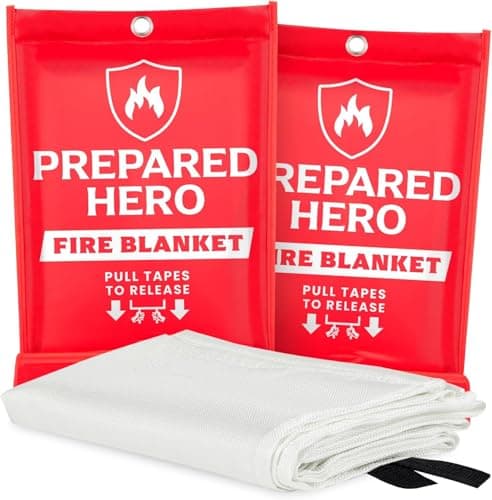 Prepared Hero Emergency Fire Blanket A woven fiberglass blanket in a hanging pouch, so it packs small, mounts on a tent pole or camper hook and comes out in one pull. The one to buy if you buy one. | Most campers — the compact one in a pouch that gets deployed fast | 8.8/ 10 | |
| 2 | 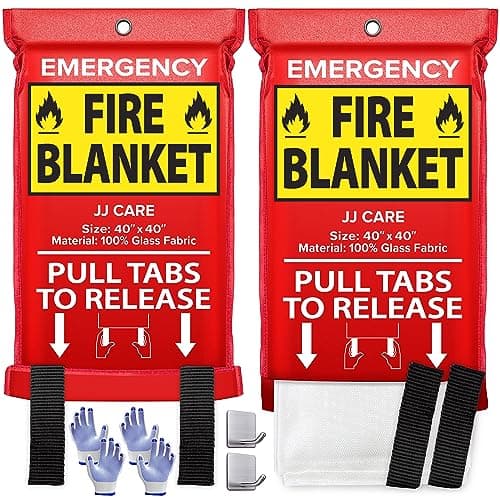 JJ CARE Fire Blanket Kit The cheapest fire blanket in this registry, which is the point: one in the car, one in the camp box and one in the tent is still less than a single extinguisher. | The budget pick — cheap enough to have one in every place you need one | 8.5/ 10 | $19.89 · View on Amazon #ad how we are funded · price as of November 22, 2026 |
| 3 | 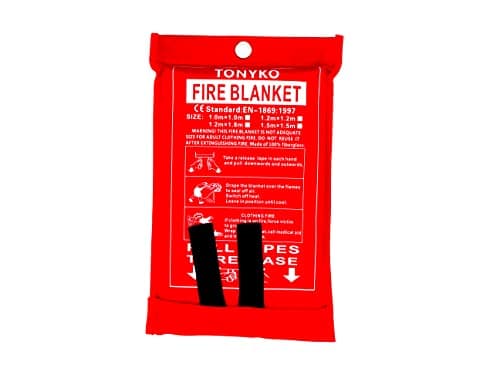 Tonyko Fiberglass Fire Blanket 47.2 x 47.2 in of woven fiberglass with a named EN 1869:1997 compliance claim. Large enough to be a heat shield around a body, not just a lid for a pan. | The largest useful area — big enough to wrap around a person | 8.6/ 10 | $21.99 · View on Amazon #ad how we are funded · price as of November 22, 2026 |
| 4 | 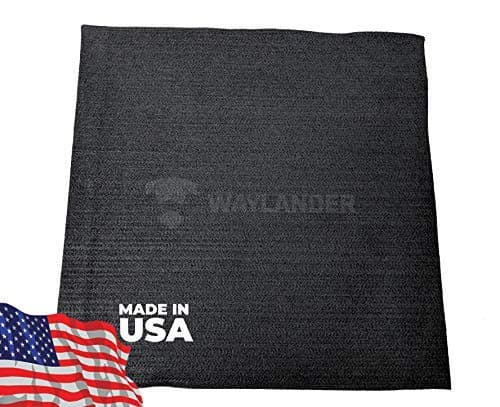 Waylander Carbon Felt Welding Blanket (36 x 36 in) Carbon felt rated by Waylander to 1800°F, Made in USA, sheds no glass fiber and can be cut to size. Read the listing: it is a welding blanket, not an EN 1869 cooking blanket. | A wood stove in a canvas tent, a teardrop or a trailer | 7.5/ 10 | $44.95 · View on Amazon #ad how we are funded · price as of November 22, 2026 |
The picks
1. Most campers — the compact one in a pouch that gets deployed fast
Prepared Hero Emergency Fire Blanket
A woven fiberglass blanket in a hanging pouch, so it packs small, mounts on a tent pole or camper hook and comes out in one pull. The one to buy if you buy one.
- Listed to
- Prepared Hero states conformity to CE safety standards, naming EN 1896:1997
- Sensing / agent
- Two layers of woven fiberglass around an inner fire-retardant layer
- Power / service life
- Single use on a real fire; inspect and replace after any deployment
Why the pouch is the deciding feature outdoors. At home a blanket can live in a drawer by the hob. At a campsite everything is in a bag, and in the dark, in a hurry, a folded blanket at the bottom of a bag is unreachable. A pouch that hooks onto a tent pole, a camper cupboard or an awning rail turns the blanket into something you can grab without looking — which is the whole difference between owning one and being able to use one.
It is the right tool for the fires a campsite actually produces. A camp stove tipping over, a pan of oil catching, a gas canister connection flaring, a spark landing on a chair. All small, all contained, all exactly what a blanket is for. How to use a fire blanket covers the technique, which takes about a minute to learn and is worth doing before you need it.
What it does well
- **Comes in a hanging pouch**, which is the specification that matters most at a campsite: a blanket folded in the bottom of a bag is not a fire tool, and one hanging on a pole by the stove is
- **Woven fiberglass**, the standard domestic fire-blanket material, which smothers a fire by cutting its air supply rather than by cooling it
- **Compact enough to live in a camp box or a door pocket permanently**, so it travels without a decision being made each trip
- **No gauge, no pin, no expiry and no technique** — it is the one fire tool a person with no training uses correctly first time
- **Nothing to service.** Unlike an extinguisher there is no pressure to lose and no annual check, which is what makes it the right tool for gear that lives in a car boot
The downside
- **Single use on a real fire.** Once it has been on flames it is finished and goes in the bin, which is the honest economics of every blanket here
- **Smaller than the Tonyko**, so it is better suited to a stove, a pan or a small flare-up than to wrapping around an adult
- **Fiberglass sheds fibers when cut, damaged or disturbed**, which can irritate skin and airways — handle it by the tabs and wash your hands afterwards
- **It smothers; it does not cool.** Lift it too early and a hot pan or a stove can re-ignite, so it stays put until everything is cold
- **Not a substitute for an extinguisher** where the fire is already spreading, and at a campsite there is usually no extinguisher at all
Do not buy this if: a wood stove in a canvas tent, where sustained radiant heat is the issue and the Waylander's higher rating is the better match. For sizing in general, [what size fire blanket do I need](/fire-blankets/what-size-fire-blanket-do-i-need) works it through.
- 39 x 39 in, sold as a two-pack so a kitchen and a garage can both be covered
- Pull-down tabs deploy it, which is the only mechanism that matters when you are reaching blind
- No powder, no residue, no clean-up beyond throwing the blanket away
- Woven fiberglass construction, so the fiber question below applies to it
- A hanging slot in the sleeve, so it can live on the wall rather than in a drawer
Prepared Hero product documentation
2. The budget pick — cheap enough to have one in every place you need one
JJ CARE Fire Blanket Kit
The cheapest fire blanket in this registry, which is the point: one in the car, one in the camp box and one in the tent is still less than a single extinguisher.
- Listed to
- JJ CARE does not name a listing number or test standard on its listing
- Sensing / agent
- Dual-layer woven fiberglass
- Power / service life
- Single use on a real fire; JJ CARE states the blankets themselves do not expire in storage
Why quantity is the right strategy with blankets. Unlike extinguishers, blankets have no service cost, no pressure to lose and no expiry, so the only real cost is the purchase. That makes the sensible approach to buy several and distribute them — vehicle, camp box, tent or camper, and one left at home by the hob — rather than buying one good one and carrying it around.
Place them where cooking happens. Nearly every campsite fire starts at the stove, so the blanket wants to be within arm's reach of the stove and not in the tent on the other side of it. Where to mount a fire blanket covers the principle, which transfers straight from a kitchen to an awning.
What it does well
- **Cheapest blanket in this registry**, and at this price buying three is an easier decision than buying one — which matters because the blanket that helps is the one within reach
- **Woven fiberglass**, the standard material for a cooking-fire blanket
- **Light and flat enough to live permanently in a vehicle**, where it costs nothing to carry and needs no maintenance
- **No technique required**, which is what makes it the sensible thing to hand to somebody with no fire training
- **Nothing to expire or service**, unlike an extinguisher in a hot car boot
The downside
- **Single use on a real fire**
- **Smaller usable area than the Tonyko**, so less suitable as a heat shield around a person
- **Fiberglass sheds fibers** when disturbed or damaged — handle by the tabs
- **Check which size you are actually ordering.** Blanket listings in this category change size within one product name more often than any other category on this site
- **Cheap is only an advantage if you place them well.** Three blankets in one bag is worse than one on a hook
Do not buy this if: a wood-stove installation or welding, where a higher-temperature material is warranted — see the Waylander below.
- Ships as a kit: two 40 x 40 in blankets, protective gloves and adhesive hooks
- 40 x 40 in is hob-sized — enough for a pan, not enough to wrap an adult
- Gloves are the part people skip and then regret, because a blanket transmits heat
- Adhesive hooks fail on textured walls; use a screw fixing if you can
- Sold in pack sizes from two upwards, so the second blanket can go in the garage or the car
#ad how we are funded · price as of November 22, 2026
3. The largest useful area — big enough to wrap around a person
Tonyko Fiberglass Fire Blanket
47.2 x 47.2 in of woven fiberglass with a named EN 1869:1997 compliance claim. Large enough to be a heat shield around a body, not just a lid for a pan.
- Listed to
- Tonyko states the blanket meets EN 1869:1997 for cooking-fire suppression
- Sensing / agent
- Woven fiberglass
- Power / service life
- Single use on a real fire
Why area is the specification to think about for camping specifically. At home, a blanket's job is almost always a pan. At a campsite the realistic scenarios widen: a stove, a canister, a chair, and — the one nobody wants to think about — somebody's fleece catching at a fire pit. A blanket you can get around a person is doing a different job from one that covers a hob, and 47 inches square is about where that becomes possible.
Fix it to something before the trip. Because this one ships without a pouch, the thirty seconds spent clipping it to an awning rail or a camper hook at setup is the thirty seconds that makes it usable. What size fire blanket do I need covers how the dimensions map onto uses.
What it does well
- **47.2 x 47.2 in (1.2 x 1.2 m) in the size linked here — large enough to wrap around a body as a heat shield**, which the smaller hob blankets genuinely are not. At a campsite, where clothing catching is a real scenario, that matters
- **Tonyko names a specific EN 1869 edition (EN 1869:1997)**, which is more than most sellers in this category do and is the kind of specificity this site weights heavily
- **Tonyko names the kitchen, fireplace, grill, car and camping as the intended uses**, so the camping application is the manufacturer's rather than our inference
- **Also sold in 47.2 x 70.9 in and 78.7 x 78.7 in**, so there is a larger option if a camper or awning needs it
- **Woven fiberglass**, the standard cooking-fire blanket material
The downside
- **Plain blanket — no pouch or hooks in the pack**, so you have to plan the fixing yourself. At a campsite that means a carabiner and a decision, and without it the blanket ends up in a bag
- **Bulkier folded than the compact picks**, which is a real cost in a pack rather than a camper
- **Single use on a real fire**
- **Fiberglass sheds fibers** when cut or damaged
- **Check the size in the basket.** This product is sold in three sizes under one name, and the camping-relevant one is not always the default
Do not buy this if: a backpacking trip where every ounce and every cubic inch counts — the compact picks are the right call there. [Fire blanket sizes compared](/fire-blankets/fire-blanket-sizes-compared) covers the dimensions properly.
- Tonyko names a specific EN 1869 edition, which is more than most sellers in this category do
- 47.2 x 47.2 in (1.2 x 1.2 m) in the size linked here — large enough to wrap around a body as a heat shield, which the smaller hob blankets are not
- Also sold in a 47.2 x 70.9 in and a 78.7 x 78.7 in, so check which size you are adding to the basket
- Plain blanket — no pouch or hooks in the pack, so plan the fixing yourself
- Tonyko names the kitchen, fireplace, grill, car and camping as the intended uses
#ad how we are funded · price as of November 22, 2026
4. A wood stove in a canvas tent, a teardrop or a trailer
Waylander Carbon Felt Welding Blanket (36 x 36 in)
Carbon felt rated by Waylander to 1800°F, Made in USA, sheds no glass fiber and can be cut to size. Read the listing: it is a welding blanket, not an EN 1869 cooking blanket.
- Listed to
- An industrial welding blanket. It is NOT certified to EN 1869, the cooking-fire blanket standard, and is not intended for pan fires
- Sensing / agent
- Carbon felt, rated by the manufacturer to 1800°F
- Power / service life
- Reusable for spark and slag protection; discard after any real fire deployment
The honest case for a welding blanket at a campsite. Hot tents and teardrops with wood stoves have a specific problem that cooking blankets do not address: sustained radiant heat and falling embers near canvas and a timber floor. A carbon felt blanket rated to 1800°F is the right material for a hearth pad, a flue shield or an ember mat, and it is reusable for that job.
What it is not. It is not certified for smothering a pan fire, and we are not going to imply that it is. If you buy this one, buy it for the stove and keep a fiberglass blanket by the cooking — two different products for two different jobs, and both of them cheap.
What it does well
- **Carbon felt rated by the manufacturer to 1800°F**, far above the woven fiberglass blankets sold for kitchens — which is the specification that matters next to a hot flue or a stove
- **Carbon felt rather than woven fiberglass, so it sheds no glass fiber** — a genuine advantage if you are handling it in a confined tent or around children
- **Reusable for spark and slag protection**, so it is a long-lived piece of kit for the sparks-and-embers job rather than a single-use item
- **Explicitly Made in USA**, which almost nothing else in this category is
- **36 x 36 in and cuttable to size without unravelling**, so it can be fitted to a specific stove or floor area
The downside
- **It is an industrial welding blanket. Waylander does not certify it to EN 1869, the cooking-fire blanket standard, and it is not intended for pan fires** — that is the single most important line on this entry and the reason it is last on the page
- **Discard it after any real fire deployment**, even though it is reusable for sparks and slag
- **Heavier and stiffer than a fiberglass blanket**, and not sold with a pouch
- **Smaller at 36 x 36 in** than the Tonyko, so not the choice if wrapping a person is the priority
- **Sold for welding, glass blowing, auto body work and wood stoves** — buy it for those jobs, not as your camp cooking blanket
Do not buy this if: a camp stove or a pan fire, which is what an EN 1869 blanket is for. Buy it alongside one of the fiberglass blankets above if you run a tent stove, never instead of one. [Fiberglass-free fire blankets](/fire-blankets/fiberglass-free-fire-blankets) covers the material question in full.
- Explicitly Made in USA, which almost nothing else in this category is
- Carbon felt rather than woven fiberglass, so it sheds no glass fiber
- 1800°F rating — far above the woven fiberglass blankets sold for kitchens
- 36 x 36 in, and it can be cut to size without unravelling
- Sold for welding, glass blowing, auto body work and wood stoves — not marketed as a kitchen blanket
Waylander product documentation
#ad how we are funded · price as of November 22, 2026
The four blankets side by side
Materials, dimensions and compliance claims exactly as the manufacturers publish them, checked on 2026-11-21. No prices in this table — the live figure and its "as of" date sit in each buy button above.
| Blanket | Material | Size as listed | Standard claimed | Pouch | Best camping job |
|---|---|---|---|---|---|
| Prepared Hero | Woven fiberglass | Compact domestic size | No edition named | Yes, hanging pouch | Stove and pan fires, fast access |
| JJ CARE | Woven fiberglass | Compact domestic size | No edition named | Check the listing | A spare for the car and camp box |
| Tonyko | Woven fiberglass | 47.2 x 47.2 in (also 47.2 x 70.9 and 78.7 x 78.7) | EN 1869:1997, named | No - plain blanket | Largest area; wrapping a person |
| Waylander carbon felt | Carbon felt, maker-rated 1800°F | 36 x 36 in, cuttable | Not EN 1869 - a welding blanket | No | Tent stove hearth and ember mat |
The fourth column is the one to read before buying. Only the Tonyko names an EN 1869 edition; the Waylander explicitly is not an EN 1869 blanket and is not intended for pan fires. That does not make it a bad product — it makes it a different one.
The three campsite fires a blanket handles, and the one it does not
A stove or pan fire. The commonest campsite fire by a wide margin. Turn the gas off at the canister if you can reach the valve safely, lay the blanket over the pan from the near edge with your hands behind it, and leave it alone until everything is completely cold — lifting it early to check is how a smothered fire restarts. Never throw water on burning oil.
Clothing alight. Stop, drop and roll is still the first instruction, and a large blanket wrapped around the person is the second. This is the one job no extinguisher does and the reason the larger blanket on this page earns its bulk. Keep the person's face clear, and get medical help for any burn beyond the most superficial.
Embers and sparks near canvas or a stove. A fire pit throws embers and a tent stove radiates hard at a flue penetration. A high-temperature blanket used as a hearth mat or a shield is the right tool here, and the only one on this page rated for it is the carbon felt.
What a blanket will not do is deal with a tent or camper already alight. Synthetic tent fabric goes fast and produces thick toxic smoke, and a camper fire involves gas, fuel and a battery. In both cases there is no version of this where equipment is the answer: get everyone out and away, move clear of neighboring tents and vehicles, and raise the alarm. Prevention does more here than any purchase — keep the stove on level ground away from fabric, never cook inside a tent, check canister connections, and keep the fire pit downwind and well away from everything that burns. Fire escape plan is written for a house but the habit transfers: know the way out before you need it.
Questions people actually ask
What is the best fire blanket for camping?
Do I need a fire blanket for camping?
Is a flame-resistant camping blanket the same as a fire blanket?
What size fire blanket do I need for camping?
Can you reuse a fire blanket after a fire?
Should I take a fire extinguisher camping instead?
How these picks were chosen. On published specifications, safety listings and manufacturer documentation — plus the findings of organizations that do run tests. We have no laboratory and we do not burn anything. Read the full methodology.
Sources
- British Standards Institution — BS EN 1869: Fire blankets — specification
- CDC / NIOSH — Synthetic vitreous fibers — occupational health guidance
- NFPA — NFPA 10, Standard for Portable Fire Extinguishers
- US Fire Administration — Cooking fire safety
- US Fire Administration — Home fire prevention
Read next
Fire Blankets
The Best Fire Blankets for a Home
Three blankets worth mounting, plus the woven-fiberglass issue the sellers leave out.
Fire Blankets
The Best Fire Blankets for RVs
Galley pan fires, mounting in a moving vehicle, and the line between fighting and leaving.
Fire Blankets
The Best Fire Blankets for Grills and BBQs
Lid first, tank off, blanket third. Sizing for a full-size grill and the propane line you do not cross.
Fire Blankets
Cover it, leave it covered for 15 minutes, never lift a corner to look. Six steps.
Fire Blankets
What Size Fire Blanket Do I Need?
39 to 40 in for a pan, around 5 x 5 ft for a person. Measured against your own hob.
Fire Blankets
The alternative materials, and a straight answer about what you can actually buy today.