Smoke Detectors
The Best Wireless Interconnected Smoke Alarms
One alarm detects, every alarm sounds - with no cable through finished ceilings. This is the cheapest real upgrade available in home fire safety.
By Ryder M.Last reviewed

Buy the X-Sense SC07-W if your house has no alarm wiring: it links up to 24 units by radio with no hub, no router and no account, covers smoke and carbon monoxide on one certified unit, is sealed for ten years and is the cheapest route here per position - which makes it the budget pick as well as the top one. If you want the set to reach a phone as well as the next room, the Kidde Battery Smart alarm adds Wi-Fi to the Ring app while keeping a wire-free link to compatible Kidde units. If part of the house is wired and part is not, two Kidde units bridge the gap: the 20SAR-VRF for smoke-only positions and the 30CUAR-VRF where you also need carbon monoxide. One caution that applies to every set on this page: the range figure on the box cannot tell you whether the link will hold in your building, so commission the set before you drill.
Siren & Safe is reader-funded. We earn a commission on some links on this page, at no cost to you. It does not change what we recommend or the order we rank it in. Full disclosure.
Why interconnection is the upgrade that actually matters
The scenario behind most home fire deaths is not a missing alarm in the room where the fire starts. It is a sleeping person on another floor, behind a closed door, who never hears the alarm that did detect. A closed bedroom door is a very effective barrier to sound, which is exactly why fire services tell you to sleep with it shut - and that same door is why a single hallway alarm can do its job perfectly and still not wake anybody.
Interconnection is the fix. When any alarm in the set detects, every alarm sounds, which puts an 85 dB horn inside the sleeping person's own room. The residential pattern most US jurisdictions have adopted asks for interconnected alarms in new construction for this reason. Older housing stock mostly predates it, which is why this product category exists at all.
The wired route does it over the alarm circuit's third conductor and is the better option if your ceilings already carry alarm cable - the expensive part is installed and paid for. The wireless route does the same thing by radio between the alarms, and it is the only realistic option when pulling cable through finished ceilings would cost several times the price of the alarms. Interconnected smoke alarms covers both routes and when each makes sense.
What wireless interconnection does not change is detection. Every alarm on this page carries a mark from a recognized testing laboratory against UL 217, and the combination units against UL 2034 as well. The radio is a notification layer on top of certified alarms that each work on their own - which is the right architecture, because it means a failed link leaves you with working alarms rather than nothing.
How we scored these
Five criteria for somebody covering a house that has no alarm cable, or only has it in half the rooms. Detection is not among them: every unit here is certified, and that settles it.
- Radio reach. How many units the set supports and whether the link can also bridge to a wired circuit. More reach is worth more in a larger or more divided house.
- Hazards covered. Smoke only, or smoke and carbon monoxide from the same position. In a house that burns any fuel the second is not optional.
- Ten-year upkeep. Sealed cells score highest because the household has to remember nothing. AA backups score lower for one reason: across a whole set, an annual chore eventually gets skipped.
- Independence from a network. Whether the interconnect needs a router, an account or a vendor's cloud to work. Radio between alarms scores full marks; Wi-Fi notification does not, and should not be confused with it.
- Cost per position. Not the unit price - the price of covering every position a house needs, because a wireless set is never a single purchase.
Quick picks
Scored against radio reach, hazards covered, ten-year upkeep, independence from a network and cost per position. Tap a row for the full write-up. The price in each buy button is the live Amazon price at the last check, stamped with the date it was taken.
| # | Product | Best for | Score | Price |
|---|---|---|---|---|
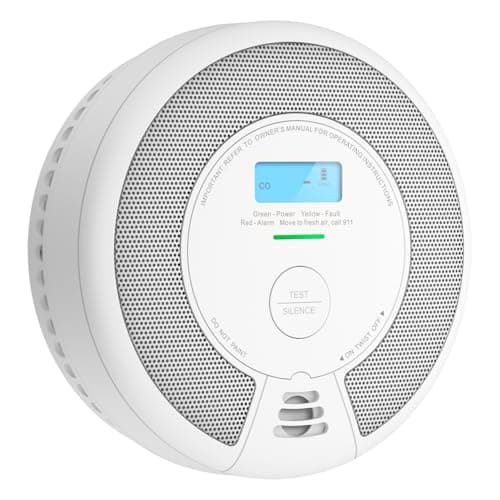
| 1 | 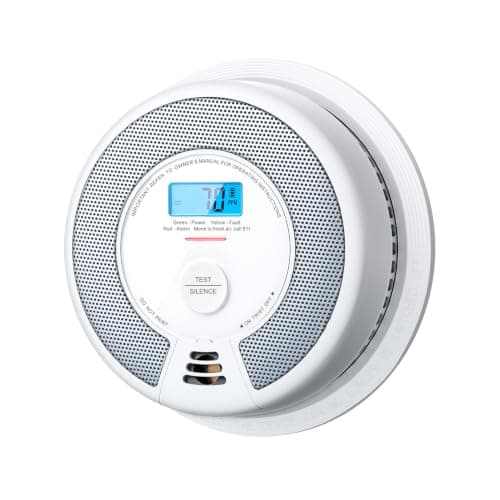 X-Sense SC07-W Wireless Interconnected Smoke & CO Alarm Smoke and CO certified, sealed for ten years, linked by radio to 23 other units with nothing in between. The cheapest honest way to make a whole house sound together. | A house with no alarm cable - and the budget pick | 9.4/ 10 | |
| 2 | 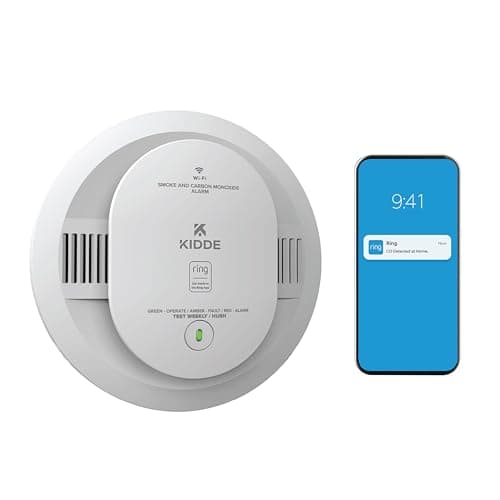 Kidde Battery Smart Smoke & Carbon Monoxide Alarm (Ring) Wi-Fi to the Ring app with no hub required, plus a wire-free link to compatible Kidde alarms. The pick when somebody needs the alert while they are out. | A set that should also reach your phone | 8.3/ 10 | |
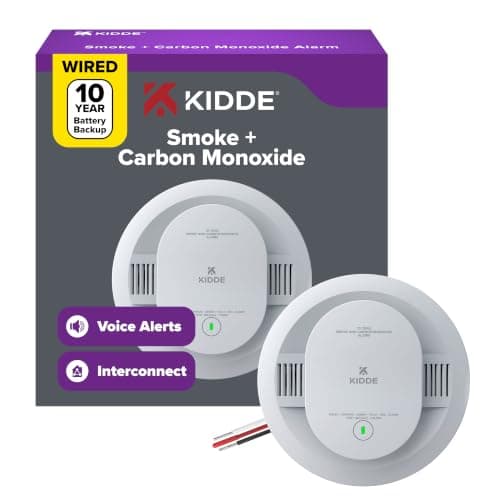
| 3 | 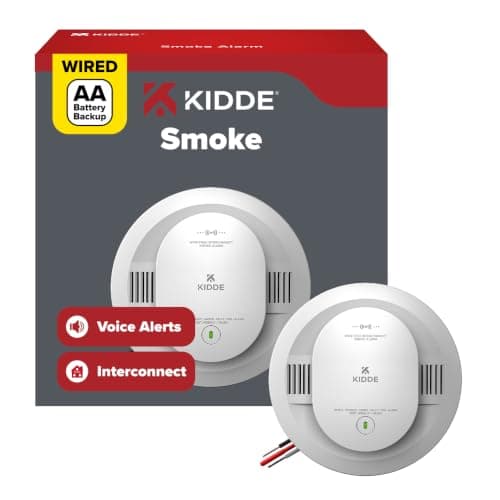 Kidde 20SAR-VRF Hardwired Smoke Alarm with Wire-Free Interconnect A hardwired alarm with both wired and wire-free interconnect, so the circuit you have reaches the rooms it never did. Smoke only, with a spoken alert. | A half-wired house - bridging a wired loop into rooms with no cable | 8.2/ 10 | $49.97 · View on Amazon #ad how we are funded · price as of November 22, 2026 |
| 4 | 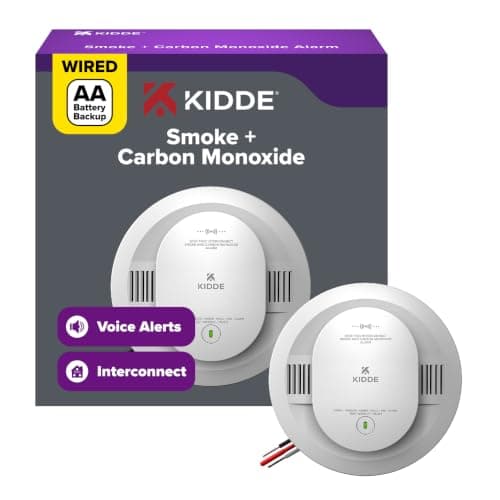 Kidde 30CUAR-VRF Wire-Free Interconnect Smoke & CO Alarm The same wire-free bridge with a certified CO cell and a spoken hazard, for the positions where smoke-only is not enough. | A half-wired house that also needs carbon monoxide | 8.5/ 10 | $84.99 · View on Amazon #ad how we are funded · price as of November 22, 2026 |
The picks
1. A house with no alarm cable - and the budget pick
X-Sense SC07-W Wireless Interconnected Smoke & CO Alarm
Smoke and CO certified, sealed for ten years, linked by radio to 23 other units with nothing in between. The cheapest honest way to make a whole house sound together.
- Listed to
- UL 217 and UL 2034
- Sensing / agent
- Photoelectric smoke sensing plus an electrochemical CO cell
- Power / service life
- 10-year sealed lithium battery, not hardwired
Why this is the default recommendation across this site. It is the only product in the registry that turns the single most valuable feature in residential fire safety - alarms that sound together - into something a household with no alarm wiring can buy and fit in an afternoon, at a price that still allows one alarm per required position. The full review is at X-Sense SC07-W review.
No network is a feature, not a gap. A radio link between alarms has no dependency you do not own. There is no account to be locked out of, no cloud to be discontinued, and nothing to break when the router is replaced. For a device whose job happens during a house fire, fewer dependencies is the correct direction.
Buy the set in one order and pair it before mounting. Label each unit by room on the back, write the install month beside it, then test from the furthest position with the alarms propped where they will live. Every wireless interconnect problem is a range problem.
What it does well
- **Wireless interconnect for up to 24 units** - one alarm triggers the whole set, which is the mechanism that gets a sleeping person out of a back bedroom with the door shut
- **Radio between the alarms, not Wi-Fi.** No router, no base station, no account and no subscription, so the link survives an internet outage, a router swap and a vendor losing interest in an app
- **Certified to UL 217 and UL 2034**, so every unit is a real smoke alarm and a real CO alarm in its own right - if the radio ever failed you would still have certified alarms
- **Sealed 10-year lithium cell** in every unit: no battery ritual across the whole set, and no low-battery chirp until end of life
- **LCD CO reading on each unit**, which is unusual anywhere near this price
- **Cheapest per covered position** of anything on this page, which is what makes covering six positions realistic rather than aspirational
The downside
- **A single unit is pointless** - the feature needs at least two alarms, so the real entry price is double and a whole-house set is a real outlay
- **Range is decided by your building.** Masonry, foil-backed insulation, steel studwork and a long basement run all cut into the link, and no published figure accounts for your walls
- **ETL certified to UL 217 rather than UL-listed.** Same standard, recognized laboratory, different mark - check first if an inspector or insurer specified UL
- **No phone notification at all**, so an empty house tells you nothing
- **It will not join a hardwired loop**; a wireless set is its own network alongside anything already fitted
- Sealed and disposable at ten years, and you will be replacing a matched set rather than one unit
Do not buy this if: a studio or single-floor one-bedroom, where there is nothing to interconnect - the standalone SC07 is the same alarm for less. In a house whose ceilings already carry alarm cable, the wiring does this job better and is already paid for; see [best hardwired smoke and carbon monoxide alarms](/smoke-detectors/best-hardwired-smoke-and-co-alarms).
- Wireless interconnect for up to 24 units — one alarm triggers the whole set
- No wiring, which is the point: it retrofits interconnection into a house that never had it
- LCD CO reading on each unit
- X-Sense recommends it for large or multi-story homes
2. A set that should also reach your phone
Kidde Battery Smart Smoke & Carbon Monoxide Alarm (Ring)
Wi-Fi to the Ring app with no hub required, plus a wire-free link to compatible Kidde alarms. The pick when somebody needs the alert while they are out.
- Listed to
- Ring's product page does not state a UL listing number for this alarm
- Sensing / agent
- Photoelectric smoke sensing plus an electrochemical CO cell
- Power / service life
- Two replaceable AA batteries; 10-year limited warranty excluding batteries
Who this is actually for. A house that empties out - a second home, a let, a long absence - or a household where somebody needs the alert on a phone for accessibility reasons. In an occupied house a horn is the notification, and the money is better spent on more positions.
Keep the two jobs separate in your head. Interconnection is what wakes the household and it works locally. Notification is what reaches you when you are out and it needs the internet. This alarm does both; most alarms do one; and confusing them is how people end up paying for an app and skipping a bedroom.
Budget for the batteries. AA cells across a whole set, replaced annually, are the recurring cost that the sealed-cell alarms on this page do not have. Put it on a calendar at the same time as the monthly test habit.
What it does well
- **Connects over 2.4 GHz Wi-Fi to the Ring app with no hub required**, which is the shortest path from an alarm to a phone in this registry
- **Wire-free interconnect with compatible Kidde alarms**, so the set still sounds together locally rather than relying on the cloud to relay an alert between rooms
- **Smoke and CO in one unit**, with a voice alert announcing "Fire" as well as sounding 85 dB at 10 ft
- **Ring states over 25% faster smoke detection than the prior generation** - a manufacturer claim, and the kind that is at least specific
- **Optional 24/7 professional smoke and CO monitoring**, which is a paid subscription and explicitly not required to use the alarm
- An established US brand on the ceiling, which avoids an argument at inspection
The downside
- **Two replaceable AA batteries rather than a sealed ten-year cell** - across a six-alarm set that is a real annual chore and an eventual chirp at an awkward hour
- **Ring's product page does not state a UL listing number for this alarm**, which is a documentation gap worth knowing about rather than a safety finding
- **Cloud dependency for the useful half.** The local link works without the internet; the notifications do not, and the app is a vendor decision you do not control
- **No local control option** - there is no hub protocol here, only the Ring account
- More expensive per position than the X-Sense set, before the batteries
Do not buy this if: a household that wants no account and no cloud, where the X-Sense set is simpler and cheaper. If you want notifications through a controller you own rather than a vendor app, the Z-Wave alarm on [best smart smoke detectors](/smoke-detectors/best-smart-smoke-detectors) is the other route.
- Connects over 2.4 GHz Wi-Fi to the Ring app — no hub required, and no local control either
- Voice alert announces "Fire" as well as sounding 85 dB at 10 ft
- Wire-free interconnect with compatible Kidde alarms
- Ring states over 25% faster smoke detection than the prior generation
- Optional 24/7 professional smoke and CO monitoring, which is a paid subscription and not required to use the alarm
- AA batteries rather than a sealed ten-year cell
3. A half-wired house - bridging a wired loop into rooms with no cable
Kidde 20SAR-VRF Hardwired Smoke Alarm with Wire-Free Interconnect
A hardwired alarm with both wired and wire-free interconnect, so the circuit you have reaches the rooms it never did. Smoke only, with a spoken alert.
- Listed to
- UL 217 10th edition and UL 2034 5th edition; ETL listed
- Sensing / agent
- Photoelectric smoke sensing, with voice annunciation
- Power / service life
- 120V AC with two replaceable AA backup batteries
The half-wired house is extremely common. Alarm cable on the bedroom floor because that is what the code asked for when the house was built, and nothing in the basement, the loft conversion or the extension added later. This product class exists for that building, and it turns a replacement job into a coverage improvement.
Use it with the wired alarms, not instead of them. The wired units stay wired and keep their continuous power; this one carries the alert across to the rooms the cable never reached. That is a better outcome than abandoning the circuit and going fully wireless.
The AA cells are the cost to plan for. They are the one component on this alarm that will not look after itself for a decade, and they are what keeps it alive through a tripped breaker.
What it does well
- **Hardwired and wire-free interconnect in one unit** - it joins the wired alarms on its circuit to up to 12 compatible units in rooms with no alarm cable, which is the commonest gap in older US housing stock
- **Voice alert announces "Fire!"** rather than sounding an ambiguous horn, which orients a half-woken person faster than volume does
- **Listed to UL 217 10th edition and ETL listed** - the most specific certification claim on this page
- **Photoelectric sensing with voice annunciation**, both published by Kidde rather than described in adjectives
- **No cloud, no account, no app**: the bridge is radio between alarms, same as the X-Sense set
- Solves the basement, loft-conversion and extension problem without pulling cable through finished ceilings
The downside
- **Smoke only - no CO cell.** In a house that burns anything you need carbon monoxide covered elsewhere, or the combination version below
- **Two replaceable AA backup batteries rather than a sealed cell**, so this one keeps the annual visit
- **Needs AC power at each hardwired position** - it bridges to battery wire-free units for rooms with no supply at all
- **Twelve-unit wire-free limit**, lower than the 24 on the combination model
- **Will not interconnect with another manufacturer's alarms**, wired or wireless
Do not buy this if: a house with no alarm wiring at all, where a battery wireless set is simpler and cheaper, or a fully wired house, where plain hardwired alarms cost less. Before mixing families on a loop, read [are smoke alarms interchangeable](/smoke-detectors/are-smoke-alarms-interchangeable).
- Hardwired AND wire-free interconnect: it joins the wired alarms on its circuit to alarms in rooms that have no wiring, up to 12 compatible units
- Voice alert announces "Fire!" rather than sounding an ambiguous horn
- 85 dB with a red LED
- Listed to UL 217 10th edition, which carries the cooking-nuisance test the 8th edition introduced
- AA backup batteries rather than a sealed cell — the one part of this alarm that still needs an annual visit
#ad how we are funded · price as of November 22, 2026
4. A half-wired house that also needs carbon monoxide
Kidde 30CUAR-VRF Wire-Free Interconnect Smoke & CO Alarm
The same wire-free bridge with a certified CO cell and a spoken hazard, for the positions where smoke-only is not enough.
- Listed to
- UL 217 10th edition and UL 2034 5th edition; ETL listed
- Sensing / agent
- Photoelectric smoke sensing plus an electrochemical CO cell, with voice annunciation
- Power / service life
- 120V AC with two AA backup batteries
Where this earns the premium. The basement is usually the room with no alarm cable and the room with the furnace, the water heater and the flue - which is to say the room with the highest carbon monoxide risk in the house. Bridging a wired loop down there with a smoke-only alarm covers the less likely of the two hazards in front of it.
Mix the two Kidde units deliberately. Smoke-only bridges upstairs where CO is already covered, combination bridges in the basement and anywhere a fuel-burning appliance lives. They are the same family and they talk to each other.
Commission it like any radio set. Pair everything, then test from the furthest unit in its real position before anything is fixed to a ceiling.
What it does well
- **Wire-free interconnect bridges hardwired alarms into rooms with no alarm wiring** - Kidde names renovations, basements and lofts as the case for it
- **Smoke and CO from one position**, which is what a basement with a furnace actually needs
- **Voice announcement of "Fire" or "Warning, Carbon Monoxide"** - essential on a combination alarm, because the two hazards demand opposite responses
- **Listed to UL 217 10th edition and UL 2034 5th edition, and ETL listed** - the most specifically documented listing of any alarm on this page
- **No cloud and no account**: radio between alarms, nothing else
- Pairs with Kidde's battery wire-free units for rooms with no AC supply
The downside
- **Still needs AC power at each hardwired position**, so it is not the answer for a room with no electricity
- **Two AA backup batteries rather than a sealed cell**, so the annual visit stays
- **Most expensive unit on this page**, which across several positions is a real number
- **Will not join a landlord's existing loop** from another manufacturer
- **No display**, so there is no CO concentration to read - it announces rather than reports
Do not buy this if: a fully wired house, where the plain wired combination alarm does the same job for less and keeps a sealed backup cell - see [best hardwired smoke and carbon monoxide alarms](/smoke-detectors/best-hardwired-smoke-and-co-alarms).
- Wire-free interconnect bridges hardwired alarms to rooms with no alarm wiring
- Voice alerts announce "Fire" or "Warning, Carbon Monoxide" rather than an ambiguous horn
- Kidde names renovations, basements and lofts as the case for it — the half-wired house, original circuit upstairs and nothing below
- Still needs AC power at each hardwired position; pair it with Kidde's battery wire-free units for the rooms that have none
- AA backup batteries rather than a sealed cell, so this one still needs an annual visit
#ad how we are funded · price as of November 22, 2026
The four sets side by side
Specifications as published by the manufacturers and their retail listings, checked on 2026-11-21. The live price and the date it was taken sit in each buy button.
| Alarm | Hazards | Link type | Units on a set | Power | Phone alerts |
|---|---|---|---|---|---|
| X-Sense SC07-W | Smoke and CO | Radio between alarms | Up to 24 | Sealed 10-year lithium | No |
| Kidde Battery Smart (Ring) | Smoke and CO | Wi-Fi plus wire-free to Kidde units | Per Kidde family | Two AA cells | Yes, via the Ring app |
| Kidde 20SAR-VRF | Smoke only | Wired plus wire-free bridge | Up to 12 | 120V with two AA backup | No |
| Kidde 30CUAR-VRF | Smoke and CO | Wired plus wire-free bridge | Up to 24 | 120V with two AA backup | No |
No wireless set joins another manufacturer's network, and none of them joins a hardwired loop from a different family. Mixing brands is fine for standalone alarms and never fine on a connected system - pick one family and stay in it.
Commissioning a wireless set properly
Three groups, in order. The second group is the one almost everybody skips.
On the table
- Unbox every unit and pair the whole set at once, following the manufacturer's sequence rather than adding units later.
- Press test on one and confirm every other unit sounds. If one does not, repair it before going any further.
- Write the room name and the install month on the back of each unit in permanent marker.
- Note the manufacture date stamped on each unit - the ten-year clock starts there, not at purchase.
In the real positions
- Carry the paired set to the positions you intend to use and prop each unit up there, on a stepladder or a shelf.
- Test from the furthest unit, not the nearest. A link that works across a room may not hold from a basement to a loft.
- Watch for masonry walls, foil-backed insulation, steel studwork and detached structures - these are where links fail.
- If a position will not hold the link, move the alarm rather than accepting a half-connected set. A silent unit inside a set is worse than a standalone alarm, because you will assume it is connected.
After mounting
- Press test on one alarm monthly and confirm the whole set responds, not just the one you pressed.
- Do the real test once: bedroom door shut, fan on, lights off, somebody presses an alarm on another floor.
- Vacuum the vents every six months, more often near a kitchen or in a utility space.
- Replace the set together at ten years. A matched set bought on one day expires on one day.
Questions people actually ask
What are the best wireless interconnected smoke alarms?
Do wireless interconnected smoke alarms need Wi-Fi?
How many wireless alarms can be linked together?
Can wireless alarms connect to my existing hardwired ones?
Are wireless interconnected alarms reliable?
Is wireless interconnect worth it in a single-story house?
How these picks were chosen. On published specifications, safety listings and manufacturer documentation — plus the findings of organizations that do run tests. We have no laboratory and we do not burn anything. Read the full methodology.
Sources
- UL Solutions — UL 217 — smoke alarms
- UL Solutions — UL 217, Standard for Smoke Alarms, published with new technical requirements
- UL Solutions — UL 2034 — single and multiple station carbon monoxide alarms
- X-Sense — SC07 10-year battery combination smoke and carbon monoxide alarm with LCD
- NFPA — Smoke Alarms in US Home Fires
- NFPA — Smoke alarms — installation and placement guidance
- NFPA — NFPA 72, National Fire Alarm and Signaling Code (2025 edition)
- International Code Council — IRC Chapter 3 — building planning (R310, R314, R315)
- UpCodes — Specific location requirements for smoke alarms (NFPA 72 §29.11.3.4)
- US Fire Administration — Home fire prevention
Read next
Smoke Detectors
Why interconnection matters most, and the wired, wireless and hybrid routes.
Smoke Detectors
The Best Interconnected Smoke Detectors
One sounds, they all sound. Wireless retrofit and hardwired picks, and the mixing mistake to avoid.
Smoke Detectors
The site's most-recommended alarm reviewed on its own terms: what the wireless interconnect buys, what the radio link costs, and how to commission a set properly.
Smoke Detectors
The Best Hardwired Smoke and Carbon Monoxide Alarms
Four certified hardwired units compared on backup battery, interconnect reach, voice annunciation and accessibility - plus why dropping a wired house to battery alarms is the worst trade in this category.
Smoke Detectors
The Best Smoke and Carbon Monoxide Alarms Under $100
Five certified combination alarms under $100, spanning sealed battery, wireless interconnect, smart and hardwired tiers - and a clear answer on which tier your house needs.
Smoke Detectors
Best Smoke Detectors for a Two-Story Home
Why the staircase makes interconnection non-optional in a two-story house, and the hardwired and battery routes to getting it.