Smoke Detectors
The Best Smoke and Carbon Monoxide Alarms Under $100
This is the band where you stop choosing between features and start choosing a tier. Here is what each one is for, and the one most houses should buy.
By Ryder M.Last reviewed
Buy the X-Sense SC07 if you want the best combination alarm value under $100: certified to UL 217 and UL 2034, sealed for ten years, with the measured carbon monoxide concentration on an LCD, for roughly a third of the ceiling. The budget pick is its compact sibling the X-Sense SC01, the cheapest certified alarm in this registry that covers both hazards. If bedrooms sit on a different floor from the living space, spend the extra on the X-Sense SC07-W, which interconnects by radio so every alarm sounds when any one of them detects - the single most valuable feature available at any price. The First Alert SMCO410 is the pick for a smart home, because Z-Wave Plus lets a hub you own adopt it rather than a vendor cloud. And if your ceilings already carry alarm cable, the Kidde 30CUA10-V uses it and announces which hazard it found. Every alarm here has passed the same laboratory fires as a $130 one.
Siren & Safe is reader-funded. We earn a commission on some links on this page, at no cost to you. It does not change what we recommend or the order we rank it in. Full disclosure.
What $100 buys that $50 does not
Start with what does not change: detection. Every alarm on this page carries a mark from a recognized testing laboratory against UL 217 for smoke and UL 2034 for carbon monoxide. It has passed the same smoke-entry tests, the same sensitivity window and the same CO thresholds as a $130 smart alarm. There is no tier in this category that detects better, and if there were it would not be certified.
What the $50 band gives you is the core specification - two certified sensors, a sealed ten-year cell, a photoelectric smoke sensor, a CO display - and in this registry every alarm under that ceiling is an X-Sense standalone unit. That is a genuinely good buy and best smoke and carbon monoxide alarms under $50 is the page for it.
What $100 adds is tiers. Inside this band you can buy a wireless-interconnect alarm, so every unit in the house sounds when one detects. You can buy a Z-Wave alarm, so a controller you own can see it. And you can buy a hardwired combination alarm with a sealed backup and a spoken hazard, if your ceilings already carry cable. Those are three different answers to three different buildings, and none of them fits under $50.
So the useful way to shop this band is to identify your building rather than compare specifications. Single floor, nothing wired, nobody away: the value pick, and spend the rest on more alarms. Bedrooms on another floor, nothing wired: the interconnect pick, and buy at least two. Hub already running: the Z-Wave pick. Cable already in the ceilings: the hardwired pick, and replace the whole loop. How many smoke detectors do I need tells you how many positions that means.
The one thing this band still does not buy is accessibility hardware. A strobe or a bed shaker for a deaf or hard-of-hearing household starts above it, and there is no budget equivalent - that is a case where the cap should simply be ignored. Best smoke detectors for the hard of hearing is the page for it.
How we scored these
Five criteria for a buyer working to a ceiling rather than shopping without one. Detection is not among them, for the reason above: every alarm here is certified to UL 217 and UL 2034, and that is the detection question settled.
- Value in the band. How much of the useful specification the alarm delivers before it runs out of the ceiling - which is a different question from how cheap it is.
- What you get for the money. Whether the unit adds a display, an interconnect, a protocol, a voice or continuous power at this price, or only the horn.
- Ten-year upkeep. What the household has to remember. Sealed cells score highest because the answer is nothing, and over a decade they also cost less than the batteries they replace.
- Coverage reach. Whether the alarm can make other alarms sound. This is the criterion with the strongest safety evidence behind it, and it is the one most buyers ignore.
- Install simplicity. Two screws, a radio commissioning step, or a live 120V circuit and a harness. Hardwired units lose here and win on reach.
Quick picks
Scored against value in the band, what you get for the money, ten-year upkeep, coverage reach and install simplicity. Tap a row for the full write-up. The price in each buy button is the live Amazon price at the last check, stamped with the date it was taken.
| # | Product | Best for | Score | Price |
|---|---|---|---|---|
| 1 | 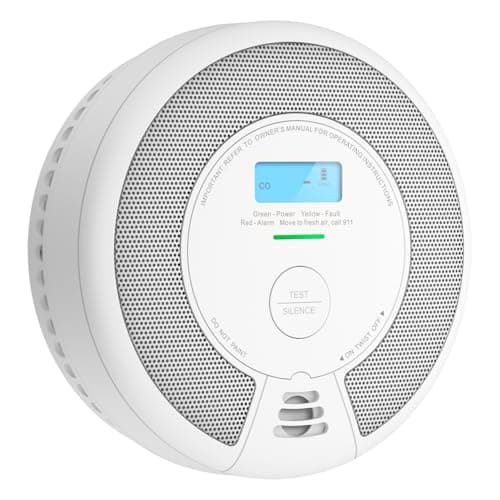 X-Sense SC07 Smoke & Carbon Monoxide Alarm Smoke and carbon monoxide both certified, sealed for a decade, with the CO concentration on a display. Nothing else under $100 does this much for this little. | The best value in the band - one alarm, both hazards, a readable number | 9.2/ 10 | |
| 2 | 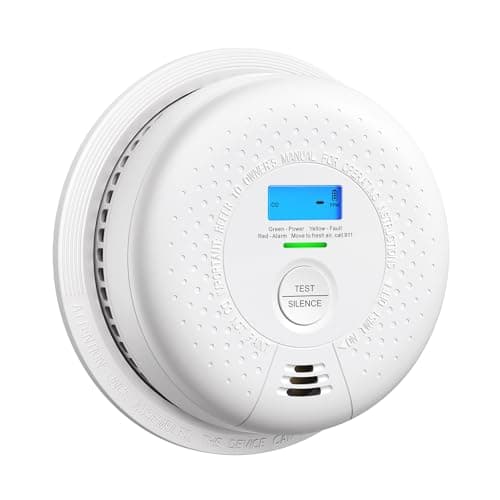 X-Sense SC01 Smoke & Carbon Monoxide Alarm The same two certifications and a live CO reading in a more compact body, at the lowest price of any combination alarm in this registry. | The budget pick - cheapest certified cover for both hazards | 8.8/ 10 | |
| 3 | 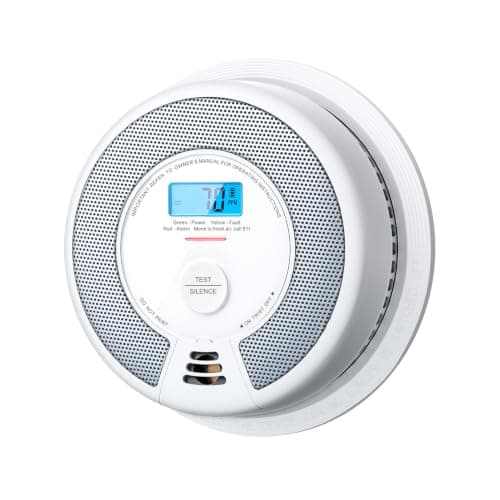 X-Sense SC07-W Wireless Interconnected Smoke & CO Alarm The SC07 with a radio link between units, so one alarm sounds and the whole set sounds. The most valuable thing you can buy in this band. | A multi-floor house - the one feature worth the extra money | 9.3/ 10 | |
| 4 | 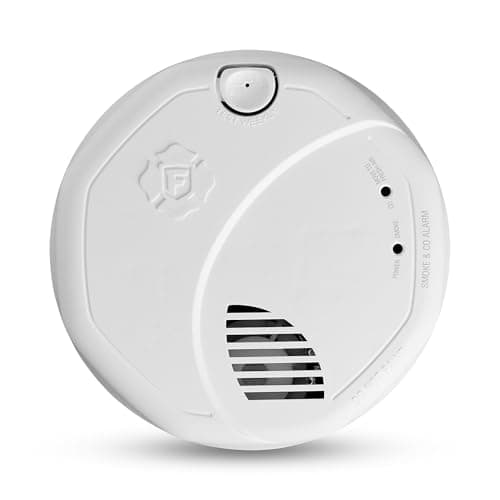 First Alert SMCO410 Z-Wave Plus Smart Smoke & CO Alarm Z-Wave Plus certified smoke and CO alarm with a sealed ten-year cell. Local control through your own controller rather than a vendor app. | A smart home - the alarm a hub you own can adopt | 8.6/ 10 | $64.93 · View on Amazon #ad how we are funded · price as of November 22, 2026 |
| 5 | 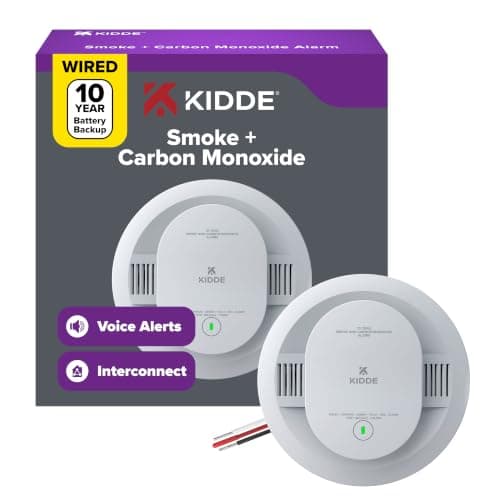 Kidde 30CUA10-V Hardwired Combination Smoke & CO Alarm A hardwired combination alarm that uses the wiring you already paid for, announces which hazard it found, and keeps a sealed ten-year backup cell. | A house whose ceilings already carry alarm cable | 8.9/ 10 | $73.99 · View on Amazon #ad how we are funded · price as of November 22, 2026 |
The picks
1. The best value in the band - one alarm, both hazards, a readable number
X-Sense SC07 Smoke & Carbon Monoxide Alarm
Smoke and carbon monoxide both certified, sealed for a decade, with the CO concentration on a display. Nothing else under $100 does this much for this little.
- Listed to
- UL 217 and UL 2034
- Sensing / agent
- Photoelectric smoke sensing plus an electrochemical CO cell
- Power / service life
- 10-year sealed lithium battery, not hardwired
Why this is the value pick rather than just the cheap one. Under $100 the question is not whether an alarm detects - all five here are certified to the same two standards - but how much of the useful specification you get before you run out of money. This unit gives you both certifications, a sealed decade-long cell, a named sensor type and a concentration display, and it leaves two thirds of the ceiling unspent. Nothing else in the band is close on that arithmetic.
The display earns its place in a combination alarm. A CO alarm that only ever alarms tells you nothing about a house running in the low tens of parts per million, which is a level a certified alarm is specifically permitted to ignore. A number turns that into something you can act on - a service call for an appliance, or a decision to ventilate.
Position still does most of the work. Keep it outside the 10 ft radius from a fixed cooking appliance where the layout allows, and 36 in clear of a bathroom door, a supply register and a ceiling-fan blade tip. Smoke detector placement covers the clearances, and how many smoke detectors do I need counts the positions.
What it does well
- **Certified to UL 217 and UL 2034**, which makes it a real smoke alarm and a real CO alarm rather than a smoke alarm with a sticker on the box
- **Photoelectric smoke sensing named on the listing** - the sensor that responds sooner to smoldering fires and nuisance-trips far less on cooking than ionization
- **LCD shows the measured CO concentration** rather than only alarming, which is how a household learns that a room sits at 30 ppm when a standard alarm is permitted to stay silent
- **Sealed 10-year lithium cell**: cheaper than a decade of 9V batteries, and there is no battery door for anyone to open at 3 a.m.
- **One ceiling position covers both hazards**, which halves the number of legal positions you have to find - the genuinely hard part of covering a house
- Roughly a third of the band's ceiling, so a three-bedroom house can be covered properly for less than the price of one premium alarm
The downside
- **No interconnect at all.** X-Sense lists it as a standalone unit - not wireless-capable, not base-station compatible. In a house with bedrooms upstairs that is the thing you are giving up
- **ETL certified to UL 217 rather than UL-listed.** Same standard, recognized laboratory, different mark - worth checking first if an inspector or insurer asked for UL specifically
- **No app and no notification**, so an empty house tells you nothing
- **Sealed, so disposable at ten years** - the whole unit is scrap and the lithium cell belongs at a recycling point
- The display is small and unlit: a daytime instrument, not something you read from the bed
Do not buy this if: a multi-floor house where alarms sounding together matters more than anything else - the SC07-W below does that and still fits the band. For the cheaper end of the market see [best smoke and carbon monoxide alarms under $50](/smoke-detectors/best-combination-alarms-under-50).
- LCD reads the measured CO concentration rather than only alarming
- Standalone unit — no wireless interconnect, no Wi-Fi, no base station
- Sealed battery, so there is no annual battery ritual and no low-battery chirp until end of life
- Test and silence on one control
2. The budget pick - cheapest certified cover for both hazards
X-Sense SC01 Smoke & Carbon Monoxide Alarm
The same two certifications and a live CO reading in a more compact body, at the lowest price of any combination alarm in this registry.
- Listed to
- UL 217 and UL 2034
- Sensing / agent
- Photoelectric smoke sensing plus an electrochemical CO cell
- Power / service life
- 10-year sealed battery, not hardwired
Cheap is a real feature in this category. NFPA's analysis of US home fires puts nearly three in five home fire deaths in homes with no working smoke alarm. The number of alarms in a house moves that figure more than any premium feature on any box, and the unit that makes one-per-required-position affordable is the unit that actually gets installed.
The compact body is worth knowing about. Retrofits run into geometry constantly - an old mounting plate that will not come off cleanly, a shallow soffit, a narrow hallway bulkhead. An alarm that physically sits flat is worth more than a marginally better one that does not.
Buy them in one order and date them together. Same purchase, same install month written on the back in permanent marker, same monthly test. Mixed-age sets are how a house ends up with one alarm that expired three years ago.
What it does well
- **Lowest price of any combination alarm here**, which is what turns a two-alarm house into a six-alarm house for the same outlay
- **Certified to UL 217 and UL 2034** - both hazards, properly tested
- **Real-time CO and battery status on the LCD**, so you can read the room rather than wait for a horn
- **Sealed 10-year battery** with nothing to replace for the life of the unit
- **Compact body**, which matters where the alarm has to sit beside an existing mounting plate or in a shallow recess
- **Photoelectric smoke and electrochemical CO sensing** named on the listing rather than described in adjectives
The downside
- **Standalone - no interconnect of any kind**
- **ETL to UL 217 rather than UL-listed**, like the rest of the X-Sense range
- **No voice, no app, no notification**
- **Nothing it does that the SC07 does not** apart from fitting a tighter space and costing slightly less
- Sealed and disposable at ten years
Do not buy this if: a household that wants the largest, clearest display or any interconnect. It is also not the pick for a utility space that keeps nuisance-tripping - the dust-resistant SC06 covered on [best smoke and carbon monoxide alarms under $50](/smoke-detectors/best-combination-alarms-under-50) is the one for that.
- Real-time CO and battery status on the LCD
- Sealed battery — nothing to replace for the life of the unit
- Compact body, which matters where it has to sit beside an existing mounting plate
- Standalone: no interconnect
3. A multi-floor house - the one feature worth the extra money
X-Sense SC07-W Wireless Interconnected Smoke & CO Alarm
The SC07 with a radio link between units, so one alarm sounds and the whole set sounds. The most valuable thing you can buy in this band.
- Listed to
- UL 217 and UL 2034
- Sensing / agent
- Photoelectric smoke sensing plus an electrochemical CO cell
- Power / service life
- 10-year sealed lithium battery, not hardwired
Interconnection is the feature to break a budget for, and this band means you do not have to. Everything else on this page is convenience: a display, an app, a voice. Interconnection changes who wakes up. If the choice is four standalone alarms or three interconnected ones, take the three.
Why radio rather than wire here. Pulling alarm cable through finished ceilings is an electrician's invoice that often exceeds the cost of the alarms several times over. Radio achieves the same functional outcome for the price of the hardware, which is the entire reason this product class exists.
Commission the set before you drill. Pair every unit on a table, confirm they all sound together, then test again with the units propped in their real positions. Interconnected smoke alarms covers the wired alternative if your ceilings already have cable.
What it does well
- **Wireless interconnect for up to 24 units** - one alarm triggers the whole set. This is the mechanism that gets a sleeping person out of a back bedroom with the door shut and a fan running, which is what the fatality statistics are largely made of
- **Both hazards certified** to UL 217 and UL 2034, with the photoelectric sensor named on the listing
- **Radio between the alarms, not Wi-Fi**: no router, no account, no cloud. If the internet is down they still sound together
- **Sealed 10-year lithium cell** in every unit, no wiring and no hub
- **LCD CO reading on each unit**, same as the standalone SC07
- Still comfortably inside the band per unit, which is the only reason interconnection appears on a price-capped page at all
The downside
- **The real entry price is double**, because one interconnect alarm alone is just a more expensive SC07. Per house this is the most expensive recommendation here
- **Range is decided by your building**, not the box - masonry, foil-backed insulation and steel all cut into the link
- **ETL to UL 217 rather than UL-listed**
- **It will not join a landlord's hardwired loop**; a wireless set is its own network alongside anything already fitted
- Sealed and disposable at ten years, as a matched set rather than one unit at a time
Do not buy this if: a studio or single-floor one-bedroom, where there is nothing to interconnect and the plain SC07 does the same job for less. For the whole wireless field, including the hardwired bridges, see [best wireless interconnected smoke alarms](/smoke-detectors/best-wireless-interconnected-smoke-alarms).
- Wireless interconnect for up to 24 units — one alarm triggers the whole set
- No wiring, which is the point: it retrofits interconnection into a house that never had it
- LCD CO reading on each unit
- X-Sense recommends it for large or multi-story homes
4. A smart home - the alarm a hub you own can adopt
First Alert SMCO410 Z-Wave Plus Smart Smoke & CO Alarm
Z-Wave Plus certified smoke and CO alarm with a sealed ten-year cell. Local control through your own controller rather than a vendor app.
- Listed to
- First Alert states the alarm's Precision Detection sensing complies with the latest industry standards; it does not name a UL edition on the listing
- Sensing / agent
- Photoelectric smoke sensing plus an electrochemical CO cell
- Power / service life
- Sealed 10-year lithium battery
Protocol beats app, when you have the choice. A Z-Wave alarm is adopted by hardware you own and keeps working whatever a vendor decides about an app in three years. A cloud-first smart alarm is the opposite trade. For a self-hosted setup this is the better one, and it is the reason this unit is here rather than a Wi-Fi alarm.
Read the Ring requirement carefully before you buy. If you are expecting phone alerts out of the box, First Alert's own statement is the sentence to plan around: the base station and the listener are both needed.
It is a certified alarm first. Whatever the hub does, the unit on the ceiling has to detect smoke and carbon monoxide on its own, and it is built to. That is the right order of priorities for a device whose job happens when the network is on fire.
What it does well
- **Z-Wave Plus certified**, which is what lets a non-Ring controller such as Home Assistant's Z-Wave JS adopt it as a native device - automation logic on hardware you own, not in somebody's cloud
- **Works with a Ring Alarm or Ring Alarm Pro base station**; First Alert states the base station plus a Ring Alarm Smoke and CO Listener are required for away-from-home notifications
- **Smoke and CO in one sealed unit**, with Precision Detection sensing that First Alert states reduces cooking nuisance alarms
- **Sealed 10-year lithium cell**: no battery changes and no low-battery chirps
- **Test and silence button plus an end-of-life warning** when the unit is due for replacement
- The only route in this band to a notification on a phone, which matters for a house nobody is in
The downside
- **It needs a controller or a Ring base station to be smart at all.** On its own it is a good sealed combination alarm with no notifications whatsoever
- **Away-from-home alerts require specific extra Ring hardware** per First Alert's own statement - an extra purchase and an extra point of failure
- **No display and no voice annunciation**
- **First Alert does not name the sensor type** - "Precision Detection" is the published wording
- Roughly twice the price of the X-Sense units for a feature set that only pays off inside a smart-home stack
Do not buy this if: a household with no hub and no intention of getting one, where the money buys more safety as additional certified alarms in uncovered rooms. [Smart versus regular smoke detectors](/smoke-detectors/smart-vs-regular-smoke-detectors) works through where that line sits.
- Z-Wave Plus certified, which is what lets a non-Ring controller such as Home Assistant's Z-Wave JS adopt it
- Works with a Ring Alarm or Ring Alarm Pro base station — First Alert states the base station plus a Ring Alarm Smoke and CO Listener are required for away-from-home notifications
- Precision Detection sensing, which First Alert states reduces cooking nuisance alarms
- Test and silence button, plus an end-of-life warning when it is time to replace the unit
- Sealed ten-year cell: no battery changes and no low-battery chirps
First Alert product documentation
#ad how we are funded · price as of November 22, 2026
5. A house whose ceilings already carry alarm cable
Kidde 30CUA10-V Hardwired Combination Smoke & CO Alarm
A hardwired combination alarm that uses the wiring you already paid for, announces which hazard it found, and keeps a sealed ten-year backup cell.
- Listed to
- UL 217 and UL 2034 — Kidde's data sheet states the unit meets UL 217, UL 2034, NFPA 72 and NFPA 101 at the date of manufacture
- Sensing / agent
- Photoelectric smoke sensing plus an electrochemical CO cell, with voice annunciation
- Power / service life
- 120V AC with a sealed 10-year backup battery; 10-year limited warranty and an end-of-life beep at ten years
If the wiring exists, use it. Dropping a wired house down to standalone battery alarms to save half an hour is the worst trade available in this category, because interconnection is the feature that changes outcomes and the expensive part is already installed. Many jurisdictions also do not permit the downgrade.
The spoken hazard matters most on a combination alarm. Smoke means get out and stay out; carbon monoxide means get into fresh air and call for help. One horn cannot distinguish them, and a household that guesses wrong gets the response backwards.
Replace the whole loop. Alarms on a shared circuit were fitted on the same day and age together, so one new unit on an old loop is a repeat trip up the ladder next year.
What it does well
- **Drops onto an existing 120V alarm circuit** and interconnects over the wire with up to 24 compatible Kidde devices - the most coverage reach in this band, using cable that is already in your ceilings
- **Announces "Fire!" or "Warning! Carbon Monoxide"** rather than sounding one ambiguous horn for two hazards that demand opposite responses
- **Sealed ten-year backup battery** rather than replaceable cells - nothing to change for a decade and no chirp that ends with a battery being pulled out
- **85 dB at 10 ft with Kidde's enhanced sensing** for the cooking-nuisance resistance the current residential standard tests
- **Both hazards from one position**, like every combination alarm here
- Continuous power, so the alarm is never running down a cell it cannot tell you about
The downside
- **Needs an existing 120V alarm circuit** - it is not a battery retrofit, and with no cable in the ceiling this is the wrong product entirely
- **Interconnect compatibility is per-family**: a Kidde alarm on a First Alert circuit detects and sounds alone, which defeats the point of a loop
- **Kidde does not name the sensor type** in its published material for this model
- **No display**, so there is no CO concentration to read - it announces rather than reports
- The most expensive unit on this page, and a nuisance alarm now speaks in every room at once
Do not buy this if: a rental or any home with no alarm wiring. For the full hardwired field, including the wire-free bridge and the strobe unit, see [best hardwired smoke and carbon monoxide alarms](/smoke-detectors/best-hardwired-smoke-and-co-alarms).
- Drops straight onto an existing hardwired circuit and interconnects over the wire, with up to 24 compatible Kidde devices on one set
- Voice alerts announce "Fire!" or "Warning! Carbon Monoxide" rather than sounding an ambiguous horn
- Sealed ten-year backup battery rather than the 2 AA cells its 30CUAR sibling uses — nothing to change for a decade
- 85 dB at 10 ft, with Kidde's enhanced sensing technology for the cooking-nuisance resistance the latest residential standard tests
- Needs an existing 120V alarm circuit — it is not a battery-only retrofit
#ad how we are funded · price as of November 22, 2026
The five alarms side by side
Specifications as published by the manufacturers and their retail listings, checked on 2026-11-21. No prices appear in this table on purpose - the live figure and the date it was taken sit in each buy button.
| Alarm | Power | Display | Interconnect | Smart | Tier it answers |
|---|---|---|---|---|---|
| X-Sense SC01 | Sealed 10-year lithium | Live CO and battery status | None | No | Cheapest certified cover |
| X-Sense SC07 | Sealed 10-year lithium | CO concentration on LCD | None | No | Best value in the band |
| X-Sense SC07-W | Sealed 10-year lithium | CO concentration on LCD | Wireless, up to 24 units | No | Multi-floor house |
| First Alert SMCO410 | Sealed 10-year lithium | None | Via Z-Wave controller | Z-Wave Plus | Smart home |
| Kidde 30CUA10-V | 120V with sealed 10-year backup | None | Wired, up to 24 units | No | Ceilings already wired |
Three of the five are X-Sense units, and that is a finding about this price band rather than a preference: the US majors' combination alarms start near the top of it and climb quickly once hardwiring, voice or a radio protocol is involved.
Spend on positions before you spend on tiers
This is the argument that outranks every pick above. The highest-value thing you can do with a fixed budget in this category is cover more positions. NFPA's analysis of US home fires found nearly three in five home fire deaths happened in homes with no smoke alarms or with alarms that failed to operate, and the death rate per 1,000 home structure fires is far lower where an alarm worked. No tier on this page moves a number like that.
Run it for a three-bedroom two-story house with a basement. The code pattern is an alarm inside each bedroom, one outside each separate sleeping area, and one on every story including the basement - six positions. At the value pick's price that is a single purchase around the price of two premium alarms, and it covers the whole house for both hazards. One $100 alarm in a hallway and nothing upstairs is the wrong spend every time.
So the order of operations is: cover every required position with certified alarms; add interconnection if there are bedrooms on another floor; and only then consider apps, protocols and voice. Where to place them covers the clearances, and combination or separate alarms settles whether one device or two is right for your layout.
What another hundred dollars adds
Three product tiers sit above this band and cannot be reached inside it: a Wi-Fi smart alarm, a hardwired voice alarm, and an alarm with an integrated hearing-impaired strobe. Best combination alarms under $200 is the page for those, and it is worth reading for one finding in particular — the two most expensive alarms in that band publish the least about which standards they are listed to, while the cheapest names both UL 217 and UL 2034. More money in this category buys the way you are told, not the thing doing the telling.
Questions people actually ask
What is the best smoke and carbon monoxide alarm under $100?
Is a $100 combination alarm better than a $40 one?
How many combination alarms do I need under this budget?
Should I pay extra for a wireless interconnect?
Do I need a smart smoke alarm in this price range?
Why are most of the picks under $100 from one brand?
How these picks were chosen. On published specifications, safety listings and manufacturer documentation — plus the findings of organizations that do run tests. We have no laboratory and we do not burn anything. Read the full methodology.
Sources
- UL Solutions — UL 217 — smoke alarms
- UL Solutions — UL 217, Standard for Smoke Alarms, published with new technical requirements
- UL Solutions — UL 2034 — single and multiple station carbon monoxide alarms
- X-Sense — SC07 10-year battery combination smoke and carbon monoxide alarm with LCD
- NFPA — Smoke Alarms in US Home Fires
- NFPA — Smoke alarms — installation and placement guidance
- NFPA — NFPA 72, National Fire Alarm and Signaling Code (2025 edition)
- NFPA — Cooking equipment fires in US homes
- International Code Council — IRC Chapter 3 — building planning (R310, R314, R315)
- UpCodes — Specific location requirements for smoke alarms (NFPA 72 §29.11.3.4)
- US Fire Administration — Home fire prevention
- CPSC — Carbon Monoxide Fact Sheet
Read next
Smoke Detectors
The Best Smoke and Carbon Monoxide Alarms Under $50
Four certified combination smoke and CO alarms under $50, including one with a wireless interconnect. What the price cap does and does not cost you.
Smoke Detectors
The Best Combination Smoke and CO Alarms
Two listings, one position — and the one room where separate units win.
Smoke Detectors
The Best Wireless Interconnected Smoke Alarms
Four certified wireless-interconnect sets compared on radio reach, sealed cells and whether they bridge a wired loop - plus the commissioning step most buyers skip.
Smoke Detectors
The Best Hardwired Smoke and Carbon Monoxide Alarms
Four certified hardwired units compared on backup battery, interconnect reach, voice annunciation and accessibility - plus why dropping a wired house to battery alarms is the worst trade in this category.
Smoke Detectors
The Best Smart Smoke Detectors
The one smart feature worth paying for, and why coverage still beats cleverness.
Placement & Code
How Many Smoke Detectors Do I Need?
Worked counts for real house shapes, including split levels and open plans.