Smoke Detectors
The Best Smoke & CO Alarms Under $200
Every alarm on this page passes the same laboratory fires as a $34 one. What a bigger budget buys is a strobe, a voice, an app or an interconnect — not a faster sensor.
By Ryder M.Last reviewed
Buy the First Alert SC5 if you want the smart tier and you have up to $200 to spend: spoken Heads-Up warnings that name the hazard, phone alerts when the house is empty, wireless interconnect with existing Nest Protect units, and the same bracket Nest Protect used — it is the unit Google itself points former Nest owners toward. If somebody in the house is deaf or hard of hearing, spend the money on the First Alert BRK 7030BSL instead: it is the only alarm here with a 77-candela synchronized strobe built in. The budget pick is the X-Sense SC01, the cheapest combination alarm in this registry, and it is the honest headline of this whole page — it is certified to UL 217 and UL 2034, which is more than the most expensive unit here can say, and it detects the same fires. Under $200 you are buying the way you get told, not the thing doing the telling.
Siren & Safe is reader-funded. We earn a commission on some links on this page, at no cost to you. It does not change what we recommend or the order we rank it in. Full disclosure.
What $200 buys, and what it does not
This site already has a page for combination alarms under $50 and one for under $100. This page exists because the $200 ceiling is the first one that reaches three product tiers the cheaper bands cannot hold: a Wi-Fi smart alarm, a hardwired voice alarm, and an alarm with an integrated hearing-impaired strobe. Those are genuinely different products, bought for genuinely different reasons.
What the ceiling does not buy is better detection. Every alarm here has been through the same standardized laboratory fires, and the two most expensive units on the page are the two with the least complete certification paperwork. The photoelectric chamber in a $34 X-Sense alarm and the one in a $115 First Alert alarm are both doing the same job to the same standard — so if you read only one sentence on this page, read that one.
The useful way to spend up to $200 is therefore to decide which of four things you are buying, in this order. A strobe, if somebody in the house will not hear a horn: that is not a feature, it is the alarm working at all. An interconnect, if the house is big enough that an alarm sounding downstairs would not wake somebody upstairs. A voice, if you want the hazard named at 3am rather than a pattern of beeps to interpret. An app, if the house is regularly empty and a CO event would otherwise go unnoticed. If none of those four apply to you, the correct purchase under $200 is several of the cheapest certified alarm here, fitted in the right rooms.
How we scored these
Five criteria for a buyer with real money to spend who wants to know what it is going toward. Detection speed is deliberately not among them: it is not a specification any manufacturer here publishes a comparable figure for, and the standard these alarms are listed to is what governs it.
- What the money buys. The capability added over a certified $34 alarm, judged on whether it changes an outcome rather than whether it sounds impressive.
- Alert quality. How much information the alert carries — a bare horn, a named hazard, a strobe, a phone notification — and how many ways it can reach a person.
- Certification clarity. Which standards the manufacturer actually names in writing. This is weighted heavily, because the buyer this site is written for cares what a device is listed to and because the gaps here are not where the price suggests they would be.
- Install and migration. Whether it fits an ordinary ceiling with ordinary tools, and what it takes to move an existing house onto it.
- Ten-year upkeep. Sealed cell against replaceable cells, chirp behavior, and what end of life actually requires.
Quick picks
Scored against what the money buys, alert quality, certification clarity, install and migration and ten-year upkeep. Tap a row for the full write-up. The price in each buy button is the live Amazon price at the last check, stamped with the date it was taken.
| # | Product | Best for | Score | Price |
|---|---|---|---|---|
| 1 | 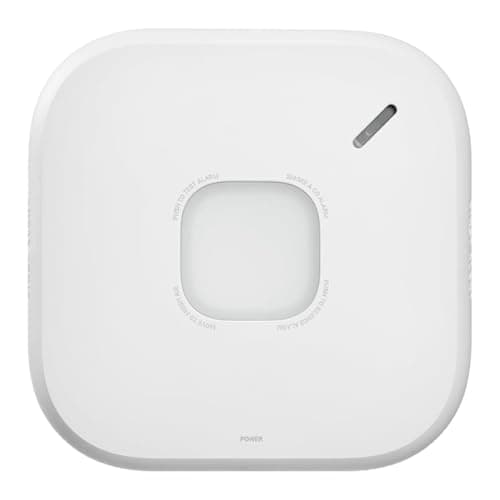 First Alert SC5 Smart Smoke & Carbon Monoxide Alarm Spoken hazard warnings, phone alerts and wireless interconnect with existing Nest Protect units, on the same mounting bracket. The alarm Google directs former Nest owners to. | The smart tier, and anyone replacing a Google Nest Protect | 8.4/ 10 | |
| 2 | 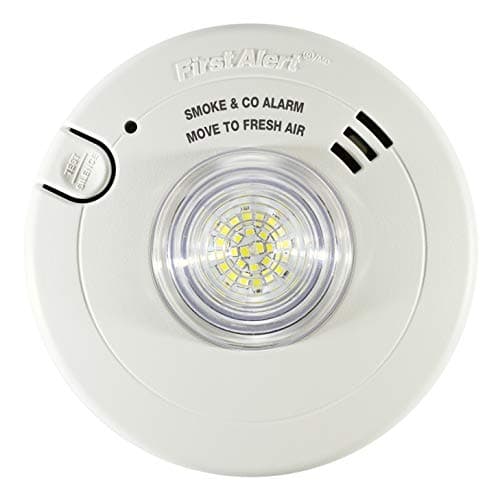 First Alert BRK 7030BSL Hearing-Impaired Smoke + CO Alarm with Strobe Smoke, CO and a published 77-candela synchronized strobe in one hardwired device, with separate flash patterns for the two hazards. The only alarm here that does not rely on being heard. | A household where somebody is deaf or hard of hearing | 8.6/ 10 | $128.99 · View on Amazon #ad how we are funded · price as of November 22, 2026 |
| 3 | 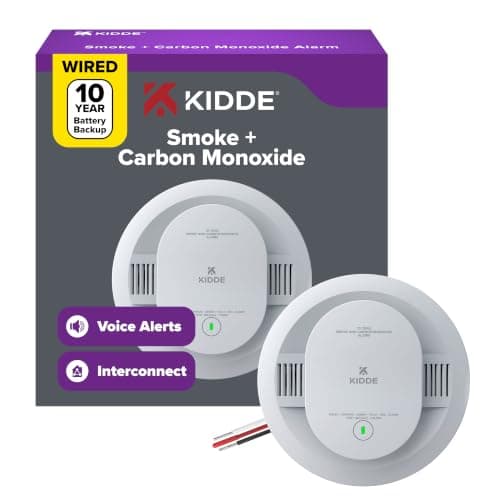 Kidde 30CUA10-V Hardwired Combination Smoke & CO Alarm Kidde's data sheet names UL 217, UL 2034, NFPA 72 and NFPA 101, with voice alerts and a sealed ten-year backup battery. The paperwork pick. | The best-documented certification on this page, if you have alarm wiring | 8.8/ 10 | $73.99 · View on Amazon #ad how we are funded · price as of November 22, 2026 |
| 4 | 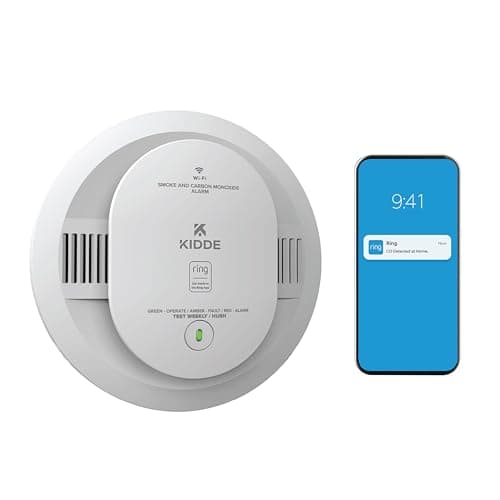 Kidde Battery Smart Smoke & Carbon Monoxide Alarm (Ring) Connects straight to the Ring app over 2.4 GHz Wi-Fi with no base station, announces "Fire" in words, and wire-free interconnects with compatible Kidde alarms. | Wi-Fi alerts without a hub, and the cheapest route into the smart tier | 7.8/ 10 | |
| 5 | 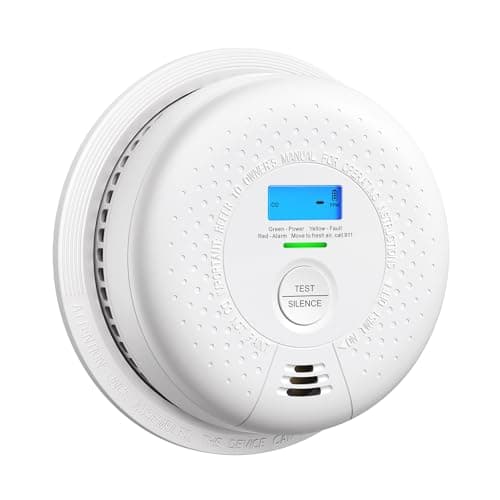 X-Sense SC01 Smoke & Carbon Monoxide Alarm The cheapest combination alarm in this registry, certified to UL 217 and UL 2034, with a sealed ten-year battery and a live CO reading on the display. | The budget pick — and the honest answer for most households | 9.0/ 10 |
The picks
1. The smart tier, and anyone replacing a Google Nest Protect
First Alert SC5 Smart Smoke & Carbon Monoxide Alarm
Spoken hazard warnings, phone alerts and wireless interconnect with existing Nest Protect units, on the same mounting bracket. The alarm Google directs former Nest owners to.
- Listed to
- Conforms to UL 217 10th edition — First Alert's published specification names no UL 2034 number
- Sensing / agent
- Photoelectric smoke sensing plus an electrochemical CO cell
- Power / service life
- Six replaceable 3V CR123A lithium cells; 10-year limited warranty
Why the smart tier is a communication purchase, not a detection one. Every alarm on this page is tested to the same standard fires. Where a smart alarm earns its money is in the thirty seconds after it triggers: it tells you *what* and *where* in words rather than in beeps, and it tells your phone as well as the room. For a house that is regularly empty, or one where a CO event would otherwise go unnoticed, that is worth paying for. For a house where somebody is always home, it is a convenience.
The Nest Protect migration is the real case for this unit. Google ended Nest Protect production in March 2025, and the SC5 is the one alarm that interconnects with the units you already own and fits their bracket. That makes a staged changeover possible instead of a whole-house replacement — see Nest Protect discontinued: what to buy for the full account, and Nest Protect vs First Alert SC5 for the head-to-head.
What it does well
- **Voice alerts with Heads-Up warning**, which name the hazard and the location instead of sounding an ambiguous horn — the single most useful thing money buys in this category
- **Phone alerts through the Resideo Connect app**, so a CO event in an empty house is not something you learn about on your return
- **Wireless interconnect, including with compatible Nest Protect units**, which means a house full of Nest alarms can be changed over one at a time rather than in a single expensive weekend
- **Mounts on the Nest Protect bracket**, so a straight swap leaves no new holes in the ceiling
- **Google promotes it as the Nest Protect replacement** — the successor relationship is published by both manufacturers rather than inferred
The downside
- **First Alert's published specification names no UL 2034 number for this alarm.** It states conformance to UL 217 10th edition and nothing more. Every cheaper X-Sense and Kidde unit on this page names both standards, and on a combination alarm that is a real gap in the paperwork rather than a quibble
- **Six replaceable CR123A lithium cells**, which is six cells to source and change — against a sealed ten-year unit that never needs opening
- **85 dB at 10 feet**, the ordinary household figure. Nothing about the price makes it louder
- **App alerts depend on your Wi-Fi and the manufacturer's servers.** Both are outside your control, and neither is required for the alarm itself to work
- **The most expensive alarm on this page detects no faster than the cheapest.** That is the honest summary of the smart tier
Do not buy this if: a household that simply wants reliable certified detection at the lowest cost — buy the X-Sense SC01 or SC07 and keep the difference. It is also the wrong pick if the deciding factor is published certification: see [UL 217 certification explained](/smoke-detectors/ul-217-certification-explained).
- Google promotes it as the Nest Protect replacement, and it mounts on the same bracket
- Wireless interconnect, including with compatible Google Nest Protect units, so a changeover can be staged one alarm at a time
- Voice alerts with Heads-Up warning, naming the hazard and the location rather than only sounding
- Phone alerts through the Resideo Connect app when the alarm sounds away from home
- 85 dB at 10 feet — the standard household figure, not a louder one
First Alert product documentation
2. A household where somebody is deaf or hard of hearing
First Alert BRK 7030BSL Hearing-Impaired Smoke + CO Alarm with Strobe
Smoke, CO and a published 77-candela synchronized strobe in one hardwired device, with separate flash patterns for the two hazards. The only alarm here that does not rely on being heard.
- Listed to
- Hardwired combination smoke and carbon monoxide alarm with an integrated LED strobe
- Sensing / agent
- Smoke sensing through First Alert's Optipath 360 chamber plus a carbon monoxide cell, with an LED strobe
- Power / service life
- 120V AC hardwired; 10-year limited warranty
Why this is the best possible use of a $200 ceiling. On every other alarm here the extra money buys a nicer version of an alert you could already receive. On this one it buys an alert channel the household does not otherwise have. If somebody in the house will not hear a horn, this is not an upgrade — it is the difference between an alarm that works for them and one that does not.
Hardwired is the trade, and it is a real one. The strobe draws more than a sealed cell can supply, so AC power is structural rather than a design choice. If the house already has an alarm circuit this is a straight swap; if it does not, budget for an electrician and read best hardwired smoke and CO alarms first.
What it does well
- **A 77-candela synchronized LED strobe, as published by First Alert**, intended to wake a sleeping resident who will not hear an 85 dB horn — a published figure rather than an adjective
- **Separate flash patterns distinguish a smoke event from a carbon monoxide event**, so the alert carries the same information a voice alarm gives
- **Smoke, CO and strobe in one ceiling position**, which is one install and one device to maintain instead of three
- **Interconnected units flash in unison as well as sounding together**, so the alert reaches a bedroom from a hallway event
- **Optipath 360 sensing chamber**, which First Alert specifies as giving the chamber 360 degrees of direct access
The downside
- **The strobe needs live AC power.** This is a hardwired appliance, not a battery alarm, and in most homes that means an electrician — see the wiring note below
- **First Alert does not publish a UL edition for this unit**, describing it by function rather than by standard number
- **A strobe is not a substitute for a bed shaker** for a profoundly deaf sleeper; a visual alert still has to be seen, which means the eyes have to open
- **Second most expensive unit on this page**, and the cost is almost entirely the strobe
- **Hardwired means it cannot be moved**, so get the position right the first time
Do not buy this if: a home with no alarm wiring at all, or a renter who cannot alter the electrics. For the battery and bedside alternatives, [best smoke detectors for hard of hearing](/smoke-detectors/best-smoke-detectors-for-hard-of-hearing) covers the full field including bed shakers.
- Smoke alarm, CO alarm and strobe in one device, so one ceiling position and one install covers all three
- First Alert publishes the synchronized LED strobe at 77 candela, intended to wake hearing-impaired residents
- Smart strobe: separate flash patterns distinguish a smoke event from a carbon monoxide event
- Interconnected units flash in unison as well as sounding together
- Optipath 360 gives the sensing chamber 360 degrees of direct access
- **The strobe needs live AC power** — it is a hardwired appliance, not a battery alarm
#ad how we are funded · price as of November 22, 2026
3. The best-documented certification on this page, if you have alarm wiring
Kidde 30CUA10-V Hardwired Combination Smoke & CO Alarm
Kidde's data sheet names UL 217, UL 2034, NFPA 72 and NFPA 101, with voice alerts and a sealed ten-year backup battery. The paperwork pick.
- Listed to
- UL 217 and UL 2034 — Kidde's data sheet states the unit meets UL 217, UL 2034, NFPA 72 and NFPA 101 at the date of manufacture
- Sensing / agent
- Photoelectric smoke sensing plus an electrochemical CO cell, with voice annunciation
- Power / service life
- 120V AC with a sealed 10-year backup battery; 10-year limited warranty and an end-of-life beep at ten years
The quiet argument for this unit. On a page where the headline products are a smart alarm and a strobe alarm, this is the one that does the most ordinary thing extremely well: it is fully documented against four standards, it speaks, it interconnects over wire, and it asks nothing of you for ten years. If the house is already wired and nobody needs a strobe, it is the best alarm here on merit.
Wired interconnect is still the strongest link. Radio interconnect is a genuine advance for houses with no cable, but a wire cannot run out of range, lose a pairing or be defeated by foil-backed insulation. Where the cable exists, use it — interconnected smoke alarms covers both routes.
What it does well
- **Kidde's data sheet states the unit meets UL 217, UL 2034, NFPA 72 and NFPA 101 at the date of manufacture** — the most completely documented listing of any alarm on this page, at a little over half the price of the most expensive one
- **Voice alerts announce "Fire!" or "Warning! Carbon Monoxide"**, so you get the hazard named without paying for an app
- **Sealed ten-year backup battery** rather than the AA cells its 30CUAR sibling uses — nothing to change for a decade, and no low-battery chirp until end of life
- **Interconnects over the existing wire with up to 24 compatible Kidde devices**, which is the most reliable interconnect there is: no radio, no pairing, nothing to lose range
- **Kidde's enhanced sensing technology** for the cooking-nuisance resistance the latest residential standard tests
The downside
- **Needs an existing 120V alarm circuit.** It is not a battery retrofit, and that single requirement rules it out for a lot of houses
- **No app and no phone alerts** — the alert is confined to the building
- **No strobe**, so it does nothing extra for a deaf or hard-of-hearing resident
- **End-of-life beep at ten years means replacing the unit**, which is the sealed-battery trade across the whole category
- **Wired interconnect only.** Rooms with no alarm cable stay outside the set unless you add a wire-free model
Do not buy this if: a house with no alarm wiring, or a rental where you cannot touch the circuit. For the wireless equivalent see [best wireless interconnected smoke alarms](/smoke-detectors/best-wireless-interconnected-smoke-alarms).
- Drops straight onto an existing hardwired circuit and interconnects over the wire, with up to 24 compatible Kidde devices on one set
- Voice alerts announce "Fire!" or "Warning! Carbon Monoxide" rather than sounding an ambiguous horn
- Sealed ten-year backup battery rather than the 2 AA cells its 30CUAR sibling uses — nothing to change for a decade
- 85 dB at 10 ft, with Kidde's enhanced sensing technology for the cooking-nuisance resistance the latest residential standard tests
- Needs an existing 120V alarm circuit — it is not a battery-only retrofit
#ad how we are funded · price as of November 22, 2026
4. Wi-Fi alerts without a hub, and the cheapest route into the smart tier
Kidde Battery Smart Smoke & Carbon Monoxide Alarm (Ring)
Connects straight to the Ring app over 2.4 GHz Wi-Fi with no base station, announces "Fire" in words, and wire-free interconnects with compatible Kidde alarms.
- Listed to
- Ring's product page does not state a UL listing number for this alarm
- Sensing / agent
- Photoelectric smoke sensing plus an electrochemical CO cell
- Power / service life
- Two replaceable AA batteries; 10-year limited warranty excluding batteries
What "no hub" is worth. Most smart alarms need a base station, which is a second purchase and a second thing to keep powered. This one does not, and that makes the smart tier a single-item decision for the first time. For a one-alarm trial in a kitchen hallway, it is the lowest-risk way to find out whether phone alerts matter to you.
Read the certification line honestly. We have not found a published UL number for this alarm, and we are not going to imply one. If documented certification is your deciding criterion, buy the Kidde 30CUA10-V or an X-Sense unit instead — both name their standards.
What it does well
- **No hub required.** It joins your 2.4 GHz Wi-Fi directly, which is the cheapest honest route to phone alerts in this registry
- **Voice alert announces "Fire" as well as sounding 85 dB at 10 ft**, so the in-room alert is informative, not just loud
- **Wire-free interconnect with compatible Kidde alarms**, so it can join a set rather than standing alone
- **Ring states over 25% faster smoke detection than the prior generation** — their figure, quoted as theirs
- **Battery powered, so it goes anywhere**, including a room with no alarm cable and a renter's ceiling
The downside
- **Ring's product page does not state a UL listing number for this alarm.** That is the weakest certification documentation of the five units here, and on a life-safety device it is the thing we would want fixed
- **Two replaceable AA batteries** rather than a sealed ten-year cell, so this alarm still needs an annual visit and will chirp when it is ignored
- **No local control.** Wi-Fi and the Ring cloud are the only path to the notifications, which is a dependency a Z-Wave alarm does not have
- **The 24/7 professional monitoring is a paid subscription**, and the page should be read with that in mind — it is not required to use the alarm
- **One ecosystem.** It makes most sense inside a household already using Ring, and least sense outside one
Do not buy this if: anyone who wants local control or a documented UL listing — the First Alert SMCO410 is Z-Wave Plus and can be adopted by Home Assistant's Z-Wave JS, covered in [best smoke detectors for Home Assistant](/smoke-detectors/best-smoke-detectors-for-home-assistant).
- Connects over 2.4 GHz Wi-Fi to the Ring app — no hub required, and no local control either
- Voice alert announces "Fire" as well as sounding 85 dB at 10 ft
- Wire-free interconnect with compatible Kidde alarms
- Ring states over 25% faster smoke detection than the prior generation
- Optional 24/7 professional smoke and CO monitoring, which is a paid subscription and not required to use the alarm
- AA batteries rather than a sealed ten-year cell
5. The budget pick — and the honest answer for most households
X-Sense SC01 Smoke & Carbon Monoxide Alarm
The cheapest combination alarm in this registry, certified to UL 217 and UL 2034, with a sealed ten-year battery and a live CO reading on the display.
- Listed to
- UL 217 and UL 2034
- Sensing / agent
- Photoelectric smoke sensing plus an electrochemical CO cell
- Power / service life
- 10-year sealed battery, not hardwired
Why the cheapest unit scores highest on value and still is not the top pick. It detects the same fires as everything above it, it is better documented than two of them, and it costs a fraction of any of them. What it does not do is tell anybody outside the room. That is a real limitation rather than a saving, and it is the reason the page is organized around what the money buys instead of simply crowning the cheapest alarm.
The best use of a $200 budget, for most houses, is coverage. Three or four of these in the rooms that actually need alarms beats one expensive unit in a hallway every time. Work out the positions first — how many smoke detectors do I need and where to install CO detectors between them settle it — and then spend what is left on features.
What it does well
- **Certified to UL 217 and UL 2034** — both standards named, which is more than the most expensive alarm on this page publishes
- **Cheapest combination alarm in this registry**, which means a whole house of them costs less than two units from the smart tier
- **Sealed ten-year battery**: nothing to replace, no annual ritual, and no low-battery chirp until the unit is genuinely finished
- **Real-time CO and battery status on the LCD**, so you can read a concentration rather than only hear an alarm
- **Compact body**, which matters where it has to sit beside an existing mounting plate
The downside
- **Standalone: no interconnect of any kind.** An alarm in the basement is heard in the basement, which is the single biggest thing you give up at this price
- **No voice**, so the alert is a pattern you have to remember rather than a sentence
- **No app and no phone alerts** — an event in an empty house goes unreported
- **Sealed battery means replacing the whole unit at ten years**, by design
- **The budget choice is the right choice only if you buy enough of them.** One cheap alarm in a hallway is worse value than three in the right rooms
Do not buy this if: a large or multi-story house where one alarm sounding needs to wake the whole building — buy an interconnecting set instead, from [best wireless interconnected smoke alarms](/smoke-detectors/best-wireless-interconnected-smoke-alarms).
- Real-time CO and battery status on the LCD
- Sealed battery — nothing to replace for the life of the unit
- Compact body, which matters where it has to sit beside an existing mounting plate
- Standalone: no interconnect
The five alarms side by side
Listings, power and alert channels exactly as the manufacturers publish them, checked on 2026-11-21. Prices are not in this table on purpose — the live figure and the date it was taken sit in each buy button above, because a number typed into a page goes stale and a number from the price layer cannot.
| Alarm | What it adds over a $34 alarm | Listing as published | Power | Interconnect |
|---|---|---|---|---|
| First Alert SC5 | Voice with Heads-Up, phone alerts, Nest Protect bracket and pairing | UL 217 10th edition; no UL 2034 number published | Six CR123A lithium cells | Wireless, including compatible Nest Protect |
| First Alert BRK 7030BSL | 77-candela synchronized strobe with separate smoke and CO patterns | Function described; no UL edition published | 120V AC hardwired | Wired, flashing in unison |
| Kidde 30CUA10-V | Voice alerts and the most completely documented listing here | UL 217, UL 2034, NFPA 72, NFPA 101 | 120V AC with sealed 10-year backup | Wired, up to 24 Kidde devices |
| Kidde Battery Smart (Ring) | Wi-Fi phone alerts with no hub, plus a voice alert | No UL number published by Ring | Two replaceable AA cells | Wire-free with compatible Kidde |
| X-Sense SC01 | Nothing — this is the baseline, and the budget pick | UL 217 and UL 2034 | Sealed 10-year battery | None |
The pattern in the third column is the finding worth taking away: the two most expensive alarms on this page publish the least about what they are listed to, and the cheapest one names both standards. Price and paperwork are not correlated in this category.
Three ways to waste $200 on alarms
Buying one expensive alarm instead of enough ordinary ones. Coverage beats capability every time. An alarm only ever detects the room it is in, so a single smart unit in a hallway leaves bedrooms, the basement and the top of the stairs uncovered — and those are where the detection time comes from. Work the positions out first; how many smoke detectors do I need does the arithmetic.
Paying for an app you will not act on. Phone alerts are genuinely useful for a house that is empty for long stretches, and close to useless if you are always home and your phone is on silent. It is a real feature with a narrow case; be honest about whether yours is it.
Replacing alarms that are not due. An alarm has a service life of about ten years from its date of manufacture, printed on the back of the unit. Replacing a six-year-old alarm because a better one exists is spending money for four years of marginal features. When to replace smoke detectors covers how to read the date, and if yours are genuinely due, this is a good page to be reading.
Questions people actually ask
What is the best smoke and carbon monoxide alarm under $200?
Is a $200 smoke alarm better at detecting fire than a $35 one?
How many combination alarms do I need for a house?
Do I need a smart alarm, or is a sealed ten-year alarm enough?
Which alarm here has the best certification?
How these picks were chosen. On published specifications, safety listings and manufacturer documentation — plus the findings of organizations that do run tests. We have no laboratory and we do not burn anything. Read the full methodology.
Sources
- UL Solutions — UL 217 — smoke alarms
- UL Solutions — UL 217, Standard for Smoke Alarms, published with new technical requirements
- UL Solutions — UL 2034 — single and multiple station carbon monoxide alarms
- NFPA — NFPA 72, National Fire Alarm and Signaling Code (2025 edition)
- NFPA — Smoke alarms — installation and placement guidance
- NFPA — Smoke Alarms in US Home Fires
- US Fire Administration — Home fire prevention
- X-Sense — SC07 10-year battery combination smoke and carbon monoxide alarm with LCD
Read next
Smoke Detectors
The Best Smoke and Carbon Monoxide Alarms Under $100
Five certified combination alarms under $100, spanning sealed battery, wireless interconnect, smart and hardwired tiers - and a clear answer on which tier your house needs.
Smoke Detectors
The Best Smoke and Carbon Monoxide Alarms Under $50
Four certified combination smoke and CO alarms under $50, including one with a wireless interconnect. What the price cap does and does not cost you.
Smoke Detectors
The Best Combination Smoke and CO Alarms
Two listings, one position — and the one room where separate units win.
Smoke Detectors
The Best Smoke Detectors for the Hard of Hearing
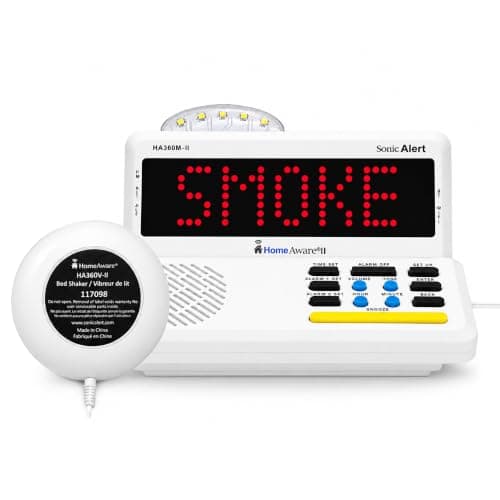
Why 520 Hz and a bed shaker beat a louder horn, and the four devices that make up a real alerting plan.
Smoke Detectors
Nest Protect Is Discontinued. What Now?
Production ended March 2025. What still works, what the deadline is, and the four replacements worth considering.
Smoke Detectors
What the standard tests, what the recent editions changed, and how to verify a mark is real.