Placement & Code
Space Heater Fire Safety
A small appliance with a wildly outsized share of the deaths. The reason is not the heater — it is what people put next to it and where they plug it in.
By Ryder M.Last reviewed

Keep anything that can burn at least 3 ft from a space heater, plug it directly into a wall outlet rather than an extension cord or a power strip, put it on a hard level surface rather than a rug, and turn it off when you leave the room or go to bed. The US Fire Administration reports that home portable heater fires were only 3% of home heating fires annually across 2017 to 2019 but accounted for 41% of the fatal ones — the gap is explained by where they are used, which is bedrooms, at night, next to bedding.
Siren & Safe is reader-funded. We earn a commission on some links on this page, at no cost to you. It does not change what we recommend or the order we rank it in. Full disclosure.
Why a rare fire kills so often
The numbers for this appliance are stark and worth reading slowly. The US Fire Administration reports that home portable heater fires were only 3% of all home heating fires annually for 2017 to 2019, but they accounted for 41% of fatal heating fires in homes. The USFA also records an estimated 32,200 home heating fires in 2021, causing an estimated 190 deaths, 625 injuries and $442 million in property loss.
A category producing 3% of the fires and 41% of the deaths is not a category with a bad failure rate. It is a category whose fires happen in the worst possible circumstances.
Three things explain it. They are used in bedrooms, which is where people are least able to detect a fire early. They are used at night, asleep, which removes the person who would otherwise notice. And they are used in rooms full of soft furnishings — bedding, curtains, upholstery, clothing — which ignite readily and produce smoke fast.
A furnace fire happens in a basement full of concrete. A space heater fire happens 18 in from a duvet with somebody asleep under it. Same appliance category, entirely different outcome.
The rules, in the order they prevent deaths
Not a long list and not a complicated one. The first two prevent most of what goes wrong.
- Three feet of clear space, in every direction. Bedding, curtains, clothes drying, a laundry basket, a sofa arm, a pet bed, paper. The commonest cause of heating fire deaths is heating equipment too close to something that burns
- Plug it straight into a wall outlet. Never an extension cord, never a power strip, never a multi-way adapter. A heater draws close to the full rating of a household circuit and those accessories are not built for a sustained load
- Hard, level, non-combustible surface. Not a rug, not a carpet, not a bed, not a chair. A tipped heater on a carpet is the classic fatal sequence, and thick pile blocks the air intake even upright
- Off when you leave the room, and off when you go to bed. This is the rule that would eliminate most of the 41%, and it is the one people negotiate with
- Buy one with tip-over and overheat shutoff, and test the tip-over. Pick the heater up off the floor and confirm it cuts out. Do this when it is new, not after a near miss
- Never use an oven or a hob to heat a room. It is a carbon monoxide source and a fire source at once, and it appears in this statistic every winter
- Unvented fuel heaters need ventilation and a CO alarm. Kerosene and propane heaters produce combustion products in the room. Follow the manufacturer's ventilation instruction exactly
- Check the cord for damage every time. A warm plug, a discolored outlet, a cracked cord or a scorch mark means stop using it now and replace it, not later
Quick picks
Scored against bedroom suitability, listing clarity, maintenance burden and install effort. Tap a row for the full write-up. The price in each buy button is the live Amazon price at the last check, stamped with the date it was taken.
| # | Product | Best for | Score | Price |
|---|---|---|---|---|
| 1 | 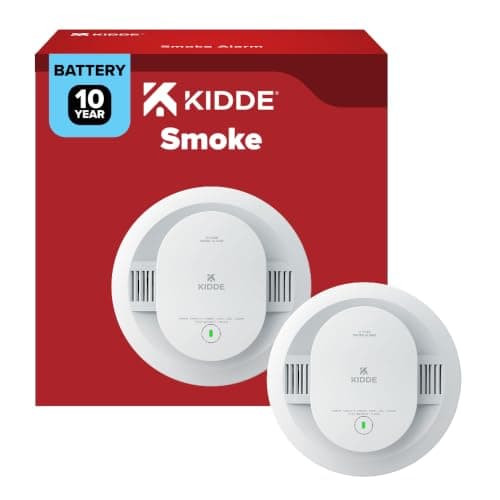 Kidde 20SD10 10-Year Battery Smoke Alarm Sealed ten years, listed to UL 217 10th edition, and it goes where the room needs it. | The bedroom the heater is used in | 9.4/ 10 | $32.47 · View on Amazon #ad how we are funded · price as of October 19, 2026 |
| 2 | 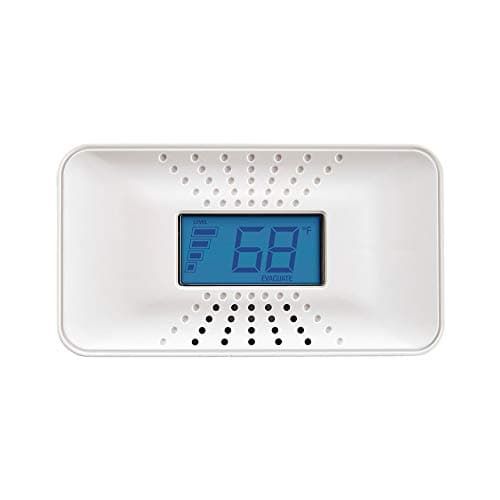 First Alert CO710 Sealed-Battery CO Alarm If the heater burns kerosene, propane or gas, this is not optional. | Any room with a fuel-burning heater | 9.3/ 10 | $44.00 · View on Amazon #ad how we are funded · price as of October 19, 2026 |
| 3 | 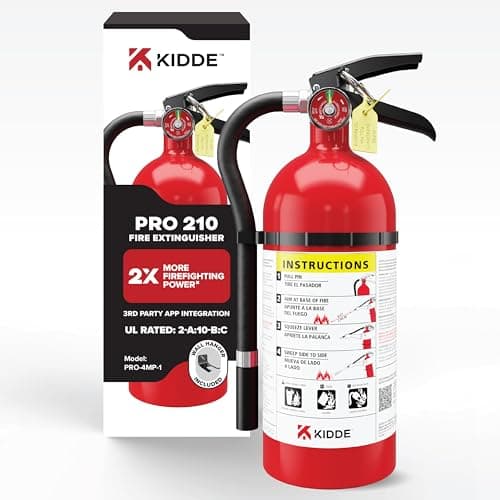 Kidde Pro 210 4 lb Multi-Purpose Extinguisher 4 lb at 2-A:10-B:C — covers furnishings, fuel and the electrical side in one unit. | The room a heater is used in, as a backstop | 7.5/ 10 | $54.97 · View on Amazon #ad how we are funded · price as of October 19, 2026 |
The alarms the room needs
1. The bedroom the heater is used in
Kidde 20SD10 10-Year Battery Smoke Alarm
Sealed ten years, listed to UL 217 10th edition, and it goes where the room needs it.
- Listed to
- UL 217, 10th edition (UL 217-2024 Ed.10)
- Sensing / agent
- Photoelectric smoke sensing only — no CO cell
- Power / service life
- Sealed 10-year lithium battery; 10-year limited warranty
The reason an alarm leads a page about heaters is the statistic in the lede. Portable heater fires are rare and disproportionately fatal, and the explanation is that they happen in bedrooms at night while people sleep.
That makes an alarm inside the bedroom — not in the hall outside it — the single most useful thing in this entire article. A closed bedroom door is excellent for fire survival and it also attenuates an alarm in the hall badly.
Check the clearances when you fit it: 36 in from a paddle fan blade tip and from a supply register, 4 in clear of the ceiling-wall corner. Smoke detector placement with ceiling fans has the measurements.
What it does well
- An alarm inside the bedroom is the one that wakes the person in it — a hallway alarm does not, with the door closed
- UL 217 10th edition, which carries the cooking-nuisance test the 8th edition introduced
- Sealed ten-year cell, so there is no annual battery change above a bed and no chirp at 3am
- Self-testing, which matters in a room people sleep in rather than walk through
The downside
- **No CO cell** — essential to know if the heater is a fuel-burning type rather than electric
- No interconnect, so a bedroom alarm sounding does not wake the rest of the house
- Photoelectric only
- Needs 36 in clearance from a paddle fan blade tip and from a supply register
Do not buy this if: a room where a kerosene or propane heater is used. That is a carbon monoxide hazard as well as a fire hazard, and a smoke-only alarm covers half of it.
- Listed to the 10th edition of UL 217, which carries the cooking-nuisance test the 8th edition introduced
- Kidde's own wording: enhanced sensing technology reduces false alarms often caused by cooking
- No low-battery chirps for ten years — the first end-of-life beep is the replacement signal
- Three long beeps and a red flash on smoke, so the pattern tells you which hazard it is
- Twist-and-click bracket, and it self-tests rather than waiting for you to press the button
#ad how we are funded · price as of October 19, 2026
2. Any room with a fuel-burning heater
First Alert CO710 Sealed-Battery CO Alarm
If the heater burns kerosene, propane or gas, this is not optional.
- Listed to
- UL 2034
- Sensing / agent
- Electrochemical CO sensor
- Power / service life
- 10-year sealed battery
Unvented kerosene and propane heaters produce combustion products in the room they are heating. That is how they work — there is no flue — and it is why every one of them ships with ventilation instructions that are routinely ignored on a cold night.
Carbon monoxide is the part you cannot detect. There is no smell, no taste, no irritation, and the early symptoms are a headache and nausea that a sleeping person never registers at all.
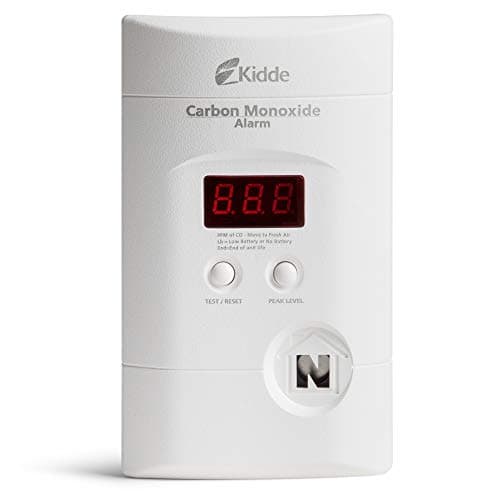
If an unvented fuel heater is used in a room, a CO alarm in that room is not a precaution, it is the control. Carbon monoxide poisoning symptoms covers what to look for, and do I need a CO detector covers the rest of the house.
What it does well
- UL 2034 listed with a sealed ten-year battery and nothing to replace in between
- Goes anywhere in the room — no outlet needed, which matters when the outlets are occupied
- Digital display of the measured concentration rather than a bare alarm
- Unaffected by a power cut, which is frequently why an unvented heater came out in the first place
The downside
- **Smoke is not covered** — this is CO only and the room needs a smoke alarm too
- End of life means replacing the whole unit
- No mains indicator, so testing is a deliberate act
- Does nothing about the fire risk, which is the other half of the hazard
Do not buy this if: a room with only an electric heater and no other fuel-burning appliance. An electric heater produces no carbon monoxide, and the CO alarms the rest of the house needs are a separate question.
- Sealed 10-year battery — nothing to change, and no low-battery chirp until it is genuinely done
- Digital display showing the measured concentration
- Placement is free: no outlet required, so it can sit at the height the room actually needs
- End of life means replacing the whole unit, by design
#ad how we are funded · price as of October 19, 2026
3. The room a heater is used in, as a backstop
Kidde Pro 210 4 lb Multi-Purpose Extinguisher
4 lb at 2-A:10-B:C — covers furnishings, fuel and the electrical side in one unit.
- Listed to
- UL rated 2-A:10-B:C
- Sensing / agent
- Monoammonium phosphate dry chemical
- Power / service life
- Rechargeable; mounting bracket included
We have put this third and we would not argue if you skipped it for this specific hazard. A space heater fire that has caught bedding or upholstery develops fast, and the window in which a household member should be fighting it rather than leaving is short.
Where it earns its place is the fire that has not reached that stage: a scorched rug, a smoldering curtain hem, a melted extension cord. Those are small, contained and exactly what a rated unit handles.
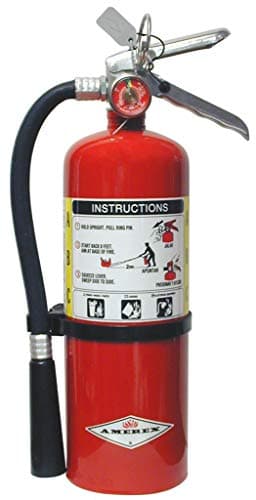
Mount it in the hallway outside the rooms rather than in one bedroom. A hall position covers several rooms and sits on the route you would be taking anyway. What size fire extinguisher do I need covers the sizing logic.
What it does well
- 2-A:10-B:C covers ordinary combustibles, flammable liquids and energized electrical equipment, which is the realistic spread around a heater
- 4 lb — light enough to aim and sweep accurately, which decides whether the agent lands on the base of the fire
- Rechargeable with a bracket in the box
- Mountable in a hallway where it covers several rooms rather than one
The downside
- **A bedroom fire that has reached the bedding is past the point for an extinguisher** — the answer there is to get out
- Dry chemical aftermath through the whole room
- Needs a solid fixing and a position people remember under stress
- Easy to over-rely on. It is the last line here, not the first
Do not buy this if: somebody who buys it instead of fixing the clearance. The 3 ft rule prevents the fire; this only responds to one that has already started.
- 4 lb — the lightest unit that still reaches a 2-A rating, which matters for one-handed use
- Rechargeable, with the bracket in the box
- Same 2-A:10-B:C class coverage as heavier units, with less run time
- Less agent means less margin for error if the first attempt misses
#ad how we are funded · price as of October 19, 2026
The extension cord problem, specifically
This deserves its own section because it is the rule people most often think does not apply to them, usually because they bought a heavy-duty cord.
A typical 1,500 W space heater draws around 12.5 A at 120 V. A standard US branch circuit is 15 A. So one heater is running at something like 80% of the circuit's capacity, continuously, for hours.
Extension cords and power strips are designed for intermittent loads, and the failure is rarely dramatic at first. The cord warms, the plug contacts warm, the connection oxidizes slightly, resistance rises, and the warming accelerates. That cycle can run for weeks before anything visible happens, and when it does the heat is at the plug or at a coil in the cord — frequently under a rug or behind furniture, which is where people run cords.
A heavier-gauge cord reduces the resistance and does not remove the problem, because the weak point is usually the connection rather than the conductor. There is no gauge that makes a power strip appropriate for a heater.
If the only outlet is across the room, the honest answer is that the room needs an outlet, or the heater needs to be somewhere else. Home fire safety checklist covers the rest of the electrical walkthrough.
Heater types and the hazard each one brings
| Type | Fire hazard | CO hazard | What it needs |
|---|---|---|---|
| Electric fan / ceramic | Contact ignition and cord overload | None | 3 ft clearance, wall outlet, hard surface |
| Oil-filled radiator | Lower surface temperature, still a contact risk | None | 3 ft clearance, wall outlet, nothing draped on it |
| Radiant / infrared | High — the element face ignites by radiation at a distance | None | 3 ft clearance treated strictly; never aimed at furnishings |
| Unvented kerosene | High — fuel on site and refueling | Yes — combustion products vent into the room | Ventilation per the manual, a CO alarm, refuel outdoors when cold |
| Unvented propane | High — fuel cylinder in a living space | Yes | Ventilation per the manual, a CO alarm, cylinder handling care |
| Oven or hob used as a heater | High | Yes | Do not. There is no safe version of this |
Any unvented fuel-burning heater means a CO alarm in the room is a requirement rather than a precaution. Where to install CO detectors.
Bedrooms, which is where this actually matters
If you take one thing from this page, take this: the combination that produces the 41% figure is a heater, a bedroom and a sleeping person, and every control worth having attacks one of those three.
Do not run a heater overnight in an occupied bedroom. Heat the room before bed and turn it off. This is the control that works, and it is the one that gets negotiated away on the coldest night of the year.
If it has to run, put the 3 ft clearance beyond argument. Not 3 ft to the duvet as it lies now — 3 ft to where the duvet ends up at 4am, to the dressing gown on the back of the door, to the curtain when the window is cracked open.
Have a working alarm inside the bedroom, not only in the hallway. A closed bedroom door is excellent for fire survival and it also attenuates a hallway alarm considerably.
Think about who is in the room. This risk falls hardest on households heating one room because the whole house is expensive to heat, on older adults who feel the cold more and may wake and move more slowly, and on children's rooms where a heater sits near a bed full of soft toys. Smoke detectors for seniors and for the hard of hearing cover the alerting side.
Signs to stop using a heater immediately
Any one of these means unplug it now and do not plug it back in. None of them improves on its own.
- The plug or the outlet is warm to the touch — a connection is failing and heating
- Scorching, discoloration or melting at the outlet or on the plug pins
- A cracked, stiff, kinked or repaired cord, or one that is warm along its length
- A burning or hot-plastic smell when it runs, beyond the dust smell of the first use of the season
- The tip-over switch does not cut the heater off when you lift it
- It trips a breaker or dims the lights on that circuit — the circuit is telling you something true
- Visible damage to the element, the grille or the housing, or rattling from inside
- It has been recalled. Heaters appear on the CPSC recall list regularly — search the model
Questions people actually ask
How far should a space heater be from furniture?
Can I plug a space heater into an extension cord?
Is it safe to leave a space heater on overnight?
Do space heaters cause carbon monoxide?
Can you put a space heater on carpet?
What kind of smoke detector do I need in a room with a space heater?
Are oil-filled radiators safer than fan heaters?
How these picks were chosen. On published specifications, safety listings and manufacturer documentation — plus the findings of organizations that do run tests. We have no laboratory and we do not burn anything. Read the full methodology.
Sources
- US Fire Administration — Home heating fire safety
- US Fire Administration — Home fire safety outreach materials
- NFPA — Smoke Alarms in US Home Fires
- CPSC — Carbon Monoxide Fact Sheet
- NFPA — NFPA 72, National Fire Alarm and Signaling Code (2025 edition)
Read next
Placement & Code
A printable room-by-room audit of alarms, CO detection, exits and suppression.
Placement & Code
The five pieces of equipment a house needs, in the order they are worth buying.
Carbon Monoxide Detectors
Do I Need a Carbon Monoxide Detector?
The five sources all-electric homes forget, and the one case where no is honest.
Carbon Monoxide Detectors
Carbon Monoxide Poisoning Symptoms
The symptoms, the flu-without-fever pattern, and the emergency action first.
Placement & Code
A fill-in template: two exits per room, a meeting place, and who helps whom.
Fire Extinguishers
The Best Fire Extinguishers for a Home
Four rated units, what the numbers mean, and why the valve material matters.