Smoke Detectors
The Best Smoke Detectors for Mobile Homes
A manufactured home has its own federal standard, a single escape corridor and a furnace closet in the middle of it. The alarms that suit it are not quite the ones that suit a house.
By Ryder M.Last reviewed
Buy the X-Sense SC07-W if you are fitting out a manufactured home: wireless interconnect for up to 24 units means an alarm at the far bedroom end sounds the one by the living-room door at the same instant, which is the single most valuable thing you can buy in a layout where every bedroom shares one corridor — and it needs no wiring, covers carbon monoxide as well as smoke, and is certified to UL 217 and UL 2034. The budget pick is the X-Sense SC01, the cheapest certified combination alarm in this registry, which makes covering three or four positions a single affordable purchase. If the home already has an alarm circuit, the First Alert SMI105-AC is the cheapest hardwired photoelectric unit here and it interconnects over the existing wire. And for the galley kitchen that sits in the middle of the corridor, the First Alert SM210V adds a spoken alert and a hush that holds. Check your HUD data plate and your state rules first — the federal standard for manufactured homes is not the residential code.
Siren & Safe is reader-funded. We earn a commission on some links on this page, at no cost to you. It does not change what we recommend or the order we rank it in. Full disclosure.
Why a manufactured home is a different buying problem
Two things make this a different question from fitting alarms in a stick-built house, and neither of them is about the alarms being cheaper.
The governing standard is federal, not the residential code. Manufactured homes are built to HUD's Manufactured Home Construction and Safety Standards, and smoke alarms in them are addressed by 24 CFR 3280.209 — a federal rule, administered through the HUD label and the data plate inside the home, rather than by the International Residential Code your neighbors' house answers to. HUD has also required that used manufactured homes sold or rented on or after 1 January 2020 be equipped with smoke alarms. On top of that, states add their own requirements: Maine, for example, requires at least one detector in specified locations and connected by a permanent wiring method into a general electrical circuit. So the honest answer to "what does my home need" is: check the data plate, then check your state and local rules, and treat your local authority as the decider. This page is about which alarms suit the building, not about what your jurisdiction requires.
The layout concentrates the risk on one corridor. The classic manufactured-home plan is long and narrow — bedrooms at one or both ends, living space at the other, a single corridor joining them, and a furnace or water-heater closet somewhere in the middle of it. That corridor is both the alarm position that matters most and the only escape route, and it is frequently also where the kitchen opens off. Three consequences follow, and they drive every pick on this page: interconnect matters more than it does in a compact house, because a fire at one end has to wake somebody forty feet away through a closed door; nuisance resistance matters more, because the corridor alarm is close to the cooking and a disabled alarm protects nothing; and a CO alarm is not optional where a fuel-burning furnace sits in a closet in the middle of the home.
The fourth factor is practical rather than regulatory: many older manufactured homes have no alarm wiring at all, and altering the electrics is a job for a qualified electrician and may engage inspection requirements. That is why the top pick here is a wireless-interconnect battery unit rather than a hardwired one. It delivers the feature that matters most without touching the structure.
How we scored these
Five criteria weighted for a long single-corridor home with a central appliance closet and, often, no alarm cable.
- Suits the layout. Whether the alarm addresses the specific geometry — one corridor, distant bedrooms, a kitchen opening onto the escape route.
- Interconnect. Whether one alarm sounding sounds them all. Weighted first among the features on this page, because distance is the layout's defining problem.
- Certification clarity. Which standards the manufacturer names in writing — relevant anywhere, and worth more in a home whose governing rule is a federal standard with its own paperwork.
- Install without alteration. Whether it can be fitted without touching wiring, which in a manufactured home is both a cost and a compliance question.
- Ten-year upkeep. Sealed cell against replaceable cells, chirp behavior, and what end of life requires.
Quick picks
Scored against suits the layout, interconnect, certification clarity, install without alteration and ten-year upkeep. Tap a row for the full write-up. The price in each buy button is the live Amazon price at the last check, stamped with the date it was taken.
| # | Product | Best for | Score | Price |
|---|---|---|---|---|
| 1 | 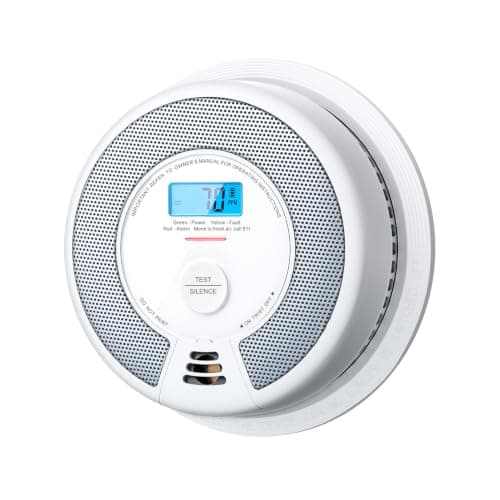 X-Sense SC07-W Wireless Interconnected Smoke & CO Alarm Wireless interconnect for up to 24 units with no wiring, a sealed ten-year cell, and both smoke and CO certified. The feature that matters most in a single-corridor layout. | Most manufactured homes — one alarm sounds, the whole home sounds | 9.7/ 10 | |
| 2 | 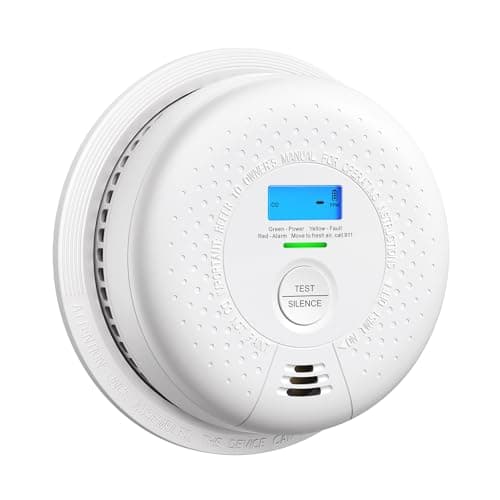 X-Sense SC01 Smoke & Carbon Monoxide Alarm The cheapest certified combination alarm in this registry, with a sealed ten-year cell and a live CO reading. Three or four of them is one affordable purchase. | The budget pick — the cheapest way to cover every required position | 8.2/ 10 | |
| 3 | 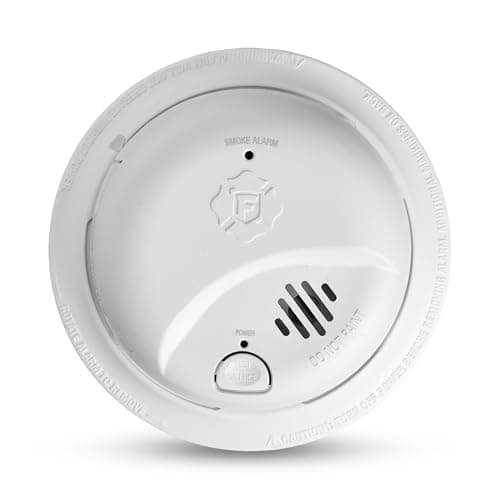 First Alert SMI105-AC Hardwired Smoke Alarm with 10-Year Battery Backup The cheapest hardwired photoelectric alarm here, with a sealed ten-year backup cell, wired interconnect and an eight-hour hush. A straight replacement for an aging wired unit. | A manufactured home that already has an alarm circuit | 8.3/ 10 | |
| 4 | 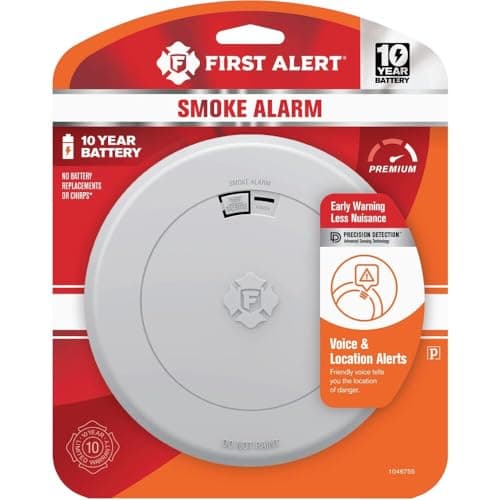 First Alert SM210V 10-Year Battery Smoke Alarm with Voice Alerts Photoelectric sensing with a sealed ten-year cell and a spoken alert, so the alarm closest to the cooker says what it found instead of just shouting. | The position nearest a galley kitchen | 8.0/ 10 | $39.99 · View on Amazon #ad how we are funded · price as of November 22, 2026 |
The picks
1. Most manufactured homes — one alarm sounds, the whole home sounds
X-Sense SC07-W Wireless Interconnected Smoke & CO Alarm
Wireless interconnect for up to 24 units with no wiring, a sealed ten-year cell, and both smoke and CO certified. The feature that matters most in a single-corridor layout.
- Listed to
- UL 217 and UL 2034
- Sensing / agent
- Photoelectric smoke sensing plus an electrochemical CO cell
- Power / service life
- 10-year sealed lithium battery, not hardwired
Why interconnect is the headline feature in a manufactured home. The classic layout is long and narrow: bedrooms at one or both ends, a living area at the other, and a single corridor joining them that is also the only escape route. A fire in the living area at night has to be announced to a bedroom thirty or forty feet away through a closed door. A standalone alarm cannot do that. An interconnected set does it instantly, and it does it without touching the wiring.
The metal frame is a real variable. Manufactured homes commonly have steel chassis members and foil-faced insulation, both of which attenuate a 2.4 GHz-class radio link more than timber and drywall do. That does not mean wireless interconnect will not work — it usually does across a single-story home — but it does mean you test it in position rather than trusting a range figure. Pair the set on a table, confirm one sounds all, then carry them to their positions, prop them up, and test again from the end of the corridor.
What it does well
- **Wireless interconnect for up to 24 units** — in a home where every bedroom is off one corridor, an alarm at the far end sounding the alarm by the exit is the difference between a warning and a warning somebody hears
- **No wiring required**, which is the practical point: it retrofits interconnection into an older manufactured home that never had alarm cable, with no alteration to the structure
- **Certified to UL 217 and UL 2034**, both named — a real smoke alarm and a real CO alarm, which matters in a home with a fuel-burning furnace in a central closet
- **Sealed ten-year lithium battery**, so there is no annual battery ritual and no low-battery chirp until end of life
- **X-Sense recommends it for large or multi-story homes**, and the long single-corridor layout of a manufactured home raises exactly the same reach problem
The downside
- **Radio range cannot be published for your home.** A manufactured home's metal frame and foil-backed insulation both cut into the link, so commission the set by testing from the furthest unit before anything is screwed down
- **No voice**, so the alert is a beep pattern rather than a named hazard
- **No app or phone alerts**, so an event in an empty home is not reported
- **Sealed battery means replacing the whole unit at ten years**
- **Pairing is a process best done on a table**, not while standing on a chair in a corridor
Do not buy this if: a single-alarm replacement where there is nothing to interconnect with — buy the SC01 below and save the difference. For the wider interconnect field see [best wireless interconnected smoke alarms](/smoke-detectors/best-wireless-interconnected-smoke-alarms).
- Wireless interconnect for up to 24 units — one alarm triggers the whole set
- No wiring, which is the point: it retrofits interconnection into a house that never had it
- LCD CO reading on each unit
- X-Sense recommends it for large or multi-story homes
2. The budget pick — the cheapest way to cover every required position
X-Sense SC01 Smoke & Carbon Monoxide Alarm
The cheapest certified combination alarm in this registry, with a sealed ten-year cell and a live CO reading. Three or four of them is one affordable purchase.
- Listed to
- UL 217 and UL 2034
- Sensing / agent
- Photoelectric smoke sensing plus an electrochemical CO cell
- Power / service life
- 10-year sealed battery, not hardwired
Coverage first, features second. In a manufactured home the required positions are few and close together, and the whole set can be covered at this price for less than a single premium alarm. A home with a certified sealed alarm in every required position is in far better shape than one with a smart alarm in the corridor and nothing in the bedrooms.
Read the CO number near the furnace. A manufactured home's furnace usually sits in a central closet, and the ability to read a concentration rather than only hear an alarm tells you whether a reading climbs when the furnace cycles. That is the information a gas engineer actually wants — best CO detectors with a digital display covers the field.
What it does well
- **Cheapest certified combination alarm in this registry**, which makes covering the bedroom, the corridor and the living area a single decision rather than a staged one
- **Certified to UL 217 and UL 2034**, both named — not a budget unit with budget paperwork
- **Sealed ten-year battery**, so nothing needs reaching and there are no chirps until end of life
- **Real-time CO and battery status on the LCD**, useful next to a furnace closet where you want to see a number rather than guess
- **Compact body**, which matters when it has to sit beside an existing mounting plate in a narrow corridor
The downside
- **No interconnect.** In a long single-corridor home this is the significant compromise, and it is the reason this is the budget pick and not the top one
- **No voice and no app**
- **Being cheap is only an advantage if you buy enough of them** — one alarm in a corridor is worse value than three in the right positions
- **Sealed battery, whole-unit replacement at ten years**
- **A combination unit has to be sited for both hazards at once**, which is always a compromise
Do not buy this if: a home where a bedroom alarm needs to wake somebody at the other end — spend the difference on the SC07-W and get the interconnect.
- Real-time CO and battery status on the LCD
- Sealed battery — nothing to replace for the life of the unit
- Compact body, which matters where it has to sit beside an existing mounting plate
- Standalone: no interconnect
3. A manufactured home that already has an alarm circuit
First Alert SMI105-AC Hardwired Smoke Alarm with 10-Year Battery Backup
The cheapest hardwired photoelectric alarm here, with a sealed ten-year backup cell, wired interconnect and an eight-hour hush. A straight replacement for an aging wired unit.
- Listed to
- UL 217 — First Alert states compliance with the latest edition
- Sensing / agent
- Photoelectric smoke sensing only — no CO cell
- Power / service life
- 120V AC with a sealed 10-year lithium backup battery
When this is the obvious purchase. A manufactured home built or updated with an alarm circuit already has the most valuable feature on this page — interconnect — in its walls. Replacing expiring wired alarms with current photoelectric units carrying sealed ten-year cells costs very little per position and gives you a fully interconnected home with nothing to maintain for a decade.
Check the date before you buy anything. Alarms carry a date of manufacture on the back and a service life of about ten years. If the alarms in the home are inside that window, this page is planning rather than shopping — when to replace smoke detectors shows where to look.
What it does well
- **Cheapest alarm in this registry, and it is hardwired photoelectric with a sealed ten-year backup cell** — not a stripped-down unit
- **Interconnects over the existing alarm circuit** with compatible First Alert and BRK units, which is the most reliable interconnect there is where the cable already exists
- **Photoelectric sensing**, the right chamber for a corridor and the one less likely to trip on a galley kitchen
- **Non-replaceable ten-year backup cell** rather than an annual 9V change, so a power cut cannot leave the home unprotected and nothing needs changing
- **Test/silence button that holds the hush for up to eight hours**, which is the humane answer to a cooking trip in a small home
The downside
- **It needs the existing 120V alarm circuit**, and plenty of older manufactured homes do not have one
- **Smoke only, no CO cell** — a separate CO alarm is still required, and a furnace closet makes that important rather than optional
- **First Alert states compliance with the latest UL 217 edition without naming the number**
- **Altering wiring in a manufactured home is work for a qualified electrician**, and may engage inspection requirements where you are
- **Wired interconnect does not reach a room with no cable**, so a partly wired home needs a wireless unit to bridge it
Do not buy this if: a home with no alarm wiring, or any situation where you cannot alter the electrics. See [hardwired vs battery smoke detectors](/smoke-detectors/hardwired-vs-battery-smoke-detectors) for the comparison, and [best hardwired smoke detectors](/smoke-detectors/best-hardwired-smoke-detectors) for the wired field.
- Photoelectric sensing on a hardwired circuit, which is the combination most houses should be replacing into
- Precision Detection sensing, which First Alert states meets the new industry standards on cooking nuisance alarms
- Non-replaceable 10-year backup cell rather than an annual 9V change
- Test/silence button that holds the hush for up to eight hours
- Interconnects over the existing alarm circuit with compatible First Alert and BRK units
First Alert product documentation
4. The position nearest a galley kitchen
First Alert SM210V 10-Year Battery Smoke Alarm with Voice Alerts
Photoelectric sensing with a sealed ten-year cell and a spoken alert, so the alarm closest to the cooker says what it found instead of just shouting.
- Listed to
- UL 217 — First Alert states compliance with the latest edition
- Sensing / agent
- Photoelectric smoke sensing, with spoken annunciation
- Power / service life
- Sealed 10-year lithium battery
The galley kitchen is the hard position in this layout. In a manufactured home the kitchen usually opens straight onto the corridor that every bedroom depends on, so the alarm covering the corridor is also the alarm closest to the cooking. That is the classic recipe for nuisance trips and a removed battery. Photoelectric sensing, an eight-hour-class hush and as much distance from the cooker as the corridor allows are the three things that keep that alarm in service.
Do not solve it by moving the alarm out of the corridor. The corridor position is the one protecting the escape route. Move it along the corridor, away from the kitchen opening — never off the route altogether. Kitchen and bathroom placement covers the clearances.
What it does well
- **Spoken alerts**, which in a small home where the alarm is close to the cooker is the difference between knowing it is smoke and assuming it is dinner
- **Photoelectric sensing**, the chamber far less prone to tripping on cooking than ionization — the right choice anywhere near a galley kitchen
- **Sealed ten-year lithium cell**, nothing to change and no chirping
- **Battery powered**, so it goes exactly where the corridor geometry wants it rather than where a cable emerges
- **Current SM-series product** rather than the outgoing SMI line
The downside
- **No interconnect**, which in this layout is the limitation to weigh hardest
- **No CO cell**, so a separate CO alarm is still needed
- **UL 217 edition not named** by First Alert for this unit
- **Sealed cell, whole-unit replacement at ten years**
- **A voice does not fix a bad position.** Too close to a galley cooker and it will still trip — distance is the real remedy
Do not buy this if: the only alarm in a manufactured home, because nothing standalone covers a long corridor on its own. Combine it with an interconnecting set, or see [best smoke detectors for kitchens](/smoke-detectors/best-smoke-detectors-for-kitchens) for the cooking-nuisance problem in full.
- Speaks rather than only sounding a horn, which removes the 3am question of what the noise means
- Photoelectric sensing — the right sensor for a hallway or a landing
- Sealed ten-year cell, so the alarm never asks to be reached
- Part of First Alert's current SM-series rather than the outgoing SMI line
First Alert product documentation
#ad how we are funded · price as of November 22, 2026
The four alarms side by side
Power, listings and interconnect exactly as the manufacturers publish them, checked on 2026-11-21. Prices are not in this table — the live figure and its "as of" date sit in each buy button above.
| Alarm | Power | Listing as published | Interconnect | CO cell | Needs wiring? |
|---|---|---|---|---|---|
| X-Sense SC07-W | Sealed 10-year lithium | UL 217 and UL 2034 | Wireless, up to 24 units | Yes | No |
| X-Sense SC01 | Sealed 10-year battery | UL 217 and UL 2034 | None | Yes | No |
| First Alert SMI105-AC | 120V AC, sealed 10-year backup | UL 217, latest edition stated without a number | Wired | No | Yes |
| First Alert SM210V | Sealed 10-year lithium | UL 217, latest edition stated without a number | None | No | No |
Three of the four need no wiring, which is deliberate: many manufactured homes have no alarm circuit, and altering the electrics is a qualified job that may engage inspection requirements where you are. Your HUD data plate and your local authority decide what the home must have.
The corridor is the plan, not just the alarm position
In a long, narrow home with one internal corridor, the escape plan is unusually simple and unusually fragile: almost everybody leaves through the same few feet of space. That makes two things worth doing on the same afternoon you fit the alarms. Work out the second way out of every bedroom — in a manufactured home that is a window, and it needs to open and be reachable by whoever sleeps in that room. And keep the corridor clear, because it is the route and there is no alternative to it. Fire escape plan covers how to write one down and rehearse it.
The furnace closet deserves its own attention. A fuel-burning furnace or water heater in a central closet is the home's most likely carbon monoxide source and sits in the middle of the sleeping area. That is why three of the four alarms on this page carry a CO cell, and it is worth adding a dedicated CO alarm at a normal height as well — where to install CO detectors covers the positions, and do I need a CO detector covers which appliances create the need.
And if you are renting the home rather than owning it, the responsibilities split between you and the park or landlord in ways that vary by state. Rental and landlord requirements sets out the general pattern, and best smoke detectors for rental property covers the units that suit a tenancy — but your own state's law is the authority, and HUD's 2020 requirement for used homes sold or rented is worth knowing about either way.
Questions people actually ask
What is the best smoke detector for a mobile home?
What are the smoke detector requirements for a manufactured home?
Can I use a regular smoke alarm in a mobile home?
How many smoke alarms does a mobile home need?
Do I need a carbon monoxide alarm in a mobile home?
Will wireless interconnected alarms work in a mobile home?
How these picks were chosen. On published specifications, safety listings and manufacturer documentation — plus the findings of organizations that do run tests. We have no laboratory and we do not burn anything. Read the full methodology.
Sources
- UL Solutions — UL 217 — smoke alarms
- UL Solutions — UL 217, Standard for Smoke Alarms, published with new technical requirements
- International Code Council — IRC Chapter 3 — building planning (R310, R314, R315)
- NFPA — NFPA 72, National Fire Alarm and Signaling Code (2025 edition)
- NFPA — Smoke alarms — installation and placement guidance
- US Fire Administration — Home fire prevention
- UpCodes — Specific location requirements for smoke alarms (NFPA 72 §29.11.3.4)
- X-Sense — SC07 10-year battery combination smoke and carbon monoxide alarm with LCD
Read next
Smoke Detectors
The Best Smoke Detectors for Rental Properties
Sealed-battery laws, locking brackets, and what to fit in a unit that changes tenants every year.
Smoke Detectors
The Best Wireless Interconnected Smoke Alarms
Four certified wireless-interconnect sets compared on radio reach, sealed cells and whether they bridge a wired loop - plus the commissioning step most buyers skip.
Smoke Detectors
The Best Smoke Detectors for Apartments
Six sealed-battery alarms a renter can actually fit, scored on nuisance resistance in a small kitchen, mounting without tools, and whether they interconnect without cable.
Placement & Code
Rental and Landlord Requirements
Where rental alarm duties actually come from, and what tenants and landlords should check.
Placement & Code
How Many Smoke Detectors Do I Need?
Worked counts for real house shapes, including split levels and open plans.
Placement & Code
A fill-in template: two exits per room, a meeting place, and who helps whom.