Smoke Detectors
The Best Smoke Detectors for Apartments
Two constraints decide this category and neither is about detection: you cannot run cable in somebody else's wall, and in a small home the cooker is never far enough away.
By Ryder M.Last reviewed

Buy the X-Sense SC07 for most apartments: a sealed 10-year photoelectric smoke and CO alarm that mounts in two minutes, needs no wiring and never needs a battery. If the apartment has two bedrooms or a long hallway, buy the SC07-W instead so the alarms sound together without cable. If you are adding an alarm to a unit that already has the landlord's hardwired ones, the Kidde 20SD10 is the cheapest listed way to cover the room they missed. The constraint nobody warns renters about is the kitchen: in a one-bedroom, almost every legal alarm position is inside 20 ft of the hob, which makes photoelectric sensing and a working hush button the two features worth paying for.
Siren & Safe is reader-funded. We earn a commission on some links on this page, at no cost to you. It does not change what we recommend or the order we rank it in. Full disclosure.
What an apartment changes about this decision
Detection is not the variable. Every alarm on this page is listed to UL 217, which means it has passed the same smoke-entry and sensitivity tests in the same laboratory fires. If the question were only "which alarm detects smoke", the cheapest listed unit in the shop would be a defensible answer and this page would be twenty words long.
What an apartment changes is everything around the alarm. You do not own the wiring, so interconnecting over cable is off the table — and interconnection is the feature that gets a sleeping person out of a back bedroom with the door shut. You do not own the ceiling, so the number of holes you are willing to put in it is a real constraint. And you cannot move the kitchen, which in a one-bedroom means almost every legal alarm position is inside the distance at which cooking sets alarms off.
Those three constraints, in that order, are what the picks above are scored against. A sealed 10-year battery, because there is no wiring and no landlord coming to change a cell. Photoelectric sensing, because the hob is close. Wireless interconnect where there is more than one sleeping area, because radio is the only interconnect a tenant is allowed to install.
The fourth thing an apartment changes is who is responsible, and that gets its own section below — because the alarms you are shopping for are usually *in addition to* the ones your landlord is legally required to maintain, not instead of them.
How we scored these
Five criteria, chosen because they are the ones an apartment actually tests. Detection performance is not among them: every unit here is UL 217 listed, and that is the detection question answered.
- Nuisance resistance. How likely the alarm is to go off while you cook, which in a small home is the difference between an alarm on the ceiling and an alarm in a drawer. Photoelectric sensing scores well, ionization scores worse, a usable hush button recovers some of the gap.
- Fits a rental. Whether it mounts with two screws and no electrical work, whether a wall position is supported when a ceiling is not, and whether anything about it needs the landlord's permission or the building's wiring.
- Covers both hazards. Whether the device is listed as a CO alarm as well as a smoke alarm. Apartments share heating plant, sit over parking and back onto neighbors' appliances, so CO is not hypothetical in a building you do not control.
- Ten-year upkeep. What the household has to remember. A sealed cell scores highest because the answer is nothing; a replaceable battery scores lower because the commonest cause of a dead alarm in any home is a cell somebody took out and never put back.
- Night behavior. Whether the alarm helps a person who has just been woken: does it name a room, is its indicator legible in the dark, and does silencing it require a chair.
Quick picks
Scored against nuisance resistance, fits a rental, covers both hazards, ten-year upkeep and night behavior. Tap a row for the full write-up. The price in each buy button is the live Amazon price at the last check, stamped with the date it was taken.
| # | Product | Best for | Score | Price |
|---|---|---|---|---|
| 1 | 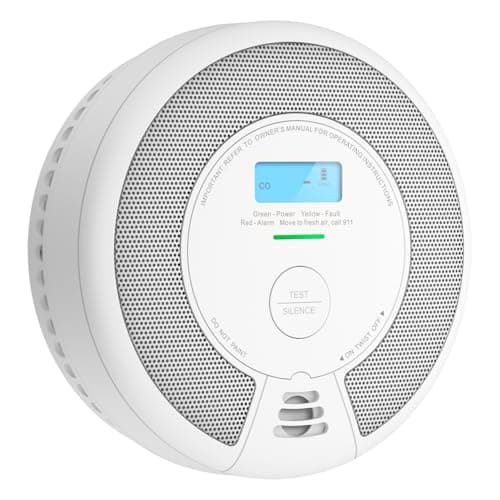 X-Sense SC07 Smoke & Carbon Monoxide Alarm A listed photoelectric smoke alarm and a listed CO alarm in one sealed 10-year unit that mounts on a wall or a ceiling with the bracket in the box. In a rental, that combination is the whole brief. | Most apartments — one sealed device, both hazards, no wiring | 9.1/ 10 | |
| 2 | 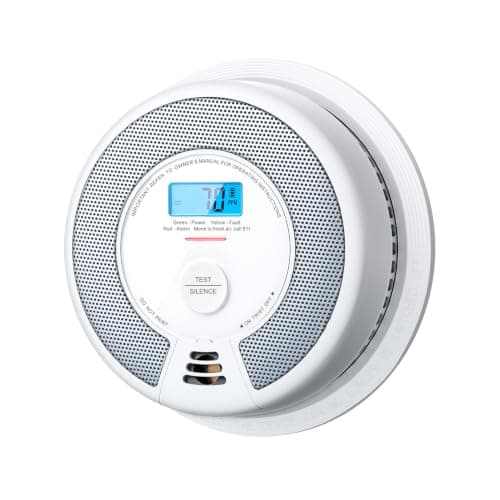 X-Sense SC07-W Wireless Interconnected Smoke & CO Alarm The same sealed 10-year combination alarm with a wireless interconnect, which is the only way to get alarms sounding together in a home where you are not allowed to run wire. | A two-bedroom or a long hallway — alarms that sound together, no cable | 9.0/ 10 | |
| 3 | 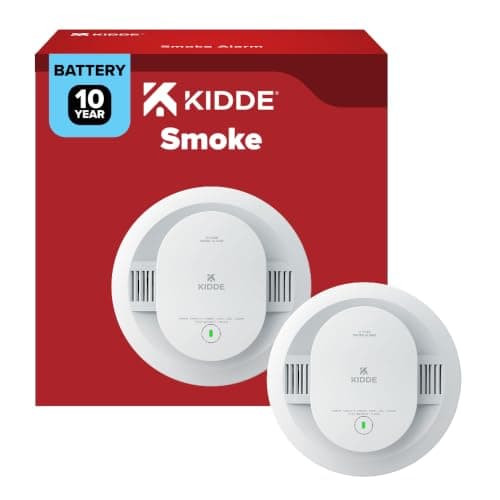 Kidde 20SD10 10-Year Battery Smoke Alarm The cheapest listed way to cover the room your landlord's alarms do not reach. Smoke only, sealed for ten years, and about as simple as this category gets. | Adding one alarm cheaply to a unit the landlord already fitted | 8.0/ 10 | $32.47 · View on Amazon #ad how we are funded · price as of November 11, 2026 |
| 4 | 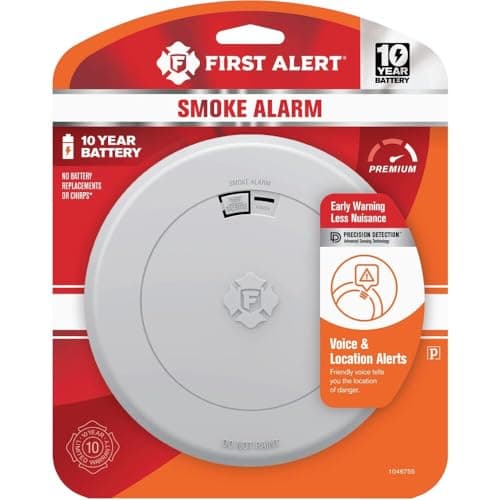 First Alert SM210V 10-Year Battery Smoke Alarm with Voice Alerts A sealed 10-year photoelectric alarm that announces the location you programmed instead of only sounding. In a dark apartment you do not know well, that sentence is worth money. | A sleeping area — the alarm that says which room it is | 8.3/ 10 | $40.82 · View on Amazon #ad how we are funded · price as of November 11, 2026 |
| 5 | 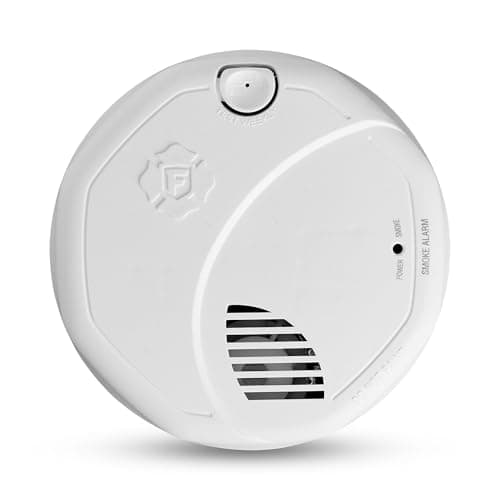 First Alert SM310 10-Year Sealed Battery Dual Sensor Smoke Alarm A dual-sensor alarm — photoelectric and ionization in one housing — which is the most complete smoke detection here. Its ionization half is also the reason it is not the pick for an open-plan studio. | Both sensor types in one alarm, for a bedroom behind a door | 7.8/ 10 | |
| 6 | 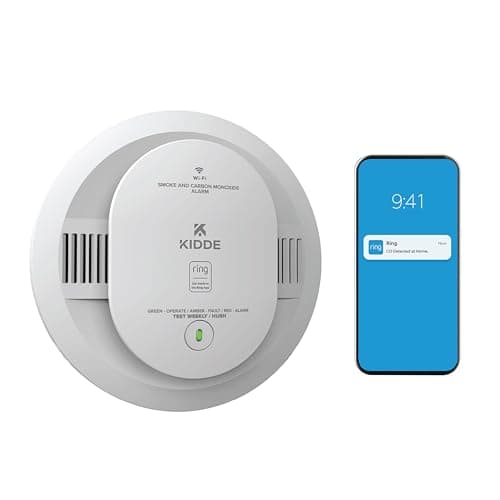 Kidde Battery Smart Smoke & Carbon Monoxide Alarm (Ring) A listed smoke and CO alarm that pushes a notification to your phone. The reason to buy it is the week you are not there, not the night you are. | An apartment that is empty for days at a time | 8.1/ 10 | $69.97 · View on Amazon #ad how we are funded · price as of November 11, 2026 |
The picks
1. Most apartments — one sealed device, both hazards, no wiring
X-Sense SC07 Smoke & Carbon Monoxide Alarm
A listed photoelectric smoke alarm and a listed CO alarm in one sealed 10-year unit that mounts on a wall or a ceiling with the bracket in the box. In a rental, that combination is the whole brief.
- Listed to
- UL 217 and UL 2034
- Sensing / agent
- Photoelectric smoke sensing plus an electrochemical CO cell
- Power / service life
- 10-year sealed lithium battery, not hardwired
Why this one wins an apartment specifically. Every alarm here is listed, so the argument is not about detection — it is about the two things an apartment takes away from you. You cannot run interconnect cable through a wall you do not own, and you cannot move the kitchen. The SC07 answers the first by needing nothing but two screws, and the second by using photoelectric sensing, which is the sensor that does not go off every time somebody sears a steak.
One device instead of two. Apartments are the hardest homes to find legal alarm positions in, and a combination unit halves how many you need to find. A single device listed to UL 217 and UL 2034 on the hallway ceiling covers the smoke requirement and the CO requirement in the one position code asks for both. Combination smoke and CO alarms is the wider roundup if you want the alternatives.
The ten-year trade, honestly. A sealed alarm costs more up front than a 9V unit and less over its life, and it removes the failure mode that kills people — a removed battery. In a rental that is the right trade: you want an alarm nobody in the household has a reason to interfere with, and a battery door is a reason.
What it does well
- **Listed to UL 217 and UL 2034 both** — a real smoke alarm and a real CO alarm in one housing, which matters in a building where shared heating plant, a neighbor's appliance or a parking level underneath can all be the CO source
- **Photoelectric smoke sensing**, the sensor that responds faster to smoldering fires and nuisance-trips far less than ionization on cooking aerosols — the single most important specification in a small home
- **Sealed 10-year lithium cell**, so there is no battery door, no 9V to replace and no 3 a.m. chirp in a one-bedroom where every room is within earshot of the alarm
- Mounts on a ceiling **or a wall** with the supplied bracket, screws and anchors — and the wall option is the one that saves renters who cannot or will not drill a ceiling
- A test and hush button that quietens a nuisance alarm rather than forcing you to pull a battery you cannot pull
- Small and plain enough that it does not look like an aftermarket addition on a landlord's ceiling
The downside
- **Not interconnected.** It sounds on its own. In a studio or a small one-bedroom that is fine; across two bedrooms and a hallway you want the SC07-W instead, and this unit cannot be upgraded into that network later
- **Sealed means disposable.** At ten years the whole device is scrap — there is no cell to swap, and if you move twice in that decade you are carrying it with you or leaving it behind
- **The CO cell is on the ceiling with the smoke sensor.** That is a legitimate position and it is not the best one for spotting a slow low-level leak at pillow height; a dedicated CO alarm near the bed does that better
- No app, no phone alert, no history. If the apartment is empty for weeks at a time, that absence is the reason to look at the Kidde Ring unit further down
- Mounting it still means two screws in somebody else's wall or ceiling. Check your lease before you drill, and read the renter notes below
Do not buy this if: an apartment with more than one sleeping area, where alarms that sound together are worth the extra money — buy the SC07-W. It is also the wrong unit if what you actually need is to replace a landlord's hardwired alarm, which is the landlord's job. For a wired replacement see [the best hardwired smoke detectors](/smoke-detectors/best-hardwired-smoke-detectors).
- LCD reads the measured CO concentration rather than only alarming
- Standalone unit — no wireless interconnect, no Wi-Fi, no base station
- Sealed battery, so there is no annual battery ritual and no low-battery chirp until end of life
- Test and silence on one control
2. A two-bedroom or a long hallway — alarms that sound together, no cable
X-Sense SC07-W Wireless Interconnected Smoke & CO Alarm
The same sealed 10-year combination alarm with a wireless interconnect, which is the only way to get alarms sounding together in a home where you are not allowed to run wire.
- Listed to
- UL 217 and UL 2034
- Sensing / agent
- Photoelectric smoke sensing plus an electrochemical CO cell
- Power / service life
- 10-year sealed lithium battery, not hardwired
Interconnection is the feature apartments lose first. A purpose-built apartment block usually has hardwired, interconnected alarms. A converted house split into flats very often does not, and a tenant who adds their own battery alarms ends up with two or three units that each sound alone. That is a real gap: NFPA's analysis of US home fires turns on whether the people asleep furthest from the fire hear anything in time.
Why wireless, not Wi-Fi. The SC07-W interconnect is radio between the alarms themselves. No router, no account, no outage to care about — if your internet is down the alarms still sound together. That is a better fit for a rental than a cloud-dependent system, and it is the reason this unit beats a smart alarm at the specific job of waking the far bedroom.
Buy the number you need, once. Pair every unit at the same time on the kitchen table before you mount anything, label them, then put them up. Adding a unit to a live network later is easy; discovering a range problem after you have drilled is not.
What it does well
- **Wireless interconnect** — when one alarm sounds they all sound, which is the feature that gets somebody out of a back bedroom with the door shut and a fan running
- **Listed to UL 217 and UL 2034**, photoelectric smoke sensing plus an electrochemical CO cell, same as the SC07
- **Sealed 10-year lithium cell** in each unit, with no wiring, no hub and no Wi-Fi involved in the interconnect
- Pairs in a couple of minutes by pressing buttons; nothing goes near the apartment's electrical system, which keeps it entirely inside what a tenant is allowed to do
- Mounts on a ceiling or a wall with the supplied bracket, like the SC07
- Scales to the apartment you move to next — add units to the same network rather than starting again
The downside
- **You need at least two for the feature to mean anything**, so the real entry price is double. One SC07-W on its own is just a more expensive SC07
- **Wireless interconnect has a range limit** and concrete or steel between units eats into it. Test the link in the actual positions before you screw anything down
- **Sealed, so disposable at ten years** — and now you are replacing a matched set rather than one alarm
- No app or phone notification: the interconnect is radio between alarms, not a connection to you when you are out
- A nuisance alarm now sounds everywhere at once, which is the point and is also genuinely unpleasant at 2 a.m. in a small apartment
Do not buy this if: a studio or a single-room apartment, where there is nothing to interconnect and the plain SC07 does the same job for less. It is also not a way to join a landlord's existing hardwired loop — those are different systems and they do not talk to each other. [Interconnected smoke alarms](/smoke-detectors/interconnected-smoke-alarms) explains why.
- Wireless interconnect for up to 24 units — one alarm triggers the whole set
- No wiring, which is the point: it retrofits interconnection into a house that never had it
- LCD CO reading on each unit
- X-Sense recommends it for large or multi-story homes
3. Adding one alarm cheaply to a unit the landlord already fitted
Kidde 20SD10 10-Year Battery Smoke Alarm
The cheapest listed way to cover the room your landlord's alarms do not reach. Smoke only, sealed for ten years, and about as simple as this category gets.
- Listed to
- UL 217, 10th edition (UL 217-2024 Ed.10)
- Sensing / agent
- Photoelectric smoke sensing only — no CO cell
- Power / service life
- Sealed 10-year lithium battery; 10-year limited warranty
The gap this alarm is for. Landlord-fitted coverage is frequently the legal minimum and sometimes less — one unit in the hallway and nothing inside the bedrooms. A tenant cannot fix that by rewiring, but a tenant can absolutely add a listed battery alarm inside their own bedroom, and at this price there is no reason not to.
Cheap is the feature. Going from one alarm to three in a two-bedroom apartment does more for your odds than any feature on any box, and the unit that lets you do it without thinking about the money is the one that actually gets bought. That is the whole argument for the 20SD10.
What it does not do. It is not a combination alarm, it does not interconnect, and it does not talk. If you want one of those things, the SC07 and the SC07-W above are the upgrades, and the best battery-operated smoke detectors covers the rest of the battery field.
What it does well
- **Sealed 10-year battery and a photoelectric sensor** at the lowest price of anything here, which makes a second or third alarm an easy decision rather than a budget argument
- **Listed to UL 217** and sold in the product family landlords and inspectors already recognize, which avoids an argument about what you have put on the ceiling
- LED status lights and an 85 dB horn — the specification every listed alarm has to meet, with nothing extra to go wrong
- No battery door at all, so nothing to open, nothing to borrow a cell from, and nothing to forget
- Light and small; the bracket takes two screws and you can wall-mount it where a ceiling is out of reach
The downside
- **Smoke only — there is no CO cell in it.** If the apartment has gas, shared heating plant, a parking level below or a fireplace, this alarm does not cover that hazard at all and you need a CO alarm as well
- **No interconnect**, wired or wireless. It sounds where it is and nowhere else
- **No voice, no app, no display.** It is a horn and two LEDs, which is the honest reason it is the cheapest unit here
- Sealed, so at ten years it is scrap rather than a battery change
- The hush button quietens a nuisance alarm but there is no clever cooking mode — position still does most of the work in a small kitchen
Do not buy this if: the only alarm in an apartment with any fuel-burning appliance, because it cannot detect carbon monoxide. Pair it with a CO alarm or buy a combination unit instead — [do I need a CO detector](/carbon-monoxide-detectors/do-i-need-a-co-detector) is the five-minute version of that decision.
- Listed to the 10th edition of UL 217, which carries the cooking-nuisance test the 8th edition introduced
- Kidde's own wording: advanced sensing technology helps distinguish real smoke from everyday cooking or steam
- No low-battery chirps for ten years — the first end-of-life beep is the replacement signal
- Three long beeps and a red flash on smoke, so the pattern tells you which hazard it is
- Twist-and-click bracket, and it self-tests rather than waiting for you to press the button
#ad how we are funded · price as of November 11, 2026
4. A sleeping area — the alarm that says which room it is
First Alert SM210V 10-Year Battery Smoke Alarm with Voice Alerts
A sealed 10-year photoelectric alarm that announces the location you programmed instead of only sounding. In a dark apartment you do not know well, that sentence is worth money.
- Listed to
- UL 217 — First Alert states compliance with the latest edition
- Sensing / agent
- Photoelectric smoke sensing, with spoken annunciation
- Power / service life
- Sealed 10-year lithium battery
Where a voice alarm earns its money. The case for voice is about waking and orienting, not volume: a person woken by a horn in an unfamiliar layout loses seconds working out where the sound is coming from, and seconds are the entire budget. In an apartment you moved into last month, with a hallway you have never walked in the dark, a device that says "bedroom" is doing something a horn cannot.
It is still a smoke-only alarm. This is the trade to be clear-eyed about. You are paying for the announcement and giving up the CO cell. In an all-electric apartment with no attached garage that is a defensible choice. In a gas apartment it is not, and you should buy the SC07 and keep the voice feature for the next place.
Program it before you mount it. Set the location on the kitchen table, test it, and only then put it on the ceiling. Nobody enjoys doing that standing on a chair.
What it does well
- **Programmable voice location** — the alarm says the room name you set, which tells a half-awake person where not to walk before they have opened their eyes
- **Photoelectric sensing with a sealed 10-year cell**, so the nuisance behavior and the upkeep are both the good version
- **Listed to UL 217**, and the voice is in addition to the 85 dB horn rather than instead of it
- Voice also announces the low-battery and end-of-life conditions in words, which is how you avoid the classic "which alarm is chirping" hunt in a small apartment
- Mounts with two screws, no wiring, and the bracket allows a wall position
The downside
- **Smoke only.** No CO cell, so it does not replace a CO alarm in an apartment with gas or shared heating plant
- **No interconnect.** The voice tells you where the fire is only if that alarm is the one that sounded
- **The voice is a recorded location label**, not a smart feature — people sometimes expect more from the word "voice" on the box than this delivers
- Dearer than the plain Kidde unit for a benefit that is real but situational: in a studio you can already see the whole apartment
- Sealed and disposable at ten years, like most of this list
Do not buy this if: a studio or a single room, where naming the location tells you nothing you cannot see. It is also not the pick if you need CO coverage from the same device — the SC07 is.
- Speaks rather than only sounding a horn, which removes the 3am question of what the noise means
- Photoelectric sensing — the right sensor for a hallway or a landing
- Sealed ten-year cell, so the alarm never asks to be reached
- Part of First Alert's current SM-series rather than the outgoing SMI line
First Alert product documentation
#ad how we are funded · price as of November 11, 2026
5. Both sensor types in one alarm, for a bedroom behind a door
First Alert SM310 10-Year Sealed Battery Dual Sensor Smoke Alarm
A dual-sensor alarm — photoelectric and ionization in one housing — which is the most complete smoke detection here. Its ionization half is also the reason it is not the pick for an open-plan studio.
- Listed to
- UL 217 — First Alert states compliance with the latest edition
- Sensing / agent
- Dual sensor: a photoelectric chamber and an ionization chamber in one housing
- Power / service life
- Sealed 10-year lithium battery; 10-year limited warranty
Why dual-sensor is both the best and the worst fit for an apartment. The two sensors answer different questions. Photoelectric sees the thick slow smoke of upholstery and bedding; ionization reacts to the near-invisible products of a fast flaming fire. Having both is better detection, full stop. It is also more sensor to be set off by a pan of oil, and in a small apartment the pan is always close.
So place it by room, not by preference. In a one-bedroom with a door, this is a good bedroom alarm and a poor hallway one. In a studio it is the wrong buy at any price, because the only alarm position you have is the one the kitchen reaches. Best smoke detectors for fewer false alarms is the page to read if nuisance tripping is what brought you here.
It still has no CO cell. Worth repeating, because "dual sensor" sounds like it covers everything and what it covers is two kinds of smoke.
What it does well
- **Dual sensor** — photoelectric for smoldering fires and ionization for fast flaming ones, both mechanisms in one listed UL 217 device, which is the most thorough smoke detection in this roundup
- **Sealed 10-year lithium battery**, so the no-maintenance argument holds
- Mounts on a ceiling or a wall with two screws and no wiring, like the rest of the battery field here
- First Alert's bracket and test button are the pattern most US landlords and inspectors already recognize
- A genuine answer for a bedroom at the far end of an apartment, where a fast flaming fire in a hallway and a slow smoldering one in the room both need catching
The downside
- **The ionization sensor is the one that nuisance-trips on cooking aerosols.** In an open-plan apartment where the hob is 12 ft from the only ceiling position, this is the alarm most likely to annoy you into silencing it — and a silenced alarm is the real hazard
- **Smoke only — no CO cell**, so it is not a one-device answer for a gas apartment
- **No interconnect**, so it sounds alone
- The most expensive smoke-only unit here, and the money buys a sensor you may not want near a small kitchen
- Dual-sensor alarms are physically a little deeper than single-sensor units, which shows on a low ceiling
Do not buy this if: a studio or any apartment where the only legal mounting position is within about 15 ft of the hob — put a photoelectric unit there instead and keep this one for a bedroom behind a door. [Ionization vs photoelectric](/smoke-detectors/ionization-vs-photoelectric) explains the mechanism rather than only the conclusion.
- The only dual-sensor unit here — photoelectric and ionization, so it is not trading one fire type for the other
- First Alert calls the sensing Precision Detection, and states it reduces cooking nuisance alarms
- 85 dB at 10 ft
- Optional locking feature that stops the alarm being lifted off its bracket
- 5 x 5 x 2 in, 0.54 lb
First Alert product documentation
6. An apartment that is empty for days at a time
Kidde Battery Smart Smoke & Carbon Monoxide Alarm (Ring)
A listed smoke and CO alarm that pushes a notification to your phone. The reason to buy it is the week you are not there, not the night you are.
- Listed to
- Ring's product page does not state a UL listing number for this alarm
- Sensing / agent
- Photoelectric smoke sensing plus an electrochemical CO cell
- Power / service life
- Two replaceable AA batteries; 10-year limited warranty excluding batteries
The specific case for a smart alarm in a rental. Apartments empty out. People travel for work, go home for a fortnight, sublet for a month. A fire in an empty apartment is a building-wide event and nobody who could act knows about it. That is the gap a notification fills, and it is the only gap it fills — the detection is the same listed detection as the cheaper units here.
The battery trade is real. Every other alarm on this page is sealed for ten years precisely so that nobody has to think about it. This one takes AAs. Put a reminder in your phone the day you fit it, because the one thing worse than no app is an alarm you hushed at 3 a.m. and then left flat.
If you want this but not the account, buy the SC07-W pair instead and accept that you will not be told. For local control without a cloud, smoke detectors for Home Assistant is the relevant page.
What it does well
- **Phone alerts through the Ring app** — if the alarm sounds while you are at work or away, you find out, which no horn in an empty apartment can do
- **A listed smoke and CO alarm**, so the alert is a side feature on a device that is a real alarm first
- **Wireless interconnect between units** of the same family, so a multi-room apartment can sound together without cable
- Hush from the app, which is the version of silencing that does not involve standing on a chair with a tea towel
- AA batteries rather than a sealed cell — unusual here, and the thing that makes it serviceable rather than disposable
The downside
- **AA batteries mean a battery to change**, and a chirp when you forget. That is the price of the app, and it reintroduces exactly the failure mode sealed alarms were designed to remove
- **It needs Wi-Fi and an account.** No internet, no notification — and in a rental where the router is yours and the power is the building's, that is a dependency worth thinking about
- **The most expensive unit in this roundup** by a wide margin, and the detection is not better than the SC07's
- An app alert is information, not a response. If you are two hours away it tells you to call somebody, and that is all it can do
- Smart alarms date faster than plain ones — the app, the account and the integration all have to keep working for a decade
Do not buy this if: a household that is home most of the time, where a sealed 10-year alarm does the same safety job for a fraction of the money and never needs a battery. It is also not the pick if you would rather not run a safety device through somebody's cloud account — [smart vs regular smoke detectors](/smoke-detectors/smart-vs-regular-smoke-detectors) works through where that line sits.
- Connects over 2.4 GHz Wi-Fi to the Ring app — no hub required, and no local control either
- Voice alert announces "Fire" as well as sounding 85 dB at 10 ft
- Wire-free interconnect with compatible Kidde alarms
- Ring states over 25% faster smoke detection than the prior generation
- Optional 24/7 professional smoke and CO monitoring, which is a paid subscription and not required to use the alarm
- AA batteries rather than a sealed ten-year cell
#ad how we are funded · price as of November 11, 2026
The six alarms side by side
Specifications as published by the manufacturers, with every listing re-checked live on 2026-10-30. Every unit here is listed to UL 217; the combination units are additionally listed as CO alarms.
| Alarm | Sensor | CO cell | Power | Interconnect | Phone alerts |
|---|---|---|---|---|---|
| X-Sense SC07 | Photoelectric | Yes — UL 2034 | Sealed 10-year lithium | No | No |
| X-Sense SC07-W | Photoelectric | Yes — UL 2034 | Sealed 10-year lithium | Wireless, between units | No |
| Kidde 20SD10 | Photoelectric | No | Sealed 10-year battery | No | No |
| First Alert SM210V | Photoelectric | No | Sealed 10-year battery | No | No |
| First Alert SM310 | Dual — photoelectric and ionization | No | Sealed 10-year lithium | No | No |
| Kidde Smart Smoke & CO (Ring) | Photoelectric | Yes | AA batteries | Wireless, between units | Yes — Ring app |
Specifications change without a model number changing, and sellers list the same model under several SKUs. Check the listing and the box before you order.
The kitchen problem, which is the real apartment problem
In a house you solve nuisance alarms with distance. NFPA 72 (2025) sets out the exclusions plainly: no alarm within a 10 ft radial distance of a fixed cooking appliance, and between 10 and 20 ft an alarm needs either an alarm-silencing means or photoelectric sensing, and must be listed for resistance to common nuisance sources from cooking.
Now measure a one-bedroom apartment. The hallway ceiling is often 12 ft from the hob. The living-area ceiling might be 14. In a studio there may be no position at all that clears 10 ft, which is exactly the case the code's second band is written for — you are permitted to mount there, but the alarm has to be the kind that can live with it.
That is why photoelectric sensing is the top criterion on this page rather than a footnote. It is not a marginal preference in an apartment; it is the specification that decides whether the alarm survives its first month. The other half of the answer is the UL 217 10th edition cooking-nuisance test, which current Kidde and First Alert alarms are being listed to — if the box names the edition, that is the most useful thing you can read standing in the aisle.
What does not work is the thing everybody tries: moving the alarm somewhere it will not be bothered. An alarm in a cupboard, behind a door or at the far end of a bedroom is not a nuisance-free alarm, it is an absent one. Smoke alarm false alarms and kitchen and bathroom placement work through the positions that are actually available to you.
Who is responsible for the alarms in a rented apartment
Start from this: in nearly every US jurisdiction, providing and maintaining working smoke alarms in a rented dwelling is the landlord's legal obligation, and the residential code sets the coverage — an alarm inside each sleeping room, one outside each separate sleeping area in the immediate vicinity of the bedrooms, and one on every story including a basement. Replacing alarms, keeping them in date and keeping a hardwired system hardwired is not a tenant job.
What tenants are typically responsible for is testing them and not disabling them. In many states a tenant who removes an alarm or takes the battery out has assumed the liability, and in some a tenant has a duty to report a failed alarm in writing. Rental and landlord requirements sets out the pattern in more detail and is the page to read before you have a conversation with a letting agent.
So why buy your own? Because the legal minimum is a floor and plenty of apartments sit below it. A single alarm in the hall and nothing inside the bedrooms is extremely common, particularly in a converted house. A tenant cannot fix that by rewiring — but a tenant can add a listed battery alarm inside their own bedroom this afternoon, and that is the single highest-value thing in this article.
One thing not to do: do not remove or replace the landlord's hardwired alarms. If one is past its ten-year date, chirping or missing, that is a written request to the landlord, not a DIY job — and in most leases taking one down is a breach. Add to the coverage; do not substitute for it.
Fitting alarms in a rental without a problem
Four groups. The first two are about the lease, the last two about the alarm actually working.
Before you drill
- Read the lease clause on fixtures and alterations. Two small screws in a ceiling is a different conversation from a mounted shelf, and most landlords welcome extra alarms — but ask in writing so the answer exists.
- Note what is already fitted, where, and the manufacture date on the back of each unit. If anything is past ten years, that is a written request to the landlord before you buy anything of your own.
- Check whether the existing alarms are hardwired and interconnected. If they are, your new battery alarms will not join that loop and are not meant to.
Choosing the position
- Inside each bedroom, on the ceiling or high on a wall per the manufacturer's instructions, is the position that adds the most protection in an apartment that only has a hallway alarm.
- Keep the 10 ft radial distance from the hob if the apartment allows it; if it does not, use a photoelectric unit and work within the 10-20 ft band the code provides for.
- Stay at least 36 in from a bathroom door where there is a shower, and 36 in from any forced-air supply register or a ceiling-fan blade tip.
- Avoid the dead air in the corner where ceiling meets wall, and never put an alarm behind a door that swings open past it.
Installing it
- Pair wireless-interconnect units on a table first, test the link in the real positions, then mount. Discovering a range problem after drilling is avoidable.
- Use the anchors in the box. Apartment ceilings are usually plasterboard, and a screw into plasterboard without an anchor is a fallen alarm in eighteen months.
- Program any voice location before the unit goes up.
- Keep the packaging and the receipt until you move out, so the alarm goes with you and the holes are the only thing you leave behind.
Living with it
- Press the test button on every alarm monthly, including the landlord's — testing is usually the tenant's duty and it takes a minute.
- Test it the way you actually sleep: bedroom door shut, fan on, from the bed. If the hallway alarm is not unmistakable from there, you have your answer about buying one for inside the room.
- Vacuum the alarm's vents every six months. In an apartment with a close kitchen, grease and dust on a sensor chamber is a real cause of nuisance tripping.
- If an alarm nuisance-trips repeatedly, move it or change the sensor type — never take the battery out. Smoke alarm false alarms covers the fixes in order of cost.
What else an apartment needs, beyond the alarm
An apartment's fire plan differs from a house's in one decisive way: the exit is a corridor you do not control and cannot see. That changes what the rest of the kit is for. A smoke alarm buys you the time; what you do with it depends on a route you should already have walked.
A fire blanket by the hob is the most useful second purchase, because a pan fire is the likeliest event in a small kitchen and a blanket does not spray corrosive powder across an open-plan room you cannot easily ventilate. One rated extinguisher near the exit is the third, and best fire extinguishers for apartments explains why 2.5 lb usually beats 5 lb in a flat. One is also the whole count for a single-floor home — how many fire extinguishers does a house need explains why the number is per floor rather than per room.
A CO alarm is not optional in a building with shared heating plant, a parking level underneath or neighbors with gas appliances, and if your smoke alarm is not a combination unit you need a separate one. Best CO detectors for apartments is the companion roundup.
An escape ladder applies only above the ground floor, only below the fourth, and only from a window that opens onto something survivable — best escape ladders for apartments is honest about how narrow that case is. For most people living in apartments the stairs, practiced, are the plan, and making a fire escape plan matters more than any product on this site.
Questions people actually ask
What is the best smoke detector for an apartment?
Can I install my own smoke detector in a rented apartment?
How many smoke detectors does an apartment need?
Why does my apartment smoke alarm go off when I cook?
Do I need a combination smoke and CO alarm in an apartment?
Are interconnected alarms possible in an apartment without rewiring?
How these picks were chosen. On published specifications, safety listings and manufacturer documentation — plus the findings of organizations that do run tests. We have no laboratory and we do not burn anything. Read the full methodology.
Sources
- UL Solutions — UL 217 — smoke alarms
- UL Solutions — UL 217, Standard for Smoke Alarms, published with new technical requirements
- NFPA — NFPA 72, National Fire Alarm and Signaling Code (2025 edition)
- UpCodes — Specific location requirements for smoke alarms (NFPA 72 §29.11.3.4)
- International Code Council — IRC Chapter 3 — building planning (R310, R314, R315)
- NFPA — Smoke alarms — installation and placement guidance
- NFPA — Smoke Alarms in US Home Fires
- NFPA — Cooking equipment fires in US homes
Read next
Smoke Detectors
The Best Battery-Operated Smoke Detectors
Sealed ten-year cells, the interconnect problem, and four battery alarms that are current models.
Smoke Detectors
The Best Combination Smoke and CO Alarms
Two listings, one position — and the one room where separate units win.
Smoke Detectors
The Best Smoke Detectors for Fewer False Alarms
The UL 217 10th edition nuisance test, how to read it on a box, and four alarms that pass it.
Placement & Code
Rental and Landlord Requirements
Where rental alarm duties actually come from, and what tenants and landlords should check.
Carbon Monoxide Detectors
Best CO Detectors for Apartments
Sealed-battery and plug-in alarms for a rental: no drilling, no rewiring, and a reading you can document.
Fire Extinguishers
Best Fire Extinguishers for Apartments
Why a small home wants a lighter extinguisher, what a renter can mount without losing a deposit, and the layered kit that actually fits a flat.