Fire Extinguishers
The Best Fire Extinguishers for Grills
Outdoor cooking combines a flammable gas, a tray of grease and, usually, a timber deck. The rating that covers all three is not the one on a kitchen extinguisher.
By Ryder M.Last reviewed
Buy the Kidde Pro 210 for a grill: 4 lb, UL rated 2-A:10-B:C, rechargeable, with the mounting bracket in the box — which means it covers the deck boards and the fence (Class A), the grease and propane (Class B) and an electric starter or a powered rotisserie (Class C), at a weight almost anybody can aim one-handed. The budget pick is the First Alert HOME1 at 2.5 lb and 1-A:10-B:C, the cheapest rated extinguisher this site recommends anywhere, and the sensible choice if you want one by the back door and one in the garage. For a built-in outdoor kitchen, the Amerex B500 is the 5 lb all-metal-valve unit to bracket permanently. And the First Alert AUTOMAR10 is the one to keep in a tailgate or trailer, rated 10-B:C with the less corrosive dry chemical. Before any of that: close the lid and shut off the gas at the tank — that stops more grill fires than anything you can buy.
Siren & Safe is reader-funded. We earn a commission on some links on this page, at no cost to you. It does not change what we recommend or the order we rank it in. Full disclosure.
Two things to do before you reach for an extinguisher
Close the lid. A grease flare-up inside a grill is a fire in a metal box, and shutting the lid cuts its air supply. On a gas grill, closing the lid and then shutting the gas off at the tank valve stops the fuel supply as well, and between them those two actions resolve the large majority of grill fires with no extinguisher, no residue and no clean-up. Do them in that order, from the side of the grill rather than leaning over the top.
Never put water on a grease fire. Water hitting burning fat turns to steam instantly and throws the burning grease outward and upward — the same mechanism that makes a kitchen grease fire so dangerous, outdoors and with more fuel. How to put out a grease fire covers this properly, and it is worth reading before the next weekend rather than during it.
The extinguisher is for what happens after those two moves fail, or for the fire that has already left the grill: the deck boards alight under the drip tray, the fence panel behind it, a cushion that caught from a spark. And if the fire has reached the structure of the house, or there is anything between you and your exit, the honest answer is to get everyone away and call the fire service — an extinguisher is for a small fire caught early with a clear route behind you.
One more case worth naming, because it is the one that puts people in hospital: a turkey fryer. That is a deep pan of hot cooking oil, which is a Class K fire, and no unit on this page is rated for it. Do not use water, do not use an ABC extinguisher as a first choice, and do not drop a frozen bird into hot oil. Class K fire extinguishers and best fire blankets for grills are the two pages for that hazard.
How we scored these
Five criteria for outdoor cooking specifically, where the fuel is gas or grease but the thing that burns next is usually timber.
- Class coverage for a grill. Weighted first, and the whole argument of this page: a grill fire can be Class A (deck, fence, furniture), Class B (propane, grease) and Class C (igniter, rotisserie, lighting) at once. A unit with no A rating covers only part of it.
- One-handed usability. Whether an average adult can hold the cylinder at arm's length and direct the nozzle, which decides whether the rating means anything at all.
- Serviceability. Metal valve and professional recharge, against a disposable unit that any discharge writes off.
- Outdoor mounting. Whether a bracket is included and whether the unit will survive being stored near an outdoor cooking area.
- Value. Price against what the unit adds, judged across a whole property rather than per cylinder.
Quick picks
Scored against class coverage for a grill, one-handed usability, serviceability, outdoor mounting and value. Tap a row for the full write-up. The price in each buy button is the live Amazon price at the last check, stamped with the date it was taken.
| # | Product | Best for | Score | Price |
|---|---|---|---|---|
| 1 | 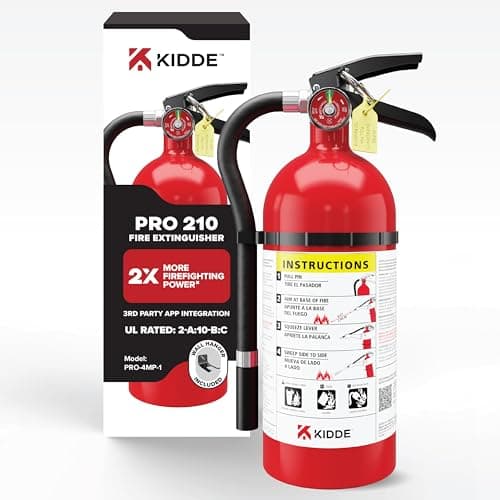 Kidde Pro 210 4 lb Multi-Purpose Extinguisher 4 lb, UL rated 2-A:10-B:C, rechargeable, bracket included. The lightest unit in this registry that reaches a full 2-A rating, which is what the deck under the grill needs. | Most grills — full class coverage at a weight you can actually aim | 9.1/ 10 | $54.97 · View on Amazon #ad how we are funded · price as of November 22, 2026 |
| 2 | 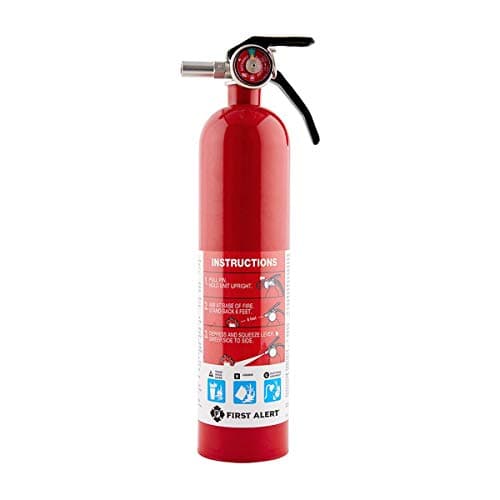 First Alert HOME1 Rechargeable Home Extinguisher (2.5 lb) 2.5 lb, UL rated 1-A:10-B:C, rechargeable with a metal head and pull pin. The cheapest rated extinguisher this site recommends, and light enough that anybody can aim it. | The budget pick — cheapest rated unit here, light enough for anyone | 9.0/ 10 | $19.53 · View on Amazon #ad how we are funded · price as of November 22, 2026 |
| 3 | 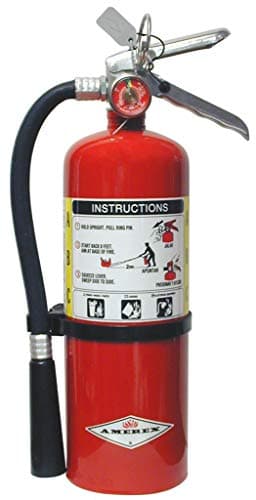 Amerex B500 5 lb ABC Dry Chemical Extinguisher 5 lb, UL rated 2-A:10-B:C, all-metal valve and body, rechargeable. The unit to fix to a wall where there is a gas supply and a permanent cooking structure. | A built-in outdoor kitchen, bracketed permanently | 8.8/ 10 | $75.00 · View on Amazon #ad how we are funded · price as of November 22, 2026 |
| 4 | 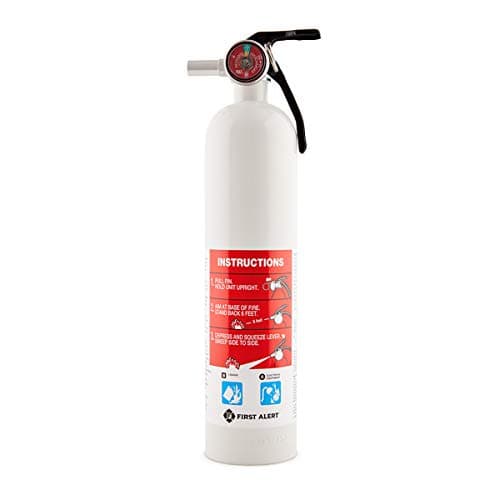 First Alert AUTOMAR10 Auto/Marine Fire Extinguisher UL rated 10-B:C with the less corrosive sodium bicarbonate agent and a vehicle bracket. No Class A rating, which is a deliberate design rather than a shortcut. | A tailgate, a trailer or a propane-only setup | 8.2/ 10 |
The picks
1. Most grills — full class coverage at a weight you can actually aim
Kidde Pro 210 4 lb Multi-Purpose Extinguisher
4 lb, UL rated 2-A:10-B:C, rechargeable, bracket included. The lightest unit in this registry that reaches a full 2-A rating, which is what the deck under the grill needs.
- Listed to
- UL rated 2-A:10-B:C
- Sensing / agent
- Monoammonium phosphate dry chemical
- Power / service life
- Rechargeable; mounting bracket included
Why the A rating is the specification that decides this. Marketing for grill and vehicle extinguishers leans on B:C, because the fuel is a gas or a liquid. That is half the picture. The thing a grill fire actually spreads to is the surface it is standing on and the structure beside it — deck boards, a fence, a pergola, a railing, a cushion. Those are Class A fires, and a 10-B:C unit has no Class A rating at all. On a deck, a 2-A:10-B:C unit is the one that covers both what starts and what it spreads to.
Keep it between you and the house, not past the grill. Bracket it by the back door or at the end of the deck you reach first, so you are never walking toward a fire to collect the thing you fight it with. Where to mount a fire extinguisher covers the positions, and how to use a fire extinguisher covers the decision to fight at all.
What it does well
- **UL rated 2-A:10-B:C — all three classes a grill fire can involve.** The A rating is the one most grill-specific products skip, and it is what covers the deck boards, the fence panel and the furniture cushion
- **4 lb is the lightest unit in this registry that still reaches a full 2-A rating**, which is the best rating-to-weight trade available here and matters when you are aiming it at arm's length
- **Rechargeable**, so a two-second burst on a flare-up does not write off the extinguisher — on a grill, partial discharges are the likely use case
- **Mounting bracket in the box**, so it ends up fixed by the back door rather than rolling around a deck box
- **Monoammonium phosphate dry chemical**, the standard ABC agent, widely understood and widely serviced
The downside
- **Dry chemical leaves a corrosive residue** that will coat the grill, the deck and anything on the table — unpleasant to clean and capable of damaging bare metal and electronics
- **Less agent than a 5 lb unit**, so less run time and less margin if the first attempt misses the base of the fire
- **No Class K rating**, so it is the wrong tool for a deep pan of cooking oil — a turkey fryer is a different problem, covered below
- **Professional recharge only**, so a refill is a trip rather than a task
- **Storing it outdoors shortens its life.** Dry chemical units do not love temperature cycling and damp; bracket it in a sheltered spot or just inside the door
Do not buy this if: a deep-fryer or turkey fryer, where a Class K agent or a fire blanket is the right answer — see [class K fire extinguishers](/fire-extinguishers/class-k-fire-extinguishers) and [kitchen Class K vs ABC](/fire-extinguishers/kitchen-class-k-vs-abc).
- 4 lb — the lightest unit that still reaches a 2-A rating, which matters for one-handed use
- Rechargeable, with the bracket in the box
- Same 2-A:10-B:C class coverage as heavier units, with less run time
- Less agent means less margin for error if the first attempt misses
#ad how we are funded · price as of November 22, 2026
2. The budget pick — cheapest rated unit here, light enough for anyone
First Alert HOME1 Rechargeable Home Extinguisher (2.5 lb)
2.5 lb, UL rated 1-A:10-B:C, rechargeable with a metal head and pull pin. The cheapest rated extinguisher this site recommends, and light enough that anybody can aim it.
- Listed to
- UL rated 1-A:10-B:C
- Sensing / agent
- Monoammonium phosphate dry chemical
- Power / service life
- Rechargeable by a certified professional; metal head and pull pin
Two light units beat one heavy one, outdoors especially. Grill fires start at the grill and spread outward, and what decides the outcome is whether something is within reach in the first thirty seconds. At this price you can have one bracketed by the back door and one in the garage, which covers far more realistic situations than a single larger cylinder in a cupboard inside.
It is also the unit to hand to somebody else. If the person standing nearest the grill is a teenager or a grandparent, 2.5 lb is the difference between an extinguisher that gets aimed and one that gets dropped. That is worth more than a rating step.
What it does well
- **Lowest price of any rated extinguisher in this registry**, which makes one by the grill and one in the garage a single easy decision
- **UL rated 1-A:10-B:C**, so it still carries a Class A rating for the deck — unlike the vehicle-rated units sold for outdoor use
- **2.5 lb is the lightest cylinder most people can aim accurately one-handed**, which is a safety specification rather than a convenience one
- **Metal head and a metal pull pin with a safety seal**, not the plastic valve of the disposable tier
- **Color-coded corrosion-resistant gauge and a mounting bracket in the box**
The downside
- **1-A is half the ordinary-combustible rating of the Kidde Pro 210**, which on a timber deck is the gap that matters
- **Less agent and less run time**, so one missed attempt is most of the cylinder
- **Dry chemical residue**, same corrosive clean-up as every ABC unit
- **Recharge economics are weak at this size** — a refill after a small discharge can approach the price of a new unit
- **No Class K rating** for a deep pan of oil
Do not buy this if: a built-in outdoor kitchen with a gas supply, where a 5 lb unit on a permanent bracket is the right answer — the Amerex B500 below. The full small-unit field is in [best small fire extinguishers](/fire-extinguishers/best-small-fire-extinguishers).
- 2.5 lb — the lightest unit most people can aim accurately with one hand
- Metal head and a metal pull pin with a safety seal, not the plastic valve of the disposable tier
- Color-coded corrosion-resistant gauge and a mounting bracket in the box
- 1-A is half the ordinary-combustible rating of a 2-A unit, which is the trade for the size
First Alert product documentation
#ad how we are funded · price as of November 22, 2026
3. A built-in outdoor kitchen, bracketed permanently
Amerex B500 5 lb ABC Dry Chemical Extinguisher
5 lb, UL rated 2-A:10-B:C, all-metal valve and body, rechargeable. The unit to fix to a wall where there is a gas supply and a permanent cooking structure.
- Listed to
- UL rated 2-A:10-B:C
- Sensing / agent
- Monoammonium phosphate dry chemical
- Power / service life
- Rechargeable; all-metal valve and body
When run time is worth the weight. A built-in outdoor kitchen is a bigger fire load than a kettle barbecue: a plumbed gas line, a fixed hood, cabinetry, often a fridge. If a fire there is going to be fought at all, it needs more than a few seconds of agent. This is also the one grill scenario where the extinguisher can be properly bracketed at a sensible height and left alone, which removes the handling objection to a 5 lb cylinder.
Check the gauge twice a year, and more often outdoors. Needle in the green, pin and seal intact, nozzle clear of spider webs and grit. A unit that has lost pressure does not announce it — fire extinguisher expiration and service covers the schedule.
What it does well
- **All-metal valve rather than plastic**, which is the difference between a serviceable unit and a disposable one — and it matters most on a unit that lives outside in temperature cycling
- **UL rated 2-A:10-B:C** with 5 lb of agent, so meaningfully more run time than the 4 lb and 2.5 lb units above at the same class coverage
- **Rechargeable**, so a partial discharge during a flare-up does not write off the extinguisher
- **Built to be bracketed and left**, which suits a permanent outdoor kitchen with a plumbed gas supply better than a portable unit does
- **Monoammonium phosphate dry chemical**, standard agent, serviced everywhere
The downside
- **5 lb is heavier than the supermarket unit and needs a proper bracket** — and it is beyond what some adults can hold at arm's length and aim accurately
- **Dry chemical residue across a built-in kitchen is a genuinely expensive clean-up**, including into appliances and burner assemblies
- **No Class K rating**, so it is not the answer for a fryer
- **Professional service**, including hydrostatic testing over its life
- **Outdoor storage is still a compromise** for any dry chemical unit — sheltered and inverted-checked annually is the minimum
Do not buy this if: a portable grill on a balcony or a small patio, where weight and reach matter more than run time — buy the Kidde Pro 210 or First Alert HOME1 instead. For an apartment balcony specifically see [best fire extinguishers for apartments](/fire-extinguishers/best-fire-extinguishers-for-apartments).
- All-metal valve rather than plastic, which is the difference between a serviceable unit and a disposable one
- Rechargeable, so a partial discharge during a small fire does not write off the extinguisher
- 2-A:10-B:C covers ordinary combustibles, flammable liquids and energized electrical equipment
- 5 lb is heavier than the supermarket unit and needs a proper bracket
#ad how we are funded · price as of November 22, 2026
4. A tailgate, a trailer or a propane-only setup
First Alert AUTOMAR10 Auto/Marine Fire Extinguisher
UL rated 10-B:C with the less corrosive sodium bicarbonate agent and a vehicle bracket. No Class A rating, which is a deliberate design rather than a shortcut.
- Listed to
- UL rated 10-B:C
- Sensing / agent
- Sodium bicarbonate dry chemical
- Power / service life
- Rechargeable by a certified professional; mounting bracket included
The honest reason this unit is on the page. Grilling happens at tailgates, on trailers and off the back of vehicles, and in those settings a bracketed vehicle unit with a less corrosive agent is exactly right: the fuel is gas and grease, there is no deck to protect, and the bracket survives being driven around.
At home, read the rating rather than the marketing. A 10-B:C unit is sold heavily into outdoor cooking because propane is Class B. The missing letter is the one that covers everything the fire spreads to. If your grill sits on timber or against a fence, you want an A rating.
What it does well
- **UL rated 10-B:C** — flammable liquids and energized electrical equipment, which is precisely what a propane leak fire or a grease flare-up is
- **Sodium bicarbonate rather than monoammonium phosphate**, the less corrosive of the two dry chemicals, which matters when what it lands on is a grill, a vehicle or a cooler
- **Metal head and metal pull pin with a safety seal**, plus a corrosion-resistant gauge
- **First Alert publishes 5.3 lb total weight and a 14.1 in body with a vehicle bracket in the box** — real published figures, and a bracket designed for a moving vehicle
- **Rechargeable by a certified professional**
The downside
- **No Class A rating at all.** It is the wrong unit for the deck, the fence, the furniture cushion or the bag of charcoal — which is why it is not the top pick for a home grill
- **It is a vehicle extinguisher** that happens to suit a tailgate; it is not a replacement for a household ABC unit
- **Dry chemical residue**, even though this agent is the gentler of the two
- **Professional recharge only**
- **Easy to buy for the wrong reason.** The B:C marketing sounds exactly right for a grill, and the missing A rating is the thing to notice
Do not buy this if: a grill standing on a timber deck — that is a Class A spread risk and this unit has no Class A rating. Buy the Kidde Pro 210 for that. For the vehicle case properly, [best car fire extinguishers](/fire-extinguishers/best-car-fire-extinguishers) and [best RV fire extinguishers](/fire-extinguishers/best-rv-fire-extinguishers) cover it.
- 10-B:C — flammable liquids and energized electrical equipment, with no A rating at all
- Sodium bicarbonate rather than monoammonium phosphate, which is the less corrosive of the two dry chemicals
- Metal head and metal pull pin with a safety seal, plus a corrosion-resistant gauge
- First Alert publishes 5.3 lb total weight and a 14.1 in body, with a vehicle bracket in the box
- No Class A rating means it is the wrong unit for a sofa, a mattress or a wastebasket fire
First Alert product documentation
The four units side by side
UL ratings, weights and construction exactly as the manufacturers publish them, checked on 2026-11-21. No prices in this table — the live figure and its "as of" date sit in each buy button above.
| Unit | Weight | UL rating | Agent | Covers the deck (Class A)? | Bracket |
|---|---|---|---|---|---|
| Kidde Pro 210 | 4 lb | 2-A:10-B:C | Monoammonium phosphate | Yes, full 2-A | Included |
| First Alert HOME1 | 2.5 lb | 1-A:10-B:C | Monoammonium phosphate | Yes, 1-A | Included |
| Amerex B500 | 5 lb | 2-A:10-B:C | Monoammonium phosphate | Yes, full 2-A | Wall bracket, all-metal valve |
| First Alert AUTOMAR10 | 5.3 lb total | 10-B:C | Sodium bicarbonate | No — no Class A rating | Vehicle bracket included |
The fifth column is the one to read. Three of these four cover the surface the grill is standing on; the fourth does not, and it is the one most often marketed for outdoor cooking because propane is a Class B fuel. None of the four is rated for a deep pan of cooking oil.
Where to keep it, and what it will do to your deck
Position it between the grill and your exit. The extinguisher should be somewhere you reach before you reach the fire — by the back door, at the house end of the deck, on a post at the near corner. An extinguisher stored in a deck box beyond the grill is an extinguisher you have to walk past a fire to collect.
Shelter it, and check it more often than you would indoors. Dry chemical units do not enjoy temperature cycling, damp or UV. Mount it under cover or just inside the door, and check the gauge, the pin, the seal and the nozzle twice a year rather than annually. Invert and gently shake a dry chemical cylinder on the same schedule to keep the powder from packing.
Expect the clean-up to be worse than you think. A dry chemical discharge on a deck coats everything within a wide radius in corrosive powder — the grill, the furniture, the siding, the glass, and anything with a vent or a hinge. That is not a reason to hesitate when discharging it is the right call, but it is a reason to close the lid and shut the gas off first. Fire extinguisher powder cleanup covers what is involved, and is fire extinguisher powder toxic answers the health question honestly.
Questions people actually ask
What kind of fire extinguisher do I need for a grill?
Can you use a regular fire extinguisher on a propane grill?
What should I do if my grill catches fire?
Do I need a Class K extinguisher for a turkey fryer?
Where should I keep a fire extinguisher for the grill?
How big a fire extinguisher do I need for outdoor cooking?
How these picks were chosen. On published specifications, safety listings and manufacturer documentation — plus the findings of organizations that do run tests. We have no laboratory and we do not burn anything. Read the full methodology.
Sources
- UL Solutions — Fire extinguisher testing and certification (UL 711)
- NFPA — NFPA 10, Standard for Portable Fire Extinguishers
- NFPA — Cooking equipment fires in US homes
- US Fire Administration — Cooking fire safety
- US Fire Administration — Home fire prevention
Read next
Fire Extinguishers
The Best Fire Extinguishers for a Home
Four rated units, what the numbers mean, and why the valve material matters.
Fire Extinguishers
The Best Small Fire Extinguishers
Four compact extinguishers compared on weight, UL rating and one-handed usability - plus an honest account of what a small cylinder gives up.
Fire Extinguishers
The Best ABC Fire Extinguishers
Four UL-rated ABC extinguishers compared on rating, weight and rechargeability, with a plain explanation of what the numbers before the letters mean.
Fire Extinguishers
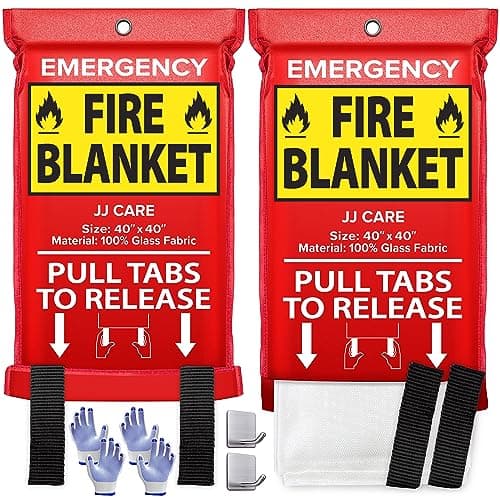
The correct sequence, why water is catastrophic, and when to leave instead.
Fire Extinguishers
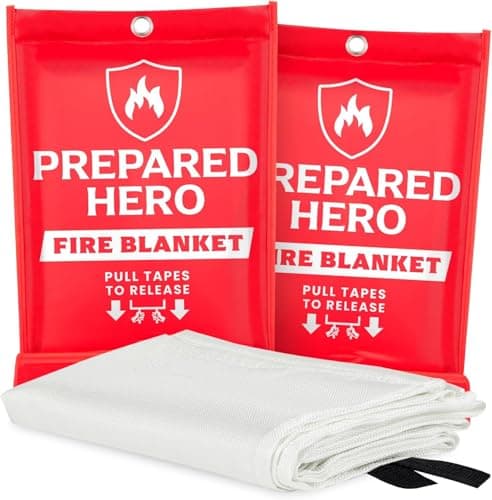
Wet chemical, saponification, and why the class exists for commercial fryers rather than home hobs.
Fire Blankets
The Best Fire Blankets for Grills and BBQs
Lid first, tank off, blanket third. Sizing for a full-size grill and the propane line you do not cross.