Fire Extinguishers
The Best Small Fire Extinguishers
Weight is a safety specification, not a convenience one. The extinguisher that works is the one the person holding it can actually point at the base of a fire.
By Ryder M.Last reviewed

Buy the First Alert HOME1 if you want one small extinguisher: 2.5 lb, UL rated 1-A:10-B:C so it covers all three household fire classes, with a metal head and pull pin rather than the plastic valve of the disposable tier - and it is rechargeable, which almost nothing this light is. It is also the budget pick, at the lowest price of any rated extinguisher in this registry. If you want a full 2-A rating at the lightest possible weight, the Kidde Pro 210 reaches it at 4 lb with the mounting bracket in the box. For a car, van or boat the First Alert AUTOMAR10 is rated 10-B:C with a vehicle bracket. And the First Alert EZ Fire Spray is the one to keep in a kitchen drawer for somebody who will never practice with a real extinguisher - it is not a rated extinguisher and it does not replace one, but it is the easiest thing here to use.
Siren & Safe is reader-funded. We earn a commission on some links on this page, at no cost to you. It does not change what we recommend or the order we rank it in. Full disclosure.
Why small is a specification rather than a compromise
Most extinguisher roundups treat size as a straight trade: bigger cylinder, bigger rating, better. The rating part is true - a 4-A unit extinguished roughly twice as much ordinary combustible fire in UL's standardized test as a 2-A one - but the conclusion does not follow, because a rating only counts if somebody can aim the cylinder.
The technique every fire service teaches assumes you can stand 6 to 8 feet back from the fire, pull the pin, hold the extinguisher steady and sweep the nozzle across the base of the flames. That means supporting the full weight of a pressurized cylinder at arm's length, one-handed, while it discharges and pushes back. A 10 lb unit is genuinely beyond many adults, and it is beyond most children, many older people and anybody with a shoulder, wrist or grip problem - which is a large share of the people who are at home during the day.
So the honest way to size an extinguisher is to pick the heaviest unit everybody in the household could aim, and then buy more of them rather than buying one bigger one. Two 2.5 lb units on two floors beat a single 5 lb cylinder in a hallway, because reach decides whether an extinguisher gets used at all and weight decides whether it gets used well.
What a small cylinder gives up is run time and margin. Less agent means a shorter discharge and less room for a missed first attempt - and most first attempts miss, because people aim at the flames rather than the base. That is a real cost, and it is the reason this page names a 4 lb unit for anyone who can handle it rather than defaulting to the lightest thing available. What size fire extinguisher do I need works the sizing through for a whole house.
How we scored these
Five criteria for a buyer who has correctly worked out that the biggest cylinder is not automatically the right one. Agent chemistry is not among them - every dry chemical unit here uses a standard agent, and the differences that matter are in the rating and the construction.
- One-handed usability. Whether an average adult can hold the cylinder at arm's length and direct the nozzle accurately. This is weighted first on purpose: it is the criterion that decides whether the rating means anything.
- Rated coverage. The UL rating, read properly - the number before the A scales with ordinary combustible fire extinguished, the number before the B with flammable-liquid fire, and C means the agent was tested as non-conductive.
- Serviceability. Whether the valve is metal and the unit can be professionally recharged, or whether any discharge makes it scrap.
- Mounting and storage. Whether a bracket is in the box and whether the unit will realistically end up where it is needed rather than in a cupboard.
- Value. Price against what the unit actually adds, judged across a whole house rather than per cylinder.
Quick picks
Scored against one-handed usability, rated coverage, serviceability, mounting and storage and value. Tap a row for the full write-up. The price in each buy button is the live Amazon price at the last check, stamped with the date it was taken.
| # | Product | Best for | Score | Price |
|---|---|---|---|---|
| 1 | 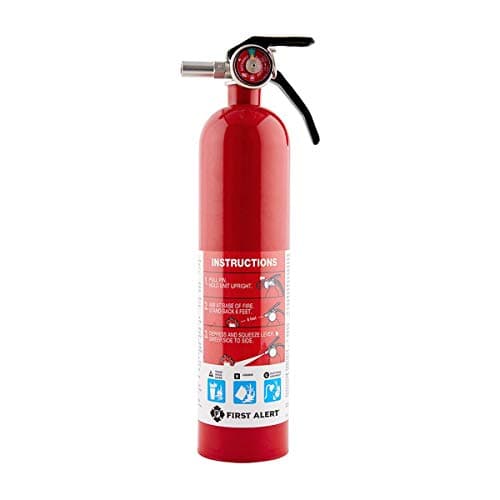 First Alert HOME1 Rechargeable Home Extinguisher (2.5 lb) 2.5 lb, UL rated 1-A:10-B:C, rechargeable, with a metal head and pull pin. The best compromise on this page between a rating that matters and a weight you can hold steady. | Most households - the lightest rated unit most people can aim, and the budget pick | 9.1/ 10 | $19.53 · View on Amazon #ad how we are funded · price as of November 22, 2026 |
| 2 | 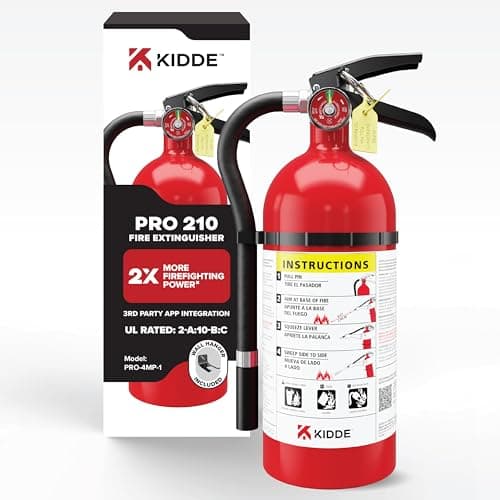 Kidde Pro 210 4 lb Multi-Purpose Extinguisher 4 lb, UL rated 2-A:10-B:C, rechargeable, bracket included. The point where the curve bends between rating and usability. | A full 2-A rating at the lightest weight that reaches it | 8.9/ 10 | $54.97 · View on Amazon #ad how we are funded · price as of November 22, 2026 |
| 3 | 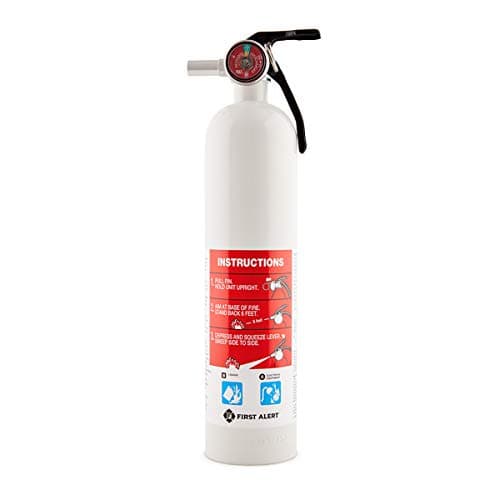 First Alert AUTOMAR10 Auto/Marine Fire Extinguisher UL rated 10-B:C with a metal head, the less corrosive dry chemical and a vehicle bracket in the box. No Class A rating, by design. | A car, van or boat | 8.3/ 10 | |
| 4 | 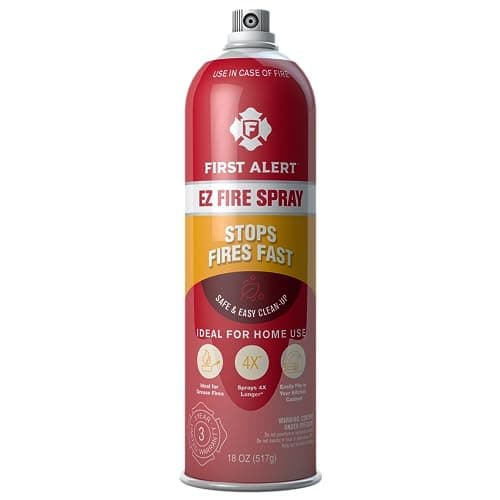 First Alert EZ Fire Spray AF400 An aerosol extinguishing spray: no pin, no gauge, aim and spray. Not a rated extinguisher, and the only thing on this page a complete beginner will use correctly first time. | A kitchen drawer - the easiest thing here to actually use | 7.5/ 10 | $11.99 · View on Amazon #ad how we are funded · price as of November 22, 2026 |
The picks
1. Most households - the lightest rated unit most people can aim, and the budget pick
First Alert HOME1 Rechargeable Home Extinguisher (2.5 lb)
2.5 lb, UL rated 1-A:10-B:C, rechargeable, with a metal head and pull pin. The best compromise on this page between a rating that matters and a weight you can hold steady.
- Listed to
- UL rated 1-A:10-B:C
- Sensing / agent
- Monoammonium phosphate dry chemical
- Power / service life
- Rechargeable by a certified professional; metal head and pull pin
Why weight belongs at the top of the criteria rather than the bottom. The standard technique assumes you can stand 6 to 8 feet back, pull the pin, hold the cylinder steady and sweep the nozzle across the base of the fire. All of that requires holding the extinguisher at arm's length while it discharges. A 10 lb unit is beyond a lot of people - including many of those most likely to be at home when a fire starts - and an extinguisher that cannot be aimed has a practical rating of zero regardless of what is stamped on the label.
Two light units beat one heavy one. What decides the outcome of a small fire is whether an extinguisher is within reach of it, not how large the cylinder is. At this price a rated unit on each floor is one purchase, and that covers far more realistic scenarios than a single bigger cylinder in a hallway cupboard.
Mount it on the escape route. On the way out of the room, at a height anybody in the household can lift it from, not behind the vacuum cleaner. Where to mount a fire extinguisher covers the positions, and how to use a fire extinguisher covers the decision to fight a fire at all.
What it does well
- **2.5 lb - the lightest cylinder most people can aim accurately with one hand**, which is a safety specification rather than a convenience one
- **UL rated 1-A:10-B:C**, so it covers ordinary combustibles, flammable liquids and energized electrical equipment. All three household classes from a unit this size
- **Metal head and a metal pull pin with a safety seal**, not the plastic valve that makes the cheapest tier disposable by design
- **Rechargeable by a certified professional**, so a two-second burst on a wastebasket fire does not write off the extinguisher
- **Color-coded corrosion-resistant gauge and a mounting bracket in the box**, so it ends up on a wall rather than on a cupboard floor
- **Lowest price of any rated extinguisher in this registry**, which makes one per floor a single easy purchase
The downside
- **1-A is half the ordinary-combustible rating of a 2-A unit.** That is the direct, honest cost of the size and weight
- **Less agent means less run time** and less margin if your first attempt misses the base of the fire - and most first attempts do
- **Dry chemical leaves a corrosive residue** that is genuinely unpleasant to clean and can damage electronics and bare metal
- **Recharge economics are weak at this size** - a refill after a small discharge can approach the price of a new unit, so the rechargeable construction is really about hardware quality here
- **No Class K rating**, so it is the wrong tool for a pan of cooking oil
Do not buy this if: a garage or workshop holding fuel and solvents, where the rating is too low and a heavier unit is the right answer - see [best garage fire extinguishers](/fire-extinguishers/best-garage-fire-extinguishers). It is also not the tool for a cooking-oil fire; [kitchen Class K versus ABC](/fire-extinguishers/kitchen-class-k-vs-abc) covers that.
- 2.5 lb — the lightest unit most people can aim accurately with one hand
- Metal head and a metal pull pin with a safety seal, not the plastic valve of the disposable tier
- Color-coded corrosion-resistant gauge and a mounting bracket in the box
- 1-A is half the ordinary-combustible rating of a 2-A unit, which is the trade for the size
First Alert product documentation
#ad how we are funded · price as of November 22, 2026
2. A full 2-A rating at the lightest weight that reaches it
Kidde Pro 210 4 lb Multi-Purpose Extinguisher
4 lb, UL rated 2-A:10-B:C, rechargeable, bracket included. The point where the curve bends between rating and usability.
- Listed to
- UL rated 2-A:10-B:C
- Sensing / agent
- Monoammonium phosphate dry chemical
- Power / service life
- Rechargeable; mounting bracket included
The 4 lb sweet spot. Rating and usability pull against each other in this category, and 4 lb at 2-A:10-B:C is where that tension mostly resolves: full household class coverage, a cylinder most adults can direct accurately, and a bracket in the box so it ends up mounted rather than stored.
Check the gauge twice a year. The needle should sit in the green. A unit that has lost pressure has not announced it, and a glance costs nothing - fire extinguisher expiration and service covers the schedule.
Practice is the missing piece. Almost nobody has ever discharged an extinguisher, and the first time should not be during a fire. Some fire services run free sessions; they are worth an hour.
What it does well
- **4 lb - the lightest unit in this registry that still reaches a full 2-A rating**, which is the best rating-to-weight trade available here
- **UL rated 2-A:10-B:C**, the same class coverage as the 5 lb cylinders most people cannot comfortably aim
- **Rechargeable**, with the mounting bracket in the box
- **Noticeably easier to direct than a 5 lb cylinder** while giving up nothing on rated class coverage
- **A professional-line unit** rather than the consumer disposable tier - which is what the Pro designation refers to
- **Monoammonium phosphate dry chemical**, the standard ABC agent, widely understood and widely serviced
The downside
- **Less agent than a 5 lb unit**, so less run time and less margin for a missed first attempt
- **Still too heavy for some users** - if holding 4 lb at arm's length is a stretch, the 2.5 lb First Alert is the honest comparison
- **Dry chemical residue**, same corrosive clean-up as every ABC unit
- **Professional recharge only**, so a refill is a trip rather than a task
- **No Class K rating** for cooking oil
Do not buy this if: a garage holding fuel and solvents, where a 60-B rating matters more than the weight saving - see [best ABC fire extinguishers](/fire-extinguishers/best-abc-fire-extinguishers) for the heavier field.
- 4 lb — the lightest unit that still reaches a 2-A rating, which matters for one-handed use
- Rechargeable, with the bracket in the box
- Same 2-A:10-B:C class coverage as heavier units, with less run time
- Less agent means less margin for error if the first attempt misses
#ad how we are funded · price as of November 22, 2026
3. A car, van or boat
First Alert AUTOMAR10 Auto/Marine Fire Extinguisher
UL rated 10-B:C with a metal head, the less corrosive dry chemical and a vehicle bracket in the box. No Class A rating, by design.
- Listed to
- UL rated 10-B:C
- Sensing / agent
- Sodium bicarbonate dry chemical
- Power / service life
- Rechargeable by a certified professional; mounting bracket included
Why no Class A is deliberate rather than a corner cut. A vehicle fire is fuel, oil and electrics - Class B and C territory. The rating reflects the realistic hazard rather than being a cut-down household unit, and the sodium bicarbonate agent is chosen because it is less corrosive to what it lands on.
Mount it in the cabin, not the trunk. An extinguisher in the boot of a burning car is unreachable. Bracket it within reach of a seated adult, and check the bracket is tight enough to survive a year of road vibration.
Know the limit. Modern vehicle fires involving fuel lines or battery packs are beyond any hand extinguisher. Get out, get clear, call for help.
What it does well
- **UL rated 10-B:C** - flammable liquids and energized electrical equipment, which is what a vehicle fire actually is
- **Sodium bicarbonate rather than monoammonium phosphate**, the less corrosive of the two dry chemicals - it matters when the thing it lands on is an engine bay
- **Metal head and metal pull pin with a safety seal**, plus a corrosion-resistant gauge
- **First Alert publishes 5.3 lb total weight and a 14.1 in body**, with a vehicle bracket included - published figures rather than adjectives
- **Rechargeable by a certified professional**
- Sized and bracketed for a vehicle, which a household cylinder is not
The downside
- **No Class A rating at all**, so it is the wrong unit for a sofa, a mattress or a wastebasket fire - that is the specification to understand before you buy
- **Not a substitute for a household extinguisher**; it is a vehicle unit and belongs in a vehicle
- **Dry chemical residue**, even though the agent is the gentler one
- **A vehicle fire escalates fast.** The honest default is to get everyone away from the car and call the fire service
- Professional recharge only
Do not buy this if: indoor household cover, because the missing Class A rating is the one you need most in a house. For the vehicle case in full see [best car fire extinguishers](/fire-extinguishers/best-car-fire-extinguishers) and [best RV fire extinguishers](/fire-extinguishers/best-rv-fire-extinguishers).
- 10-B:C — flammable liquids and energized electrical equipment, with no A rating at all
- Sodium bicarbonate rather than monoammonium phosphate, which is the less corrosive of the two dry chemicals
- Metal head and metal pull pin with a safety seal, plus a corrosion-resistant gauge
- First Alert publishes 5.3 lb total weight and a 14.1 in body, with a vehicle bracket in the box
- No Class A rating means it is the wrong unit for a sofa, a mattress or a wastebasket fire
First Alert product documentation
4. A kitchen drawer - the easiest thing here to actually use
First Alert EZ Fire Spray AF400
An aerosol extinguishing spray: no pin, no gauge, aim and spray. Not a rated extinguisher, and the only thing on this page a complete beginner will use correctly first time.
- Listed to
- Aerosol extinguishing spray — not a UL-rated A:B:C portable extinguisher
- Sensing / agent
- Sodium-bicarbonate-based extinguishing aerosol
- Power / service life
- Single use; check the stamped expiry
Why an unrated product earns a place on a roundup. The extinguisher that works is the one somebody picks up and uses correctly in the first thirty seconds. Households consistently report never having discharged an extinguisher, and a cylinder with a pin, a gauge and a technique is a lot to ask of a frightened person at 7pm with a pan smoking. A spray can removes every step except aiming.
Scope it honestly. A pan starting to smoke, a wastebasket, a toaster. Not a chip pan in full flame, not a sofa, not anything you cannot see across. And for cooking oil specifically, a fire blanket is the better domestic answer - best fire blankets for kitchens covers that.
Check the date, because nothing else will tell you. No gauge means the stamped expiry is your only indication, so put it on the same annual check as the smoke alarm batteries.
What it does well
- **Aerosol can format** - no pin to pull, no gauge to read, no technique to remember. Point and spray, which is as close to intuitive as this category gets
- **Wipes up with a cloth** instead of leaving the corrosive mess dry chemical spreads across a kitchen
- **Genuinely easier for somebody who will never practice with a real extinguisher**, which describes most households honestly
- **Sodium-bicarbonate-based agent**, the gentler of the two common dry chemistries
- **Cheapest item on this page by a wide margin**, so one in the kitchen and one in a car is a trivial decision
- Small enough to live in a drawer by the hob rather than needing a wall bracket
The downside
- **It is not a rated extinguisher.** First Alert does not claim a UL rating for it, and it will not satisfy a code or insurance requirement for one
- **Single use**, with a stamped expiry date to check - there is nothing to recharge
- **Far less agent than any cylinder here**, so its honest scope is a very small, very early fire
- **No gauge**, so there is no way to confirm it is still good other than the date on the can
- **It must not be the only fire device in a house** - that is the one way to use this product badly
Do not buy this if: a household's primary fire cover, or any situation where a rated extinguisher is required. Keep it alongside a rated unit, never instead of one - [aerosol spray versus traditional extinguishers](/fire-extinguishers/aerosol-spray-vs-traditional-extinguishers) is the honest comparison.
- Aerosol can format — no pin, no pressure gauge, aim and spray
- Wipes up with a cloth instead of the corrosive mess dry chemical leaves
- Genuinely easier for someone who will never practice with a real extinguisher
- It is not a rated extinguisher and does not satisfy a code requirement for one
#ad how we are funded · price as of November 22, 2026
The four units side by side
UL ratings, weights and construction as published by the manufacturers, checked on 2026-11-21. No prices appear in this table on purpose - the live figure and the date it was taken sit in each buy button.
| Unit | Weight | UL rating | Agent | Rechargeable | Best place for it |
|---|---|---|---|---|---|
| First Alert HOME1 | 2.5 lb | 1-A:10-B:C | Monoammonium phosphate | Yes, metal head and pin | One per floor, on the escape route |
| Kidde Pro 210 | 4 lb | 2-A:10-B:C | Monoammonium phosphate | Yes | The main household unit, if you can handle 4 lb |
| First Alert AUTOMAR10 | 5.3 lb total | 10-B:C | Sodium bicarbonate | Yes | Car, van or boat cabin |
| First Alert EZ Fire Spray | Aerosol can | Not a rated extinguisher | Sodium-bicarbonate aerosol | No, single use | A kitchen drawer, beside a rated unit |
Only three of these four are rated extinguishers, and only two of those carry a Class A rating - which is the class that covers a sofa, a mattress or a wastebasket. A house needs at least one rated A:B:C unit regardless of how many small devices are around it.
The three things a small extinguisher does not change
The decision to fight the fire at all. An extinguisher is for a small, contained fire caught early, with a clear exit behind you. Anything larger than a wastebasket, anything between you and the door, anything producing smoke you cannot see through - leave, close the door behind you and call the fire service. A lighter cylinder makes aiming easier; it does not widen the set of fires you should be tackling.
The clean-up. Dry chemical is corrosive and it travels: a 2.5 lb discharge in a kitchen will put powder on every surface in the room and into the appliances. That is not a reason to avoid using one when it is the right call, but it is worth knowing before the first time rather than after - fire extinguisher powder cleanup covers what is involved, and is fire extinguisher powder toxic covers the health question honestly.
The classes it cannot cover. No unit on this page is rated for cooking oil, which needs a Class K agent or a fire blanket, and none of them will stop a lithium-ion battery pack already in thermal runaway. Those are separate purchases for separate hazards: class K fire extinguishers and best lithium battery fire extinguishers cover both.
Questions people actually ask
What is the best small fire extinguisher?
Is a small fire extinguisher big enough for a house?
How much does a small fire extinguisher weigh?
Are aerosol fire sprays real extinguishers?
Can small fire extinguishers be recharged?
What does 1-A:10-B:C mean on a small extinguisher?
How these picks were chosen. On published specifications, safety listings and manufacturer documentation — plus the findings of organizations that do run tests. We have no laboratory and we do not burn anything. Read the full methodology.
Sources
- UL Solutions — Fire extinguisher testing and certification (UL 711)
- NFPA — NFPA 10, Standard for Portable Fire Extinguishers
- US Fire Administration — Home fire prevention
- US Fire Administration — Cooking fire safety
- CDC / NIOSH — Occupational exposure guidance and chemical databases
Read next
Fire Extinguishers
The Best Fire Extinguishers for a Home
Four rated units, what the numbers mean, and why the valve material matters.
Fire Extinguishers
What Size Fire Extinguisher Do I Need?
Weight against rating and run time, and why the likely operator decides it.
Fire Extinguishers
The Best Fire Extinguishers Under $50
Three units under $50 - a rated 2.5 lb cylinder, a vehicle unit and an aerosol can - and a plain statement of what the cap costs you.
Fire Extinguishers
The Best ABC Fire Extinguishers
Four UL-rated ABC extinguishers compared on rating, weight and rechargeability, with a plain explanation of what the numbers before the letters mean.
Fire Extinguishers
The Best Fire Extinguishers for a Car
Size, rating and the mount — plus why you should not open a smoking hood.
Fire Extinguishers
How to Use a Fire Extinguisher
PASS, the two decisions that come first, and why aiming at the flames wastes the charge.