Smoke Detectors
The Best Smoke Detectors for High Ceilings
Pick the alarm you will never need to reach. On a vaulted ceiling, every annual battery change is a ladder, and the ladder is what stops getting done.
By Ryder M.Last reviewed
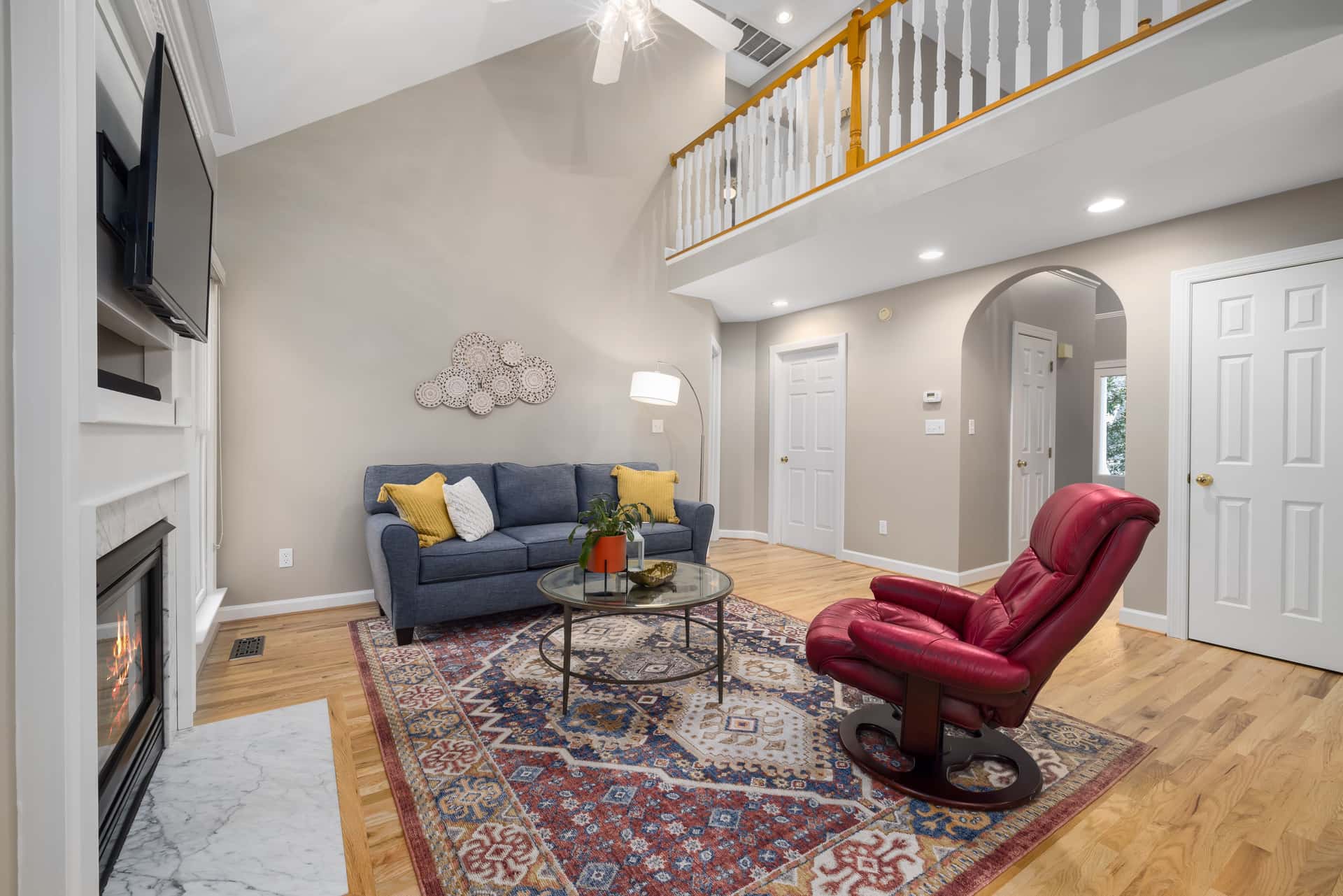
Buy the First Alert SM210V for a high or vaulted ceiling: photoelectric sensing, a sealed ten-year lithium cell so there is no annual battery change at the top of a ladder, and a spoken alert that tells you which hazard it found from 16 feet up where you cannot see the LED. If the room is part of a larger house, the X-Sense SC07-W is the better choice — the same sealed ten-year design with wireless interconnect for up to 24 units, so the alarm on the unreachable ceiling sounds every other alarm in the building rather than shouting into an empty great room. The budget pick is the X-Sense SC07, the same sensing and the same sealed decade without the interconnect. And where the house is already wired, the Kidde 20SA10 adds a sealed ten-year backup cell and a self-test to a wired interconnect. One warning before you buy anything: do not mount an alarm at the apex of a vaulted ceiling.
Siren & Safe is reader-funded. We earn a commission on some links on this page, at no cost to you. It does not change what we recommend or the order we rank it in. Full disclosure.
The high ceiling changes which specifications matter
On an eight-foot ceiling, the features worth paying for are the ones that affect detection and alerting. On a fourteen- or sixteen-foot ceiling, a different specification quietly becomes the most important one: whether you ever have to touch the alarm again. Every maintenance task that would be trivial at standing height becomes an extension ladder on a hard floor, and tasks like that get deferred rather than done.
The failure chain is always the same. The alarm needs a battery in year one. The ladder comes out, or it does not. In year four the low-battery chirp starts, at night, and it goes on for days because nobody wants to deal with it. Eventually somebody gets the unit down — and a unit that is down, or has had its cell pulled, is not an alarm. The alarms on this page are chosen first for sealed ten-year cells, because that single specification removes every rung of that chain.
The second thing a high ceiling changes is the value of interconnect. Double-height rooms are usually large, often open-plan, and frequently unoccupied. An 85 dB horn sixteen feet above a great-room floor, with bedrooms off a landing at the other end of the house, may wake nobody at all. An interconnected set sounds the alarm beside the bedrooms at the same moment — which is why the wireless-interconnect unit is the top pick for a room inside a larger house, and the standalone units are for the cases where there is nothing to interconnect with.
The third is that you cannot see the alarm properly. An LED flash pattern sixteen feet up is not something you read reliably from the floor, so an alarm that announces the hazard in words, or one that self-tests and reports a fault, is worth more here than it would be on a hallway ceiling. None of this changes the sensing — a photoelectric chamber works the same at any height — but it changes which of two similarly-priced alarms is the right purchase.
How we scored these
Five criteria weighted for a position you can only reach with a ladder and some planning. Detection speed is not among them: it does not vary by ceiling height, and UL 217 governs it.
- Reach-free ownership. Sealed ten-year cell against replaceable cells, chirp behavior, and whether the alarm self-tests. Weighted first, deliberately: on this page it is the criterion that decides whether the alarm is still working in year six.
- Alert clarity from height. Whether the alert carries information you can receive from the floor — a voice rather than an LED pattern you cannot see.
- Sensing suitability. Photoelectric sensing and what standards the listing actually names.
- Install flexibility. Whether it can go where the slope requires, or only where a cable already emerges.
- Whole-house reach. Whether an alarm in a large, often-empty room can sound the rooms people are in.
Quick picks
Scored against reach-free ownership, alert clarity from height, sensing suitability, install flexibility and whole-house reach. Tap a row for the full write-up. The price in each buy button is the live Amazon price at the last check, stamped with the date it was taken.
| # | Product | Best for | Score | Price |
|---|---|---|---|---|
| 1 | 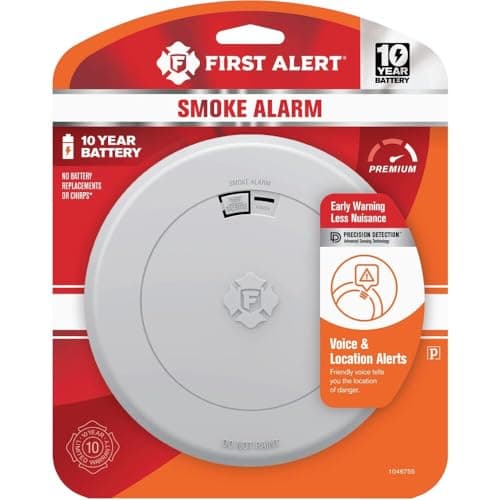 First Alert SM210V 10-Year Battery Smoke Alarm with Voice Alerts Photoelectric sensing with a sealed ten-year lithium cell and spoken alerts. Nothing to reach for ten years, and no need to see an LED you cannot see anyway. | Most high ceilings — sealed for a decade, and it tells you what it found | 9.0/ 10 | $39.99 · View on Amazon #ad how we are funded · price as of November 22, 2026 |
| 2 | 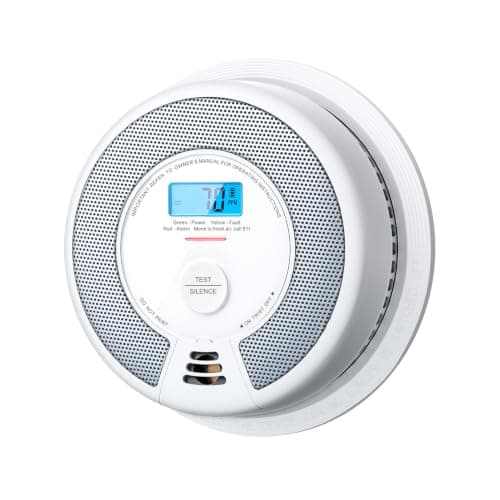 X-Sense SC07-W Wireless Interconnected Smoke & CO Alarm Sealed ten-year design with wireless interconnect for up to 24 units, so an alarm on an unreachable ceiling sounds every alarm in the building. Smoke and CO, both certified. | A high-ceilinged room inside a larger house — the one that wakes the rest of it | 9.4/ 10 | |
| 3 | 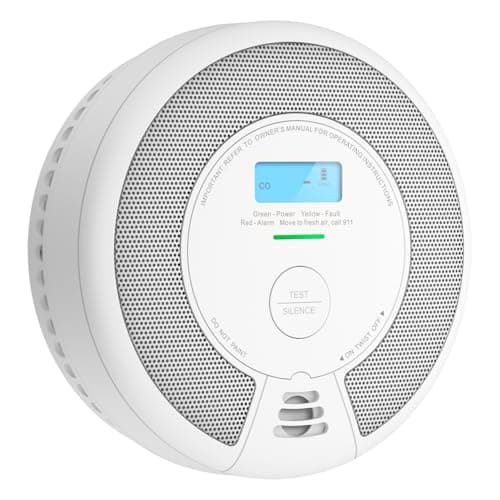 X-Sense SC07 Smoke & Carbon Monoxide Alarm Photoelectric smoke plus a CO cell, certified to UL 217 and UL 2034, sealed for ten years. The cheapest way to put a fit-and-forget combination alarm on a ceiling you cannot reach. | The budget pick — the same sealed decade, without the interconnect | 8.4/ 10 | |
| 4 | 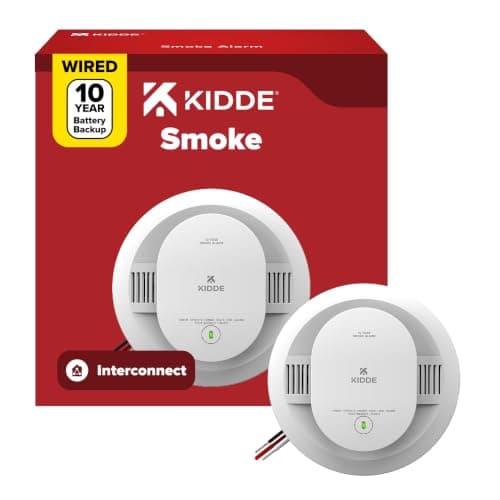 Kidde 20SA10 Hardwired Smoke Alarm with 10-Year Backup Battery Listed to UL 217 10th edition, wired interconnect, a sealed ten-year backup cell and a self-test — so the wiring and the no-ladder argument coexist. | A high ceiling that already has alarm cable running to it | 8.6/ 10 | $42.77 · View on Amazon #ad how we are funded · price as of November 22, 2026 |
The picks
1. Most high ceilings — sealed for a decade, and it tells you what it found
First Alert SM210V 10-Year Battery Smoke Alarm with Voice Alerts
Photoelectric sensing with a sealed ten-year lithium cell and spoken alerts. Nothing to reach for ten years, and no need to see an LED you cannot see anyway.
- Listed to
- UL 217 — First Alert states compliance with the latest edition
- Sensing / agent
- Photoelectric smoke sensing, with spoken annunciation
- Power / service life
- Sealed 10-year lithium battery
Why a sealed cell outranks every other feature on a high ceiling. On a normal ceiling, a replaceable battery is a minor annoyance. At 14 or 16 feet it is an extension ladder on a hard floor, once a year, probably alone, probably in a hurry. That job gets deferred, then the chirp starts, then somebody gets the alarm down and does not get it back up. A sealed ten-year cell removes the whole failure chain by making the alarm something you fit once and replace once.
The voice earns its place here more than anywhere else. On a reachable ceiling you can look at the LED and read the flash pattern. On a vaulted one you cannot see it clearly from the floor. An alarm that says what it found closes that gap for a few dollars — best talking smoke detectors covers the field.
What it does well
- **Sealed ten-year lithium cell**, which is the specification that matters most here: no annual battery change, which means no annual ladder, which means it actually gets left alone and kept working
- **It speaks rather than only sounding a horn**, so you learn which hazard it found without reading an LED pattern 16 feet above your head
- **No low-battery chirps for ten years.** A chirping alarm on an unreachable ceiling is the classic route to a disabled alarm or a very bad afternoon with an extension ladder
- **Photoelectric sensing**, which responds sooner to smoldering fires and is far less prone to the nuisance trips that would otherwise send you up the ladder
- **Battery powered, so placement is free** — and on a sloped ceiling, being able to choose the exact position on the slope rather than where a cable happens to emerge is a real advantage
The downside
- **No interconnect.** In a house of any size this is the significant limitation: an alarm in a double-height great room may be heard by nobody at all
- **No CO cell**, so a separate CO alarm is still needed
- **Testing still means reaching the button** — a telescopic pole is the usual answer, and it is worth owning one before you fit the alarm
- **First Alert states the latest UL 217 edition without naming the number**, which is less specific than Kidde's listing
- **Sealed cell means replacing the whole unit at ten years**, which on a high ceiling is a ladder job rather than a twist-off
Do not buy this if: a large or multi-story house where the alarm needs to wake somebody in another room — buy the SC07-W below instead. If you want the CO hazard covered from the same position, the SC07 picks do both.
- Speaks rather than only sounding a horn, which removes the 3am question of what the noise means
- Photoelectric sensing — the right sensor for a hallway or a landing
- Sealed ten-year cell, so the alarm never asks to be reached
- Part of First Alert's current SM-series rather than the outgoing SMI line
First Alert product documentation
#ad how we are funded · price as of November 22, 2026
2. A high-ceilinged room inside a larger house — the one that wakes the rest of it
X-Sense SC07-W Wireless Interconnected Smoke & CO Alarm
Sealed ten-year design with wireless interconnect for up to 24 units, so an alarm on an unreachable ceiling sounds every alarm in the building. Smoke and CO, both certified.
- Listed to
- UL 217 and UL 2034
- Sensing / agent
- Photoelectric smoke sensing plus an electrochemical CO cell
- Power / service life
- 10-year sealed lithium battery, not hardwired
Interconnect is the real answer to a high ceiling. The problem with a double-height room is not only that the alarm is hard to reach — it is that the room is usually large, often open-plan, and frequently empty. An 85 dB horn 16 feet up in a great room at 2am may not wake anybody. An interconnected set sounds the alarm beside the bedrooms at the same instant, which is the outcome you actually want.
Commission it on the floor, not on the ladder. Pair every unit on a table, confirm one triggers all of them, then carry them to their positions, prop them up and test again from the furthest one. Discovering a range problem after you have drilled into a vaulted ceiling is the avoidable mistake with these sets.
What it does well
- **Wireless interconnect for up to 24 units** — one alarm triggers the whole set, which is the single most valuable thing you can add to an alarm nobody is standing underneath
- **No wiring required**, which is the point: it retrofits interconnection into a great room, a vaulted landing or a converted loft that never had alarm cable
- **Sealed ten-year lithium battery**, so the no-ladder argument holds exactly as it does for the SM210V
- **Certified to UL 217 and UL 2034**, both named, so it is a real smoke alarm and a real CO alarm from one high position
- **LCD CO reading on each unit**, and X-Sense specifically recommends the model for large or multi-story homes
The downside
- **Radio range is the one specification nobody can publish for your house.** Masonry, foil-backed insulation and steel studwork all cut into the link, so the set must be commissioned by testing from the furthest unit before the holes are drilled
- **Reading the LCD from a 16 ft ceiling is not realistic**, so the display is useful on the companion units at normal height rather than on this one
- **No voice**, so the alert is a pattern rather than a sentence
- **Pairing is a process**, and it is much easier done on a table than up a ladder — pair the whole set before anything goes on a ceiling
- **Sealed battery, whole-unit replacement at ten years**
Do not buy this if: a single-room installation where there is nothing to interconnect with — the SM210V or SC07 are the cheaper and simpler answers. See [best wireless interconnected smoke alarms](/smoke-detectors/best-wireless-interconnected-smoke-alarms) for the full interconnect field.
- Wireless interconnect for up to 24 units — one alarm triggers the whole set
- No wiring, which is the point: it retrofits interconnection into a house that never had it
- LCD CO reading on each unit
- X-Sense recommends it for large or multi-story homes
3. The budget pick — the same sealed decade, without the interconnect
X-Sense SC07 Smoke & Carbon Monoxide Alarm
Photoelectric smoke plus a CO cell, certified to UL 217 and UL 2034, sealed for ten years. The cheapest way to put a fit-and-forget combination alarm on a ceiling you cannot reach.
- Listed to
- UL 217 and UL 2034
- Sensing / agent
- Photoelectric smoke sensing plus an electrochemical CO cell
- Power / service life
- 10-year sealed lithium battery, not hardwired
The honest case for the cheapest pick. Everything that makes an alarm right for a high ceiling — a sealed decade, photoelectric sensing, two certified hazards, no wiring — this unit has. What it does not have is reach. If the high-ceilinged room is where people actually are, in a single-story or open-plan home, that may not matter and this is the sensible purchase.
Carbon monoxide does not behave like smoke. It mixes roughly evenly with air rather than collecting at the ceiling, so a combination alarm at 16 feet is a fine smoke alarm and a mediocre CO monitor. Add a CO alarm at a normal height as well — where to install CO detectors covers the heights, and best battery CO detectors covers the units.
What it does well
- **Sealed ten-year battery at the lowest price of any combination alarm here**, so the fit-and-forget argument costs very little
- **Certified to UL 217 and UL 2034** — both standards named, which is more than several far more expensive alarms publish
- **Smoke and carbon monoxide from one high position**, which means one ladder trip rather than two
- **Photoelectric sensing**, less prone to the nuisance trips that would otherwise mean a ladder
- **Two screws and no electrician**, so it suits a room where running cable to a vaulted slope is not realistic
The downside
- **Standalone — no interconnect, no Wi-Fi, no base station.** On a high ceiling in a big house, that is the weakness to think hardest about
- **No voice and an LCD you cannot read from the floor**, so the alert carries less information from height than the SM210V's
- **Sealed battery, whole-unit replacement at ten years**
- **CO siting is a compromise on a high ceiling**, because CO mixes with air rather than rising like smoke — the note below covers this
- **One device covering two hazards means one failure point for both**
Do not buy this if: a large open-plan house where nobody would hear it — spend the difference on the SC07-W above and get the interconnect.
- LCD reads the measured CO concentration rather than only alarming
- Standalone unit — no wireless interconnect, no Wi-Fi, no base station
- Sealed battery, so there is no annual battery ritual and no low-battery chirp until end of life
- Test and silence on one control
4. A high ceiling that already has alarm cable running to it
Kidde 20SA10 Hardwired Smoke Alarm with 10-Year Backup Battery
Listed to UL 217 10th edition, wired interconnect, a sealed ten-year backup cell and a self-test — so the wiring and the no-ladder argument coexist.
- Listed to
- UL 217, 10th edition (UL 217-2024 Ed.10)
- Sensing / agent
- Photoelectric smoke sensing only — no CO cell
- Power / service life
- 120V AC with a sealed 10-year backup battery; 10-year limited warranty
Self-test is the underrated feature on an unreachable ceiling. Every alarm wants testing monthly, and nobody puts an extension ladder up monthly. A unit that runs its own sensor check and reports a fault changes what "maintained" means for a position you can only reach with planning. It does not remove the need to test — it means a silent failure is far less likely to go unnoticed between tests.
Buy a telescopic pole at the same time. A 12 ft extension pole with a soft head lets you press the test button from the floor, which turns a monthly ladder into a monthly reach. It is the cheapest thing you can add to a high-ceiling installation and the one most people only buy after the first chirp.
What it does well
- **Sealed ten-year backup battery on a hardwired alarm**, which is the combination to look for: mains power plus no annual battery change at the top of a ladder
- **Interconnects over the existing wire** — one sounds, they all sound, with no radio to pair and no range to lose on a 16 ft ceiling
- **It self-tests rather than waiting for you to press the button**, which matters more here than anywhere else because the button is the hardest thing in the house to reach
- **Listed explicitly to UL 217 10th edition (UL 217-2024 Ed.10)**, which carries the cooking-nuisance test — the clearest listing of any alarm on this page
- **No low-battery chirps across the ten years**, so the alarm does not start demanding a ladder in year four
The downside
- **It needs the cable already running to that position on the slope**, and on a vaulted ceiling that is rarely where you would choose to put the alarm
- **No voice and no CO cell**: a horn, and smoke only
- **Running new cable to a vaulted slope is a serious job** — if the wire is not there, buy a battery unit instead
- **Replacing it at end of life is an electrical job up a ladder**, not a twist-off
- **Wired interconnect does not reach rooms with no cable**, so a half-wired house still needs a wire-free bridge
Do not buy this if: a vaulted ceiling with no existing alarm wiring, which is most of them. See [hardwired vs battery smoke detectors](/smoke-detectors/hardwired-vs-battery-smoke-detectors) if you are weighing the two routes.
- Drops onto an existing 120V alarm circuit and interconnects over the wire — one sounds, they all sound
- Sealed 10-year backup battery, so a tripped breaker does not leave the house unprotected
- Same reduced-nuisance sensing as the battery model in this series
- No low-battery chirps across the ten years
- The direct successor to the P4010ACS line, which Kidde has discontinued
#ad how we are funded · price as of November 22, 2026
The four alarms side by side
Power, listings and interconnect exactly as the manufacturers publish them, checked on 2026-11-21. Prices are not in this table — the live figure and its "as of" date sit in each buy button above.
| Alarm | Battery | Listing as published | Interconnect | Alert from height | CO cell |
|---|---|---|---|---|---|
| First Alert SM210V | Sealed 10-year lithium | UL 217, latest edition stated without a number | None | Spoken hazard alert | No |
| X-Sense SC07-W | Sealed 10-year lithium | UL 217 and UL 2034 | Wireless, up to 24 units | Horn, plus every other alarm in the set | Yes |
| X-Sense SC07 | Sealed 10-year lithium | UL 217 and UL 2034 | None | Horn only | Yes |
| Kidde 20SA10 | 120V AC, sealed 10-year backup | UL 217 10th edition (UL 217-2024 Ed.10) | Wired | Horn, plus self-test fault reporting | No |
Every alarm here has a sealed ten-year cell, which is the entry requirement for this page rather than a finding. The column that separates them is interconnect: on a high ceiling in a large house, that is the difference between an alarm that is heard and one that is not.
Three things to settle before you put the ladder up
Where on the slope the alarm goes. Not the apex — that is the one position to rule out, for the reason in the warning above. Your alarm's manual gives the measurement it wants from the peak; where it is silent, NFPA 72's sloped-ceiling rule is the reference and your local code is the authority. Sloped and vaulted ceilings works the geometry through, and getting it right is worth more detection time than any feature on this page.
How you will test it. A 12-foot telescopic extension pole with a soft head lets you press the test button from the floor, which is the difference between a monthly test that happens and one that does not. Buy it at the same time as the alarm, not after the first chirp. How to test a smoke alarm covers what a real test involves.
Whether the CO hazard is covered at the right height. Carbon monoxide mixes with air rather than rising to a ceiling, so a combination alarm sixteen feet up is a good smoke alarm and an indifferent CO monitor. If the room or the floor needs CO coverage, add a dedicated alarm at a normal height — where to install CO detectors covers the positions and how many CO detectors do I need covers the count.
Questions people actually ask
What is the best smoke detector for a high ceiling?
Where do you put a smoke detector on a vaulted ceiling?
How do you test a smoke alarm you cannot reach?
Do smoke alarms work as well on a high ceiling?
Should I get a hardwired or battery alarm for a vaulted ceiling?
Does a sealed ten-year battery really matter on a high ceiling?
How these picks were chosen. On published specifications, safety listings and manufacturer documentation — plus the findings of organizations that do run tests. We have no laboratory and we do not burn anything. Read the full methodology.
Sources
- NFPA — NFPA 72, National Fire Alarm and Signaling Code (2025 edition)
- UL Solutions — UL 217 — smoke alarms
- UL Solutions — UL 217, Standard for Smoke Alarms, published with new technical requirements
- NFPA — Smoke alarms — installation and placement guidance
- US Fire Administration — Home fire prevention
- UpCodes — Specific location requirements for smoke alarms (NFPA 72 §29.11.3.4)
- X-Sense — SC07 10-year battery combination smoke and carbon monoxide alarm with LCD
Read next
Placement & Code
Why the apex is the wrong spot, and how peaked, vaulted, tray and joisted ceilings differ.
Smoke Detectors
The Best Wireless Interconnected Smoke Alarms
Four certified wireless-interconnect sets compared on radio reach, sealed cells and whether they bridge a wired loop - plus the commissioning step most buyers skip.
Smoke Detectors
The Best Battery-Operated Smoke Detectors
Sealed ten-year cells, the interconnect problem, and four battery alarms that are current models.
Smoke Detectors
Best Smoke Detectors for a Two-Story Home
Why the staircase makes interconnection non-optional in a two-story house, and the hardwired and battery routes to getting it.
Smoke Detectors
The monthly button test, the aerosol chamber test, the interconnect test, and why open flame is never a test method.
Placement & Code
Smoke Detector Placement, Room by Room
The three requirements, the four exclusions, and an original placement diagram.