Carbon Monoxide Detectors
The Best CO Detectors for Bedrooms
Carbon monoxide kills people who are asleep, which makes the bedroom the room where the alarm has to be loud enough to wake you and dim enough that you leave it switched on.
By Ryder M.Last reviewed

Buy the X-Sense SC07 if the bedroom needs a smoke alarm as well, which in most US homes it does — one sealed 10-year device covers both hazards in the room where somebody sleeps. If there is an outlet near the bed, the First Alert CO615 is the better nightstand alarm: a 6-foot cord, a readable blue backlight that First Alert itself recommends for a bedroom, and AA backup for the night the power fails. For a nursery or anyone pregnant, elderly or unwell, add the Kidde COBDL, which alerts in the 30-70 ppm band a standard UL 2034 alarm is allowed to sit silent through. One point that trips most buyers up: code puts the required CO alarm in the hallway outside the bedrooms, not inside them.
Siren & Safe is reader-funded. We earn a commission on some links on this page, at no cost to you. It does not change what we recommend or the order we rank it in. Full disclosure.
What a bedroom asks of a CO alarm that no other room does
Carbon monoxide does its worst damage to people who are asleep. That is not a stylistic point — it is the whole reason the codes put an alarm near sleeping areas rather than only near the furnace. An awake adult at 50 ppm gets a headache and wonders why. A sleeping one gets nothing at all until the alarm sounds, and whether it sounds loud enough and early enough is the only thing that matters.
So the criteria for a bedroom alarm are not the criteria for a basement alarm. In a basement you want the alarm near the appliance and you do not care how bright it is. In a bedroom you need it audible from sleep, dim enough at night that nobody covers it or unplugs it, positioned where furniture cannot block it, and free of the small-hours low-battery chirp that is the single commonest reason a household disables an alarm and never re-enables it.
Every alarm on this page is listed to UL 2034, which means every one of them behaves identically at the thresholds that matter: it may not sound below 30 ppm, it must sound within 60 to 240 minutes at 70 ppm, within 10 to 50 minutes at 150 ppm and within 4 to 15 minutes at 400 ppm. The listing is the floor. Everything that separates these five is about whether the alarm survives contact with a real bedroom.
The five things we scored, and why
Ranked in the order they actually decide whether an alarm protects a sleeping person.
- Will it wake a sleeper? Every listed alarm sounds at 85 dB measured at 10 feet, so the variable is not loudness but distance and closed doors. An alarm in a hallway behind a closed bedroom door is quieter at the pillow than the specification suggests, which is the argument for a second alarm in the room.
- Night legibility. An always-bright display gets covered, turned around or unplugged. A backlit display that lights when you press it does not. First Alert built the CO615's blue backlight for exactly this and says so.
- Does it cover both hazards? A bedroom is expected to have a smoke alarm inside it. If one listed device can be both, that is one fixing, one battery and one end-of-life date instead of two.
- Ten-year upkeep. Sealed cells remove the chirp and the forgotten battery; replaceable cells keep the alarm cheap and let you fix a dead battery in two minutes. Both are defensible. Pretending there is no trade is not.
- Mounting options. This is where a specification sheet earns its money. The CO710 is a tabletop alarm by design. The CO615 has six feet of cord. The battery units go anywhere. If the position you need is a wall, two of the five are out before price enters the conversation.
Quick picks
Scored against wakes a sleeper, night legibility, covers both hazards, ten-year upkeep and mounting options. Tap a row for the full write-up. The price in each buy button is the live Amazon price at the last check, stamped with the date it was taken.
| # | Product | Best for | Score | Price |
|---|---|---|---|---|
| 1 | 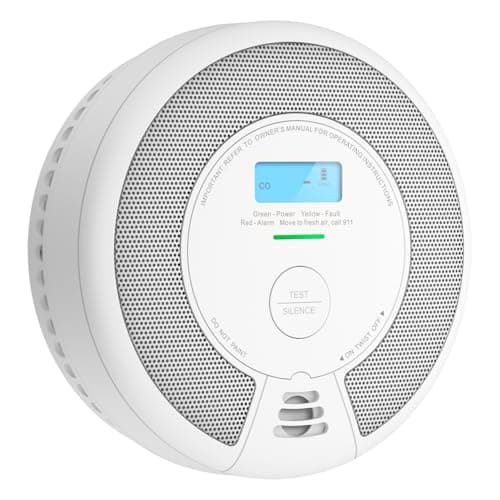 X-Sense SC07 Smoke & Carbon Monoxide Alarm The bedroom is the one room where code already wants a smoke alarm inside it. A listed combination alarm covers that requirement and adds CO detection for roughly the price of a CO-only unit. | A bedroom that needs a smoke alarm too — one device, both hazards | 8.6/ 10 | |
| 2 | 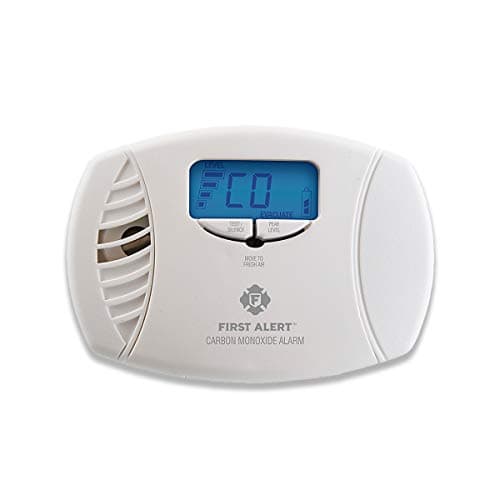 First Alert CO615 Plug-In CO Alarm with Battery Backup The best in-room CO alarm here if there is an outlet: a long cord, AA backup, and a backlight First Alert specifically describes as suited to a bedroom. | A nightstand or a bedroom wall with an outlet nearby | 8.0/ 10 | $44.95 · View on Amazon #ad how we are funded · price as of November 11, 2026 |
| 3 | 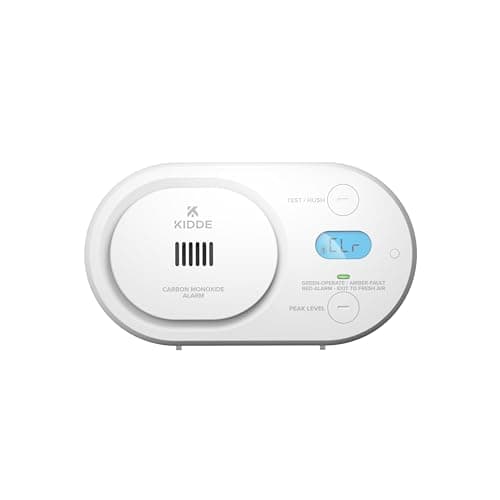 Kidde COBDL Low-Level Carbon Monoxide Alarm A listed alarm that deliberately speaks earlier than UL 2034 requires. The second alarm to buy for a room where a child, an older adult or a pregnant person sleeps. | A nursery, or a bedroom used by somebody the 70 ppm threshold does not protect | 8.2/ 10 | $40.47 · View on Amazon #ad how we are funded · price as of November 11, 2026 |
| 4 | 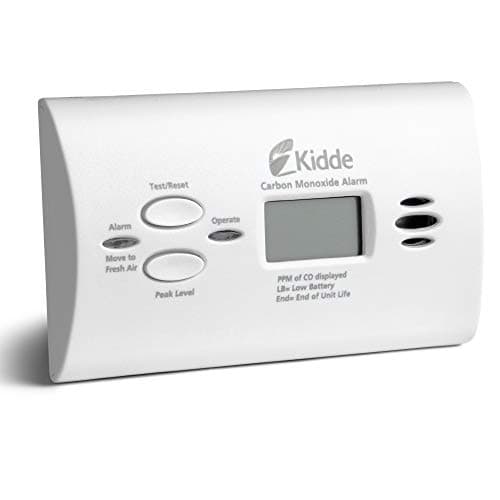 Kidde KN-COPP-B-LPM Battery CO Alarm with Digital Display Two AA batteries, a peak-level memory and no cord. The alarm to buy when the right spot in the hallway has no outlet and no wiring. | The cheapest listed alarm that goes where you want it | 7.4/ 10 | $27.97 · View on Amazon #ad how we are funded · price as of November 11, 2026 |
| 5 | 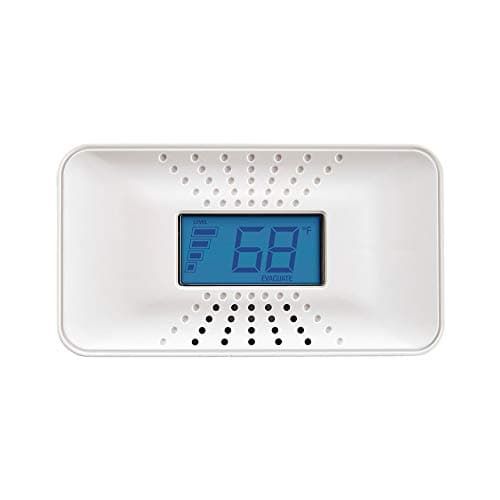 First Alert CO710 Sealed-Battery CO Alarm A sealed 10-year cell, a backlit display with a temperature readout and nothing to maintain. The catch is that First Alert designed it to sit on a surface, not hang on a wall. | A bedroom with no outlet, no wiring and nobody who will change a battery | 7.6/ 10 | $44.49 · View on Amazon #ad how we are funded · price as of November 11, 2026 |
The five alarms, ranked for a bedroom
1. A bedroom that needs a smoke alarm too — one device, both hazards
X-Sense SC07 Smoke & Carbon Monoxide Alarm
The bedroom is the one room where code already wants a smoke alarm inside it. A listed combination alarm covers that requirement and adds CO detection for roughly the price of a CO-only unit.
- Listed to
- UL 217 and UL 2034
- Sensing / agent
- Photoelectric smoke sensing plus an electrochemical CO cell
- Power / service life
- 10-year sealed lithium battery, not hardwired
Why a combination alarm is the sensible default here and nowhere else. Across most of the house, this site argues for separate devices: a smoke alarm belongs on the ceiling in the middle of the room, a CO alarm belongs at the height your manufacturer specifies, and one box cannot be in two places. The bedroom is the exception, because a smoke alarm inside each bedroom is already expected in US homes and because a second device in the same small room buys less than it costs. One listed, certified unit on the bedroom wall or ceiling is a real improvement over the common reality, which is a smoke alarm in the bedroom and no CO detection anywhere near the sleeping area.
What the LCD is for. A CO alarm with no readout can only tell you one thing: leave. A readout tells you whether you are looking at 35 ppm from an attached garage that needs a conversation with a heating contractor, or 200 ppm that needs the fire department. Best CO detectors with a digital display goes into which readings matter.
The interconnect caveat is the one to read twice. X-Sense prints it at the top of its own listing because people buy the SC07 expecting the SC07-W. If you want a bedroom alarm to wake somebody at the other end of the house, you need linked alarms, and the SC07 is deliberately not one. Nest Protect vs X-Sense covers what linking actually buys.
What it does well
- **Certified to UL 217 and UL 2034 both** — it is a listed smoke alarm and a listed CO alarm, not a CO alarm with a smoke feature bolted on
- **Sealed 10-year lithium cell**, so there is no battery to change over the alarm's life and no low-battery chirp above a bed at three in the morning
- **Photoelectric smoke sensor plus an electrochemical CO cell** — the photoelectric side responds faster to the slow, smoldering fire that starts in an occupied bedroom
- Mounts on a wall or a ceiling with the bracket, screws and anchors in the box; no rewiring, so it works in a rental
- An LCD shows the live CO reading, which is the difference between an alarm you can interpret and one you can only obey
The downside
- **No wireless interconnect, no Wi-Fi and no base station.** X-Sense says so on the listing itself: if you want one alarm to sound every alarm, you need the SC07-W instead
- **A sealed unit is a disposable unit.** At ten years the whole alarm is thrown away, and the clock starts at manufacture rather than at purchase
- The combination sensor is a compromise: a dedicated CO alarm at bed height will see a low-level leak sooner than a combination alarm on the ceiling
- X-Sense's 5-year quality warranty is shorter than the 10-year service life, which Kidde and First Alert both cover for the full decade
- One device means one point of failure for two hazards — if it fails, nothing in that room is watching either
Do not buy this if: a house being wired to code in new construction, where interconnected hardwired alarms are the requirement and a standalone battery unit will not satisfy an inspector. Read [interconnected smoke alarms](/smoke-detectors/interconnected-smoke-alarms) before you buy standalone units for a whole house.
- LCD reads the measured CO concentration rather than only alarming
- Standalone unit — no wireless interconnect, no Wi-Fi, no base station
- Sealed battery, so there is no annual battery ritual and no low-battery chirp until end of life
- Test and silence on one control
2. A nightstand or a bedroom wall with an outlet nearby
First Alert CO615 Plug-In CO Alarm with Battery Backup
The best in-room CO alarm here if there is an outlet: a long cord, AA backup, and a backlight First Alert specifically describes as suited to a bedroom.
- Listed to
- UL 2034
- Sensing / agent
- Electrochemical CO sensor
- Power / service life
- AC powered with battery backup
The cord is the feature. Most plug-in CO alarms hang directly off the outlet, which means the outlet's height and position decide the alarm's. In a bedroom that is usually wrong: outlets sit near the floor behind furniture, and the position you actually want is on an open wall at roughly head height for somebody lying down. A 6-foot cord turns a fixed position into a choice.
Why the backlight matters more than it sounds. An alarm that glows all night gets turned to face the wall, covered with a sock or unplugged — and then it is not an alarm. First Alert's description of a calm blue light readable in the dark is the manufacturer solving exactly that problem, and it is the reason this unit is on a bedroom page rather than a basement one.
Note on the model name. First Alert still lists the CO615 in its current carbon monoxide range alongside a renamed near-identical SKU, the CO3-P01D. If you find the CO3-P01D at a better price, it is the same class of product. Plug-in vs battery CO detectors covers the trade properly.
What it does well
- **A 6-foot power cord**, which is the detail that decides whether an alarm can sit where you want it rather than where the outlet is
- **First Alert's own copy calls the calm blue backlight readable in the dark and well suited to a bedroom** — a rare case of a manufacturer naming the room
- **Plug-in with two AA batteries as backup**, so it keeps monitoring through the power cut that often arrives with the generator that caused the problem
- The display shows the live CO level and the backup battery's charge, so the thing most likely to fail silently is the thing on screen
- Wall-mountable or free-standing on a shelf or nightstand, and an end-of-life warning tells you when the sensor is finished
- Advanced electrochemical sensor — the same sensing technology as every other alarm on this page
The downside
- **A 7-year limited warranty, three years shorter than Kidde's and than the CO710's**, on a product class where the sensor is the thing that ages
- **It needs an outlet.** A bedroom with the bed on the wrong wall and one outlet behind a dresser is exactly the case where a battery alarm wins
- **Replaceable AA backup means a chirp eventually, above a bed** — the thing people disable and forget to re-enable
- No smoke detection at all, so this is an addition to a bedroom smoke alarm, never a replacement for one
- A plugged-in alarm with a visible cord is the one a child or a cleaner unplugs, and nothing warns you that it has happened
Do not buy this if: a bedroom where the only free outlet is behind furniture or at floor level in a corner. Six feet of cord is generous but it is not infinite, and an alarm in dead air behind a dresser is worse than no alarm, because it feels like protection.
- Plugs in at outlet height, which is where a hallway alarm is easiest to read and test
- Battery backup keeps it alive through an outage
- Digital display of the current reading
- Tied to an outlet position, so it cannot go wherever you like
#ad how we are funded · price as of November 11, 2026
3. A nursery, or a bedroom used by somebody the 70 ppm threshold does not protect
Kidde COBDL Low-Level Carbon Monoxide Alarm
A listed alarm that deliberately speaks earlier than UL 2034 requires. The second alarm to buy for a room where a child, an older adult or a pregnant person sleeps.
- Listed to
- UL 2034, 5th edition; ETL listed
- Sensing / agent
- Electrochemical CO sensor
- Power / service life
- Two AA batteries; 10-year limited warranty on the alarm
The gap this closes is real and it is written into the standard. A UL 2034 alarm may not sound below 30 ppm, and at 70 ppm it has between 60 and 240 minutes before it has to sound. That window was set around a healthy adult. An infant breathes faster relative to body mass, and a pregnant person's circulation carries the exposure to a fetus — the same concentration is not the same risk.
One honest limit on the early alert. A 30-70 ppm alert tells you a source exists. It does not tell you where. If it fires repeatedly, the next call is to a heating contractor rather than back to this site. Carbon monoxide poisoning symptoms covers what low-level exposure feels like, and the full Kidde COBDL review goes deeper on the unit itself.
What it does well
- **A distinct light-and-sound alert at 30-70 ppm**, inside the band where a standard listed alarm is specifically permitted to stay silent, then the full 85 dB alarm at 70 ppm as the standard requires
- **Kidde names who it is for — young children, older adults, pregnant women and pets** — which is the population a threshold written around a healthy adult serves worst
- **Tested to UL 2034 5th Edition and ETL listed**, so the early alert is an addition to a listed alarm rather than an alternative to one
- Two AA batteries included and mounting hardware in the box: wall-mount it in a nursery or stand it on a shelf
- A backlit digital display and a test/hush button, so a check or a brief silence does not mean taking it down
- Compact enough to travel, which makes it the alarm that comes along to a rental or a hotel room
The downside
- **It is a listed alarm, not a professional low-level monitor.** It does not read single-figure ppm and it is not a substitute for a combustion analysis by a heating engineer
- **The Defender-branded low-level monitors people search for are a different product entirely**, sold outside Amazon and at several times the price
- **Earlier alerting means more alerts.** In a house with an attached garage or an older appliance, a 30-70 ppm alert may fire more often than you expect — which is information, but it is also noise in the middle of the night
- AA batteries are replaceable, so this is an alarm with an upkeep task attached
- No smoke detection, so it sits alongside a bedroom smoke alarm rather than replacing one
Do not buy this if: your only CO alarm. Buy it as the second alarm in the specific room where somebody vulnerable sleeps, and put a conventional listed alarm in the hallway outside the bedrooms where code expects it.
- Alerts earlier, at 30 to 70 ppm, with a distinct light and sound pattern — below the concentration at which a standard UL 2034 alarm is permitted to sound
- Kidde names the people that early band is for: young children, older adults, pregnant women and pets
- Digital backlit display and a test/hush button; no wiring, so it can sit at the height the room needs
- Separate full alarm at 70 ppm, as the standard requires
- It is a listed alarm in its own right, not a professional monitor — it does not read single-figure ppm
#ad how we are funded · price as of November 11, 2026
4. The cheapest listed alarm that goes where you want it
Kidde KN-COPP-B-LPM Battery CO Alarm with Digital Display
Two AA batteries, a peak-level memory and no cord. The alarm to buy when the right spot in the hallway has no outlet and no wiring.
- Listed to
- UL 2034
- Sensing / agent
- Electrochemical CO sensor
- Power / service life
- Battery powered; 10-year unit life
This is the alarm for the position code actually cares about. The required CO alarm is in the hallway outside the bedrooms, and hallway ceilings rarely have an outlet. A battery unit removes the constraint completely: mount it where the manufacturer's instructions say, not where the electrician left an outlet.
Peak Level Memory earns its place. A CO alarm that only sounds in real time tells you nothing about the eight hours you were at work. A peak memory turns the alarm into a record, and a recorded 40 ppm with no alarm is exactly the evidence a heating contractor needs. How many CO detectors do I need sets out how many positions you are actually covering.
What it does well
- **Battery-powered, so position is entirely your choice** — the hallway outside the bedrooms rather than the nearest outlet
- **Peak Level Memory records the highest concentration seen since the last reset**, which is the feature that catches the slow leak that happened while the house was empty
- **Keeps working in a power cut**, which is when portable generators and kerosene heaters come out and CO incidents cluster
- Electrochemical sensor, 85 dB alarm, green power LED and red alarm LED — the standard listed feature set at the lowest price here
- Wall-mount it or set it on a tabletop, and the test-hush button silences a low-battery chirp temporarily rather than permanently
- Kidde's 10-year limited warranty covers the alarm for its full service life
The downside
- **The display is the weakest here** — it reports a level, but without the backlit legibility of the CO615 or the CO710 at night
- **Two AA batteries mean a chirp you will eventually hear in the small hours**, and Kidde's warranty is explicit that it covers the alarm, not battery performance
- **No smoke detection**, and no temperature readout or extras of any kind
- The warranty clock starts when the alarm is first powered on, so an unknown power-on date should be read as "replace it"
- Cheapest here, and it looks it — a plain plastic unit that nobody will choose for a bedside table
Do not buy this if: a nightstand in a room where somebody wants to read the number at night. It is the hallway alarm, and it is a very good one for the money.
- Battery only, so it goes where there is no outlet — a bedroom wall, a cabin, a rental
- Digital display plus peak-level memory
- Portable enough to travel with, which matters more than most buying guides admit
- Replaceable batteries mean an annual check is genuinely required
#ad how we are funded · price as of November 11, 2026
5. A bedroom with no outlet, no wiring and nobody who will change a battery
First Alert CO710 Sealed-Battery CO Alarm
A sealed 10-year cell, a backlit display with a temperature readout and nothing to maintain. The catch is that First Alert designed it to sit on a surface, not hang on a wall.
- Listed to
- UL 2034
- Sensing / agent
- Electrochemical CO sensor
- Power / service life
- 10-year sealed battery
What ten sealed years really buys. It removes the single commonest failure in this product class: a dead or removed battery. A CO alarm with no power is not a quiet alarm, it is no alarm, and the sealed-cell design closes that failure mode for a decade.
The mounting limitation is not a quibble. First Alert's own specification describes this as a tabletop unit requiring no installation, which is an honest description and a real constraint. If your plan was a wall beside a bedroom door, the CO615 or the Kidde battery unit will do it and this will not. Where to install CO detectors covers position properly, including why the dead air within about 6 inches of a ceiling-wall corner is the one place to avoid.
What it does well
- **A sealed 10-year lithium cell — no batteries to change and no low-battery chirp above a bed** for the life of the alarm
- **Backlit digital display showing the live CO concentration, the recent peak in parts per million and the room temperature**
- **85 dB at 10 feet and listed to UL 2034**, with a 10-year limited warranty that matches the service life
- Advanced electrochemical sensor, and an end-of-life signal that tells you when the sensor is spent rather than leaving you guessing
- Compact — under 5 inches wide and half a pound — and needs no installation at all, which makes it the easiest alarm here to put in a guest room or a rental
The downside
- **First Alert designed it to sit on a flat surface and says no installation is required — it is not a wall-mount alarm**, which is a real limitation when the position you want is an open wall
- **A unit that sits on a surface is a unit that gets moved, stacked on or knocked behind a lamp**, and nothing tells you it has happened
- **Sealed means disposable**: at ten years the whole alarm is replaced, and the clock runs from manufacture
- No smoke detection, and no interconnect of any kind
- **Check the model name when you buy.** First Alert lists both the CO710 and a renamed near-identical SKU, the CO5-B10D, in its current range — the same product class under two names, and the prices move independently
Do not buy this if: the hallway position outside the bedrooms, where you want something fixed to a wall at the height your manufacturer specifies. Use the Kidde KN-COPP-B-LPM there and keep the CO710 for a surface in a room.
- Sealed 10-year battery — nothing to change, and no low-battery chirp until it is genuinely done
- Digital display showing the measured concentration
- Placement is free: no outlet required, so it can sit at the height the room actually needs
- End of life means replacing the whole unit, by design
#ad how we are funded · price as of November 11, 2026
Side by side
Every figure below is the manufacturer's published specification for the exact product linked on this page, checked on 2026-10-23.
| Alarm | Power | Mounting | Smoke too? | Warranty | The reason to pick it |
|---|---|---|---|---|---|
| X-Sense SC07 | Sealed 10-year lithium | Wall or ceiling | Yes — UL 217 and UL 2034 | 5-year quality warranty | One listed device for both hazards in the room where somebody sleeps |
| First Alert CO615 | Plug-in, 2x AA backup | Wall, shelf or nightstand (6-ft cord) | No | 7 years limited | The nightstand alarm — long cord, blue backlight made for a bedroom |
| Kidde COBDL | 2x AA (included) | Wall or tabletop | No | 10 years limited | Alerts at 30-70 ppm for a nursery or a vulnerable sleeper |
| Kidde KN-COPP-B-LPM | 2x AA (included) | Wall or tabletop | No | 10 years limited | Cheapest listed alarm, and it goes in the hallway with no outlet |
| First Alert CO710 | Sealed 10-year lithium | Flat surface only — no wall mount | No | 10 years limited | Zero upkeep for a decade, plus a temperature readout |
Warranty terms cover the alarm rather than battery performance, and on the Kidde units the clock starts when the alarm is first powered on. Specifications change without a model number changing — check the listing before you order.
The alarm that protects a bedroom usually hangs outside it
This is the part most buying guides get wrong, so it is worth being precise. The residential code requirement is a CO alarm outside each separate sleeping area, in the immediate vicinity of the bedrooms — in practice, the hallway the bedroom doors open onto, plus one on every level of the home. An alarm inside a bedroom is not the requirement.
There is one clear exception and it is the one worth knowing: where a fuel-burning appliance sits inside a bedroom or its attached bathroom, the code calls for a CO alarm inside that bedroom. A gas fireplace in a main suite, an unvented space heater or a gas water heater in an en-suite closet all put you in that category.
Beyond the code floor, a second alarm inside a bedroom is a reasonable thing to buy and not a waste of money — a closed door costs you real decibels at the pillow, and the people most at risk from a low-level exposure are often the ones asleep behind it. Treat the hallway alarm as the one you must have and the bedroom alarm as the one that makes the difference for a heavy sleeper, a child or anybody with a cardiac or respiratory condition.
Wherever it goes, follow the manufacturer's instructions for height on your specific unit. Carbon monoxide mixes with air rather than reliably rising or sinking, which is why the high-or-low argument never resolves and why being in the right room matters far more than being at the right height. Avoid the dead air within about 6 inches of a ceiling-wall corner, avoid bathrooms and unheated spaces, and keep the alarm out of an appliance's start-up plume. Where to install CO detectors works through each room.
Two mistakes that cost people the protection they paid for
Assuming the smoke alarm covers it. It does not. A smoke alarm detects particles of combustion; a CO alarm uses an electrochemical cell to measure a gas. They are different sensors answering different questions, and a bedroom with a smoke alarm and no CO alarm anywhere near it is the commonest gap this site sees. CO detector vs smoke detector is the page to read if that distinction is new.
Buying one alarm for the whole upstairs. One alarm in one hallway, behind three closed doors, is not coverage of three bedrooms. The honest minimum is one per level plus one within earshot of each sleeping area, and "within earshot" means tested with the doors shut the way the household actually sleeps. Press the test button with the bedroom doors closed and the fan on, from the bed. If you cannot hear it clearly, you have your answer, and the second alarm costs less than thirty dollars.
Questions people actually ask
Do you need a carbon monoxide detector in every bedroom?
Where should a CO detector go in a bedroom?
Should a bedroom CO alarm be plug-in or battery?
Is a combination smoke and CO alarm good enough for a bedroom?
Will a CO alarm in the hallway wake me up with the bedroom door closed?
Why does a bedroom CO alarm's display brightness matter?
How these picks were chosen. On published specifications, safety listings and manufacturer documentation — plus the findings of organizations that do run tests. We have no laboratory and we do not burn anything. Read the full methodology.
Sources
- UL Solutions — UL 2034 — single and multiple station carbon monoxide alarms
- International Code Council — IRC Chapter 3 — building planning (R310, R314, R315)
- NFPA — NFPA 72, National Fire Alarm and Signaling Code (2025 edition)
- CPSC — Carbon Monoxide Fact Sheet
- First Alert — CO615 — plug-in carbon monoxide alarm with battery backup and digital display
- First Alert — CO710 — carbon monoxide alarm with 10-year battery and digital temperature display
Read next
Carbon Monoxide Detectors
The Best Carbon Monoxide Detectors
Four listed alarms, and why placement and a stored peak beat a fancier display.
Carbon Monoxide Detectors
Room by room, and a straight answer to the high-or-low question.
Carbon Monoxide Detectors
How Many Carbon Monoxide Detectors Do I Need?
Two rules decide the count: separate sleeping areas, and levels. Worked through by house size.
Carbon Monoxide Detectors
A listed alarm that alerts at 30-70 ppm, below the standard's threshold. Who needs that, and why it is not the Defender monitor.
Smoke Detectors
The Best Smoke Detectors for Bedrooms
A bedroom alarm has one job: wake somebody asleep. Photoelectric, sealed, and ideally spoken.
Carbon Monoxide Detectors
Plug-In vs Battery CO Detectors
Outlet resilience against placement freedom. And why mains-only is the wrong buy either way.