Smoke Detectors
The Best Photoelectric Smoke Detectors
Sensor type is the one specification on the box that changes which fires your alarm notices first — and it is the one most roundups skip entirely.
By Ryder M.Last reviewed
Buy the First Alert SM210V if you want one photoelectric alarm: photoelectric sensing with a sealed ten-year battery and spoken alerts, so it fits any ceiling, needs nothing for a decade and tells you in words what it has found. If the house already has alarm wiring, the Kidde 20SA10 is the better unit — listed to UL 217 10th edition, interconnecting over the existing wire, with a sealed ten-year backup battery. The budget pick is the First Alert SMI105-AC, the cheapest alarm in this registry, and it is a hardwired photoelectric unit with a ten-year backup cell rather than a stripped-down one. And if you want smoke and carbon monoxide from one photoelectric device, the X-Sense SC07 does both and is certified to UL 217 and UL 2034. The honest caveat sits in the middle of this page: photoelectric is the better single sensor for a home, and the fire service position is that the best protection uses both sensor types.
Siren & Safe is reader-funded. We earn a commission on some links on this page, at no cost to you. It does not change what we recommend or the order we rank it in. Full disclosure.
What photoelectric actually does differently
A photoelectric chamber works by shining a beam of light across a dark space with a sensor off to one side. Clean air scatters nothing, so the sensor sees nothing. When smoke particles drift in they scatter light onto the sensor, and the alarm sounds. An ionization chamber works on a different principle — a tiny radioactive source maintains a small electrical current across the chamber, and smoke particles disrupt it.
That difference in mechanism produces a difference in what each one notices first. Photoelectric sensing responds sooner to smoldering fires: the slow, smoky, large-particle fires that start in upholstery, bedding, mattresses and electrical wiring, and that fill a house with smoke long before there is any flame. Ionization sensing responds sooner to fast flaming fires with small combustion particles — a pan of oil, a wastebasket of paper going up quickly.
For a house, photoelectric is the better single sensor, for two reasons that both matter. The first is that smoldering fires are the ones that kill people in their sleep, because they produce the most smoke in the hours when nobody is awake to see it. The second is practical: photoelectric alarms nuisance-trip far less on cooking and shower steam, and a nuisance-tripping alarm gets its battery taken out. An alarm with no battery in it has a detection rate of zero regardless of which chamber is inside it.
The honest counterpoint is that fire services recommend protection against both fire types, which means either both sensor types in the house or a dual-sensor alarm. Two things follow from that. First, this registry's dual-sensor unit, the First Alert SM310, carries a photoelectric and an ionization chamber in one housing, and it is the right answer if you want both without running two alarms. Second, an ionization chamber contains a small sealed radioactive source — americium-241 — which is a genuine consideration for some households and a non-issue for others. Are ionization smoke detectors safe covers that question with the published figures, and non-toxic smoke detectors is the page to read if avoiding the source entirely is your deciding factor. Choosing photoelectric for that reason is a legitimate choice, and this page is the roundup for it.
How we scored these
Five criteria for a buyer who has already decided sensor type matters. Detection speed is not among them — no manufacturer publishes a comparable figure, and UL 217 is what governs it.
- Sensing suitability. Photoelectric sensing confirmed on the manufacturer's own specification, and how clearly the listing is documented.
- Nuisance resistance. Whether the unit is listed to a UL 217 edition carrying the cooking-nuisance test, and what the manufacturer states about cooking and steam. This is weighted heavily: nuisance alarms are the main reason alarms get disabled.
- Alert quality. Horn only, voice, or interconnect — how much the alert tells you and how far it reaches.
- Install flexibility. Whether it needs a circuit, and whether a renter can fit it.
- Ten-year upkeep. Sealed cell against replaceable cells, chirp behavior, and what end of life requires.
Quick picks
Scored against sensing suitability, nuisance resistance, alert quality, install flexibility and ten-year upkeep. Tap a row for the full write-up. The price in each buy button is the live Amazon price at the last check, stamped with the date it was taken.
| # | Product | Best for | Score | Price |
|---|---|---|---|---|
| 1 | 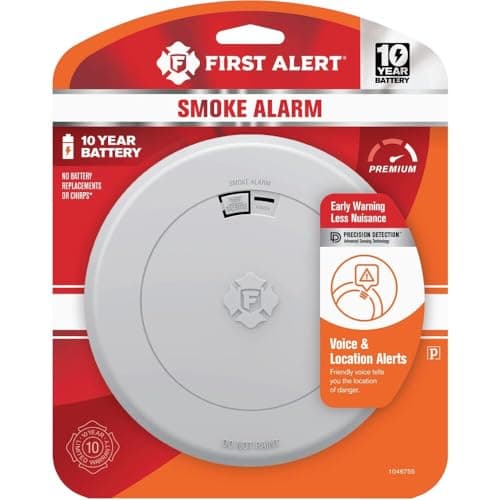 First Alert SM210V 10-Year Battery Smoke Alarm with Voice Alerts Photoelectric smoke sensing with a sealed ten-year lithium cell and spoken annunciation. Fits any ceiling, needs nothing for ten years, and says what it found. | Most houses — photoelectric sensing, a sealed decade and a spoken alert | 9.3/ 10 | $39.99 · View on Amazon #ad how we are funded · price as of November 22, 2026 |
| 2 | 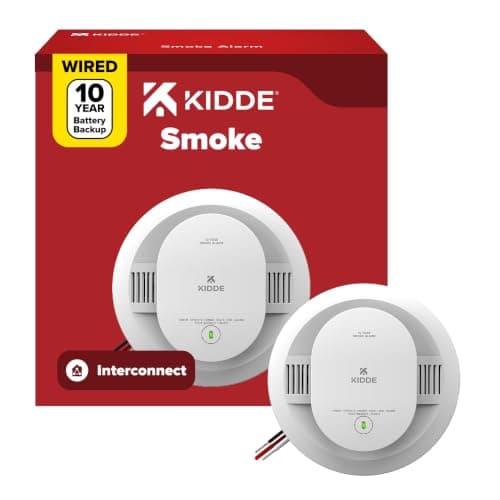 Kidde 20SA10 Hardwired Smoke Alarm with 10-Year Backup Battery Listed to UL 217 10th edition, hardwired with a sealed ten-year backup battery, and interconnecting over the wire so one alarm sounds them all. | A house with existing alarm wiring — the best-documented listing here | 9.0/ 10 | $42.77 · View on Amazon #ad how we are funded · price as of November 22, 2026 |
| 3 | 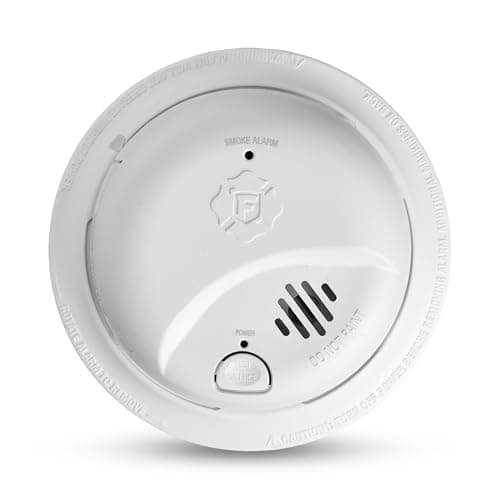 First Alert SMI105-AC Hardwired Smoke Alarm with 10-Year Battery Backup Hardwired photoelectric sensing with a sealed ten-year backup cell and interconnect, at the lowest price of any alarm in this registry. | The budget pick — the cheapest alarm here, and it is hardwired photoelectric | 8.6/ 10 | |
| 4 | 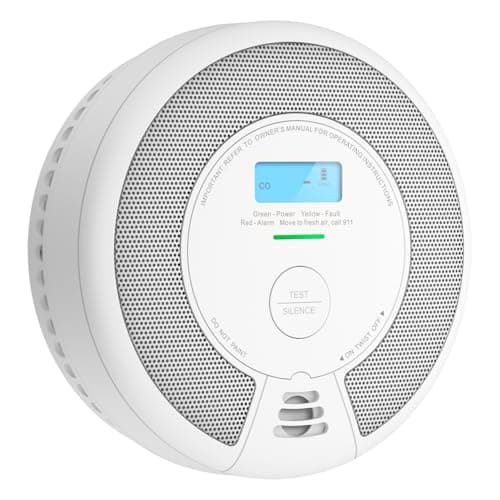 X-Sense SC07 Smoke & Carbon Monoxide Alarm Photoelectric smoke sensing plus an electrochemical CO cell, certified to UL 217 and UL 2034, sealed for ten years, with the CO concentration on the display. | Photoelectric smoke and CO from one device, with both standards named | 9.0/ 10 |
The picks
1. Most houses — photoelectric sensing, a sealed decade and a spoken alert
First Alert SM210V 10-Year Battery Smoke Alarm with Voice Alerts
Photoelectric smoke sensing with a sealed ten-year lithium cell and spoken annunciation. Fits any ceiling, needs nothing for ten years, and says what it found.
- Listed to
- UL 217 — First Alert states compliance with the latest edition
- Sensing / agent
- Photoelectric smoke sensing, with spoken annunciation
- Power / service life
- Sealed 10-year lithium battery
Why photoelectric plus a sealed cell is the default worth recommending. Two things decide whether a household's alarms are working in year seven: which fires they respond to, and whether anybody has taken the battery out. Photoelectric sensing addresses the first, because it responds sooner to smoldering fires and nuisance-trips far less on cooking steam — and nuisance alarms are the single most common reason a battery gets removed. A sealed ten-year cell addresses the second by making removal pointless. Together they are the most reliable ordinary alarm you can buy.
The voice is worth more than it looks. A horn tells you something is wrong. A voice tells you it is smoke rather than carbon monoxide, which is the difference between evacuating and ventilating. For a household with children or older residents, that is a meaningful upgrade for very little money — best talking smoke detectors covers the field.
What it does well
- **Photoelectric sensing**, which is the sensor type that responds sooner to the slow smoldering fires that start in furniture, bedding and wiring — the fires a sleeping household is least likely to notice
- **It speaks rather than only sounding a horn**, which removes the 3am question of what the noise means and which hazard it is
- **Sealed ten-year lithium cell**, so the alarm never asks to be reached — no annual battery change and no low-battery chirp until end of life
- **Battery powered, so placement is free.** It goes on any ceiling in any room, including a rental where you cannot touch the wiring
- **Part of First Alert's current SM series** rather than the outgoing SMI line, so it is a current product with current sensing
The downside
- **No interconnect of any kind.** An alarm sounding in the basement is heard in the basement — the single biggest thing this unit gives up
- **No CO cell**, so this is smoke only and a separate CO alarm is still required
- **First Alert states compliance with the latest UL 217 edition without naming the edition number**, which is less specific than Kidde's published listing
- **Sealed cell means replacing the whole unit at ten years**, which is the trade across this entire category
- **Photoelectric alone is slower on fast flaming fires** than an ionization chamber — see the sensor section below, because this applies to every pick on this page
Do not buy this if: a large or multi-story house where one alarm needs to wake the whole building. For that, buy an interconnecting set — [best wireless interconnected smoke alarms](/smoke-detectors/best-wireless-interconnected-smoke-alarms) covers the no-wiring route.
- Speaks rather than only sounding a horn, which removes the 3am question of what the noise means
- Photoelectric sensing — the right sensor for a hallway or a landing
- Sealed ten-year cell, so the alarm never asks to be reached
- Part of First Alert's current SM-series rather than the outgoing SMI line
First Alert product documentation
#ad how we are funded · price as of November 22, 2026
2. A house with existing alarm wiring — the best-documented listing here
Kidde 20SA10 Hardwired Smoke Alarm with 10-Year Backup Battery
Listed to UL 217 10th edition, hardwired with a sealed ten-year backup battery, and interconnecting over the wire so one alarm sounds them all.
- Listed to
- UL 217, 10th edition (UL 217-2024 Ed.10)
- Sensing / agent
- Photoelectric smoke sensing only — no CO cell
- Power / service life
- 120V AC with a sealed 10-year backup battery; 10-year limited warranty
The 10th edition matters more than any feature on this page. UL 217's 8th edition introduced a cooking-nuisance test, and an alarm listed to the 10th edition has been through it. That is the difference between a photoelectric alarm you can site reasonably near a kitchen and one that will be disabled by its owner within a month. Kidde names the edition on this unit; most manufacturers say "the latest standards" and leave you guessing.
Interconnect is the feature to buy if you can. The gap between an alarm that wakes one room and a set that wakes a house is larger than any sensor difference. Where the cable already exists this is the cheapest and most reliable way to get it: best hardwired smoke detectors covers the wired field in full.
What it does well
- **Listed to UL 217 10th edition, named explicitly** (UL 217-2024 Ed.10) — which carries the cooking-nuisance test the 8th edition introduced, and is the clearest certification statement of any alarm on this page
- **Interconnects over the existing 120V alarm circuit**: one alarm sounds and the whole house sounds, with no radio to pair and no range to lose
- **Sealed ten-year backup battery**, so a tripped breaker does not leave the house unprotected and nothing needs changing for a decade
- **Reduced-nuisance sensing** of the same generation as Kidde's battery models, which is what makes a photoelectric alarm livable near a kitchen
- **The direct successor to the discontinued P4010ACS line**, so it is the current drop-in replacement for a very common hardwired alarm
The downside
- **Needs an existing 120V alarm circuit**, which rules it out for most rentals and for any house that was never wired for alarms
- **No voice** — the alert is a horn and a flash pattern you have to know how to read
- **Smoke only, no CO cell.** A separate CO alarm is still required
- **Wired interconnect does not reach rooms with no cable**, so a half-wired house needs a wire-free model to bridge the gap
- **Replacing it means an electrical job**, not a twist-off, which matters at end of life as well as on day one
Do not buy this if: a renter or a house with no alarm wiring. Buy the SM210V above instead, or see [hardwired vs battery smoke detectors](/smoke-detectors/hardwired-vs-battery-smoke-detectors) if you are deciding between the two routes.
- Drops onto an existing 120V alarm circuit and interconnects over the wire — one sounds, they all sound
- Sealed 10-year backup battery, so a tripped breaker does not leave the house unprotected
- Same reduced-nuisance sensing as the battery model in this series
- No low-battery chirps across the ten years
- The direct successor to the P4010ACS line, which Kidde has discontinued
#ad how we are funded · price as of November 22, 2026
3. The budget pick — the cheapest alarm here, and it is hardwired photoelectric
First Alert SMI105-AC Hardwired Smoke Alarm with 10-Year Battery Backup
Hardwired photoelectric sensing with a sealed ten-year backup cell and interconnect, at the lowest price of any alarm in this registry.
- Listed to
- UL 217 — First Alert states compliance with the latest edition
- Sensing / agent
- Photoelectric smoke sensing only — no CO cell
- Power / service life
- 120V AC with a sealed 10-year lithium backup battery
The right way to use a budget pick in this category. The question is never "what is the cheapest alarm I can put in the hall" — it is "what does it cost to replace every alarm in this house with a current photoelectric unit". At this price that is a realistic weekend rather than a project, and a house of current ten-year photoelectric alarms is a materially better outcome than one new premium alarm among five expiring ones.
Check the date on the back before you buy anything. Alarms carry a date of manufacture and a service life of about ten years. If yours are within that window, this page is interesting rather than urgent — when to replace smoke detectors shows where to find the date.
What it does well
- **The cheapest alarm in this registry**, and it is not a stripped-down unit — it is hardwired photoelectric with a sealed ten-year backup battery
- **Precision Detection sensing, which First Alert states meets the new industry standards on cooking nuisance alarms** — their wording, quoted as theirs
- **Interconnects over the existing alarm circuit** with compatible First Alert and BRK units, so a whole-house replacement is a per-unit cost at this price
- **Non-replaceable ten-year backup cell** rather than the annual 9V change its predecessors needed
- **Test/silence button that holds the hush for up to eight hours**, which is the humane way to deal with a cooking trip
The downside
- **Hardwired only** — it needs the circuit, and it is the wrong purchase for a house without one
- **No voice and no CO cell**: it is a smoke alarm with a horn
- **First Alert names no UL edition**, stating compliance with the latest edition rather than the number — Kidde's 20SA10 is more specific for a little more money
- **Interconnect is wired only**, so it cannot reach an unwired room
- **Being the cheapest is only an advantage at volume.** Its real case is replacing every alarm in a wired house at once
Do not buy this if: a single-alarm purchase in an unwired room, where a battery unit is the only sensible answer. For the whole-house wired case see [best hardwired smoke and CO alarms](/smoke-detectors/best-hardwired-smoke-and-co-alarms).
- Photoelectric sensing on a hardwired circuit, which is the combination most houses should be replacing into
- Precision Detection sensing, which First Alert states meets the new industry standards on cooking nuisance alarms
- Non-replaceable 10-year backup cell rather than an annual 9V change
- Test/silence button that holds the hush for up to eight hours
- Interconnects over the existing alarm circuit with compatible First Alert and BRK units
First Alert product documentation
4. Photoelectric smoke and CO from one device, with both standards named
X-Sense SC07 Smoke & Carbon Monoxide Alarm
Photoelectric smoke sensing plus an electrochemical CO cell, certified to UL 217 and UL 2034, sealed for ten years, with the CO concentration on the display.
- Listed to
- UL 217 and UL 2034
- Sensing / agent
- Photoelectric smoke sensing plus an electrochemical CO cell
- Power / service life
- 10-year sealed lithium battery, not hardwired
Why the sensor pairing here is a good one. Photoelectric smoke sensing and an electrochemical CO cell are the two sensor types best suited to a home, and this unit has both with both standards named. For a hallway outside bedrooms — the one position nearly every code requires — it covers the two hazards that kill people in their sleep from a single ceiling plate.
Read the concentration, do not just hear the alarm. A CO display turns a binary alarm into information: a reading that climbs when the furnace runs is a different problem from a one-off spike, and you can tell your gas engineer which it was. Best CO detectors with a digital display covers that field.
What it does well
- **Certified to UL 217 and UL 2034** — both standards named in writing, which means it is a real smoke alarm and a real CO alarm rather than a dual-purpose claim
- **Photoelectric smoke sensing plus an electrochemical CO cell** in one ceiling position, which is one device and one install for two hazards
- **LCD reads the measured CO concentration** rather than only alarming, so you can tell a 30 ppm nuisance from a genuine event
- **Sealed ten-year lithium battery**, so there is no annual battery ritual and no chirp until end of life
- **Battery powered and standalone**, so it goes on any ceiling including a rental's
The downside
- **No interconnect, no Wi-Fi and no base station.** The alert stays in the room it happens in
- **No voice**, so you are reading beep patterns rather than hearing a hazard named
- **A combination unit has to be sited for both hazards at once**, and the best height for smoke is not always the best for CO — the note below covers this
- **Sealed battery means whole-unit replacement at ten years**
- **One device means one failure point** for two hazards, which is the honest argument for separate alarms in some houses
Do not buy this if: a household that wants CO monitored at a different height from smoke, or wants the two hazards on independent devices — [combo vs separate alarms](/carbon-monoxide-detectors/combo-vs-separate-alarms) settles that properly.
- LCD reads the measured CO concentration rather than only alarming
- Standalone unit — no wireless interconnect, no Wi-Fi, no base station
- Sealed battery, so there is no annual battery ritual and no low-battery chirp until end of life
- Test and silence on one control
The four alarms side by side
Sensing, listings and power exactly as the manufacturers publish them, checked on 2026-11-21. No prices in this table — the live figure and its "as of" date sit in each buy button above.
| Alarm | Sensing | Listing as published | Power | Interconnect | CO cell |
|---|---|---|---|---|---|
| First Alert SM210V | Photoelectric, with voice | UL 217, latest edition stated without a number | Sealed 10-year lithium | None | No |
| Kidde 20SA10 | Photoelectric | UL 217 10th edition (UL 217-2024 Ed.10) | 120V AC, sealed 10-year backup | Wired | No |
| First Alert SMI105-AC | Photoelectric | UL 217, latest edition stated without a number | 120V AC, sealed 10-year backup | Wired | No |
| X-Sense SC07 | Photoelectric plus electrochemical CO | UL 217 and UL 2034 | Sealed 10-year lithium | None | Yes |
Every unit here is photoelectric on the manufacturer's own specification — that is the entry requirement for this page, not a finding. The column worth comparing is the listing: Kidde names the UL 217 edition, X-Sense names both standards, and First Alert names neither edition number.
What this choice does not fix
Position still beats sensor type. A photoelectric alarm in the wrong place loses more detection time than an ionization alarm in the right one. Inside every sleeping room, outside each sleeping area, on every level, away from the kitchen and bathroom door and off the ceiling peak — smoke detector placement covers the positions and how far apart should smoke detectors be covers the spacing.
Sensor type does not replace a CO alarm. Carbon monoxide needs an electrochemical cell, and no smoke chamber of either kind will detect it. Either buy a combination unit like the SC07 above, or add dedicated CO alarms — best carbon monoxide detectors covers that.
And it does not change the ten-year clock. Every alarm here has a date of manufacture on the back and a service life of about ten years, after which the chamber's sensitivity is no longer guaranteed. Buying the right sensor type and then leaving it up for fifteen years is the most common way a well-chosen alarm stops working.
Questions people actually ask
What is the best photoelectric smoke detector?
Is photoelectric better than ionization?
How do I tell if my smoke alarm is photoelectric?
Do photoelectric alarms have fewer false alarms?
Is a photoelectric alarm enough on its own, or do I need both types?
Are photoelectric smoke alarms more expensive?
How these picks were chosen. On published specifications, safety listings and manufacturer documentation — plus the findings of organizations that do run tests. We have no laboratory and we do not burn anything. Read the full methodology.
Sources
- UL Solutions — UL 217 — smoke alarms
- UL Solutions — UL 217, Standard for Smoke Alarms, published with new technical requirements
- NFPA — Smoke alarms — installation and placement guidance
- NFPA — Smoke Alarms in US Home Fires
- US Fire Administration — Home fire prevention
- First Alert — 10-year battery smoke alarm with voice alerts (SM210V) — product page
- X-Sense — SC07 10-year battery combination smoke and carbon monoxide alarm with LCD
Read next
Smoke Detectors
The two mechanisms, the fires each sees first, and why photoelectric wins at home.
Smoke Detectors
Are Ionization Smoke Detectors Safe?
The americium source is sealed and regulated. The real problem with ionization alarms is response time on smoldering fires.
Smoke Detectors
The Best Non-Toxic Smoke Detectors
No ionization chamber means no americium-241. Five alarms whose makers publish the sensor type, and what the non-toxic label cannot tell you.
Smoke Detectors
The Best Smoke Detectors for Fewer False Alarms
The UL 217 10th edition nuisance test, how to read it on a box, and four alarms that pass it.
Smoke Detectors
The Best Smoke Detectors for a Home
Four alarms, what UL 217 tests, and why interconnection beats every other feature.
Smoke Detectors
What the standard tests, what the recent editions changed, and how to verify a mark is real.