Smoke Detectors
The Best Smoke Detectors for Laundry Rooms
Steam and lint defeat smoke alarms, and a disabled alarm detects nothing. This is the one room where the right answer is a different kind of device.
By Ryder M.Last reviewed
Buy the First Alert HD6135FB for inside the laundry room: a hardwired heat alarm that triggers at a fixed 135°F or on a rate of rise of 15°F per minute, so it reacts to a fast temperature climb before 135°F is even reached — and it ignores the steam and lint that would nuisance-trip a smoke alarm in that space. The Kidde HD135F is the budget pick, a fixed-temperature-only heat alarm at a lower price and genuinely less capable for it. Then put a real smoke alarm immediately outside the door, in the hallway or adjoining room: the X-Sense SC07 is the one to use, certified to UL 217 and UL 2034, sealed for ten years, covering smoke and carbon monoxide from one position. If the laundry is in a dusty utility space rather than a steamy one, the X-Sense SC06 has a dust-resistant housing. Read the warning first: a heat alarm is not a smoke alarm and cannot satisfy a code requirement for one.
Siren & Safe is reader-funded. We earn a commission on some links on this page, at no cost to you. It does not change what we recommend or the order we rank it in. Full disclosure.
Why a smoke alarm inside a laundry room always loses
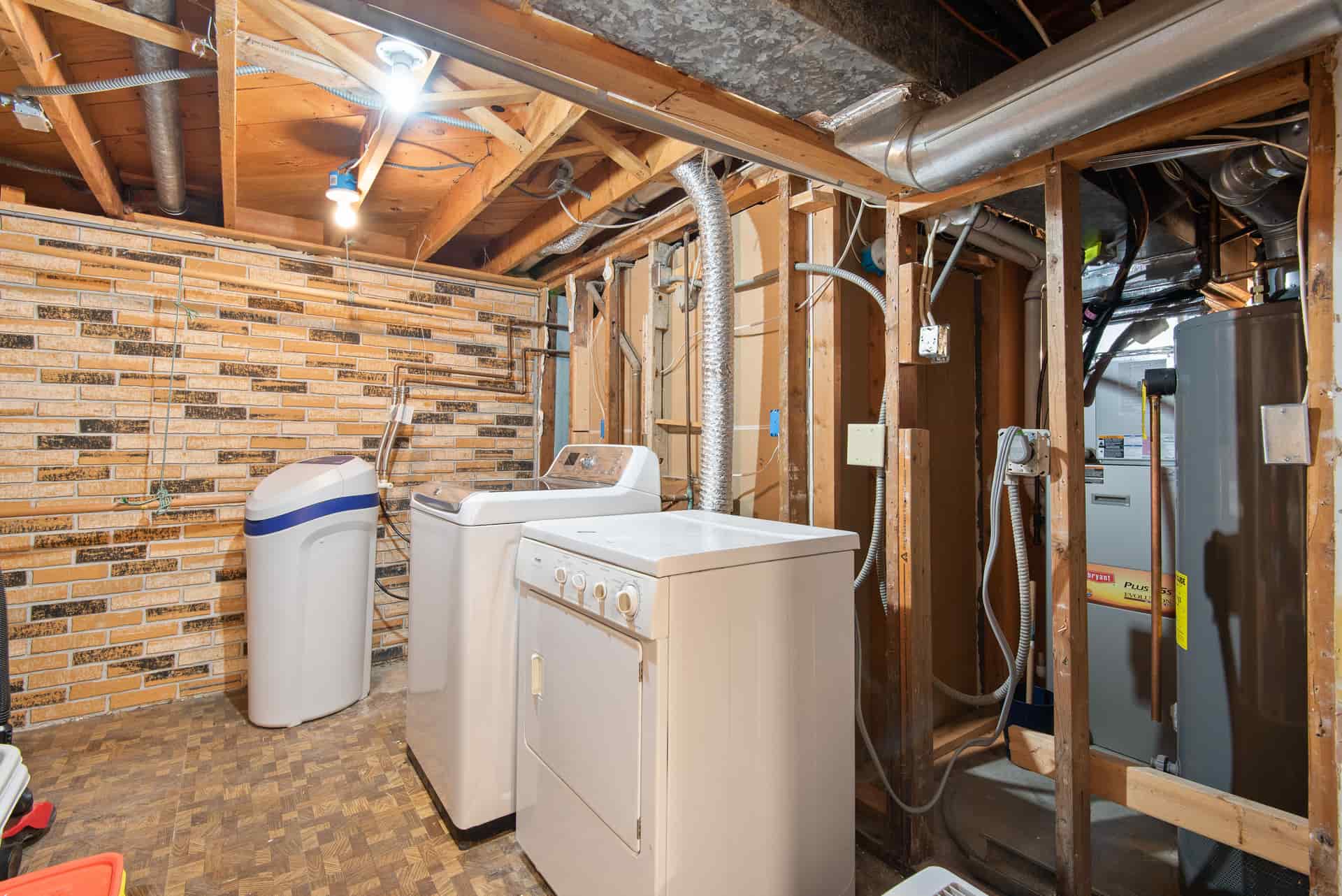
A laundry room is the single worst domestic environment for a smoke alarm, because it generates all three of the things that nuisance-trip one. Steam from a washer and from damp clothes reaches the ceiling as condensing water vapor, and a photoelectric chamber cannot reliably tell fine water droplets from fine smoke particles. Lint from a dryer — especially one with a partly blocked vent — is airborne particulate that both trips a chamber and fouls it over time. And heat rising from a running dryer concentrates both of those at the ceiling, which is exactly where the alarm is.
What happens next is predictable and it is the real failure. The alarm trips while somebody is doing laundry. It trips again the following week. Within a month or two somebody takes the battery out, or pulls the unit off its bracket, intending to put it back. An alarm with no battery in it has a detection rate of zero — and the room it was protecting is one of the most common origin points for a house fire, because a dryer is a heating appliance with a lint trap.
The arrangement that solves this is not a better smoke alarm. It is a heat alarm inside the room and a smoke alarm outside its door. A heat alarm measures temperature, so steam, lint and dust are invisible to it and it will sit in that room for a decade without a single nuisance trip. The smoke alarm outside the door — down the hallway, on the landing, in the adjoining room — does the smoke detection, satisfies your code requirement, and is far enough from the laundry door that ordinary washday humidity does not reach it.
The one thing to be clear about is what you have not bought. A heat alarm is listed to UL 539, not UL 217. It is not a smoke alarm, it does not count as one for code purposes, and it is deliberately slow to notice a smoldering fire — which is why the smoke alarm outside the door is part of the arrangement rather than a nice extra. Smoke detectors vs heat detectors sets out the whole comparison, and your local code is the authority on what each position requires.
How we scored these
Five criteria for a room that defeats ordinary alarms. Two of the four picks here are heat alarms for inside the room and two are smoke alarms for outside its door, so the scores are read within those two groups rather than across them.
- Suitability for the room. Whether the device can actually live where it is being put, for ten years, without being disabled.
- Sensing capability. For heat alarms, fixed-temperature against fixed-plus-rate-of-rise. For smoke alarms, the chamber type and what standards the listing names.
- Nuisance immunity. Resistance to steam, lint and dust. Heat alarms score full marks here by construction; it is the whole reason they are on this page.
- Interconnect. Whether an alert in a room nobody is standing in reaches the rooms people are standing in.
- Install simplicity. Whether it needs a circuit and an electrician, or two screws.
Quick picks
Scored against suitability for the room, sensing capability, nuisance immunity, interconnect and install simplicity. Tap a row for the full write-up. The price in each buy button is the live Amazon price at the last check, stamped with the date it was taken.
| # | Product | Best for | Score | Price |
|---|---|---|---|---|
| 1 | 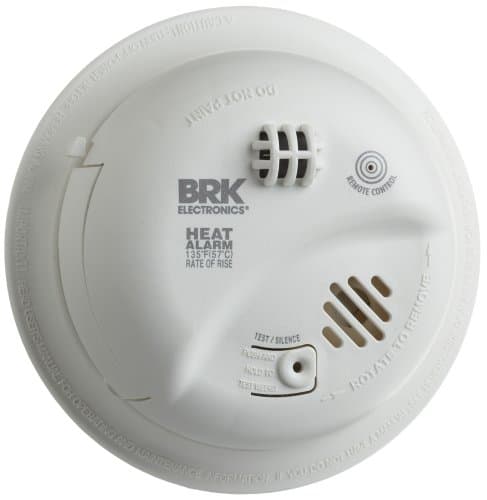 First Alert HD6135FB Hardwired Heat Alarm Fixed-temperature and rate-of-rise sensing in one hardwired unit, so it reacts to a fast heat climb before 135°F is reached. Immune to the steam and lint that defeat smoke alarms here. | Inside the laundry room — the heat alarm to buy | 9.1/ 10 | $29.79 · View on Amazon #ad how we are funded · price as of November 22, 2026 |
| 2 | 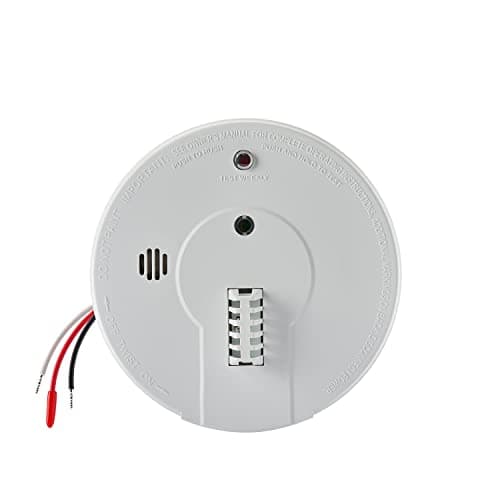 Kidde HD135F Hardwired Heat Alarm A hardwired heat alarm that triggers at 135°F with no rate-of-rise sensing. Cheaper than the First Alert, and measurably less capable for it. | The budget pick — a fixed-temperature heat alarm, and honestly the lesser one | 8.0/ 10 | $42.97 · View on Amazon #ad how we are funded · price as of November 22, 2026 |
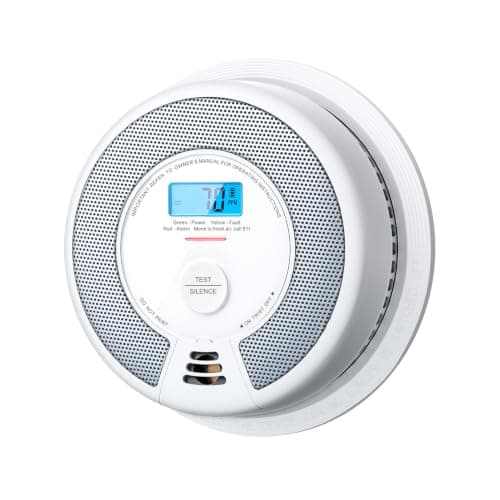
| 3 | 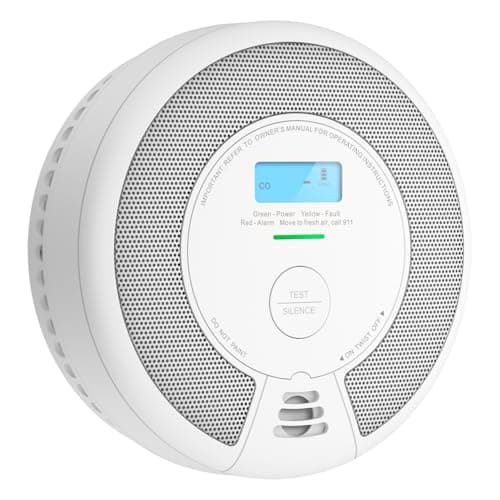 X-Sense SC07 Smoke & Carbon Monoxide Alarm Certified to UL 217 and UL 2034, photoelectric smoke sensing plus a CO cell, sealed for ten years, with the CO concentration on the display. The alarm the heat alarm cannot replace. | Immediately outside the laundry room door — the smoke alarm that does the real work | 8.6/ 10 | |
| 4 | 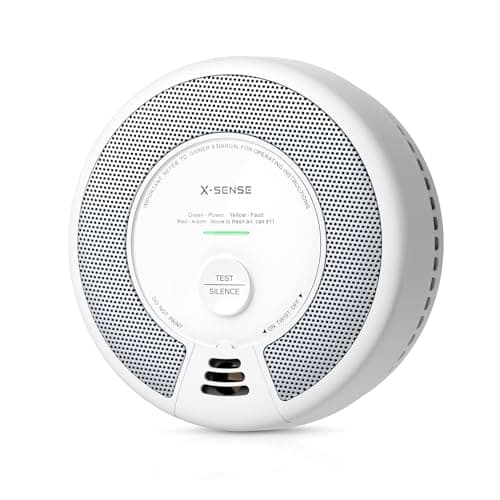 X-Sense SC06 Smoke & Carbon Monoxide Alarm The same certified smoke and CO sensing in a dust-resistant housing, which is the cheap fix for nuisance alarms in a utility room full of lint. | A dusty utility space rather than a steamy one | 8.2/ 10 |
The picks
1. Inside the laundry room — the heat alarm to buy
First Alert HD6135FB Hardwired Heat Alarm
Fixed-temperature and rate-of-rise sensing in one hardwired unit, so it reacts to a fast heat climb before 135°F is reached. Immune to the steam and lint that defeat smoke alarms here.
- Listed to
- UL 539 — a heat alarm standard, NOT UL 217. It is not a smoke alarm and cannot replace one
- Sensing / agent
- Thermistor with a microprocessor: alarms at a fixed 135°F, or on a rate of rise of 15°F per minute
- Power / service life
- 120V AC with a 9V replaceable backup battery
Why rate-of-rise is worth the extra money. A fixed-temperature alarm waits for the air at the ceiling to reach 135°F, which in a small room with a dryer fire is a meaningful delay. Rate-of-rise sensing triggers on the *speed* of the climb — 15°F per minute — so a fire that is heating the room fast is caught before the threshold arrives. In a laundry room, where the realistic fire is lint igniting in or behind a running dryer, that is the sensing behavior you want.
It belongs on the circuit, not on its own. A heat alarm that sounds only in the laundry room is close to useless, because nobody is standing in the laundry room. Interconnecting it means the hallway and bedroom alarms sound too. Interconnected smoke alarms covers how to do that, and the garage case — the same device, the same reasoning — is in heat alarms for garages.
What it does well
- **Fixed-temperature AND rate-of-rise sensing**, so it reacts to a fast temperature climb rather than waiting for the air to reach 135°F — the difference between the two heat alarms here, and the reason this one is the pick
- **Completely immune to steam, lint and dust**, because it is measuring temperature rather than looking for particles. That is what makes it survivable in a room where a smoke alarm cannot live
- **Interconnects with compatible BRK and First Alert alarms on the same circuit**, so a laundry-room event sounds the alarms where people actually are
- **First Alert states compliance with UL 539, CSFM, NFPA 72, HUD and FHA requirements** — a fully documented listing for the standard that governs heat alarms
- **Explicitly intended for garages, attics, crawl spaces, furnace rooms and laundry rooms**, which is the manufacturer naming this exact use rather than us inferring it
The downside
- **It is listed to UL 539, not UL 217. It is not a smoke alarm and cannot replace one** — this is the single most important sentence on the page, and it is a category limit rather than a product flaw
- **It detects heat, not smoke.** In a slow smoldering fire it will be the last device in the house to notice, which is exactly why the smoke alarm outside the door is not optional
- **Hardwired**, so it needs a 120V circuit in the laundry room and in most houses that means an electrician
- **9V replaceable backup battery** rather than a sealed ten-year cell, so this one still needs an annual visit
- **No voice and no display.** It is a horn and a temperature threshold
Do not buy this if: any position where a code requires a smoke alarm, and not as a household's only fire detection. For the alarm that does the smoke detection, see the X-Sense picks below and [smoke detectors vs heat detectors](/smoke-detectors/smoke-detectors-vs-heat-detectors) for the full comparison.
- Fixed-temperature AND rate-of-rise sensing, so it reacts to a fast temperature climb before 135°F is reached
- Interconnects with compatible BRK and First Alert alarms on the same circuit
- Intended for garages, attics, crawl spaces, furnace rooms and laundry rooms — places a smoke alarm cannot live
- Complies with UL 539, CSFM, NFPA 72, HUD and FHA requirements
- Detects heat, not smoke: in a smoldering fire it will be the last thing in the house to notice
First Alert product documentation
#ad how we are funded · price as of November 22, 2026
2. The budget pick — a fixed-temperature heat alarm, and honestly the lesser one
Kidde HD135F Hardwired Heat Alarm
A hardwired heat alarm that triggers at 135°F with no rate-of-rise sensing. Cheaper than the First Alert, and measurably less capable for it.
- Listed to
- UL 539 — a heat alarm standard, NOT UL 217. It is not a smoke alarm and cannot replace one
- Sensing / agent
- Fixed-temperature thermistor that alarms at 135°F. No rate-of-rise sensing
- Power / service life
- 120V AC with a 9V replaceable backup battery
When the cheaper alarm is the right call. If you are covering several spaces at once — laundry room, garage, attic — and the budget decides how many get covered, a fixed-temperature alarm in every space beats a rate-of-rise alarm in one and nothing in the others. Coverage first, sensing refinement second.
What fixed-temperature actually costs you. Both alarms trigger at the same 135°F. The difference is only in the fires that are heating a room quickly, where the rate-of-rise unit gets there first. That is not nothing, but it is a narrower gap than the price difference implies.
What it does well
- **The cheaper of the two mainstream residential heat alarms**, which makes covering a laundry room and a garage at once an easier decision
- **Same total immunity to steam, lint and dust** as any heat alarm — the sensing principle, not the price, is what delivers that
- **Interconnects with compatible Kidde alarms on the same circuit**, so the alert reaches the rest of the house
- **Two LEDs for power and alarm status**, so a glance tells you it is live
- **120V AC with a 9V backup**, so a power cut does not silence it
The downside
- **Fixed temperature only — no rate-of-rise sensing.** It waits for 135°F rather than reacting to how fast the air is heating, which is a real delay in a small room and the reason it is not the top pick
- **Listed to UL 539, not UL 217: not a smoke alarm**, and it cannot satisfy a code requirement for one
- **Deaf to smoke**, like every heat alarm — a smoldering fire will be found by the alarm outside the door, not this one
- **Hardwired**, with the same electrician requirement as the First Alert
- **Replaceable 9V backup**, so an annual battery visit is still part of owning it
Do not buy this if: a laundry room where the dryer runs daily and you want the earliest possible warning — pay the difference for the rate-of-rise unit above.
- Fixed temperature only — it waits for 135°F rather than reacting to how fast the air is heating
- Interconnects with compatible Kidde alarms on the same circuit
- Two LEDs for power and alarm status
- The cheaper of the two mainstream residential heat alarms, and the less capable
- Same category limit as every heat alarm: it is deaf to smoke
#ad how we are funded · price as of November 22, 2026
3. Immediately outside the laundry room door — the smoke alarm that does the real work
X-Sense SC07 Smoke & Carbon Monoxide Alarm
Certified to UL 217 and UL 2034, photoelectric smoke sensing plus a CO cell, sealed for ten years, with the CO concentration on the display. The alarm the heat alarm cannot replace.
- Listed to
- UL 217 and UL 2034
- Sensing / agent
- Photoelectric smoke sensing plus an electrochemical CO cell
- Power / service life
- 10-year sealed lithium battery, not hardwired
Why the smoke alarm goes outside the door. The heat alarm inside the room handles the fast fire. The smoke alarm outside handles everything else — and it is the device that satisfies your code requirement, because a heat alarm does not. Together they cover both failure modes of a laundry room: a dryer igniting lint quickly, and something smoldering slowly behind the machines.
Gas dryers make this a CO question too. A gas dryer is a fuel-burning appliance, and a blocked or disconnected vent is a carbon monoxide route as well as a fire risk. A combination alarm outside the door covers that at no extra cost — where to install CO detectors covers the heights and positions.
What it does well
- **Certified to UL 217 and UL 2034** — a real smoke alarm and a real CO alarm, which is the point of putting it outside the door rather than relying on the heat alarm inside
- **Photoelectric smoke sensing**, which responds sooner to smoldering fires and nuisance-trips far less on the steam drifting out of a laundry room than an ionization chamber would
- **Covers carbon monoxide too**, which matters if the laundry room holds a gas dryer or sits next to a furnace — a gas appliance is a CO source
- **Sealed ten-year lithium battery**, so nothing needs changing and there is no chirp until end of life
- **Battery powered and standalone**, so it goes on the hallway ceiling with two screws and no electrician
The downside
- **No interconnect**, so it alerts the hallway it is in and not the bedrooms upstairs — in a multi-story house, buy an interconnecting set instead
- **Still a smoke alarm, so position matters.** Too close to the laundry door and the steam will reach it; 10 to 20 feet down the hallway is the sensible compromise
- **No voice**, so you are reading beep patterns
- **A combination unit has to suit both hazards from one height**, which is always a compromise
- **Sealed battery means whole-unit replacement at ten years**
Do not buy this if: mounting inside the laundry room itself — that is the mistake this whole page exists to prevent. If you need the alert to reach a bedroom upstairs, see [best wireless interconnected smoke alarms](/smoke-detectors/best-wireless-interconnected-smoke-alarms).
- LCD reads the measured CO concentration rather than only alarming
- Standalone unit — no wireless interconnect, no Wi-Fi, no base station
- Sealed battery, so there is no annual battery ritual and no low-battery chirp until end of life
- Test and silence on one control
4. A dusty utility space rather than a steamy one
X-Sense SC06 Smoke & Carbon Monoxide Alarm
The same certified smoke and CO sensing in a dust-resistant housing, which is the cheap fix for nuisance alarms in a utility room full of lint.
- Listed to
- UL 217 and UL 2034
- Sensing / agent
- Photoelectric smoke sensing plus an electrochemical CO cell
- Power / service life
- 10-year sealed battery
The narrow case for this one. Some laundry spaces are more dusty than damp: a basement utility corner, a laundry closet shared with storage, a room where the dryer vents properly outside but lint still settles everywhere. In those, a dust-resistant housing on the alarm outside the door is a genuine improvement for a few dollars.
Dust is not the same problem as steam. Steam reaches an alarm as condensing water vapor, which a photoelectric chamber can read as smoke; lint reaches it as settling particulate that fouls the chamber over years. Different failure modes, different fixes — and if your room gives you both, distance from the door is the variable that helps with both.
What it does well
- **Dust-resistant housing**, which X-Sense positions as the fix for nuisance alarms in a dusty utility space — and lint is dust
- **Certified to UL 217 and UL 2034**, so it is a real smoke alarm and a real CO alarm
- **Dual smoke and CO detection from one ceiling position**, same as the SC07
- **Sealed ten-year battery** with a single test and silence control
- **Battery powered**, so the position is yours to choose
The downside
- **No display: it alarms, it does not report a concentration.** On the SC07 you can read the CO number and tell a nuisance from an event; here you cannot
- **Dust resistance is not steam resistance.** If the room is humid rather than dusty, the SC07 outside the door is still the better arrangement
- **No interconnect and no voice**
- **It is still a smoke alarm**, so it should go outside a laundry room rather than inside one
- **Sealed battery, whole-unit replacement at ten years**
Do not buy this if: inside a laundry room with a vented dryer — no smoke alarm belongs there. For high-humidity spaces specifically, [best smoke detectors for high humidity areas](/smoke-detectors/best-smoke-detectors-for-high-humidity-areas) is the page.
- Dust-resistant housing — the cheap fix for nuisance alarms in a dusty utility space
- Dual smoke and CO detection in one ceiling position
- Single test and silence control
- No display: it alarms, it does not report a concentration
What goes where
Listings, sensing and intended position as the manufacturers publish them, checked on 2026-11-21. Prices are not in this table on purpose — the live figure and its "as of" date sit in each buy button above.
| Device | Where it goes | Listed to | Sensing | Counts as a smoke alarm? |
|---|---|---|---|---|
| First Alert HD6135FB | Inside the laundry room, on the ceiling | UL 539 (heat alarm standard) | Fixed 135°F plus rate of rise, 15°F per minute | No |
| Kidde HD135F | Inside the laundry room, on the ceiling | UL 539 (heat alarm standard) | Fixed 135°F only | No |
| X-Sense SC07 | Outside the door, 10-20 ft down the hallway | UL 217 and UL 2034 | Photoelectric smoke plus electrochemical CO | Yes |
| X-Sense SC06 | Outside the door, in a dusty utility space | UL 217 and UL 2034 | Photoelectric smoke plus electrochemical CO | Yes |
The last column is the one that matters for code. A heat alarm is an addition to a compliant set of smoke alarms, never a substitute for one — no matter how sensible it is for the room it sits in.
The alarm is the backup — the lint trap is the fix
No detector on this page reduces the chance of a laundry fire. Clearing the lint filter after every load does, and so does keeping the dryer's vent duct short, rigid and clear to the outside. A long flexible duct with a sag in it accumulates lint along its whole length, and that lint sits a few inches from a heating element. If you do one thing after reading this page, pull the dryer out and look at the duct.
Gas dryers add a second hazard. A gas dryer burns fuel, so a blocked or disconnected vent is a carbon monoxide route as well as a fire risk. That is why both smoke alarm picks here are combination units: outside a laundry room with a gas appliance, you want the CO cell. Do I need a CO detector covers which appliances create the requirement.
And get the position of the outside alarm right. Too close to the laundry door and you have simply moved the nuisance problem a few feet. Ten to twenty feet down the hallway, away from the bathroom door as well, is the position that holds up — smoke detector placement and kitchen and bathroom placement cover the clearances, and smoke detector distance from vents covers the airflow problem.
Questions people actually ask
What is the best smoke detector for a laundry room?
Can a heat alarm replace a smoke alarm in a laundry room?
Why does my smoke alarm go off when I do laundry?
Fixed temperature or rate of rise for a laundry room?
Where should the smoke alarm outside the laundry room go?
Do I need a carbon monoxide alarm near a laundry room?
How these picks were chosen. On published specifications, safety listings and manufacturer documentation — plus the findings of organizations that do run tests. We have no laboratory and we do not burn anything. Read the full methodology.
Sources
- UL Solutions — UL 217 — smoke alarms
- UL Solutions — UL 217, Standard for Smoke Alarms, published with new technical requirements
- NFPA — NFPA 72, National Fire Alarm and Signaling Code (2025 edition)
- NFPA — Smoke alarms — installation and placement guidance
- NFPA — Smoke Alarms in US Home Fires
- US Fire Administration — Home fire prevention
- UpCodes — Specific location requirements for smoke alarms (NFPA 72 §29.11.3.4)
- X-Sense — SC07 10-year battery combination smoke and carbon monoxide alarm with LCD
Read next
Smoke Detectors
Smoke Detectors vs Heat Detectors
Why a heat alarm is always slower, and the four rooms where that is the right trade.
Smoke Detectors
Why a garage needs a UL 539 heat alarm rather than a smoke alarm, and which of the two residential units to fit.
Smoke Detectors
The Best Smoke Detectors for High-Humidity Areas
The non-condensing limit, why cold ceilings cause winter nuisance alarms, and four alarms for damp rooms.
Smoke Detectors
The Best Smoke Detectors for Basements
Dual sensing, mounted at the foot of the stairs rather than over the furnace. Plus the CO question.
Smoke Detectors
Why Your Smoke Alarm Goes Off for No Reason
Position first, contamination second, faulty alarm a distant third.
Placement & Code
Kitchen and Bathroom Placement
The cooking and bathroom exclusion distances, and how to satisfy them in an open plan.