Fire Extinguishers
The Best Fire Extinguishers for a Workshop
A shop is the one room in a house with four different fire loads in it at once. The honest answer is two extinguishers, chosen to cover different ones.
By Ryder M.Last reviewed
Buy the First Alert PRO10 as a workshop's main extinguisher: UL rated 4-A:60-B:C, which is six times the flammable-liquid rating of the usual supermarket unit, rechargeable, with an all-metal valve and head and a 12-year limited warranty — and the rating that actually matches a bench with solvents, finishes and sawdust on it. The Amerex B500 is the alternative if 5 lb at 2-A:10-B:C suits your shop better, and its all-metal valve is the construction that makes a unit serviceable rather than disposable. The budget pick is the First Alert HOME1 at 2.5 lb, cheap and light enough that there is no excuse for not having a second one by the door. Then add one of two specialists, depending on what is on your bench: the Amerex 322 CO2 unit leaves no residue at all on electronics, motors and finished work, and the StaySafe lithium spray is formulated for the fires that start in power-tool battery packs. Read the ratings section before you buy — a workshop is the place where getting the rating wrong costs most.
Siren & Safe is reader-funded. We earn a commission on some links on this page, at no cost to you. It does not change what we recommend or the order we rank it in. Full disclosure.
A workshop has four fire loads, not one
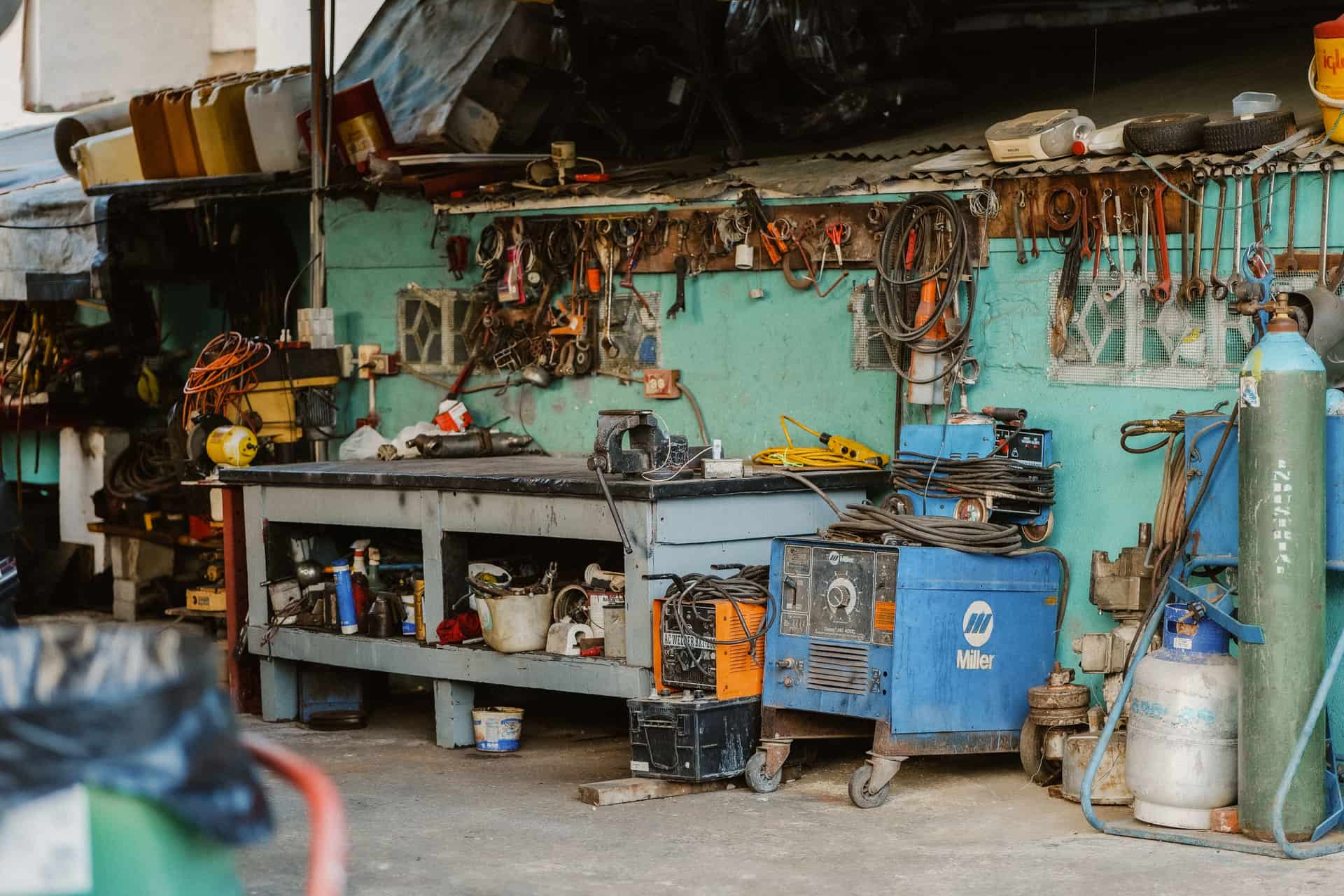
Most rooms in a house have one realistic fire load. A workshop has four, and they want different things from an extinguisher — which is why a single supermarket cylinder on the wall is the commonest mistake in shop safety.
Class A: dust, offcuts, rags and the bench itself. This is the biggest load by volume in any woodworking shop, and it is the one that spreads. Fine sawdust on horizontal surfaces, a bin of offcuts, oily rags from a finishing session — rags with drying oil on them can self-heat, which is a genuine spontaneous-ignition route rather than a workshop myth. A Class A rating is non-negotiable for a shop's main extinguisher, and 4-A against 2-A is a meaningful difference.
Class B: solvents, finishes, adhesives, fuel. A shop keeps flammable liquids in quantities a kitchen never does — mineral spirits, lacquer thinner, contact cement, aerosols, two-stroke mix for garden machinery. This is the load that justifies a bigger rating than a household unit: 60-B is six times the flammable-liquid capability of the 10-B:C cylinder most people own.
Class C: machinery, extension leads, bench electronics. Motors, switch gear, daisy-chained leads, a dust extractor on a long run, a space heater in winter. The C in a rating is not a number — it means the agent was tested as non-conductive, so it can be used on energized equipment. Every ABC unit here has it, and a CO2 unit adds the ability to do it without destroying what you were trying to save.
And the fourth, which is newer: lithium-ion packs on charge. A cordless shop has a shelf of battery packs, frequently charging, often unattended. A pack in thermal runaway generates its own oxidizer and is not what a dry chemical extinguisher is designed for. That is a different product and a different plan — and it is the load most workshop roundups still do not mention.
The practical conclusion, and the honest recommendation of this page: buy two. One rated ABC unit as the main extinguisher, mounted on the escape route, and one second device chosen for whichever of the other loads your shop actually has — a light ABC unit at the far end, a CO2 unit for an electronics bench, or a lithium spray on the charging shelf.
How we scored these
Five criteria for a room with more fire load and more valuable contents than any other in a house. Note that two of these five units are deliberately specialists rather than general-purpose extinguishers, and they are scored as such.
- Rating vs the fire load. Whether the published UL rating is proportionate to what a shop actually stores and generates, with the Class A and Class B figures weighted most heavily.
- Serviceability. Metal valve, rechargeable, professional service available — against a unit that any discharge writes off.
- One-handed usability. Whether an average adult can hold the cylinder at arm's length and direct it accurately. A rating you cannot aim is a rating you do not have.
- Mounting and reach. Whether a bracket is included, and whether the unit can realistically be positioned between the bench and the door.
- Value. Price against what the unit adds to a shop's overall cover, judged across the pair of extinguishers rather than per cylinder.
Quick picks
Scored against rating vs the fire load, serviceability, one-handed usability, mounting and reach and value. Tap a row for the full write-up. The price in each buy button is the live Amazon price at the last check, stamped with the date it was taken.
| # | Product | Best for | Score | Price |
|---|---|---|---|---|
| 1 | 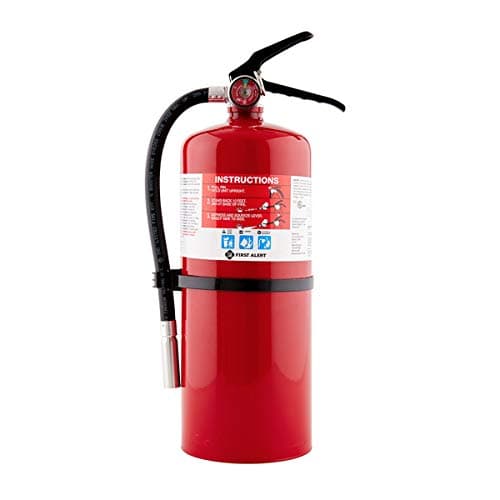 First Alert PRO10 Rechargeable Heavy Duty Extinguisher UL rated 4-A:60-B:C with an all-metal valve and head and a 12-year limited warranty. Six times the flammable-liquid rating of a supermarket unit, which is what a bench full of solvents warrants. | A workshop's main extinguisher — the rating that matches the fire load | 9.2/ 10 | $72.98 · View on Amazon #ad how we are funded · price as of November 22, 2026 |
| 2 | 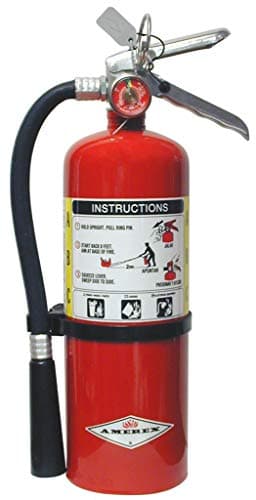 Amerex B500 5 lb ABC Dry Chemical Extinguisher 5 lb, UL rated 2-A:10-B:C, all-metal valve and body, rechargeable. The industry's default shop cylinder, and easier to aim than the PRO10. | A shop that wants a serviceable 5 lb ABC unit rather than a bigger rating | 8.9/ 10 | $75.00 · View on Amazon #ad how we are funded · price as of November 22, 2026 |
| 3 | 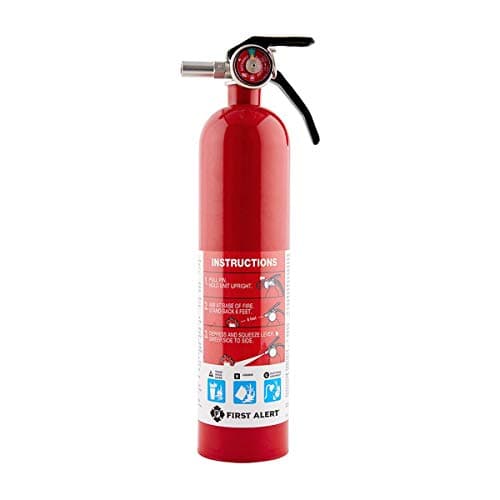 First Alert HOME1 Rechargeable Home Extinguisher (2.5 lb) 2.5 lb, UL rated 1-A:10-B:C, rechargeable with a metal head and pull pin. Cheap and light enough that a second extinguisher is an easy decision rather than a debate. | The budget pick — the second extinguisher, by the door | 8.6/ 10 | $19.53 · View on Amazon #ad how we are funded · price as of November 22, 2026 |
| 4 | 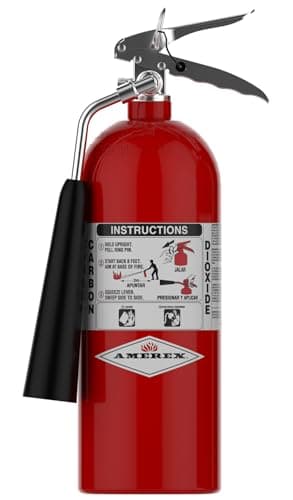 Amerex 322 5 lb Carbon Dioxide Extinguisher 5 lb of carbon dioxide, UL and ULC rated 5-B:C, UL listed and FM approved. The only agent here that leaves nothing behind to clean off a board, a motor or a finish. | A bench with electronics, motors or finished work on it — no residue at all | 7.8/ 10 | $298.00 · View on Amazon #ad how we are funded · price as of November 22, 2026 |
| 5 | 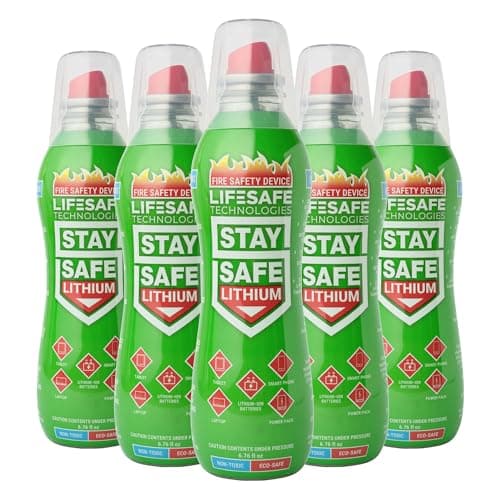 StaySafe Lithium Fire Extinguishing Spray A hand-held spray formulated for lithium-ion battery fires, non-toxic and residue-free, with LifeSafe stating it is safe on electrical fires up to 1000V from a stated minimum distance. | A bank of lithium tool batteries on charge | 7.4/ 10 | $89.99 · View on Amazon #ad how we are funded · price as of November 22, 2026 |
The picks
1. A workshop's main extinguisher — the rating that matches the fire load
First Alert PRO10 Rechargeable Heavy Duty Extinguisher
UL rated 4-A:60-B:C with an all-metal valve and head and a 12-year limited warranty. Six times the flammable-liquid rating of a supermarket unit, which is what a bench full of solvents warrants.
- Listed to
- UL rated 4-A:60-B:C
- Sensing / agent
- Monoammonium phosphate dry chemical
- Power / service life
- Rechargeable by a certified professional; all-metal construction with a commercial-grade metal valve and head; 12-year limited warranty
Why a shop deserves a bigger rating than a house. The ordinary house extinguisher is sized for a wastebasket, a toaster or a cushion. A workshop keeps flammable liquids in quantity — mineral spirits, lacquer thinner, contact adhesive, two-stroke fuel, finish, aerosols — and it generates a continuous supply of fine fuel in the form of dust and offcuts. That is a different fire, and 60-B against 10-B is the specification that acknowledges it.
Mount it on the escape route, not by the bench. The instinct is to put the extinguisher where the fire will start. The correct position is between the bench and the door, so reaching it never means moving toward the fire and so grabbing it is on the way out either way. Where to mount a fire extinguisher covers heights and positions.
What it does well
- **4-A:60-B:C is a far larger rating than any household unit** — the 60-B figure is six times the flammable-liquid rating of the 10-B:C unit most people own, and solvent, thinner, finish and fuel are exactly the Class B fuels a shop keeps in quantity
- **4-A is double the ordinary-combustible rating of a 2-A unit**, which covers the real Class A load of a workshop: offcuts, sawdust, rags, packaging and a timber bench
- **Rechargeable by a certified professional, with an all-metal valve and head**, so a partial discharge on a small fire does not scrap the extinguisher
- **First Alert publishes a 12-year limited warranty**, which is the longest on any unit in this registry and a reasonable proxy for how the hardware is built
- **Mounting bracket and a color-coded corrosion-resistant pressure gauge in the box**, so it gets fixed to a wall and stays readable
The downside
- **Bigger and heavier, which is a real problem for anyone who cannot handle the weight one-handed.** A rating you cannot aim is a rating you do not have — this is the honest limit of the unit, and the reason the budget pick below exists as a second extinguisher rather than a cheaper alternative
- **Dry chemical leaves a corrosive residue** that is genuinely destructive in a workshop: it gets into motor windings, bearing races, switch gear, tool vents and unfinished timber
- **No Class D rating**, so it is wrong for burning magnesium or other combustible metal swarf — rare in a home shop but real in some
- **Not formulated for a lithium-ion pack in thermal runaway**, which is a growing shop risk and needs the specialist below
- **Professional recharge and periodic service**, which is a trip rather than a task
Do not buy this if: a small, tidy craft bench where the whole fire load is paper and glue — a 2.5 lb unit is proportionate there. It is also not the answer for a lithium pack fire or for bench electronics you want to save; see the two specialists below.
- 4-A:60-B:C is a far larger rating than most home units — six times the flammable-liquid rating of the 10-B:C supermarket unit
- Rechargeable rather than disposable, with an all-metal valve and head
- Suits a garage, workshop or home office where liquids and equipment are the realistic risk
- Mounting bracket and a color-coded corrosion-resistant pressure gauge in the box
- Bigger and heavier, which is a real problem for anyone who cannot handle the weight one-handed
#ad how we are funded · price as of November 22, 2026
2. A shop that wants a serviceable 5 lb ABC unit rather than a bigger rating
Amerex B500 5 lb ABC Dry Chemical Extinguisher
5 lb, UL rated 2-A:10-B:C, all-metal valve and body, rechargeable. The industry's default shop cylinder, and easier to aim than the PRO10.
- Listed to
- UL rated 2-A:10-B:C
- Sensing / agent
- Monoammonium phosphate dry chemical
- Power / service life
- Rechargeable; all-metal valve and body
The reason this cylinder is everywhere. A 5 lb all-metal ABC unit is the default in commercial and trade settings because it is the smallest size that behaves like real equipment: serviceable valve, rechargeable, enough agent to matter, mountable. If you want one extinguisher in the shop and the PRO10 is more than you can comfortably handle, this is the right answer.
Shake it and read it twice a year. Needle in the green, pin and seal intact, and a gentle inversion to stop the powder packing at the bottom of the cylinder. A shop is dustier and more humid than a hallway, so the schedule is tighter — fire extinguisher expiration and service covers it.
What it does well
- **All-metal valve rather than plastic**, which is the single construction detail that separates a unit worth servicing from one that is disposable by design
- **UL rated 2-A:10-B:C with 5 lb of agent**, covering ordinary combustibles, flammable liquids and energized electrical equipment with useful run time
- **Rechargeable**, so a partial discharge during a small fire does not write off the extinguisher
- **Lighter and easier to direct than the 4-A:60-B:C unit** while keeping full ABC class coverage
- **Widely serviced.** This is a commercial-pattern cylinder, so finding somebody to recharge it is not a project
The downside
- **10-B is a sixth of the PRO10's flammable-liquid rating**, which in a shop that stores solvents in quantity is the gap to think about
- **5 lb still needs a proper bracket** and is beyond what some adults can hold at arm's length and aim accurately
- **Dry chemical residue**, with the same destructive effect on motors, switches and bare metal
- **No Class D and not for lithium packs**
- **Professional service applies**, including hydrostatic testing over the cylinder's life
Do not buy this if: a shop whose dominant risk is solvents and finishes in quantity — pay the difference for the 60-B rating. For the ABC field in general see [best ABC fire extinguishers](/fire-extinguishers/best-abc-fire-extinguishers).
- All-metal valve rather than plastic, which is the difference between a serviceable unit and a disposable one
- Rechargeable, so a partial discharge during a small fire does not write off the extinguisher
- 2-A:10-B:C covers ordinary combustibles, flammable liquids and energized electrical equipment
- 5 lb is heavier than the supermarket unit and needs a proper bracket
#ad how we are funded · price as of November 22, 2026
3. The budget pick — the second extinguisher, by the door
First Alert HOME1 Rechargeable Home Extinguisher (2.5 lb)
2.5 lb, UL rated 1-A:10-B:C, rechargeable with a metal head and pull pin. Cheap and light enough that a second extinguisher is an easy decision rather than a debate.
- Listed to
- UL rated 1-A:10-B:C
- Sensing / agent
- Monoammonium phosphate dry chemical
- Power / service life
- Rechargeable by a certified professional; metal head and pull pin
Why two extinguishers is the right answer for a shop. A workshop usually has one door and a bench against a wall, which means a fire can sit between you and the only exit. Two units — one on the escape route, one at the far end — means there is always one you can reach without moving toward the fire. That matters more in a shop than anywhere else in a house, and at this price it costs very little to arrange.
Think about who else uses the shop. If a partner, a teenager or a parent is ever in there alone, the extinguisher they can actually lift and aim is the one that will be used. A 2.5 lb cylinder by the door is a genuine safety improvement rather than a compromise.
What it does well
- **Cheapest rated extinguisher in this registry**, which is what makes the two-extinguisher arrangement this page recommends realistic
- **2.5 lb is light enough for anybody in the household to aim**, including whoever happens to be nearest when something goes wrong in the shop
- **UL rated 1-A:10-B:C**, so it is a genuine three-class unit rather than a novelty
- **Metal head and metal pull pin with a safety seal**, and rechargeable
- **Bracket and corrosion-resistant gauge in the box**
The downside
- **1-A:10-B:C is a household rating in a workshop setting**, which is why this is the second unit rather than the main one
- **Small cylinder, short discharge**, so there is little margin if the first attempt misses the base
- **Dry chemical residue**, same as the larger units
- **Recharge economics are weak at this size** — a refill can approach the price of a new unit
- **No Class D, no Class K and not for lithium packs**
Do not buy this if: a shop's only extinguisher, if the shop stores solvents or runs machinery. Pair it with one of the larger units above — [best small fire extinguishers](/fire-extinguishers/best-small-fire-extinguishers) covers the light-unit field in full.
- 2.5 lb — the lightest unit most people can aim accurately with one hand
- Metal head and a metal pull pin with a safety seal, not the plastic valve of the disposable tier
- Color-coded corrosion-resistant gauge and a mounting bracket in the box
- 1-A is half the ordinary-combustible rating of a 2-A unit, which is the trade for the size
First Alert product documentation
#ad how we are funded · price as of November 22, 2026
4. A bench with electronics, motors or finished work on it — no residue at all
Amerex 322 5 lb Carbon Dioxide Extinguisher
5 lb of carbon dioxide, UL and ULC rated 5-B:C, UL listed and FM approved. The only agent here that leaves nothing behind to clean off a board, a motor or a finish.
- Listed to
- UL and ULC rated 5-B:C; UL listed and FM approved
- Sensing / agent
- Stored-pressure carbon dioxide, discharged through a horn
- Power / service life
- Rechargeable aluminum cylinder; professional hydrostatic testing applies
The narrow, real case for CO2 in a home shop. If your bench carries test equipment, a 3D printer, a CNC controller, a stereo you are restoring or work that has taken months to finish, a dry chemical discharge destroys as much as the fire would. CO2 puts the fire out and leaves the room clean. That is worth having as the second extinguisher on an electronics bench — alongside, never instead of, an ABC unit for everything else.
Ventilate before you re-enter. CO2 works by displacing oxygen, so a 5 lb discharge in a small closed basement shop meaningfully changes the air. Open the door, get out, let it clear. Best fire extinguishers for electrical fires covers the electrical case in more depth.
What it does well
- **Carbon dioxide leaves no residue at all**, which is the whole argument: nothing to clean off a circuit board, a motor winding, a lathe bed, a bench or a piece of finished work
- **UL and ULC rated 5-B:C, UL listed and FM approved** — a fully documented listing rather than a claim
- **5 lb of agent with roughly a 10-second discharge at a 3 to 8 ft range**, as published
- **Published operating range of -22 to 120 degrees F**, which suits an unheated shop better than most equipment does
- **Rechargeable aluminum cylinder**, serviced through the normal professional route
The downside
- **Rated 5-B:C only — no Class A rating at all.** It will not deal with sawdust, offcuts, rags or a timber bench, which is most of what actually burns in a shop. This is a second extinguisher, never a shop's only one
- **A CO2 horn gets extremely cold in use and displaces oxygen in a small closed space**, which is a genuine hazard in a sealed basement workshop
- **The most expensive unit on this page by a wide margin**, for a narrow benefit
- **Heavy and awkward**, with a horn to aim rather than a nozzle
- **Not for a lithium pack in thermal runaway**, which CO2 will not stop
Do not buy this if: a woodworking shop, where the dominant fire load is Class A and this unit has no Class A rating. It earns its place only where there is expensive electronics or finished work you are trying to save. [CO2 vs dry chemical extinguishers](/fire-extinguishers/co2-vs-dry-chemical-extinguishers) compares the agents properly.
- Carbon dioxide leaves no residue at all — nothing to clean off a board, a motor or a bench
- 5 lb of agent, published as roughly a 10-second discharge at a 3 to 8 ft range
- Rated 5-B:C, so flammable liquids and live electrical only — no Class A rating
- Published operating range of -22 to 120 degrees F
- A CO2 horn gets extremely cold in use and displaces oxygen in a small closed space
#ad how we are funded · price as of November 22, 2026
5. A bank of lithium tool batteries on charge
StaySafe Lithium Fire Extinguishing Spray
A hand-held spray formulated for lithium-ion battery fires, non-toxic and residue-free, with LifeSafe stating it is safe on electrical fires up to 1000V from a stated minimum distance.
- Listed to
- Not a UL-rated A:B:C portable extinguisher. LifeSafe states the product is tested and approved with recognized standards bodies and third-party test facilities, without naming a rating
- Sensing / agent
- Patented non-toxic extinguishing fluid, sprayed from a hand-held canister
- Power / service life
- Single use — discharge the unit fully and replace it
Why this belongs on a workshop page in 2026 and would not have in 2010. A modern shop has six to twelve lithium-ion packs in it, several of them on charge at any time, often overnight, often on a timber bench. A pack that goes into thermal runaway produces its own oxidizer, which is why ordinary extinguishers struggle and why water is the fire service's tool of choice at scale. A purpose-formulated spray on the charging shelf is a sensible, cheap addition for the early stage of that failure.
Change where you charge, which helps more than any product. Charge on a non-combustible surface, away from the timber bench and the solvent shelf, not overnight and not unattended, and bin visibly swollen or damaged packs rather than nursing them. Best fire blankets for lithium batteries covers the containment side of the same problem.
What it does well
- **Formulated specifically for fires started by lithium-ion batteries** — the one fire load in a modern workshop that nothing else on this page is designed for, and every cordless tool charger is a source of it
- **Non-toxic with no residue to clean up**, which is the practical difference from dry chemical indoors and on a bench
- **LifeSafe states it is safe on electrical fires up to 1000V from a stated minimum distance** — their published claim, quoted as theirs
- **No pin and no gauge: remove the cap, point and spray.** The easiest thing on this page for an untrained person to use correctly first time
- **Small enough to keep on the charging shelf itself**, which is where it needs to be
The downside
- **Not a UL-rated A:B:C portable extinguisher.** LifeSafe states the product is tested and approved with recognized standards bodies and third-party test facilities without naming a rating, so it will not satisfy a code or insurance requirement for an extinguisher
- **Single use** — discharge it fully and replace it. There is nothing to recharge and no gauge to check
- **It will not stop a large pack already in full thermal runaway**, and nothing sold to consumers will. That limit is the most important thing to understand about it
- **Narrow scope.** It is a battery-fire product, not a workshop extinguisher
- **Must never be a shop's only fire device**
Do not buy this if: general workshop fire cover, or any requirement for a rated extinguisher. Keep it beside the charging bench alongside a rated ABC unit — [best lithium battery fire extinguishers](/fire-extinguishers/best-lithium-battery-fire-extinguishers) covers the category.
- Formulated specifically for fires started by lithium-ion batteries in phones, laptops, power banks and other electronics
- LifeSafe states it is safe on electrical fires up to 1000V from a stated minimum distance
- No pin and no gauge: remove the cap, point and spray until the canister is empty
- Non-toxic with no residue to clean up, which is the practical difference from dry chemical indoors
- It will not stop a large pack already in full thermal runaway, and nothing sold to consumers will
#ad how we are funded · price as of November 22, 2026
The five units side by side
Ratings, agents and construction exactly as the manufacturers publish them, checked on 2026-11-21. No prices in this table — the live figure and its "as of" date sit in each buy button above.
| Unit | Size | Rating as published | Agent | Residue | Role in a shop |
|---|---|---|---|---|---|
| First Alert PRO10 | Heavy duty, rechargeable | UL 4-A:60-B:C | Monoammonium phosphate | Corrosive powder | Main extinguisher |
| Amerex B500 | 5 lb | UL 2-A:10-B:C | Monoammonium phosphate | Corrosive powder | Main extinguisher, easier to aim |
| First Alert HOME1 | 2.5 lb | UL 1-A:10-B:C | Monoammonium phosphate | Corrosive powder | Second unit, by the door |
| Amerex 322 | 5 lb CO2 | UL and ULC 5-B:C; FM approved | Carbon dioxide | None at all | Electronics bench only - no Class A |
| StaySafe Lithium Spray | Hand-held canister | Not a UL-rated A:B:C extinguisher | Non-toxic extinguishing fluid | None | Battery charging shelf only |
The last two rows are specialists and the last column says so. Neither has a Class A rating, and the lithium spray is not a rated extinguisher at all — so neither can be a workshop's only fire device. The arrangement this page recommends is one unit from the top three plus one from the bottom two.
The four shop habits that beat any extinguisher
Deal with oily rags properly. Rags carrying drying oils and some finishes can self-heat as the oil cures, and that is a real ignition route in a closed bin on a warm evening. Spread them flat outdoors to dry before disposal, or keep them in a sealed metal container — not crumpled in a plastic bin under the bench.
Store flammable liquids in a closed metal cabinet, away from the bench and the door. Quantity is what turns a Class B fire from a flare into a fire you cannot approach, and an open shelf of half-empty solvent tins beside a grinder is the configuration to avoid. Keep only what you use.
Charge batteries somewhere that is not timber, and not overnight. A non-combustible surface, away from solvents and sawdust, with the charger visible and the packs inspected — swollen or damaged packs go out of the building, not back on the shelf.
Sweep the dust, especially off horizontal surfaces and machine housings. Fine dust is fuel with a very large surface area, and it sits on exactly the warm surfaces you would rather it did not. It is the cheapest, dullest and most effective fire-safety work in a shop. How many fire extinguishers does a house need covers the rest of the building, and home fire safety checklist is the whole-house version of this list.
Questions people actually ask
What is the best fire extinguisher for a workshop?
What class of fire extinguisher do I need for a workshop?
How many fire extinguishers should a workshop have?
Will a dry chemical extinguisher damage my tools?
Can a fire extinguisher put out a lithium battery fire?
Where should I mount a fire extinguisher in a workshop?
Do I need a Class D extinguisher for a home workshop?
How these picks were chosen. On published specifications, safety listings and manufacturer documentation — plus the findings of organizations that do run tests. We have no laboratory and we do not burn anything. Read the full methodology.
Sources
- UL Solutions — Fire extinguisher testing and certification (UL 711)
- NFPA — NFPA 10, Standard for Portable Fire Extinguishers
- NFPA — Lithium-ion battery safety
- US Fire Administration — Home fire prevention
- CDC / NIOSH — Occupational exposure guidance and chemical databases
Read next
Fire Extinguishers
The Best Fire Extinguishers for a Garage
A garage is a B-class room. Buy the flammable-liquid rating, not the home-kitchen unit.
Fire Extinguishers
The Best ABC Fire Extinguishers
Four UL-rated ABC extinguishers compared on rating, weight and rechargeability, with a plain explanation of what the numbers before the letters mean.
Fire Extinguishers
CO2 vs Dry Chemical Fire Extinguishers
Residue versus coverage, and the oxygen-displacement limit nobody mentions. Which agent belongs in a house, a workshop and a server cupboard.
Fire Extinguishers
The Best Fire Extinguishers for Lithium Battery Fires
Why no consumer unit stops a pack in runaway, and what genuinely helps instead.
Fire Extinguishers
How Many Fire Extinguishers Does a House Need?
One per floor on the escape route plus a bigger one for the garage — why four is the honest number for a typical house, and why the kitchen is not one of them.
Fire Extinguishers
What Size Fire Extinguisher Do I Need?
Weight against rating and run time, and why the likely operator decides it.